


More news on this day
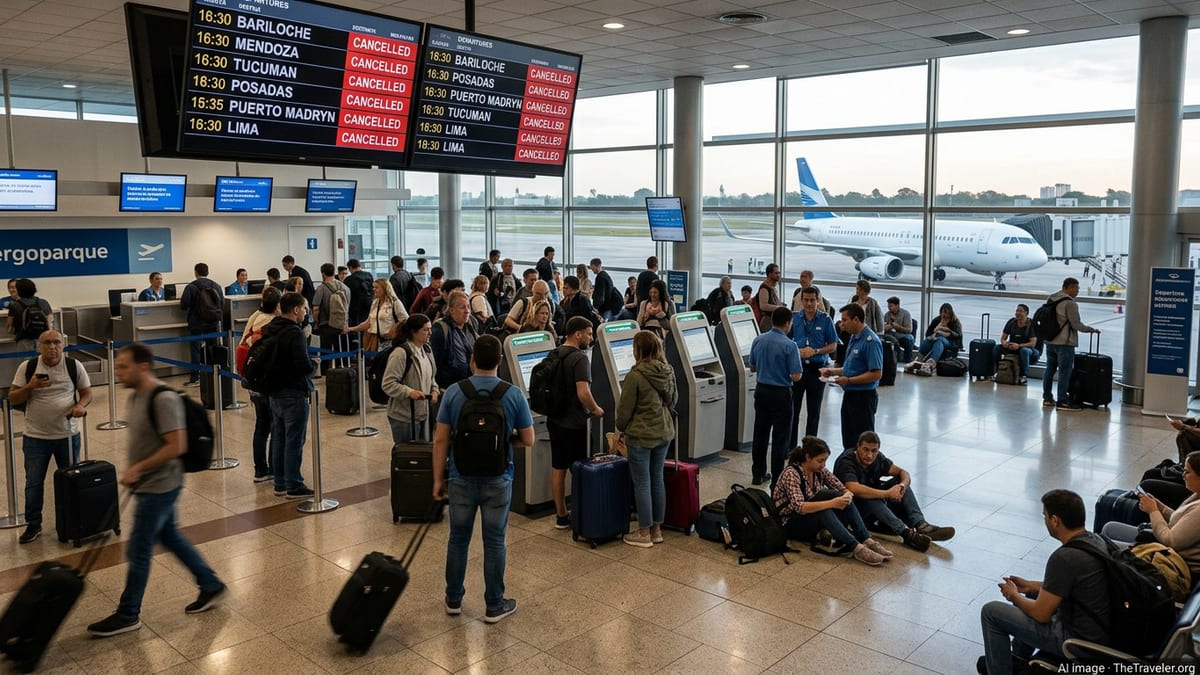
Operations at Buenos Aires’ Aeroparque Jorge Newbery faced significant disruption in early June 2026, as rough weather across Argentina contributed to 44 delayed flights and three cancellations affecting both Aerolíneas Argentinas and several budget carriers.
Get the latest news straight to your inbox!
Weather Turbulence Hits a Key Urban Airport
The disruption unfolded at Aeroparque Jorge Newbery, the city airport that serves as a primary hub for domestic and some regional services in Buenos Aires. Publicly available information for the first week of June shows a spike in irregular operations, with dozens of departures and arrivals registering delays that extended into several hours on the busiest travel periods.
Published coverage in Argentina links the operational difficulties to a chain of storm systems sweeping through several provinces, including severe hail and strong winds in central Argentina. Those conditions affected popular trunk routes to and from Buenos Aires, particularly services connecting the capital with Córdoba and other interior cities, which rely heavily on Aeroparque’s tight short-haul schedule.
Data from flight-tracking and airport-monitoring platforms for early June indicate that on one of the most affected days, 44 flights at Jorge Newbery were delayed and three were cancelled outright, straining the compact terminal and its ground operations. The impact was felt across both departures and arrivals, with knock-on effects for later rotations as aircraft and crews fell out of position.
The timing compounded the challenge. Early June marks the approach of Argentina’s winter travel season, when demand for domestic tourism and regional business travel begins to rise. With runway and apron works scheduled at various airports across the country in 2026, Aeroparque’s role as a central node in the network has left it especially sensitive to external shocks such as weather.
Flag Carrier and Low Cost Airlines Share the Impact
Aerolíneas Argentinas, which uses Aeroparque as one of its main hubs and is the country’s largest airline, was among the most disrupted operators. Timetables show that many of the delayed flights involved the carrier’s high-frequency domestic routes, such as services to Córdoba, Mendoza, Rosario, Neuquén and the northern tourist gateways. Delays in these sectors can quickly cascade, because the same aircraft often operate multiple legs in a single day.
Budget carriers based at Aeroparque, including ultra-low-cost operator Flybondi and JetSmart Argentina, also experienced schedule changes as the adverse conditions developed. These airlines typically work with leaner fleets and tighter turnarounds, which can leave fewer spare aircraft to absorb unexpected interruptions. When one early departure is delayed, subsequent flights using the same aircraft may inherit the disruption.
Publicly available flight performance statistics for Aeroparque in June 2026 show a broader pattern of volatility across multiple airlines, reflecting the operational strain of weather events and infrastructure constraints. While Aerolíneas Argentinas operates a larger share of the traffic and therefore recorded a higher absolute number of impacted flights, low cost carriers had proportionally similar exposure on their reduced networks.
Analysts note that Aeroparque’s role as a hub concentrates risk. The airport’s city-center location makes it attractive for travelers, but also means that traffic peaks are highly condensed in the morning and evening waves. When storms affect one or two of those key banks of flights, both full-service and low cost airlines can face simultaneous disruptions that are difficult to recover within the same operating day.
Passenger Experience Strained as Delays Mount
Reports from local media describe long lines at check-in counters and crowded boarding areas as passengers waited for updated departure times. With 44 flights delayed on a single day, the number of travelers affected ran into the thousands, particularly on domestic sectors where single-aisle aircraft operate at high load factors. Prolonged waits and uncertainty about connections to other cities added to frustration among those attempting to reach family or work commitments.
At Aeroparque, which already operates near capacity during peak periods, even moderate delays can quickly translate into congestion at security, cafes and gate lounges. Observers noted that passengers sought information from airline apps, airport display screens and staff at service desks as they tried to rebook missed onward journeys or adjust hotel and ground transport plans in other cities.
Ground-handling teams also faced pressure. Extended turnaround times due to shifting departure slots, weather-related safety checks and crew duty limits meant that some aircraft remained at gates longer than scheduled. This, in turn, complicated gate allocation for later flights and contributed to a sense of overcrowding on the compact airside concourses.
As airlines worked through the backlog, some late-evening services were among the three that ended up being cancelled rather than further delayed, particularly where crew duty-time restrictions or curfews at destination airports made operations impractical. Affected passengers were left to weigh immediate rebooking options, overnight stays in Buenos Aires or changes in their travel plans.
Compensation Rules and Passenger Rights in Focus
The disruption reignited debate over passenger rights and compensation in Argentina and the wider South American region. Online consumer resources tracking Aerolíneas Argentinas and other carriers note that eligibility for monetary compensation often depends on the cause of the delay or cancellation, with weather events typically classified as circumstances beyond an airline’s control.
Travel-rights organizations point out that, even when financial compensation is not required, passengers may still have entitlements to care such as meals, refreshments or accommodation, depending on the length of delay and the specific airline’s conditions of carriage. However, the fragmented nature of regional regulation and varying contract terms can make it challenging for travelers to understand exactly what support they should receive.
The June disruptions at Aeroparque are likely to renew calls for clearer communication around what airlines can realistically offer during widespread weather events. Industry observers highlight that transparent messaging on expected waiting times, rebooking options and available amenities can mitigate some of the frustration that arises when large numbers of passengers are stranded in terminals for hours at a time.
In response to recent years of heavy schedule changes in the region, several consumer-facing platforms have expanded their tools for tracking delays and guiding passengers through claims processes. These services, which draw on live flight status feeds and historical performance data, allow travelers using Aeroparque and other hubs to review how often particular routes are delayed and to prepare contingency plans where possible.
Operational Resilience and Infrastructure Plans
The episode comes as Argentine aviation authorities and airport operators pursue a multi-year program of infrastructure upgrades, including works affecting runway surfaces and aprons across the network. Planning documents released for the 2025 to 2028 period reference continued investment at Aeroparque, such as apron expansions designed to improve aircraft parking capacity and maneuvering space during peak times.
Specialists in regional air transport note that improving Aeroparque’s resilience will likely require a mix of physical upgrades and operational refinements. Additional remote stands, optimized gate assignments and better integration of real-time weather and air traffic information into airline scheduling systems are among the measures seen as vital to limit the ripple effects of storms and low-visibility events.
The early June disruption underscores the balancing act facing Argentina’s aviation sector. Jorge Newbery Airport’s proximity to downtown Buenos Aires makes it a highly convenient gateway for business and leisure travelers, but it also concentrates a large volume of flights into a relatively constrained space. When adverse weather hits multiple destinations served from the airport, that concentration can quickly translate into dozens of delayed flights and pockets of gridlock across the terminal.
As winter progresses in the Southern Hemisphere, industry watchers will be monitoring whether airlines and the airport can adapt schedules, staffing and contingency plans to better manage further bouts of bad weather. For passengers planning trips through Aeroparque in the coming months, the events of June 2026 serve as a reminder to keep a close eye on forecasts and to allow extra time for potential disruptions.