


More news on this day
Mexican boxing star Saul “Canelo” Álvarez has arrived in Riyadh for his October 31 title bout, stepping into Saudi Arabia’s flagship sports showcase just as the United States sharply tightens its travel warning for the kingdom and orders some diplomatic staff and family members to leave.
Get the latest news straight to your inbox!
High-Profile Arrival in a Heightened Security Climate
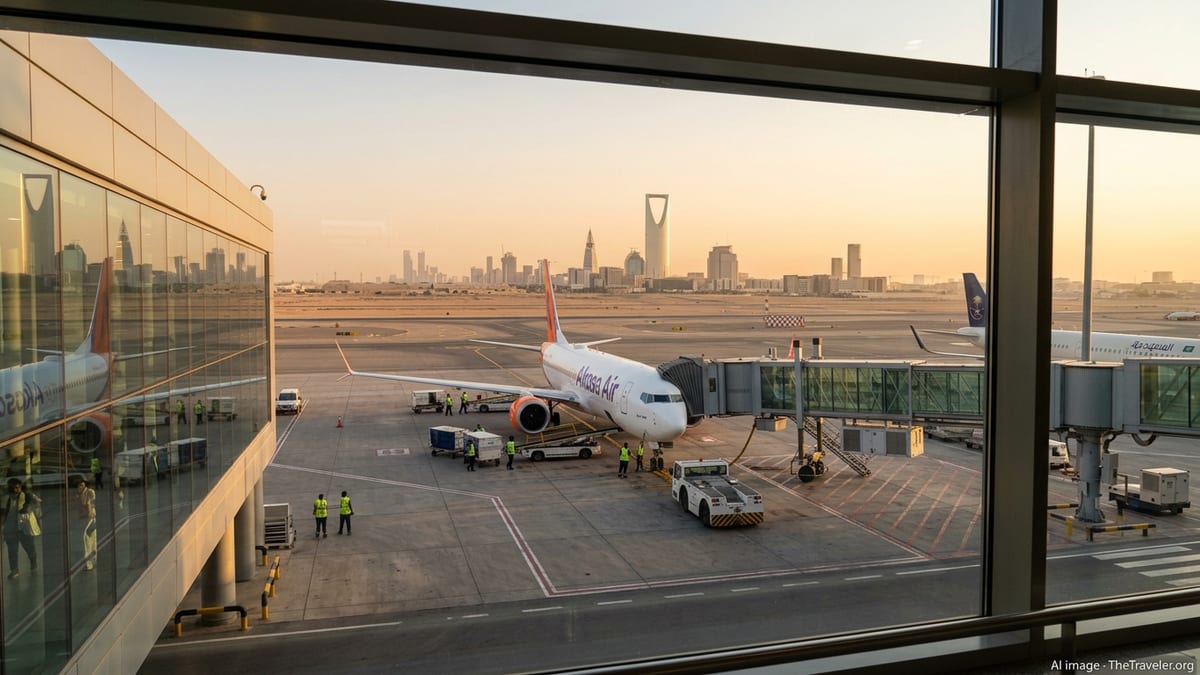
Álvarez touched down in the Saudi capital at the start of fight week for his clash with Christian Mbilli, a centerpiece of this year’s Riyadh Season entertainment festival. Broadcaster footage and boxing coverage show the four-division champion being greeted at King Khalid International Airport before transferring to a central Riyadh hotel, where fans gathered for a brief welcome appearance.
The Mexico vs The World card, scheduled for October 31, remains on the boxing calendar with ticket sales and promotional events continuing in the city. Pre-fight activities, including a public workout and news conference, are expected to draw international media, visiting supporters and Saudi residents, reinforcing Riyadh’s positioning as a global combat sports hub.
Álvarez’s arrival comes as international attention focuses not only on the bout but also on the broader security context. Reports highlight that major airlines are operating into Riyadh and Jeddah, though recent disruptions following attacks on Saudi airports have prompted rescheduling and temporary diversions in parts of the country.
U.S. Advisory Raised to ‘Reconsider Travel’
Publicly available information from the U.S. Department of State shows that Saudi Arabia is currently under a Level 3 advisory, “Reconsider travel,” following an update published in late October. The advisory cites armed conflict, terrorism and the risk of missile and drone attacks originating from Iran and Yemen’s Houthi movement, together with strict local laws that can carry severe penalties for violations.
In a separate step on October 23, the department ordered the departure of non-emergency U.S. government employees and eligible family members from Saudi Arabia, reflecting an elevated threat assessment. The advisory also reiterates long-standing restrictions that bar U.S. government personnel from traveling within 20 miles of the Yemen border and outline limitations on using certain airports without special authorization.
The updated guidance notes that missiles and drones have previously struck civilian targets, including airports and critical energy infrastructure. Aviation safety language urges U.S. citizens to carefully review airline routing, local security alerts and any carrier-specific advisories before committing to travel plans that include Saudi airspace.
Riyadh Season Pushes Ahead With Major Events
Despite the security backdrop, Saudi Arabia’s Riyadh Season is pressing ahead, with Álvarez’s bout marketed internationally as one of the 2026 edition’s marquee nights. The state-backed festival combines boxing, football exhibitions, professional wrestling, motorsport showcases, concerts and pop-up attractions across venues concentrated in and around the capital.
For overseas visitors who still decide to attend, publicly available schedules indicate a dense calendar around fight week, with fan zones, themed districts and late-night entertainment clusters operating under extended hours. Hotels in central Riyadh and near major event sites are promoting fight-and-stay packages, while premium hospitality offerings inside the arena target high-spend international guests.
Analysts of the kingdom’s tourism strategy note that staging globally televised bouts featuring stars such as Álvarez is central to Saudi Arabia’s ambition to reposition itself as a year-round leisure destination. The timing of this latest headline event, however, underscores the tension between that ambition and the perception challenges created by regional conflict and evolving foreign government advisories.
What the New Warning Means for U.S. Travelers
Under the current Level 3 guidance, U.S. citizens are urged to reconsider nonessential travel to Saudi Arabia, with particular emphasis on areas close to the Yemeni border and locations associated with previous missile and drone incidents. The advisory highlights the possibility of attacks with little or no warning and notes that strikes have, in the past, targeted airports, oil facilities and urban areas.
The State Department’s material encourages travelers who still choose to visit to enroll in the Smart Traveler Enrollment Program, monitor local media and official security alerts, and develop contingency plans that do not rely on U.S. government assistance. It also points to risks stemming from local legislation, including strict rules on public conduct, assembly and online expression, which can surprise visitors unfamiliar with Saudi law.
In practice, the tightened advisory may influence corporate travel approvals, insurance coverage and the willingness of some U.S.-based fans to attend large-scale events such as the Álvarez vs Mbilli card. Industry commentary suggests that organizers are likely to see a higher proportion of regional and non-U.S. international spectators if American travelers and companies opt to defer trips while the ordered departure for some embassy personnel remains in effect.
Balancing Spectacle and Risk in a Shifting Region
Álvarez’s presence in Riyadh highlights the extent to which Saudi Arabia has tied its global image to high-visibility sporting spectacles at a time of volatility in the wider Middle East. The same week that boxing broadcasters shared images of the champion stepping off his jet, news outlets were reporting on renewed Houthi missile and drone attacks and additional military support pledged to Saudi Arabia by foreign partners.
Travel and security analysts note that this juxtaposition complicates risk calculations for international visitors. On one hand, Riyadh’s main entertainment zones, high-end hotels and modern arenas are heavily policed and have not been the primary targets of recent attacks. On the other, the updated U.S. advisory reflects concern that strategic infrastructure such as airports and energy facilities could again come under fire, with potential knock-on effects for flight operations and traveler safety.
For now, the Mexico vs The World card is proceeding on schedule, with Álvarez installed as the main attraction in front of a global broadcast audience. Whether the tightened warning and ordered departure dampen American attendance, or become a footnote to another title fight in Saudi Arabia’s capital, will be closely watched by both travel planners and the architects of the kingdom’s sports-led tourism drive.