


More news on this day
Saul “Canelo” Alvarez has landed in Riyadh ahead of his October 31 title fight with Christian Mbilli, touching down in the Saudi capital just as the United States sharpens its security warnings and orders some government personnel and family members to leave the country.
Get the latest news straight to your inbox!
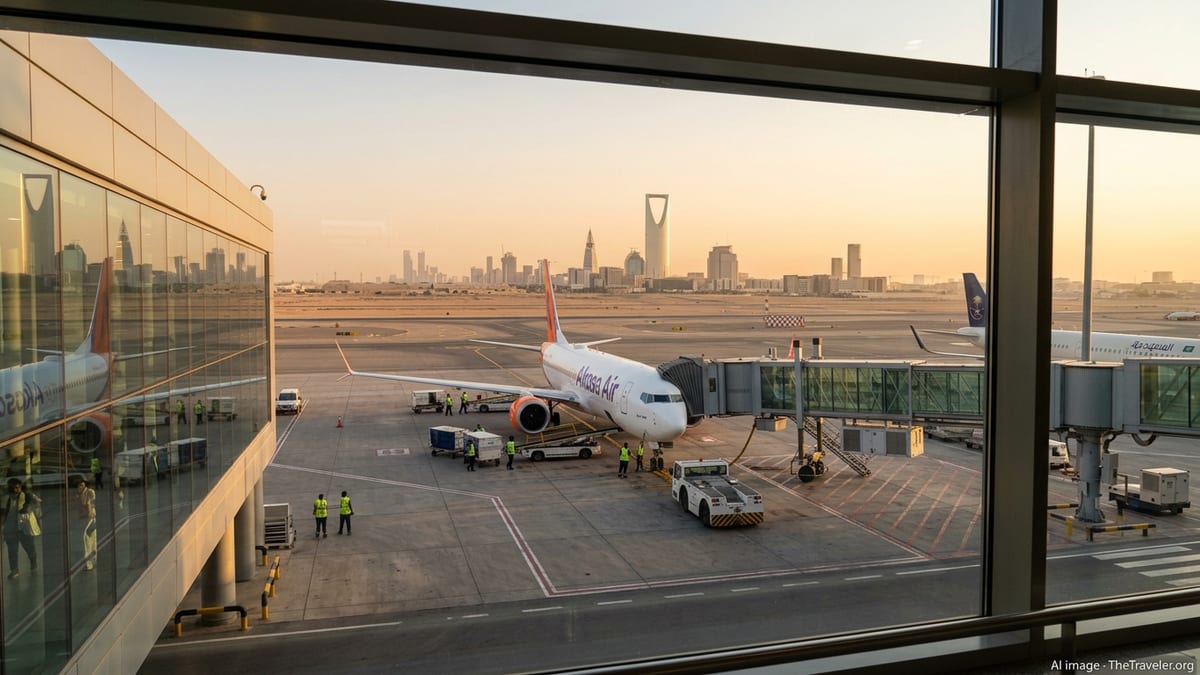
Fight week begins under rising security concerns
Alvarez’s arrival on October 26 was showcased on Saudi and boxing-focused social media, with video showing the Mexican star walking through a Riyadh hotel lobby alongside former heavyweight champion Oleksandr Usyk amid fanfare and dancers in traditional Mexican dress. Reports indicate the scene was designed to underline that the “Mexico vs The World” card, part of Riyadh Season 2026, remains on the calendar despite regional instability.
The bout with WBC super middleweight titleholder Christian Mbilli is scheduled for October 31 at The Venue Riyadh, the latest in a series of major boxing events relocated to Saudi Arabia under a multi-fight agreement between Alvarez and Riyadh Season. Publicly available boxing records list Alvarez at 63 wins, 3 losses and 2 draws with 39 knockouts, while Mbilli enters at 29 wins, no defeats, one draw and 24 knockouts.
Alvarez’s decision to proceed follows weeks of speculation over whether the card could be postponed or moved after a string of missile and drone attacks on Saudi airports attributed to Yemen’s Houthi movement. According to international coverage of those incidents, the strikes in October killed and injured hundreds of people and triggered new debate about the safety of staging large-scale sports events in the kingdom.
Despite that backdrop, Riyadh Season organizers have continued to promote the fight week schedule, including a pre-fight news conference on October 29 and a full undercard built around Mexican and international talent. Boxing industry reports suggest broadcasters may call the event remotely from studios outside Saudi Arabia, an adjustment that underlines lingering security concerns around travel into the country.
U.S. travel warning escalates ahead of October 31 card
Alvarez’s landing in Riyadh comes less than a week after the U.S. Department of State ordered the departure of non-emergency government employees and family members from Saudi Arabia. According to news reports that draw on State Department statements and security alerts, the decision was prompted by a series of lethal missile and drone attacks and the risk of further strikes on civilian infrastructure.
Publicly available advisories show that Saudi Arabia is currently subject to a Level 3 “Reconsider Travel” warning for U.S. citizens. The notice cites ongoing risks from Iranian and Iran-backed actors, including Houthi missile and drone launches, along with terrorism, armed conflict and the possibility of abrupt flight cancellations or airspace closures affecting routes into and out of the kingdom.
Separate communications from U.S. embassies across the wider region in October urged Americans to exercise “heightened vigilance” and to keep contingency plans up to date. Media coverage indicates that the guidance reflects concerns about potential attacks on public gatherings and infrastructure across the Middle East, rather than on any single sporting event.
For travelers, the sharper language translates into practical complications. Reports note that airlines operating to Saudi Arabia have been required to coordinate closely with aviation authorities amid airspace alerts, and that some travelers connected to the Alvarez card are routing through neighboring states and crossing by road to mitigate the risk of last-minute flight disruptions.
Riyadh Season presses ahead with sports-led tourism push
The Alvarez versus Mbilli showdown is a centerpiece of this year’s Riyadh Season, the state-backed entertainment program that has turned Saudi Arabia into a recurring host for global boxing, football, professional wrestling and mixed martial arts events. Coverage of the initiative describes it as part of a broader economic diversification effort that uses headline sports properties to draw overseas visitors and reshape the country’s image.
Alvarez has become a familiar figure in that strategy. Previous Saudi-hosted fights in Riyadh featured the Mexican star in super middleweight title bouts, while Riyadh Season has also underwritten major heavyweight boxing cards and international football exhibitions. The October 31 show is the final contest in a four-fight arrangement reported when Alvarez first aligned with the Saudi-backed series.
Despite the U.S. evacuation order for some personnel, schedules published by sports and entertainment outlets still list the Alvarez Mbilli fight and World Wrestling Entertainment’s Crown Jewel event on November 7 as going ahead in Riyadh. Industry analysis frames the decision to maintain the calendar as a signal of Saudi Arabia’s determination to project normality and safeguard the credibility of its emerging sports hub.
At the same time, travel and security specialists quoted across international coverage point out that elevated risk levels can affect insurance, logistics and staffing decisions for promoters and broadcasters, even when events themselves remain on the schedule. That tension is now on display in Riyadh, where marketing for Riyadh Season continues alongside regular civil defense alerts and air-raid warnings.
What the situation means for international fans
For boxing fans considering a trip to Riyadh, the collision of a marquee fight week with a heightened security environment creates an unusually complex backdrop. Travel advisories encourage U.S. nationals to reconsider non-essential travel, to avoid areas near critical infrastructure or military sites and to have an evacuation plan that does not depend on government assistance.
Reports from boxing journalists and commentators indicate that some members of the media and fight camps have altered itineraries, delayed arrivals or decided not to travel at all. At least one trainer associated with the undercard has cited missile alerts, uncertainty around flight schedules and the difficulty of guaranteeing a safe preparation environment as reasons for withdrawing from the event.
Ticketing for the October 31 card remains active through Riyadh Season’s domestic channels, and local hospitality operators continue to advertise fight-week packages. However, publicly available information suggests that international visitors are facing higher-than-usual hurdles in securing travel insurance that covers conflict-related disruption, as well as stricter checks on short-notice flight changes.
For travelers already on the ground or intent on attending, security analysts recommend close monitoring of local alert systems, awareness of shelter locations in major venues and careful coordination with airlines regarding the status of outbound flights. While the Alvarez Mbilli fight is still planned as a showcase of Saudi Arabia’s sports ambitions, the atmosphere around it is now shaped as much by air-raid sirens and diplomatic warnings as by the usual debates over tactics and scorecards.
A test case for sports events in unstable times
The convergence of Alvarez’s star power, Riyadh’s growing role in international sport and a rapidly evolving regional security picture has turned this fight week into a test case. Observers note that organizers, broadcasters and governing bodies across multiple sports are watching closely to see whether high-profile events can continue in Saudi Arabia amid elevated threat levels without incident.
Coverage in global sports business outlets stresses that long-term partnerships between Saudi entities and international promoters rely on the perception that events can be staged safely for athletes, staff and spectators. Any major security incident affecting the Alvarez card, or a sudden cancellation triggered by new attacks, would raise difficult questions about future fixtures scheduled in the kingdom.
For now, Alvarez’s presence in Riyadh sends a message that the October 31 bout is still on, even as Washington’s stance grows more cautious. The contrast between images of the Mexican champion greeting fans in a hotel lobby and the concurrent emergency alerts on mobile phones across the city captures the uneasy balance defining travel to Saudi Arabia at this moment.
How that balance holds over the coming days will matter not only to fans planning to travel for Mexico vs The World, but also to a wider ecosystem of international events that increasingly depend on Saudi Arabia’s venues, sponsorship and broadcast investment.