


More news on this day
A newly updated United States travel advisory for France, combined with a separate worldwide caution, is pushing many American travelers to reassess upcoming trips to one of Europe’s most visited destinations.
Get the latest news straight to your inbox!
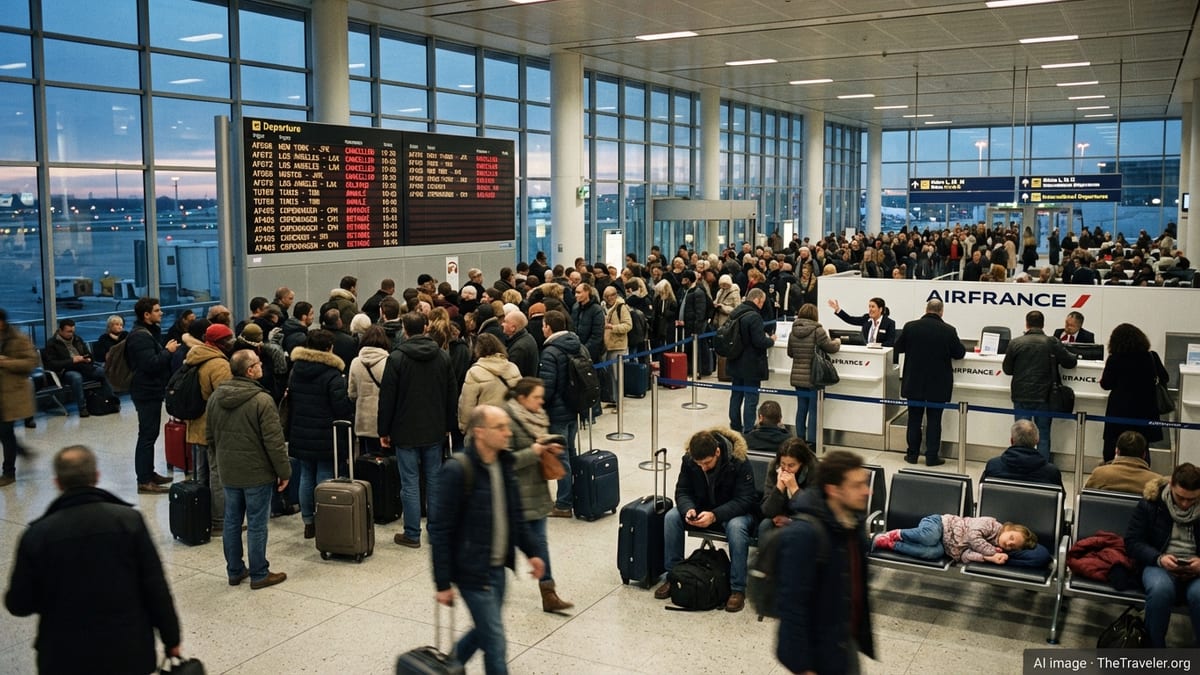
France Stays at Level 2 as Advisory Language Toughens
The U.S. Department of State updated its travel advisory for France on October 21, 2026, keeping the country at Level 2, which signals that U.S. citizens should exercise increased caution. Publicly available information on the advisory cites unrest and terrorism as the key risk factors, reflecting a security environment that has shifted over recent months but not to the point of triggering a higher-level warning.
Reports indicate that the advisory highlights recent violence and rioting in parts of France, along with the potential for further demonstrations that can disrupt transportation and tourism. Travelers are urged to avoid protests and areas with heavy police deployments, and to remain alert in busy public places such as transport hubs, markets, and major tourist attractions.
Coverage from travel and consumer news outlets notes that the October update is the first significant revision to the France advisory since the summer of 2025, when the State Department first framed the country’s risks around both unrest and terrorism. The latest wording draws a more direct connection between street protests, broader social tensions, and the possibility of opportunistic attacks, underlining why the advisory has captured new attention among prospective visitors.
Despite the sharper language, the Level 2 rating still places France alongside many other popular European destinations that are considered generally safe for informed travelers who follow local guidance and stay alert to changing conditions.
Worldwide Caution Adds Global Context to France Concerns
The France update arrives against the backdrop of a broader worldwide caution issued by the State Department in March 2026 and refreshed in July 2026. That security alert advises Americans everywhere overseas to exercise increased caution because of heightened tensions and the potential for terrorist attacks, demonstrations, or violence against U.S. citizens and interests.
According to the worldwide caution notice, U.S. officials assessing global risk point to the possibility that actors inspired by conflicts in the Middle East or other regions could look for high-profile targets in major cities, including in Western Europe. This global framing does not single out France, but it helps explain why an advisory for a major tourism market is drawing more scrutiny than similar notices might have in the past.
Travel risk consultancies and foreign-affairs agencies in other countries, including those in Canada, the United Kingdom, Ireland, and Australia, also flag elevated security concerns across Europe. Their public advisories for France cite the risk of terrorism, the likelihood of demonstrations, and periodic transport or border disruptions, underscoring that the U.S. position aligns with a wider international assessment rather than standing alone.
The combination of a destination-specific Level 2 advisory and a worldwide caution effectively layers risks for travelers. For many Americans planning a trip to France, the question is less about whether to go at all and more about how to adapt itineraries and behavior to the current climate.
What the Advisory Means for Travelers on the Ground
The practical impact of the updated France advisory is most visible in the way it encourages travelers to prepare. The State Department’s country page for France emphasizes situational awareness in crowded locations, careful route planning around scheduled protests, and the importance of monitoring local news for rapid changes in security posture or public-transport operations.
Travel industry reports describe recent demonstrations that have prompted short-notice closures of attractions, delays on intercity rail services, and sporadic detours on urban transit networks. In some cases, local authorities have imposed movement restrictions in specific neighborhoods while security operations were under way, leading to advice that visitors stay indoors or avoid certain districts until conditions normalize.
Major tourism authorities recommend that visitors allow extra time when moving between airports, train stations, and city centers, particularly in Paris and other large metropolitan areas such as Lyon and Marseille. They also suggest building flexibility into daily plans, including advance ticket purchases with changeable times for key attractions, to accommodate potential delays or temporary closures.
Travel insurers and tour operators are responding by reminding customers to review policy language on civil unrest, trip interruption, and travel warnings. Publicly available policy summaries show that some plans provide limited coverage when official advisories are at Level 2, while stricter conditions can apply if a destination reaches Level 3 or Level 4 or if flights are canceled because of security concerns.
How France Is Managing Security and Public Events
The French government continues to operate its domestic terrorism alert framework, known as Vigipirate, which adjusts security measures in response to perceived threats. Publicly available French and partner-government guidance explains that this system can lead to visible steps such as increased military patrols at stations and key monuments, stricter bag checks, and occasional evacuations or drills at busy sites.
Recent advisories from allied governments, including Canada and the United Kingdom, draw attention to a higher probability of protests and political gatherings across France in late October 2026, with a particular focus on days of nationwide action coordinated by unions and activist groups. These events can affect central districts in Paris as well as regional cities, leading to traffic disruption, temporary shop closures, and heavy security around government buildings.
For visitors, this often translates into longer wait times at security checkpoints for museums and cultural venues, more frequent identity checks near border crossings and train stations, and sporadic delays on cross-border routes with neighboring countries. Irish travel advice, for example, notes that there are reinforced checks at several internal Schengen borders, which may lengthen overland journeys even when air travel proceeds normally.
At the same time, travel data and tourism-board commentary suggest that France continues to welcome large numbers of international visitors, with major attractions operating close to pre-pandemic capacity on many days. The official focus, according to published government documentation, is on managing risk in a way that allows cultural events, sports fixtures, and conferences to go ahead while keeping crowds under close observation.
Planning a Trip: Balancing Caution and Demand
For travelers weighing the new advisory, published coverage from consumer travel outlets emphasizes that a Level 2 warning does not instruct Americans to cancel or avoid France. Instead, it signals that visitors should research their destinations in more depth, stay informed throughout their trip, and be ready to change plans quickly if needed.
Practical recommendations appearing across official advisories and travel-industry guidance include enrolling in the State Department’s traveler enrollment program so that security updates and alerts can be sent directly, carrying identification at all times, and keeping digital copies of travel documents accessible in case of disruptions. Travelers are also encouraged to know emergency contact numbers in France and to identify safe meeting points with companions if separated in a crowded or chaotic setting.
Price search data reported in the travel press indicate that demand for France remains resilient despite the heightened messaging. Airfares between the United States and Paris for late 2026 departures have fluctuated but have not shown a sustained collapse, suggesting that many travelers are choosing to proceed with their plans while simply paying closer attention to security advice.
As the situation continues to evolve, public guidance from both U.S. and partner governments is likely to be updated again. For now, the combination of a France-specific Level 2 advisory and a global caution has clearly moved safety and flexibility higher on the checklist for Americans planning time in Paris, along the Riviera, or in the country’s smaller regional cities.