


The French Riviera inspires a very specific kind of daydream: glittering sea, palm-lined promenades, cafe terraces and late sunsets over the Mediterranean. But when you start planning, one question comes up fast: should you stay in Cannes or Nice? Both cities deliver sunshine, beaches and classic Côte d’Azur charm, yet they feel very different on the ground. This guide compares them side by side so you can decide which destination fits your travel style, budget and priorities best.
Get the latest updates straight to your inbox!
First Impressions: The Feel of Each City
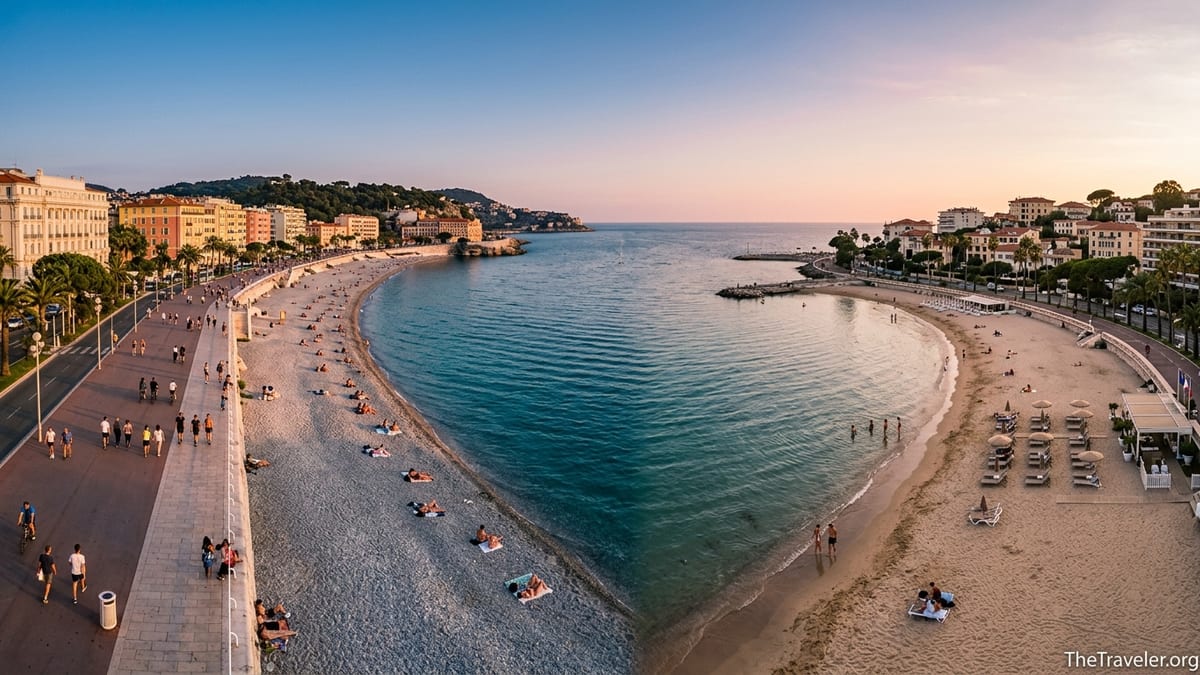
Nice is the larger, more lived-in city, with around 340,000 residents and the feel of a real Mediterranean hub rather than a pure resort. The seafront Promenade des Anglais stretches for kilometers, backed by Belle Époque facades, apartment buildings and everyday life: joggers, commuters on electric scooters, families heading to school. In the Old Town (Vieux Nice), laundry hangs above narrow lanes, food markets spill into the streets and local restaurants serve socca and salade niçoise to as many residents as visitors.
Cannes, by contrast, is smaller and more curated. Its seafront boulevard, La Croisette, is lined with luxury hotels, designer boutiques and beach clubs, with the famous Palais des Festivals at its heart. Away from festival season, the city is quieter and more polished, with a compact center that feels easy to grasp in a single walk. You still get a historic quarter, Le Suquet, climbing up behind the port, but overall Cannes feels more resort, less city.
For many travelers, the first impression comes down to energy. Nice feels busy, varied and sometimes a little chaotic, especially around Place Masséna and Avenue Jean-Médecin. Cannes feels tidier and more controlled, with a gentler pace once you step away from the Croisette. If you like cities that still function for locals in the off-season, Nice will probably resonate. If your dream is a refined, seaside holiday base with an easy-to-navigate center, Cannes may suit you better.
Season matters too. In July and August, both cities are busy, but the crowds in Nice are more mixed: students, families, tour groups and business travelers. Cannes tends to skew toward leisure visitors, events, and those drawn to its film-festival aura, so the vibe can feel more overtly vacation-focused even in shoulder seasons like May and September.
Beaches: Pebbles in Nice, Soft Sand in Cannes
The beaches are one of the clearest practical differences. Nice’s shoreline is made up of smooth, rounded pebbles, sloping quickly into deep blue water. The water color is stunning and the Promenade des Anglais view is iconic, but you will want water shoes or thick towels if you plan to spend full days on the beach. Public sections are free, while private beach clubs provide loungers, parasols and waiter service for a day fee that often starts around several dozen euros in peak season and includes more comfort and showers.
Cannes offers wide, sandy beaches along La Croisette and around the old port, which many visitors find more comfortable for lounging and swimming. You will find a mix of private beach clubs attached to hotels and restaurants, and several public stretches. One notable example is Zamenhof Beach near the eastern end of La Croisette, managed by the city and supervised in high season, where you can rent a sunbed and umbrella for a relatively modest fee compared with the luxury clubs nearby. Municipal information in recent seasons has listed day rates in the range of a few tens of euros for a lounger and umbrella, which is noticeably less than high-end private clubs.
In private beach clubs in Cannes, day packages on the Croisette often include a lounger, umbrella and access to facilities for a premium that can run from roughly the cost of a mid-range dinner up to three-figure splurges in peak months, depending on location and front-row positioning. Visitors often plan one “treat” beach-club day in Cannes, then use the free public sections on other days to balance the budget. Nice offers a similar pattern, but because the shore is pebbly, many budget travelers simply use the public beach with a foldable mat or neoprene shoes and skip paid clubs entirely.
If you are traveling with young children or anyone who finds it difficult to walk on stones, Cannes’ sand is the clear winner. If your priority is dramatic sea color, evening walks and views, Nice’s pebbly shore paired with the Promenade can still be appealing even if you spend less time actually lying on the beach.
Budget & Value: What Your Money Buys in Each City
When it comes to costs, Nice generally offers a wider range of price points. As a bigger city with more inventory, you will find everything from simple guesthouses and small two-star hotels to five-star seafront palaces. In busy months like July, a mid-range three-star room within walking distance of the Promenade and Old Town often starts around the low-to-mid hundreds of euros per night, with reasonable deals if you book early or stay a few blocks back from the water. Off-season, especially in November or early March, you can find noticeably lower rates as business and conference travelers replace leisure tourists.
Cannes, thanks to its festival calendar and glamorous branding, tends to be slightly pricier on average for beachside locations, especially during big events. During the Cannes Film Festival in May and major industry markets, prices for central hotels can spike dramatically, and minimum stays may apply. Outside those windows, however, Cannes is not exclusively for luxury travelers: in shoulder seasons, you can still find three-star hotels or apartment rentals inland from the Croisette at prices comparable to Nice, particularly around the train station area or the quieter residential streets behind the center.
Food and drink follow a similar pattern. In Nice, local brasseries and neighborhood bistros in less touristy streets often offer lunch menus at approachable prices: a socca snack from a market stall, a slice of pissaladière and a coffee can still come in under ten to fifteen euros, and fixed-price lunches in the twenty-euro range are common. Cannes tends to lean more toward refined dining and seafront venues: a simple salad and drink on the Croisette might quickly match what you would pay for a full two-course lunch in an inland Nice bistro.
For budget-conscious travelers, Nice offers more self-catering options and supermarkets scattered through residential districts, making it easier to picnic on the beach or cook in a rental apartment. In Cannes, this is possible too, but the compact center means you are often closer to higher-end restaurants and hotel bars than everyday food shops, so you may need to plan a bit more deliberately if you want to keep daily costs down.
Access & Getting Around: Logistics for Short Trips
Nice wins clearly on international access. Nice Côte d’Azur Airport is only a few kilometers from the city and is connected to the center by tramway, city buses and taxis. The modern tram line that serves the airport runs frequently throughout the day, connecting both terminals with key stops such as Jean-Médecin near the main shopping street and the port area. Recent traveler reports and local information describe the tram as one of the easiest and cheapest airport transfers in Europe, with standard tram tickets costing only a couple of euros when you board from non-airport zones and a specific airport fare applied when starting directly at the terminals.
From the airport, reaching Cannes requires a bit more planning. You can take the tram or bus to a nearby rail station such as Nice-Saint-Augustin, then board a regional TER train west along the coast; the journey from Nice-Ville to Cannes typically takes around 30 to 40 minutes. Alternatively, direct airport shuttles and private transfers are available and popular with travelers carrying heavy luggage or arriving late at night, although costs rise accordingly. Taxis from the airport to Cannes follow regulated rates but can easily approach or exceed three figures in euros depending on traffic and time of day.
Once in the cities, both are walkable in their centers. Nice’s core stretches from the Old Town and Promenade inland past Avenue Jean-Médecin, with trams linking the main neighborhoods. Most visitors can comfortably walk from the beach to the station or Old Town in 15 to 20 minutes. In Cannes, most key sights lie in a compact area: the Croisette, the old port, Le Suquet hill and the shopping streets like Rue d’Antibes sit within an easy 10 to 20 minute walk radius. Local buses connect to residential districts and nearby suburbs in both cities, but many short-stay visitors barely need them.
If you plan lots of day trips by train to Monaco, Villefranche-sur-Mer or Menton, Nice is slightly better positioned because its main station sits on that eastern branch and trains are frequent. If most of your excursions will be to Antibes, the Lérins Islands, Fréjus or Saint-Raphaël, basing in Cannes minimizes backtracking and gives you quicker access to western Riviera highlights.
Culture, Atmosphere & Nightlife
Nice has a deeper cultural layer, with major museums and a year-round local arts scene. The Matisse Museum, Chagall Museum, Museum of Modern and Contemporary Art and the newer cultural hubs around the port give you indoor options on cloudy days. Vieux Nice buzzes late into the evening with wine bars, casual pubs and small clubs that cater as much to students and local workers as to tourists. Around Place Garibaldi and Rue Bonaparte, you will find a mix of cocktail bars, bistros and casual late-night spots that feel authentic rather than resort-like.
Cannes’ cultural calendar peaks dramatically during flagship events such as the Cannes Film Festival in May and the fireworks competitions in summer. During these times, the city feels electric, with red carpets, industry parties and a parade of film fans and curious visitors. Outside festivals, cultural offerings are more low-key: you can explore the hilltop church and castle in Le Suquet, visit smaller galleries and enjoy seaside concerts and seasonal events, but Cannes is less of a museum-and-gallery destination than Nice.
Nightlife follows the same pattern. In Nice, options range from live jazz in intimate bars in the Old Town to larger clubs near the center where both locals and visitors dance into the early morning, especially in summer and on weekends. In Cannes, nightlife is more concentrated in upscale lounges and clubs along the Croisette and around the port, often with bottle service and dress codes. You can absolutely find more relaxed wine bars and casual spots, but the overall tone is higher-end.
Your preference might come down to how you like to spend evenings. If lingering in a busy square over a reasonably priced carafe of wine while people-watching sounds ideal, Nice will suit you. If you prefer glamorous hotel bars, waterfront lounges and the occasional “big night out” in a stylish club, Cannes is a stronger fit.
Best For Different Types of Travelers
For a first-time visitor to the French Riviera, especially someone arriving by plane and staying three or four nights, Nice is often the most practical base. The quick airport tram, abundance of hotels at varying price points and easy train connections to Monaco, Villefranche-sur-Mer, Èze (via bus from the nearby station) and Menton make it simple to build a varied itinerary without renting a car. Many travelers report days that combine a morning market in Cours Saleya, an afternoon swim, and a sunset drink in the port, with day trips sprinkled in.
Cannes, on the other hand, is ideal if your priority is a classic resort feel with comfortable sandy beaches and a walkable, self-contained center. Couples on short romantic breaks often book a hotel just behind the Croisette to be steps from beach clubs and sunset strolls, then take a half-day boat trip to the Lérins Islands for quiet pine forests and clear swimming coves. If you have already seen Nice on a previous trip, using Cannes as your base on a second visit can give you a different perspective on the coast.
Families might choose based on the age of their children. With strollers and young kids, Cannes’ compact layout and soft sand are practical advantages, although Nice’s tram network is stroller-friendly and there are playgrounds along the Promenade. For teenagers who enjoy city energy, street food, and frequent day trips, Nice’s size and variety can be more engaging. Solo travelers often favor Nice for its busier streets, local student population and range of low-key bars that feel comfortable for going out alone.
Finally, if you are attending a conference or festival, your choice may be dictated by logistics: many industry events are based in Cannes’ Palais des Festivals, and staying nearby can save time and taxi fares. Conversely, if you are visiting purely for art, history and food, Nice’s museums and neighborhoods offer enough to fill several days even without venturing far afield.
Sample Itineraries: How a Stay Plays Out in Practice
Imagine a three-night stay in Nice without a car. You land at Nice Côte d’Azur Airport in the late morning, hop on the tram from outside your terminal and ride into the city center, arriving near Jean-Médecin in roughly half an hour. After dropping bags at a mid-range hotel a few blocks inland from the Promenade, you spend the afternoon wandering Vieux Nice, tasting socca from a well-known stall and browsing the flower and produce market. The next day, you take an early TER train from Nice-Ville to Monaco, explore the old town and the port, and are back in Nice by late afternoon for a swim off the pebbly shore and a casual dinner at a neighborhood bistro.
On day three, you ride the coastal train west just one stop to Villefranche-sur-Mer for a few hours on its sandy bay, or you head to Èze-sur-Mer and catch the bus up the hill to the medieval village, returning in time for sunset on the Promenade des Anglais. Evenings are open-ended: one night you might catch live jazz in a small bar, another you might simply sit on the stone benches along the waterfront with a takeaway gelato, watching locals and visitors share the promenade.
Now picture three nights in Cannes. You arrive at the airport and take a pre-booked shared transfer straight to your hotel near the Croisette. After check-in, you stroll along the palm-lined boulevard, peeking into luxury storefronts and choosing a spot for an aperitif with sea views. The next morning, you head to a public stretch of beach to swim and relax, renting a reasonably priced sunbed and umbrella from the municipal area if you want comfort without the full beach-club bill. That afternoon, you climb up into Le Suquet to explore the cobbled streets, church and viewpoints over the bay.
On day two, you book a mid-morning ferry from the old port to Île Sainte-Marguerite, one of the Lérins Islands, for under twenty euros per adult for a round trip. You pack picnic supplies from a local bakery and supermarket, then spend the day walking shaded forest paths and swimming in clear coves before returning to Cannes for dinner. On your final day, you hop on a short TER train ride to Antibes to wander its old town and harbor, then return to Cannes in time for a final sunset drink overlooking the yachts. This kind of itinerary highlights Cannes’ strength as a laid-back, beach-focused base with accessible boat and train excursions.
The Takeaway
Choosing between Cannes and Nice comes down less to which city is “better” and more to what kind of Riviera experience you want. Nice is energetic, layered and convenient, with the region’s main airport on its doorstep, extensive public transport, a wide range of hotel prices and a strong cultural scene that balances tourism with everyday life. Its pebbly beaches are scenic but less comfortable, and the city can feel hectic in peak season, yet it is hard to beat as a base for exploring up and down the coast without a car.
Cannes is more focused and resort-like, with soft sandy beaches, an elegant seafront and a compact center that feels tailored to holidaymakers, especially couples and families looking for a refined yet walkable base. Prices along the Croisette reflect its glamorous reputation, but with some planning and by mixing public beaches and inland dining, you can enjoy Cannes without an unlimited budget. Boat trips to the Lérins Islands and easy westward train links add to its appeal if you prioritize relaxation and seaside time over big-city buzz.
If you have a week or more, many travelers now split their time: a few nights in Nice for museums, markets and day trips east, followed by a few nights in Cannes for sandy beaches and a slower pace. If you must choose just one, think about what matters most to you: quick, inexpensive airport access and variety point to Nice; soft sand, resort ambiance and that Croisette stroll point to Cannes. Either way, you will still wake up to Mediterranean light, seafront promenades and the enduring allure of the French Riviera.
FAQ
Q1. Is Cannes or Nice better for a first-time visitor to the French Riviera?
For most first-time visitors, Nice is slightly more practical thanks to its airport tram, wider range of hotel prices and easy train links to Monaco, Villefranche-sur-Mer and other nearby towns. Cannes can be better if your main goal is sandy beaches and a classic resort atmosphere.
Q2. Which city is cheaper, Cannes or Nice?
Overall, Nice tends to offer better value because it has more accommodation options and everyday restaurants, especially away from the seafront. Cannes can feel more expensive along the Croisette, particularly during major events, although prices drop in shoulder seasons and a few blocks inland.
Q3. Are the beaches really that different between Nice and Cannes?
Yes. Nice has smooth pebble beaches with deep blue water and a dramatic shoreline, while Cannes offers soft, sandy beaches that are generally more comfortable for sunbathing and for children. Both have a mix of free public areas and paid beach clubs.
Q4. Is it easy to visit both Cannes and Nice on the same trip?
It is very easy to visit both. Regional TER trains connect Cannes and Nice in around 30 to 40 minutes, and run frequently throughout the day. Many travelers stay in one city and do a day trip to the other, or split a longer stay between them.
Q5. Do I need a car to enjoy Cannes or Nice?
No. Both cities are walkable in their centers and have good public transport. Nice has trams and buses reaching most neighborhoods, while Cannes has local buses and an easily walkable core. Trains and coastal buses link both to other Riviera towns, so a car is optional rather than essential.
Q6. Which city has better nightlife?
Nice offers more varied nightlife, from student-friendly bars and small clubs to live jazz venues and wine bars in the Old Town and around Place Garibaldi. Cannes focuses more on upscale lounges and clubs along the Croisette and the port, which appeal to travelers seeking a glamorous night out.
Q7. Is Cannes worth visiting outside the Film Festival?
Yes. Outside the festival, Cannes becomes a relaxed seaside town with sandy beaches, boat trips to the Lérins Islands and a compact historic quarter in Le Suquet. Prices are usually more manageable and the city feels much less crowded than during festival weeks.
Q8. Which city is better as a base for day trips?
Nice is generally the better all-around base for day trips because of its central rail connections and buses heading both east and west along the coast. It is especially convenient for Monaco, Èze, Villefranche-sur-Mer and Menton. Cannes works well if you plan to focus on Antibes, the Lérins Islands and towns further west.
Q9. How many days should I spend in Cannes or Nice?
With two full days in either city you can see the main sights and enjoy some beach time. Three to four days lets you add a nearby day trip. For a full Riviera experience, many travelers aim for five to seven days and combine both cities or use one as a base for multiple excursions.
Q10. Which city is more family-friendly?
Both can work well for families, but for younger children Cannes has an edge thanks to its sandy beaches and compact layout. Nice offers more variety, playgrounds and easy public transport, which can be ideal for families with older kids or teenagers who enjoy exploring and doing frequent day trips.