


Cannes may be best known for its red carpet moments, but long after the cameras leave, the city continues to attract a steady stream of luxury travelers from around the world. On any given evening, the terrace bars along La Croisette fill with guests speaking English, Arabic, Italian, Mandarin, and American-accented French, all drawn by the same blend of Mediterranean ease and high-end indulgence. From legendary palace hotels and discreet villas in the hills to superyacht marinas and flagship fashion boutiques, Cannes remains one of Europe’s most compelling addresses for travelers who like their sunshine served with a glass of champagne.
Get the latest updates straight to your inbox!
A Historic Riviera Address Reinvented for Modern Luxury
Cannes’ allure for affluent travelers is rooted in more than a century of Riviera glamour. British and Russian aristocrats began wintering here in the late 19th century, attracted by the mild climate and sea air. Early villas in hilltop neighborhoods like La Californie and Croix des Gardes set the tone for a resort built around privacy, gardens, and sea views. That history still shapes the city’s most coveted addresses, where Belle Époque facades hide fully modern spas, rooftop pools, and private concierges.
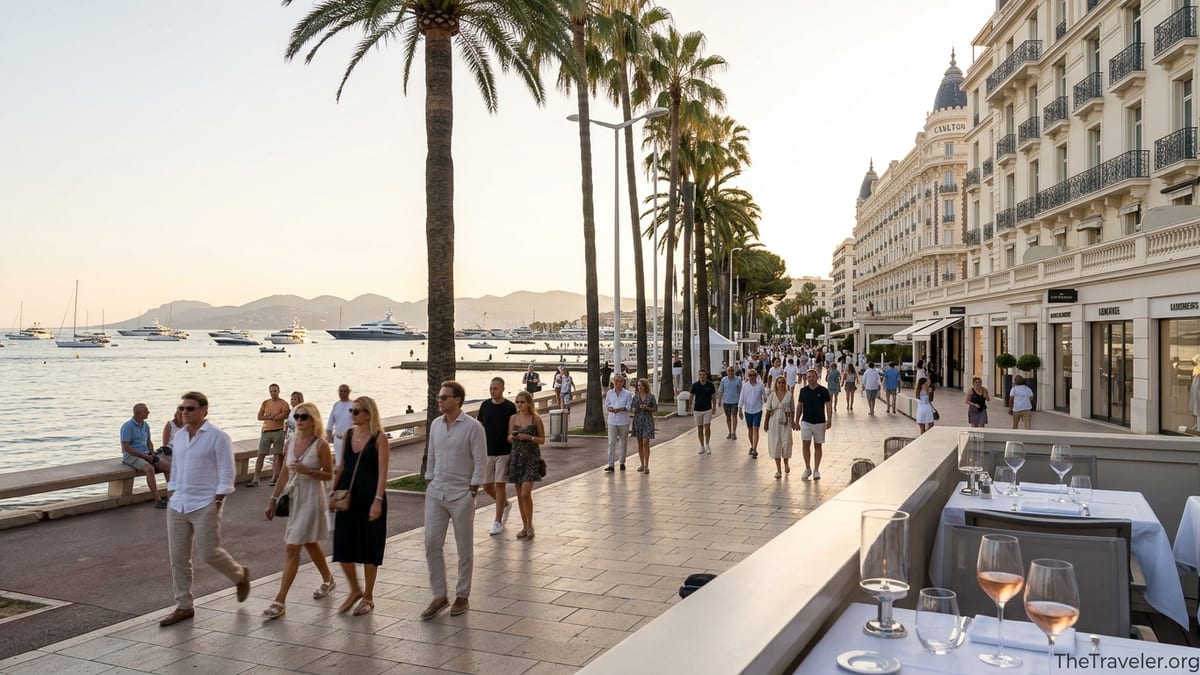
Flagship properties such as the Carlton Cannes, now part of the Regent brand, and Hotel Barrière Le Majestic directly face the Bay of Cannes on La Croisette, giving guests front-row views of the yachts and evening promenades. The Carlton, first opened in 1911 and recently reimagined after a major restoration, mixes its signature twin domes and grand terrace with new residences and a destination spa, designed to meet the expectations of today’s ultra-high-net-worth travelers who may stay for weeks rather than nights.
Nearby, the Majestic and the Hôtel Martinez anchor the central stretch of La Croisette, with suites that are frequently booked out by film studios, luxury brands, and private families well before the festival calendar is announced. A traveler booking a junior suite at one of these palace hotels in peak summer can easily spend several thousand euros for a multi-night stay, with butler service, private beach access, and limousine transfers bundled into bespoke packages.
What keeps these properties relevant is their constant reinvention. Many have introduced wellness-focused floors, expanded open-air spaces, and added fully serviced residences that appeal to guests who want the intimacy of an apartment combined with the services of a five-star hotel. This evolution allows Cannes to speak both to heritage-seeking travelers and to a younger, experience-driven clientele.
La Croisette: A Seamless Triangle of Sea, Shopping, and Five-Star Service
The heart of Cannes’ luxury experience is the Boulevard de la Croisette, a palm-lined waterfront promenade where palace hotels, private beaches, and designer boutiques sit only a few steps apart. For a visitor staying at the Majestic or the Carlton, a typical day might involve breakfast on a sea-view terrace, a walk across the boulevard to a reserved sunbed on a private pontoon, and a late-afternoon wander along the flagship stores of Dior, Chanel, or Louis Vuitton before dinner.
La Croisette has become one of Europe’s densest collections of high-end retail. Flagship boutiques from Dior and Chanel occupy prime addresses facing the sea, offering full collections of ready-to-wear, leather goods, and high jewelry, alongside brands such as Hermès, Saint Laurent, Gucci, Prada, Cartier, and Chopard. Several multibrand jewelers showcase rare timepieces and high jewelry pieces that are often brought in specifically for the Cannes Film Festival and major yacht shows. For many visitors from the Middle East, North America, and Asia, shopping here is as central to the trip as the beach itself.
Prices reflect the Riviera setting. A luxury traveler might step from the Carlton’s lobby directly into a nearby boutique and leave with a new-season handbag or watch, then stroll a few minutes to a beach restaurant where a leisurely seafood lunch with chilled rosé can easily run to three figures for two people. For those looking to calibrate their spending, the city offers public alternatives nearby, such as the municipally managed Zamenhof beach just off La Croisette, where a sun lounger is priced far lower than at private hotel clubs, while still letting visitors enjoy the same stretch of sand and sea.
Just behind the Croisette, Rue d’Antibes adds another layer to the experience, mixing mid-range fashion, French beauty brands, and gourmet food shops. Luxury travelers often combine major purchases on the seafront with more casual browsing and everyday errands on this parallel street, appreciating the fact that Cannes functions as a real city, not just a resort façade.
Film, Festivals, and a Year-Round Events Calendar
The Cannes Film Festival is still the city’s most visible calling card, and for many travelers it is the ultimate bucket-list event. During the two weeks in May when the festival takes over the Palais des Festivals, room rates at palace hotels soar and access to private beaches becomes a matter of who you know as much as what you can pay. Luxury travelers who are not industry insiders increasingly work with high-end travel advisors or concierge services to secure festival-week packages that combine accommodation with chauffeur-driven transfers, restaurant reservations, and invitations to selected screenings or side events.
The red carpet, however, is only part of the story. Cannes has built a full-year event calendar that keeps luxury demand high well beyond May. Major international trade shows in industries like television, advertising, property, and technology regularly fill hotels with executives who are willing to pay premium rates and expect quick access to meeting spaces, private dining rooms, and yacht charters for client entertaining. The Cannes Yachting Festival each September brings an influx of affluent boat owners, shipyard executives, and prospective buyers who prefer to stay in suites with marina views or charter crewed yachts as their base.
For leisure travelers, these events create opportunities as well as challenges. Visiting just before or after a major festival can mean enjoying the same polished infrastructure, restaurant scene, and beach clubs without the densest crowds. Some luxury guests deliberately choose late June or September for this reason, timing their stays around yachting events or art fairs rather than the film industry. This strategy often yields better value, with top-tier rooms available at less eye-watering prices and more flexibility on last-minute restaurant and beach reservations.
The city’s tourism office and the Palais des Festivals have also emphasized sustainable destination credentials, working on certifications and environmental measures that matter increasingly to high-spending travelers. Guests booking a multi-day corporate retreat now ask not only about suite size and technical support, but also about energy efficiency of venues and options for low-impact excursions in the surrounding region.
From Superyacht Marinas to Helicopter Pads: Seamless High-End Logistics
Cannes’ ability to attract global luxury travelers is closely tied to how easy it is to arrive and move around in comfort. Most international visitors fly into Nice Côte d’Azur Airport, which is a short helicopter hop or a private car transfer from Cannes. Helicopter shuttle services reduce the journey to a few minutes and are particularly popular during the film festival, when traffic along the coastline can become dense. Travelers arriving by private jet often coordinate their ground or air transfers through hotel concierges or dedicated yacht brokers.
Once in Cannes, the Old Port and the modern Port Canto offer superyacht berths that let guests quite literally step from their decks onto La Croisette. During major events, these marinas become floating extensions of the city’s hotel stock, with many executives and celebrities choosing to charter yachts as both accommodation and entertainment venue. A week-long charter of a mid-sized crewed yacht based in Cannes can easily reach into high five or six figures, depending on the vessel and season, but offers complete privacy and the ability to explore nearby islands and bays at a moment’s notice.
For those who prefer land-based stays, top hotels coordinate door-to-door experiences with private drivers, multilingual concierges, and security teams where required. A luxury traveler might step off a transatlantic flight, transfer by helicopter to the Croisette, be met by a hotel car on the heliport, and sit down to a late lunch on the terrace within an hour of landing. This frictionless experience is precisely what repeat visitors from North America, the Gulf, and Asia cite when they explain why they choose Cannes over more remote island destinations.
Even within the city, details such as well-kept promenades, discreet on-street parking valets for luxury vehicles, and easy access to nearby golf courses, vineyards, and perfumeries in Grasse contribute to an ecosystem designed around guests who value their time as much as their surroundings.
Gastronomy, Beach Culture, and Discreet Indulgence
Luxury in Cannes is not only measured in thread counts and yacht lengths. For many visitors, the greatest pleasure lies in ordering a seafood platter at a beachfront restaurant, watching the late-afternoon light on the bay, or walking up into the historic Suquet district for dinner beneath stone walls and climbing vines. The city’s dining scene caters to this balance of spectacle and discretion, with everything from Michelin-starred establishments to intimate bistros serving Mediterranean produce and Provençal wines.
Private beach clubs attached to hotels like the Majestic and the Martinez offer full-service days on the sand, where a guest’s only decisions are which sunbed to choose and whether to have grilled fish or a truffle-topped pizza sent to the lounger. Rates for a front-row sunbed on a well-known private beach can easily match or exceed a high-end dinner for two elsewhere on the coast, especially in July and August, but regular guests accept these prices as part of the Cannes experience. Many clubs operate on half-day or full-day reservation systems, and during festivals it is common for sunbeds to be booked out weeks ahead, often by production companies and brands.
At the same time, Cannes offers public beaches like Plage du Midi and the municipal sections near La Croisette, where a mix of residents and visitors enjoy the same sea and skyline without the premium. Some luxury travelers appreciate the contrast, spending one day on a private deck with attentive service and the next on a quieter public stretch with a simple towel and a takeaway coffee from a nearby café.
Evenings typically unfold at terrace bars overlooking the bay, rooftop lounges atop palace hotels, or in the Old Port area, where yachts form a glittering backdrop. For those who want a livelier night, Cannes’ casinos and clubs provide options, but the city’s luxury scene often leans more toward late dinners and extended conversations than high-decibel nightlife, especially outside peak festival dates.
Global Clientele, Personalized Service, and Subtle Status
Part of Cannes’ enduring appeal is how international it feels without losing its French Riviera identity. Recent tourism figures for the wider Côte d’Azur show strong growth in American visitors, alongside long-established flows from western Europe, the Middle East, and increasingly Asia. Walk into a palace hotel lobby in summer and you are likely to hear several languages in quick succession, with staff switching fluidly between them.
Luxury travelers who return to Cannes year after year often cultivate relationships with specific concierges, boutique sales associates, and private drivers. It is not uncommon for a guest to arrive and find their preferred table already set aside at a beach restaurant, or for a fashion house on La Croisette to call a regular client when a particular bag color or watch reference arrives. This human-scale continuity is something that newer resort destinations struggle to replicate.
Cannes also excels at subtle status signals. There is no shortage of visible wealth, from rare sports cars cruising the Croisette to diamond necklaces glimpsed on hotel terraces, but regular visitors often opt for understated brands and tailored resort wear rather than overt logos. A family renting a villa above the city may spend significant sums on private chefs, yacht charters, and in-house spa treatments without appearing anywhere near a red carpet. For this segment, Cannes functions as a polished backdrop to a largely private holiday.
Service culture is central to all of this. High-end hotels and restaurants in Cannes compete not only on decor and location but on the ability to remember preferences: a guest’s favored wine producer, the way they take their coffee, or their child’s food allergies. For many long-haul visitors, this sense of being known and looked after is as important as the sea view when choosing where to return.
The Takeaway
Cannes continues to attract luxury travelers from around the world because it delivers a rare combination of attributes in a compact, walkable setting. Historic palace hotels, modernized for contemporary tastes, sit just steps from a deepwater marina, designer boutiques, and fine sand beaches. A year-round calendar of world-class events ensures a constant flow of international visitors and the infrastructure to serve them, while easy access via air, road, and sea makes short, high-impact stays feasible even for time-pressed guests.
At the same time, Cannes retains the relaxed Mediterranean rhythm that first drew aristocrats a century ago. Luxury here is as much about sipping a coffee while watching the morning light on La Croisette as it is about walking a red carpet or stepping onto a yacht. For travelers seeking a destination where glamour feels ingrained rather than manufactured, and where every element from airport transfer to boutique shopping can be woven into a seamless experience, Cannes still more than justifies its reputation as one of the world’s premier luxury playgrounds.
FAQ
Q1. When is the best time of year for luxury travelers to visit Cannes?
The most popular months are May through September, with May centered on the film festival and July and August bringing peak beach season. Many luxury travelers favor late June or September, when the water is warm, most services are fully open, and prices and crowds are slightly softer than during the busiest festival and holiday weeks.
Q2. How expensive is a luxury stay in Cannes compared with other Riviera destinations?
Cannes is firmly in the high-end bracket, comparable to Saint-Tropez or Monaco for top-tier hotels and private beaches. A night in a leading palace hotel during peak season can easily reach four figures for a suite, while front-row sunbeds on prestigious private beaches and fine dining add significantly to daily spend. Prices tend to ease outside major events and shoulder seasons.
Q3. Is it necessary to stay in a palace hotel to experience Cannes’ luxury side?
No. Staying at the Carlton, the Majestic, or the Martinez offers a classic experience, but many travelers opt for smaller five-star boutiques, serviced apartments, or hillside villas and still enjoy palace-level restaurants, bars, and beach clubs as external guests. Day access to private beaches and advance reservations at top venues allow visitors to tap into the luxury ecosystem without necessarily sleeping on the Croisette.
Q4. Do I need a car while staying in Cannes?
Within Cannes itself, most luxury travelers rely on walking, taxis, and hotel cars, since La Croisette, the Old Port, and the main shopping streets are compact. A private driver or rented car with chauffeur can be useful for day trips to nearby destinations such as Antibes, Saint-Paul-de-Vence, or Monaco, but for a short, city-focused stay, a car is often more of a convenience than a necessity.
Q5. How far is Cannes from the nearest international airport?
Cannes is roughly a 30- to 45-minute drive from Nice Côte d’Azur Airport under normal traffic conditions. Many luxury travelers use pre-booked private transfers or helicopter shuttles, which reduce travel time significantly during busy periods. Hotels can coordinate these services so that the transfer becomes a seamless extension of the flight.
Q6. Is Cannes suitable for luxury family holidays?
Yes. Many high-end hotels in Cannes cater specifically to families, offering interconnecting rooms or suites, children’s clubs in high season, and kid-friendly menus at beach restaurants. Families often split their time between pool days, gentle beach activities, and short excursions to attractions such as nearby islands or coastal towns, while still enjoying the comforts and services expected at a luxury level.
Q7. How far in advance should I book for the Cannes Film Festival or major events?
For the Cannes Film Festival, experienced travelers often secure rooms and key restaurant or beach reservations six to twelve months in advance, especially if they want specific suites or berths for yachts. For other major events like the Cannes Lions advertising festival or the Cannes Yachting Festival, booking several months ahead is advisable, particularly for top hotels and high-demand dates.
Q8. Can luxury travelers enjoy Cannes on a shorter stay, such as a weekend?
Absolutely. Thanks to its compact size and efficient connections from Nice airport, Cannes works well for high-impact weekends. A typical short break might include two nights in a seafront hotel or yacht, a full day at a private beach club, a fine-dining dinner in the Suquet or along La Croisette, and a few hours of designer shopping or a quick boat trip to the nearby Lérins Islands.
Q9. Is Cannes still interesting outside the peak summer season?
Yes. Spring and autumn can be particularly appealing for luxury travelers who value calmer streets and milder temperatures. Many hotels and restaurants remain open, and the city’s events calendar continues through much of the year. Winter stays attract guests who prefer long coastal walks, spa time, and quieter dining experiences over beach clubs and yacht parties.
Q10. How does Cannes compare with other French Riviera luxury spots?
Cannes combines elements that elsewhere are often spread across several towns: palace hotels, a deepwater marina, a concentration of luxury boutiques, sandy beaches, and a major convention center, all within walking distance. Compared with Nice it feels more focused on high-end leisure, while compared with Monaco it offers a softer, more resort-like atmosphere. Many luxury travelers include Cannes as one key stop in a broader Riviera itinerary.