


Landing at Cape Town International Airport can feel overwhelming, especially after a long-haul flight. The city center, V&A Waterfront and Atlantic Seaboard hotels lie roughly 20 kilometers away, and there is no single “best” way to get there. Your ideal transfer depends on your arrival time, budget, luggage, group size and where you are staying. This guide walks you through the main options from Cape Town Airport to the city center, with realistic price ranges, real-world examples, safety notes and clear recommendations by hotel area.
Get the latest updates straight to your inbox!
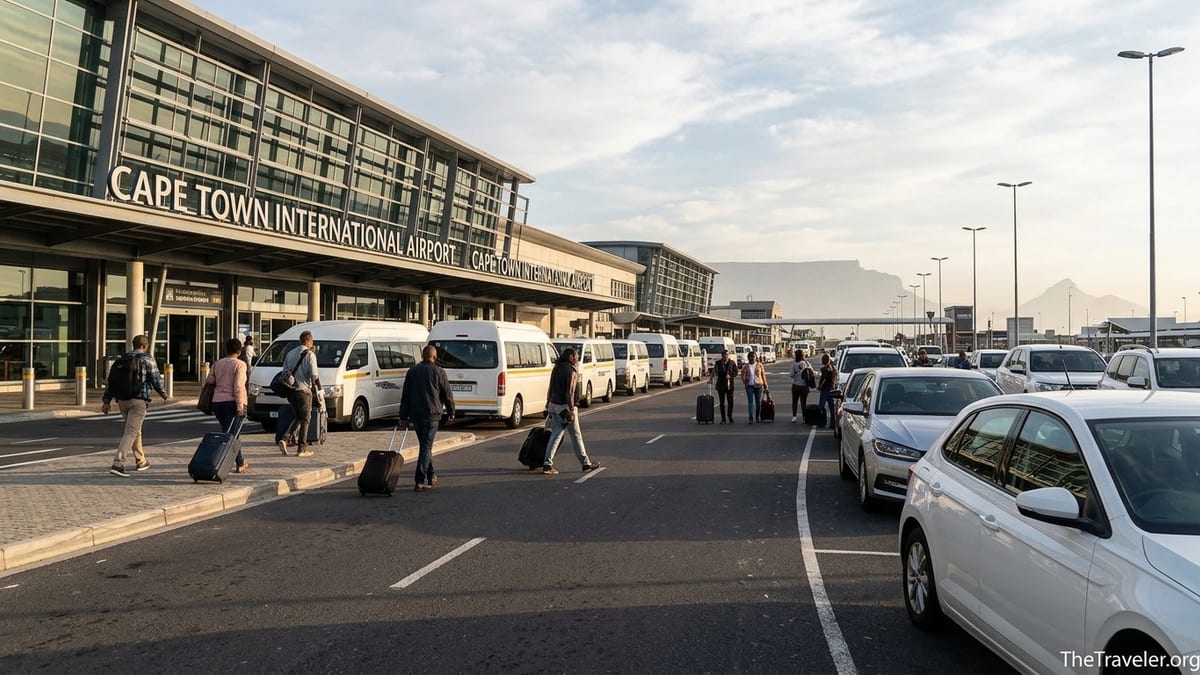
Understanding the Route from Cape Town Airport
Cape Town International Airport sits about 18 to 22 kilometers from most central hotel areas, including the City Bowl, V&A Waterfront and Sea Point. In normal traffic the drive takes about 20 to 30 minutes, but at rush hour it can stretch to 45 minutes or more. The main route follows the N2 highway into town before branching toward specific neighborhoods like Gardens, Green Point, Camps Bay or Woodstock.
Most visitors do not drive themselves on arrival, especially at night or after an overnight flight, and instead rely on app-based rides, taxis or pre-booked shuttles. Ride-hailing services such as Uber and Bolt are widely used in Cape Town, including for airport trips, and many locals rely on them for daily commuting. Metered taxis and private shuttle companies operate from the airport forecourt too, and there is a small but growing market for hotel and guesthouse transfers, particularly in popular tourist areas.
It is important to know that the dedicated MyCiTi airport bus route that once ran between the terminal and the city center has been suspended due to low usage. Recent public discussions in mid 2026 highlight that there is currently no direct MyCiTi airport service, even though the broader MyCiTi network around the city is expanding. This means visitors should plan on one of the road-based options from the airport, rather than expecting a straightforward public bus link into town.
Traffic patterns into the city are fairly predictable. Morning rush hour toward town usually peaks between about 7:00 and 9:00, and evening rush outbound between roughly 16:00 and 18:30. Late-night and early-morning transfers are typically quicker, but come with their own considerations such as ride availability and safety around the terminal and at your final drop-off point.
Uber and Bolt: Flexible and Popular
For many travelers, Uber and Bolt are the easiest way to get from Cape Town Airport to the city. Both apps are active at the airport, and official guidance notes that pickups must occur in designated rideshare areas. In practice, after collecting your luggage, you open the app, set the pickup location to “Cape Town International Airport” and follow the on-screen directions to the indicated pickup zone, typically in or near the main parking area rather than directly outside the arrivals doors.
Prices vary with time of day and demand, but as a broad guideline, a standard Uber or Bolt to the central business district or V&A Waterfront may cost somewhere around R220 to R350 in light traffic for one to three people. During busy evening peaks, large events, or heavy rain, surge pricing can push this higher, occasionally approaching or exceeding R400. Local riders often compare the two apps in real time and pick the cheaper one; recent comments from Cape Town residents suggest that Bolt is sometimes slightly cheaper than Uber on the same short routes, though this can change moment by moment.
For luggage, standard cars can usually handle one large suitcase and one smaller bag per person for up to three passengers, especially if you book the “UberX” or Bolt equivalent rather than the smallest budget category. If you are a group of four with large checked bags and sports gear, it is worth requesting a larger vehicle category where available, or splitting into two cars. At busy times, especially after evening flights, you might see estimated arrival times of 10 to 15 minutes. During very late or very early hours, some travelers report occasional difficulty finding a driver, so it is wise to request your ride as soon as you exit customs and be prepared to try both apps.
On safety, South African and foreign government advisories emphasize using only regulated, app-based or officially marked transport from airports, and warn about individuals posing as Uber or Bolt drivers. To stay safe, always match the car’s registration plate, model and driver photo with what you see in the app before getting in. Do not accept rides from people approaching you inside the terminal who say they are Uber, Bolt or taxi drivers but are not clearly matched in the app or waiting in the official rank. Once in the car, share your trip status with a friend or family member and keep valuables out of sight.
Airport Taxis and Private Shuttles
Metered taxis still operate from Cape Town Airport, usually from a signed official taxi rank outside arrivals. These vehicles are typically sedan cabs or small people carriers clearly marked as taxis. Pricing is usually either on a meter or on a fixed-fare table for common destinations. In recent years, many airport taxis have responded to competition from Uber and Bolt by advertising set fares for popular routes such as “Airport to City Centre” or “Airport to V&A Waterfront.” As a rough comparison, a standard taxi from the airport to the City Bowl might cost in the region of R350 to R450, depending on time of day, vehicle type and the specific company.
Private shuttle companies and transfer services offer another layer of comfort, particularly for late-night arrivals or travelers carrying bulky luggage like surfboards or golf clubs. Many of these services allow you to pre-book online with flight details, so the driver tracks your arrival time and waits in the terminal holding a name board. This can be reassuring if you are landing alone around midnight or early morning, as you avoid negotiating on the spot or waiting in lines. Typical pricing for a pre-booked sedan transfer from the airport to central hotels might run from about R400 to R700 for up to three passengers, with larger vans for families and small groups costing more.
For real-world context, a family of four staying near the V&A Waterfront who book a private shuttle may pay around R650 to R800 for a minivan, including meet-and-greet and room for four large cases. In contrast, they might see ride-hailing quotes of R280 to R380 for a standard Uber or Bolt at a similar time. The premium for the shuttle buys certainty, additional luggage capacity and the reassurance of a driver who is specifically expecting your family and knows exactly where your accommodation is located.
Taxi and shuttle safety at Cape Town Airport largely comes down to using reputable providers. Stick to the official taxi rank, or to pre-booked companies recommended by your hotel, guesthouse or trusted agents. Avoid following unmarked individuals in the arrivals hall who offer cheap rides or “special deals,” and do not get into unbranded cars without clear company identification. If you are sharing a shuttle with strangers, keep your bags with you where possible and ensure that your accommodation details are correct before you depart.
Rental Cars: Freedom, But Not for Everyone
If you plan to explore the Cape Peninsula, Winelands and surrounding regions extensively, renting a car directly at the airport can be a cost-effective choice. Cape Town Airport hosts several major international car rental brands alongside local companies, with counters in the arrivals area and vehicle collection in nearby parking structures. For a couple staying five or six days, a compact rental car could average around R450 to R650 per day once insurance and basic fees are included, though prices fluctuate by season and availability.
Driving from the airport to the city center is relatively straightforward in daylight. The N2 highway is well signposted, and navigation apps usually provide accurate routes to central hotels in areas like the City Bowl, Vredehoek, Gardens and Green Point. Many hotels and serviced apartments offer secure underground or gated parking, although some charge a nightly fee. For example, a mid-range hotel in the City Bowl might add R80 to R150 per night for parking, while certain guesthouses in Tamboerskloof or Oranjezicht include secure off-street parking at no extra cost.
However, self-driving is not ideal for everyone. After a long overnight flight, adjusting to driving on the left-hand side in unfamiliar traffic can be stressful. Traffic on the N2 can be fast-moving, and local driving habits may feel assertive to first-time visitors. There is also the risk of opportunistic crime at traffic lights or in poorly lit streets if you arrive very late. For these reasons, many visitors choose to use Uber, Bolt or a shuttle on arrival day, then pick up a rental car later from a city branch once they are rested and familiar with the area.
If you do rent a car from the airport, consider planning your arrival so you drive in daylight and during off-peak traffic if possible. Program your accommodation address into your navigation app before leaving the airport parking area, keep windows closed in slow-moving traffic, and avoid leaving luggage or electronics visible in the car when you stop. Many locals recommend filling up at well-lit, reputable petrol stations along main routes and avoiding isolated stops late at night.
Costs, Luggage and Late-Night Arrivals
When comparing transfer options, most visitors look first at cost. As a simplified snapshot, a solo traveler or couple can often reach central Cape Town from the airport by Uber or Bolt for somewhat less than a metered taxi, especially outside rush hour. A metered taxi typically costs more but can be convenient if there is a rank queue ready and your mobile data is not yet active to use the apps. Private shuttles tend to be the most expensive for one or two people, but become more competitive for families or small groups once the cost is shared among several passengers.
Luggage is the second big factor. A pair of backpackers each carrying one large backpack and one small daypack can comfortably use UberX or Bolt’s standard category cars. A couple with two large suitcases and two cabin-size bags usually fit as well, especially in sedan-style cars. Problems arise with sports equipment like surfboards, kitesurfing gear, golf clubs or multiple extra-large cases. In those cases, pre-booking a private shuttle van or a rental car with a larger boot can be worth the extra cost. For example, surfers heading straight to Muizenberg might find it easier to reserve a shuttle that guarantees roof racks or extra interior space, rather than relying on whatever vehicle type appears on the app.
Late-night and early-morning arrivals need particular attention. Flights from Europe and the Middle East often arrive in Cape Town in the late evening or very early morning. At those times, ride-hailing availability can fluctuate. Locals note that in some residential areas during pre-dawn hours there may be fewer Uber and Bolt drivers around, which can lead to longer waiting times or higher surge fares. Around the airport itself, though, there are usually at least some ride-hailing vehicles ready to accept trips, as drivers often stage near terminals to catch arriving passengers.
If you land after 22:00 or before 05:00, consider pre-booking a shuttle, asking your hotel to arrange a transfer, or at least checking ride-hailing prices while you are still in the luggage hall so you have a sense of costs before stepping outside. For solo travelers and first-time visitors, the combination of a well-lit official pickup area, a clearly identified car, and a door-to-door drop at a secure hotel entrance is worth prioritizing over saving a modest amount of money.
Best Option by Hotel Area
Where you are staying in Cape Town has a big impact on the best transfer option. If your hotel is in the City Bowl, central business district, or V&A Waterfront, both Uber and Bolt are straightforward and widely used. Most drivers know the major hotels by name, such as those around the Foreshore, Bree Street or the Waterfront complexes, and navigation apps handle the rest. In these areas, traffic is usually manageable and there are many well-lit, busy streets, which adds to the sense of security when arriving at night.
For Green Point and Sea Point, which stretch along the Atlantic Seaboard just beyond the Waterfront, ride-hailing and taxis remain the most practical solutions. Roads like Beach Road and Main Road are familiar to drivers, hotels and guesthouses are concentrated along a few main corridors, and there is typically ample street activity into the evening. A standard Uber or Bolt from the airport to Sea Point might cost slightly more than a city-center drop due to the extra distance, but still typically falls within a similar range with modest variations.
If you are headed straight to Camps Bay or Clifton on the Atlantic coast, the journey becomes more scenic and slightly longer. For couples or solo travelers, Uber or Bolt are again the most common option; for families with several bags, a pre-booked shuttle or larger ride-hail category works better, especially if you expect to navigate steep hillside streets. In more residential neighborhoods like Woodstock, Observatory, Gardens, Tamboerskloof or Oranjezicht, ride-hailing is also very common. Just ensure your accommodation address is accurate and that you are dropped inside a secure property entrance wherever possible.
Further out, if you are staying in the southern suburbs, such as Rondebosch or Newlands, or heading directly to Winelands towns like Stellenbosch or Franschhoek, pre-booked transfers or rental cars start to make more sense. While Uber and Bolt will often take you to these areas, the fare climbs significantly because of the longer distance, and return availability late at night can be less predictable. Many guesthouses and wine estates can recommend trusted drivers or shuttle partners who know the back roads and gate access procedures specific to their area.
Safety, Scams and Common Pitfalls
Cape Town is one of Africa’s most visited cities, but like any large urban area it has crime risks that are important to understand, particularly around airports and transport hubs. Travel advisories frequently highlight the risk of theft and robbery on roads to and from airports in South Africa, and urge visitors to take sensible precautions. The key is to choose reputable transport, remain alert and avoid unnecessary exposure of valuables.
The most common pitfall is accepting rides from unlicensed drivers who approach travelers in the arrivals hall. They may claim to be Uber or Bolt drivers, or offer flat-rate transfers that sound cheaper than the apps. These drivers may not be insured or vetted, and there have been instances in various South African cities of overcharging or even criminal behavior. To avoid this, walk past any unsolicited offers and go directly to the official taxi rank or the clearly marked rideshare pickup zone, and only board vehicles that match what you have booked.
Another concern is luggage security. Keep your bags with you at all times in the terminal, and when loading into a car, make sure everything is properly placed in the boot before you get in. In traffic, avoid placing laptops, cameras or handbags on the back seat where they can be seen from outside. If your car stops at a traffic light in a quiet area, it is wise to keep doors locked and windows nearly closed. These habits are second nature to many locals and help reduce the risk of opportunistic theft.
Finally, be cautious when arriving at your accommodation at night. Ask your driver to wait until you are safely inside the reception area or gate. Many guesthouses in the City Bowl and Atlantic Seaboard have secure intercom systems and off-street parking; make sure you know the gate code or check-in procedure before you arrive, so you are not left standing on the street with luggage while searching for instructions on your phone.
The Takeaway
There is no universal best way to get from Cape Town International Airport to the city center, but there is usually a best choice for your specific circumstances. For most visitors staying in central areas like the City Bowl, V&A Waterfront, Green Point or Sea Point, Uber and Bolt strike the best balance of price, flexibility and convenience, especially for one to three passengers traveling with standard baggage. They pick you up in a designated area, take you directly to your hotel and allow you to pay via the app without handling cash.
Metered taxis offer a more traditional alternative, particularly if you do not yet have mobile data or run into ride-hailing surges, while private shuttles and hotel transfers provide extra reassurance for late-night arrivals, families, or travelers with bulky luggage. Rental cars work well for those planning extensive day trips around the region, but many visitors prefer to delay driving until after their first night’s rest.
Whatever you choose, a little advance planning goes a long way. Install your preferred ride-hailing apps before you fly, confirm with your hotel where drivers should drop you, and have a backup option such as a recommended shuttle company in case demand is high. With a realistic understanding of costs, travel times and safety basics, your journey from Cape Town Airport to the city centre can be a smooth start to your time in one of the world’s most spectacular coastal cities.
FAQ
Q1. How long does it usually take to get from Cape Town Airport to the city center?
In light traffic it typically takes around 20 to 30 minutes by car from the airport to central areas like the City Bowl or V&A Waterfront. During weekday rush hours or heavy rain, the trip can extend to 40 minutes or slightly more.
Q2. Is Uber or Bolt cheaper from Cape Town Airport to downtown?
Prices fluctuate with demand, but many travelers find that Uber and Bolt fares to the city center often fall below typical metered taxi rates. At some times Bolt may show slightly lower prices than Uber, but it is worth checking both apps on arrival.
Q3. Are there fixed-price airport taxis in Cape Town?
Several airport taxi operators publish indicative fixed fares for common destinations such as the city center or V&A Waterfront, though final prices can still vary by company, vehicle type and time of day. It is best to confirm the fare clearly before you depart the rank.
Q4. Is there currently a MyCiTi bus from Cape Town Airport to the city?
The dedicated MyCiTi airport bus route has been suspended due to low demand, and there is no direct MyCiTi service from the terminal to the city center at present. Travelers should plan to use ride-hailing, taxis, shuttles or rental cars instead.
Q5. What is the safest way to get into town late at night?
For solo travelers or first-time visitors arriving late, a pre-booked private shuttle or a clearly verified Uber or Bolt from the official pickup area is generally the safest choice. Avoid unlicensed drivers who approach you inside the terminal and always check the car details in your app before getting in.
Q6. Can I pay for taxis and shuttles with a credit card?
Some airport taxis and many private shuttle companies accept major credit cards, but not all. Ride-hailing apps process payment through the app, which is the easiest option for many visitors. If you plan to use street taxis, carry some local currency in case card facilities are unavailable or offline.
Q7. Is it worth renting a car at the airport?
Renting a car at the airport is worthwhile if you intend to explore regions like the Cape Peninsula and Winelands extensively. If your plans focus mainly on the central city and nearby coastal neighborhoods, many visitors find that using Uber, Bolt and occasional day tours is simpler than managing a rental car from day one.
Q8. How much should I budget for an airport transfer to central Cape Town?
A realistic range for one to three people using Uber or Bolt is often around R220 to R350 in normal conditions, with higher prices during peak demand. Metered taxis and private shuttles typically cost more, with shuttles offering better value when several passengers share the fare.
Q9. Do I need to tip the driver for an airport transfer?
Tipping is customary but flexible. For ride-hailing, many travelers add a small tip in the app if the service is good. For taxis and shuttles, rounding up the fare or adding a modest gratuity for help with luggage is appreciated but not strictly required.
Q10. What should I do if my flight is delayed and I have a pre-booked transfer?
Most reputable transfer companies track flight arrival times and adjust pickups within reasonable limits. If you know of a significant delay, contact the company via email or messaging as soon as you can. Providing your flight number at the time of booking helps them monitor your arrival automatically.