


More news on this day
As demand for Alaska cruises grows and cabin prices follow, travelers are increasingly weighing whether to book the cheapest inside stateroom or pay a premium for a balcony on scenic sailings through fjords and glacier-filled bays. Comparing two recent voyages, one in a low-cost interior cabin and another in a midrange balcony stateroom, shows a clear split between which choice offers the best value on paper and which delivers the most memorable experience at sea.
Get the latest news straight to your inbox!
Parallel itineraries, very different price tags
Alaska has become one of the most competitive cruise markets, with mainstream lines routinely deploying their newest ships to seven-night runs from Seattle and Vancouver. Industry guides show that on these itineraries, the price gap between an inside and a balcony cabin can easily reach several hundred dollars per person, particularly in peak summer months when wildlife sightings and long daylight hours drive demand.
Sample pricing published by cruise comparison sites for the 2024 and 2025 seasons indicates that an interior cabin on a weeklong Inside Passage sailing can start at a relatively accessible fare, while standard balconies on the same sailing often cost 40 to 80 percent more. Suites, which add space and concierge-style perks, sit in a higher tier again and can more than double the base fare of an inside cabin on Alaska routes.
Travel planning resources note that this price spread is especially pronounced on Alaska voyages because balconies sell out faster than on warm-weather itineraries. Many lines highlight veranda categories heavily in their brochures for Glacier Bay and Hubbard Glacier sailings, positioning them as a signature way to see calving ice and passing wildlife from the privacy of the cabin.
This dynamic framed the comparison across two recent trips: an early-season Inside Passage cruise booked in the least expensive inside category and a peak-summer sailing on a similar route reserved in a midship balcony cabin, both on large mainstream ships with comparable onboard offerings.
Inside cabin: the better value for budget and busy days
On paper, the inside stateroom delivered the stronger value. The fare savings versus a balcony on the same departure were substantial, enough to cover several marquee shore excursions, specialty dining and pre-cruise hotel nights. Cruise planning sites consistently describe interior cabins as the best value category for travelers who prioritize itinerary and activities over private space, and that proved accurate in Alaska.
The inside room itself was compact but functional, with modern storage, blackout conditions and quick access to public decks. With long port days in Ketchikan, Juneau and Skagway, as well as scenic sailing through narrow channels, days were spent largely off the ship or on open decks rather than inside the cabin. Public viewing areas, particularly forward observation lounges and promenade decks, offered wide-angle views that were sometimes better than those available from private verandas.
Reports from experienced cruisers support this pattern, noting that on busy Alaska itineraries, travelers who book interior cabins often spend most of their waking hours elsewhere on the ship. Independent cabin guides describe inside rooms as a smart financial move when the priority is maximizing time in port, booking higher-end excursions such as whale-watching, dog-sledding or flightseeing, or stretching the budget to accommodate longer land extensions into Denali and the interior.
There were trade-offs. Without natural light, it was easy to lose track of time during Alaska’s long summer evenings, and spontaneous wildlife sightings from the cabin were not possible. Yet for travelers focused on overall trip length and activities, the math favored the inside option, which redirected several hundred dollars per person away from the stateroom category and into on-the-ground experiences.
Balcony cabin: the clear winner on experience
The second voyage, in a standard balcony cabin on a similar route, shifted the equation from value to experience. Consumer travel sites emphasize that scenic regions such as Alaska and the Norwegian fjords are among the few itineraries where a balcony can fundamentally change how the trip feels, and day-to-day life aboard matched that assessment.
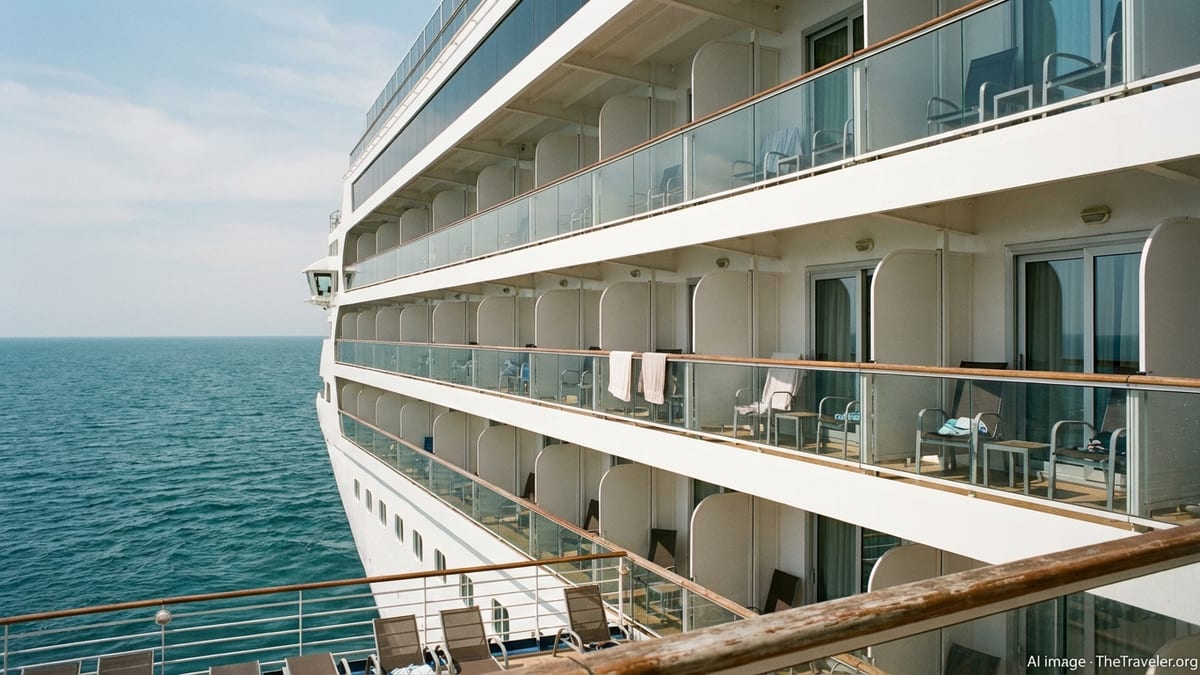
On glacier days and during long stretches of coastal sailing, the balcony effectively became an extra room. Mornings started with coffee outdoors as the ship moved quietly past forested islands and snow-capped peaks. In the evenings, the space functioned as a private viewing platform for late sunsets, with the ability to step inside to warm up within seconds when temperatures dropped or wind picked up.
Publicly available comparisons between cabin types underscore that the private outdoor space is the largest differentiator in Alaska. Reports indicate that even when public decks are crowded during marquee scenic moments, balcony guests can step away from the crowds, watch calving glaciers in relative quiet and quickly respond when shipwide announcements point out whales, sea lions or bald eagles along the route.
The balcony cabin did not change the core itinerary or ports, but it altered how often the surrounding landscape was experienced. Downtime that might have been spent in interior spaces shifted to the veranda, where passing scenery became the default backdrop to reading, room-service meals and casual conversation. For travelers who place a high value on those moments, the experiential premium outweighed the additional cost.
How suites, location and season influence the trade-off
Beyond the base comparison of inside versus balcony, cabin guides point out that location and category subtypes can also tilt the balance between value and experience on Alaska sailings. Midship balconies on higher decks often command a premium because they combine views with added stability in choppier seas, while obstructed-view verandas offer lower prices at the cost of partially blocked sightlines.
Suites add another layer of complexity. Industry resources describe them as less about mere space and more about a different style of cruising, with perks such as priority boarding, exclusive lounges and included specialty dining. On Alaska routes, where travelers may spend more time off the ship or on public decks during scenic cruising, some cruisers report that these premium features can be harder to justify purely on a cost-per-hour basis unless the suite comes with multiple occupants or is part of a special-occasion trip.
Seasonality matters as well. Early and late-season Alaska sailings can be colder and wetter, limiting how often even balcony railings are used. Travel reports from these shoulder periods suggest that when temperatures are consistently low and rain frequent, the relative advantage of a balcony over public covered viewing areas narrows, making interior or ocean-view cabins a more compelling option for budget-conscious travelers.
Conversely, during mid-summer sailings with milder conditions and extended daylight, the balcony’s value rises. Longer evenings on the veranda and more comfortable temperatures for glacier viewing make it easier to take full advantage of the outdoor space, aligning with recommendations from cruise planning publications that highlight balconies as a strong choice during peak Alaska season.
Which choice suits which traveler
The two sailings suggest that the “better” cabin for an Alaska cruise depends heavily on the priorities and travel style of each guest. For those counting every dollar, interior cabins continue to offer standout value. They free up budget for bucket-list shore excursions, allow for longer or more complex trips combining land and sea segments, and still provide access to the same dramatic landscapes from open decks and lounges.
For travelers who view the cruise ship itself as a destination and rank quiet, private scenic time highly, the balcony emerges as the superior experience. Its benefits are most pronounced on itineraries with full glacier days and long stretches of scenic cruising, and on departures during the warmer core of the season when outdoor space is comfortable for extended periods.
Current guidance from cruise analysts and consumer publications reflects this split. Interior cabins are widely rated as the most economical way to see Alaska by sea, while balconies are routinely highlighted as the category that best showcases the region’s mountains, glaciers and wildlife. Suites, meanwhile, appeal to a narrower group seeking added privacy and service rather than direct view upgrades alone.
For many travelers, the decision ultimately comes down to whether Alaska is a once-in-a-lifetime journey or one stop in a broader pattern of cruise travel. The two-cabin comparison indicates that while the inside room wins on pure value, the balcony delivers a richer, more immersive experience that some guests may decide is worth paying for on this particular route.