


Few choices in Barcelona torment culture-loving travelers quite like this one: if you only have time or budget for one Gaudí house, should it be Casa Batlló or Casa Milà, better known as La Pedrera? Both sit on Passeig de Gràcia, just a 10 to 15 minute walk apart, both are UNESCO World Heritage Sites, and both promise a crash course in Gaudí’s genius. Yet the experiences they offer in 2026 are distinct enough that picking the right one can make the difference between a pleasant visit and a goosebump-inducing highlight of your trip.
Get the latest updates straight to your inbox!
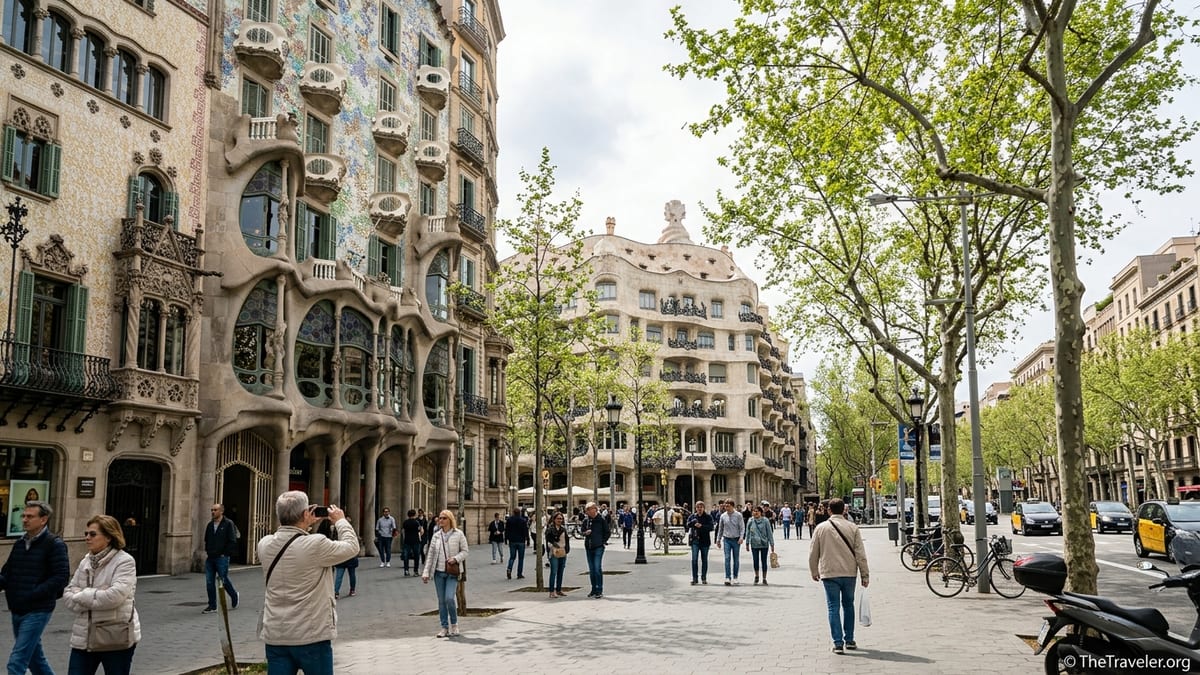
Casa Batlló vs Casa Milà at a Glance
Casa Batlló and Casa Milà are often sold together in combo tickets, but most visitors still end up spending 35 to 40 euros or more per person on each, so choosing where to invest your time and money matters. Casa Batlló is the more theatrical of the two, with immersive projections, a dramatic audiovisual rooftop show on some ticket types, and a strong focus on storytelling and digital effects. Casa Milà, by contrast, feels calmer and more like a traditional monument visit, where you walk through a real early 20th century apartment, see furniture and everyday objects, and then climb up to a surreal rooftop filled with stone warriors and chimneys.
As of mid 2026, standard daytime tickets at Casa Batlló with an audio guide and access to the rooftop typically start in the mid 30 euro range per adult, while La Pedrera’s “Essential” ticket starts from around 25 euros, including an 11-language video guide. Night experiences, such as Casa Batlló’s evening visits or La Pedrera’s rooftop Night Experience with projections and a glass of cava, usually cost more, often pushing close to or above 40 euros per person. Exact prices vary by season and time slot, but this baseline helps frame value for money when deciding which experience fits your budget.
Location will not help you choose. Both houses sit on the same elegant boulevard, Passeig de Gràcia, and are easily reached by metro and bus from central spots like Plaça de Catalunya. Many travelers even plan to walk from one to the other in under twenty minutes, stopping for coffee or tapas on the way, which makes direct comparison especially tempting if you have half a day to spare.
Architecture & Atmosphere: Dream vs Stone Quarry
Architecturally, Casa Batlló is the crowd-pleaser. Its façade is a riot of colored mosaics and wavy balconies that look like carnival masks, and inside everything feels fluid and organic, from the bone-like staircase banisters to the ocean-blue light well. Many visitors describe it as walking inside a fairy tale or underwater dream. For travelers who are not hardcore architecture buffs but want to feel “wowed” on Instagram and in person, Casa Batlló’s theatrical curves and shimmering colors tend to have the stronger immediate impact.
Casa Milà, nicknamed La Pedrera or “the stone quarry,” is more austere at first glance: a huge pale stone block with undulating lines and wrought-iron balconies that look like twisted seaweed or metal vines. The atmosphere inside, however, is quietly spectacular. The attic, with its sequence of brick catenary arches, feels like walking through the ribcage of a giant animal, and the rooftop, with its helmet-like chimneys and sculptural ventilation towers, has inspired comparisons to medieval warriors in stone. The effect is more meditative than flashy, but for some visitors it ends up being the more powerful and timeless experience.
If you are traveling with children or anyone who responds strongly to color and fantasy, Casa Batlló usually wins the first impression test. If your group includes architecture fans, photographers who love subtle light and shadow, or travelers who prefer atmosphere over digital effects, Casa Milà’s sculpted stone and rooftop skyline might end up being the more satisfying choice.
Visiting Experience & Crowd Levels in 2026
Casa Batlló has invested heavily in immersive technology, so the experience is curated and choreographed from the moment you enter. Timed entry slots help control numbers, but because it is one of Barcelona’s most visited modernist buildings after the Sagrada Família, it can feel busy even at opening time. On a typical May or October morning, visitors report a steady stream of groups, and popular spaces like the Noble Floor hallway and rooftop can require a bit of patience for photos. In 2025, Casa Batlló received close to two million visitors, and that popularity is still very evident in 2026.
Casa Milà is also busy, especially in spring and summer, but usually feels slightly less congested and more spread out. The visit is less about intense multimedia moments and more about moving through large, airy spaces. Families with strollers and travelers who dislike loud soundscapes often find La Pedrera more comfortable. In high season, morning slots around 9 to 10 a.m. and late afternoon around 4 to 5 p.m. often provide a better balance between daylight and manageable crowds than the middle of the day, when tour groups are at their peak.
Operationally, both sites run smoothly, but recent events show how big attractions can be affected by local happenings. For instance, in early June 2026, a teachers’ protest in Barcelona briefly blocked access to Casa Batlló one morning and delayed its opening for a few hours. Incidents like this are rare and usually short-lived, yet they underline why it is wise to allow some flexibility in your schedule, especially if you are visiting during a period of strikes or demonstrations.
Tickets, Prices & Value for Money
Ticket structures at both houses change periodically, but some patterns are clear in 2026. Casa Milà’s daytime “Essential” visit starts at about 25 euros for adults and includes a video guide in multiple languages. Upgrades such as the La Pedrera Night Experience or the Sunrise Experience, which offer guided rooftop visits with projections or early access before general opening, generally start around the high 30s per person and can climb higher on peak dates.
Casa Batlló’s general tickets with audio guide and full house access, including rooftop, usually sit in the mid 30 euro range and scale up depending on extras like fast-track access or augmented-reality tablets. Combos that combine Casa Batlló with Casa Milà appear frequently through major ticket providers and can shave off a small percentage on the combined price, which can be attractive if you already know you want to visit both. For budget-conscious travelers focusing on just one house, however, La Pedrera’s lower baseline price can represent noticeably better value, especially for families paying for several tickets at once.
It is worth checking the differences between ticket tiers carefully. For example, updates introduced since 2025 mean that some lower-tier Casa Batlló tickets no longer include rooftop access, which used to be standard. Travelers who visited a few years ago are sometimes surprised by this change when they return. Meanwhile, most standard La Pedrera tickets still include rooftop access, which is one of the big reasons people choose that house. Booking early, especially for evening experiences and peak summer weekends, is strongly recommended to avoid the most expensive last-minute slots.
Interiors, Rooftops & Photo Opportunities
Inside Casa Batlló, the route focuses on customized interiors designed for the Batlló family. You walk through the former main living spaces, climb past a central light well that shifts from pale ceramics at the bottom to deep cobalt at the top, and end on a rooftop that looks like the spine of a dragon. Photographers love the staircase with its sinuous wooden rail, the blue-tiled courtyard with its curved windows, and the rooftop chimneys decorated with mosaic shards. On overcast days, the colors remain vivid, and in late afternoon, soft light can make the façade’s stained-glass balconies glow from within.
Casa Milà’s interior highlights are different. A reconstructed early 1900s bourgeois apartment shows what life was like for a wealthy Barcelona family during the modernist era, complete with period furniture, ceramics, and children’s toys. The attic, once used for laundry and storage, is an architectural lesson in itself: its sequence of low brick arches creates a tunnel-like perspective that many visitors photograph repeatedly. The rooftop is arguably the star: stone sentinels with helmet-like tops, sinuous paths, and viewpoints that frame the Eixample grid, nearby Passeig de Gràcia, and distant glimpses of the Sagrada Família’s towers.
For pure photography, both houses are exceptional, but they shine in slightly different ways. Casa Batlló rewards those seeking rich color and intimate, detail-driven shots: close-ups of tiles, stained glass, door handles, and decorative motifs inspired by the sea. Casa Milà is ideal for dramatic skyline panoramas, long perspectives under arches, and minimalist compositions that play with curves and shadows on stone. Travelers who prioritize rooftop views of the city as a whole often prefer La Pedrera, while those after otherworldly interior shots tend to lean toward Casa Batlló.
Technology, Storytelling & Special Experiences
Where Casa Batlló really pulls ahead for many visitors is in its use of technology and storytelling. The audio guide and augmented reality features choreograph the visit into a narrative about the Batlló family, Gaudí’s inspirations, and the building’s symbolism, often using projections and sound effects. In the basement, immersive rooms combine projections, mirrors, and music to create multi-sensory experiences that feel closer to a contemporary art installation than a conventional house museum. For travelers who enjoy interactive exhibits and modern museography, this can be a major plus.
Casa Milà relies less on high-tech effects and more on context. Exhibits in the attic explain Gaudí’s structural innovations through scale models and diagrams, including how he used hanging chains and gravity to test the shapes of arches. The emphasis is on understanding how the building stands and why it looks the way it does. Night visits, with projections on the rooftop and a drink included, introduce more theatricality, but even then the tone is calmer and more contemplative than Casa Batlló’s high-energy immersion.
In 2026, Casa Batlló has also expanded the way visitors can interact with the building. A recently restored third-floor apartment, once home to the Batlló family’s descendants, has been opened up for private events and complementary, more exclusive experiences. Travelers with a higher budget can now book private dinners, meetings, or small gatherings in this exceptionally well-preserved modernist domestic space, adding a “live in Gaudí’s house for a few hours” angle to the visit. While not relevant for most standard tourists, it illustrates how far Casa Batlló pushes the experiential side of its offer.
Practicalities: Opening Hours, Comfort & Accessibility
As of 2026, Casa Batlló typically opens daily around 9 a.m. and closes in the early evening, with last entry mid to late afternoon. A full visit with audio guide generally takes around 1 to 1.5 hours, longer if you linger over photos or the immersive rooms. Because it is compact and vertical, some travelers with reduced mobility or those who tire easily in crowds may find peak times a bit intense, even though lifts are available.
La Pedrera follows a broadly similar daily schedule but with slightly different seasonal hours. In winter months, daytime visits usually run from 9 a.m. to around 6:30 p.m., while from roughly March to early November, closing times extend into the evening. Night Experience tours begin after standard visits end, typically around sunset. A self-guided daytime visit with video guide takes about 1.5 hours on average, though many visitors stay longer on the rooftop to enjoy the views and light.
Both houses are on central, well-lit streets lined with shops, cafes, and metro stops, which makes combining a visit with a meal straightforward. For example, many travelers schedule a 9 a.m. opening slot at Casa Batlló, have a late breakfast or early tapas nearby, then walk up Passeig de Gràcia for an early afternoon visit to La Pedrera. Others do the reverse, especially if they have booked a night show at one of the houses and want to end the day with a rooftop experience. Weather in Barcelona plays a role: summer heat on exposed rooftops in July and August can be intense at midday, so early morning or late evening visits are usually more pleasant.
Which Gaudí House Is Better For You?
For first-time visitors to Barcelona who can only pick one Gaudí house, the decision often comes down to personal style and budget. If you want something vibrant, immersive, and almost theatrical, and you are willing to pay a bit more for it, Casa Batlló usually feels like the more “spectacular” choice. The combination of color-drenched interiors, dramatic rooftop, and contemporary multimedia storytelling delivers a memorable, emotionally charged visit that works well for couples, families with teenagers, and travelers who love visually rich interiors.
If you lean toward understanding Gaudí’s architecture in depth, appreciate quieter spaces, or are watching your expenses more closely, Casa Milà is hard to beat. It offers a more complete sense of how people actually lived in a modernist building and gives you time and space to absorb details without constant audiovisual stimulation. Its rooftop, with sculptural chimneys and wide city views, is for many visitors one of the most atmospheric spots in Barcelona, especially in softer winter or shoulder-season light.
In practical terms, travelers who have already secured tickets for the Sagrada Família might prefer to balance that intense, symbolism-heavy visit with La Pedrera’s more reflective style, while those who worry that church fatigue might set in may want the pure fantasy of Casa Batlló instead. If you have a full day in the city center and the budget allows, visiting both, ideally with one in the morning and one near sunset, offers a remarkably rich window into Gaudí’s evolution from colorful façade remodels to structural experimentation.
The Takeaway
Casa Batlló and Casa Milà are not rivals so much as complementary chapters in the same story. One chapter is vivid and dreamlike, full of color and digital spectacle, ideal for those who want to feel transported. The other is quieter and more sculptural, focused on structure, daily life, and the relationship between a building and its city. Both are unmistakably Gaudí, and both justify their reputation as essential stops on any Barcelona itinerary.
If your heart is set on being dazzled and you love immersive museums, choose Casa Batlló. If you want to understand Gaudí’s architecture while enjoying generous rooftop views and a calmer atmosphere, choose Casa Milà. Either way, booking ahead, reading ticket inclusions carefully, and timing your visit to avoid the harshest midday sun and worst crowds will help ensure that whichever Gaudí house you choose becomes a highlight of your time in Barcelona.
FAQ
Q1. If I can only visit one, should I choose Casa Batlló or Casa Milà?
For a more theatrical, immersive experience with vivid colors and multimedia, choose Casa Batlló. For a calmer, more architectural visit with strong rooftop views and slightly better value, choose Casa Milà.
Q2. Which house is better for families with children?
Casa Batlló usually engages children more thanks to its bright colors, dragon-like rooftop and interactive projections. However, families with strollers or kids who dislike crowded, loud environments may find Casa Milà more comfortable.
Q3. Which visit offers the best rooftop views of Barcelona?
Casa Milà generally offers wider city views, including good perspectives over the Eixample grid and nearby landmarks. Casa Batlló’s rooftop is more about fantastical forms and mosaics than broad panoramas.
Q4. Is one of the houses noticeably cheaper to visit?
In 2026, standard daytime tickets for La Pedrera usually start a bit lower than Casa Batlló’s general visit with audio guide. If you are on a tighter budget, Casa Milà tends to offer slightly better value.
Q5. How much time should I plan for each visit?
For both houses, allow at least 1 to 1.5 hours for a relaxed visit. If you enjoy photography or want to linger on the rooftops, plan closer to 2 hours, especially at Casa Milà.
Q6. Do I need to book tickets in advance?
Advance booking is strongly recommended, especially from spring to autumn and for night experiences. Same-day tickets can sell out or be available only at less convenient times, particularly for Casa Batlló.
Q7. Which house is better for visitors with reduced mobility?
Both offer lifts and accessible routes, but Casa Milà’s wider spaces and slightly calmer flow can feel easier for those who move slowly or wish to avoid dense crowds. It is still wise to check current accessibility details before visiting.
Q8. Are there good combo tickets for visiting both houses?
Yes, several ticket providers sell Casa Batlló plus Casa Milà combo tickets that usually cost a bit less than buying both separately. These can be good value if you already plan to visit both during the same trip.
Q9. Is it better to visit during the day or at night?
Daytime offers clearer views and photographs of details, especially on the rooftops. Night visits, when available, add atmospheric lighting and projections but usually cost more. Many travelers choose one house by day and the other at sunset or in the evening.
Q10. Can I comfortably see both houses in one day?
Yes. Many travelers visit one house in the morning, have lunch nearby, then walk along Passeig de Gràcia to visit the other in the afternoon or evening. Just book timed entries that leave at least two to three hours between visits to avoid rushing.