


If you only have a day or two in Barcelona, the choice between strolling Passeig de Gràcia or La Rambla can quietly shape your entire impression of the city. One is a grand, modernist boulevard lined with Gaudí icons and luxury boutiques; the other is Barcelona’s most famous promenade, a tree-lined artery that runs from Plaça de Catalunya down to the waterfront. Both feel essential, but they deliver very different experiences, crowds and even risks. Understanding those differences helps you decide which one actually belongs on your itinerary, and when.
Get the latest updates straight to your inbox!
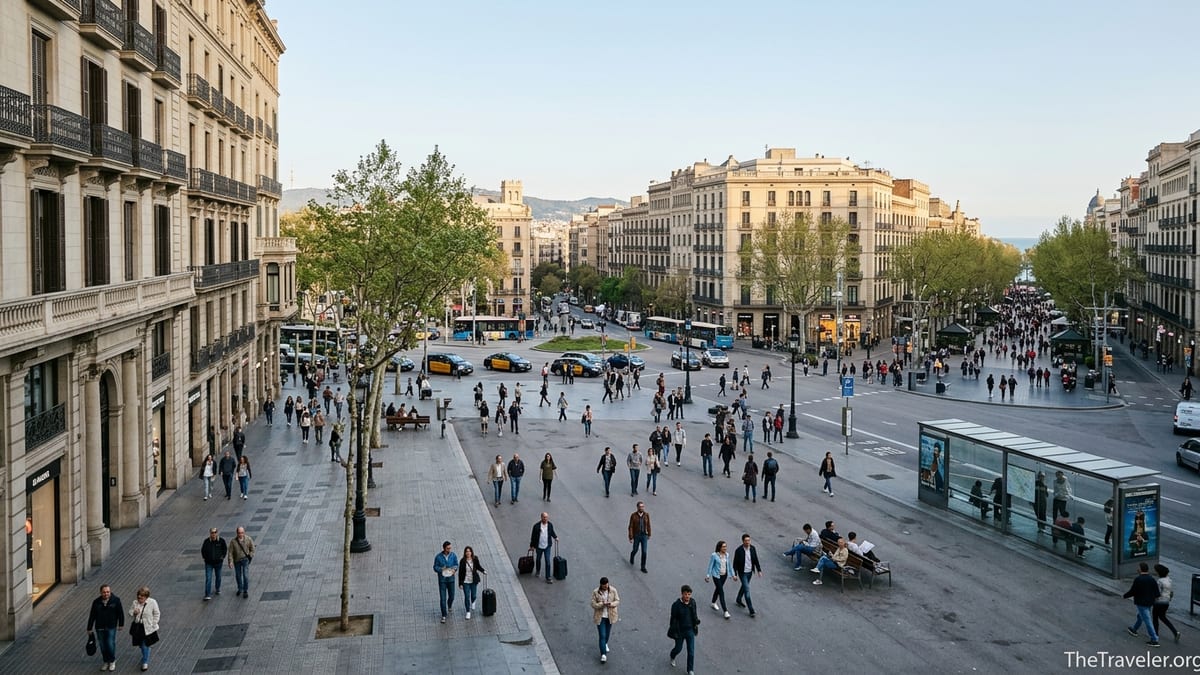
Two Iconic Streets, Two Very Different Barcelonas
Passeig de Gràcia and La Rambla sit barely ten minutes’ walk apart from each other, meeting at Plaça de Catalunya, yet they showcase two contrasting faces of Barcelona. Passeig de Gràcia runs north into the Eixample district, a wide, elegant avenue of modernist architecture, polished department stores and terrace cafés where locals in office wear mix with visitors heading to Gaudí’s Casa Batlló and La Pedrera. La Rambla heads south toward the sea, a narrower, older-feeling promenade whose central walkway is crowded with souvenir stands, performers and people drifting between the Gothic Quarter and the port.
For a first visit, most travelers will inevitably see at least a slice of both. The real question is where you should consciously invest your time. If your stay is short, it rarely makes sense to plan full half-days on each street. A more strategic approach is to anchor your sightseeing around one of them and treat the other as a quick pass-through rather than a destination in itself.
In practice, that might mean structuring an architecture-and-shopping day around Passeig de Gràcia, or using La Rambla as a gateway into the medieval lanes of the Barri Gòtic and the El Raval district. Both strategies can work; which one fits you better depends on what kind of city energy you enjoy, how sensitive you are to crowds and how much you care about Gaudí, high-end shopping and nightlife.
Passeig de Gràcia: Gaudí, Design Hotels and Quiet Money
Passeig de Gràcia is Barcelona’s premier shopping boulevard and one of its most important architectural showcases. Between Plaça de Catalunya and Avinguda Diagonal you pass some of the city’s most famous modernist buildings, including Casa Batlló at number 43 and Casa Milà, better known as La Pedrera, closer to the Diagonal end. The façades alone are worth a slow walk, and both interiors reward the admission fee if you are interested in Gaudí. Standard adult tickets for Casa Batlló and La Pedrera typically sit in the several dozen euro range, so many travelers choose just one to tour inside and admire the other from the street.
This same stretch has been repeatedly ranked as Spain’s most expensive shopping street, with luxury names like Chanel, Louis Vuitton, Gucci, Prada and Loewe taking up prime corner units. You also find large branches of Spanish brands such as Zara, Mango and Desigual, plus multi-brand department stores. This high concentration makes Passeig de Gràcia ideal if you want to devote part of a day to fashion shopping without zigzagging across the city. Prices match the international luxury scene, but sales seasons in January–February and July often bring meaningful reductions, and the high-street chains here charge roughly the same as in the rest of Spain.
The boulevard’s hotels and cafés reflect the same upscale tone. Five-star properties like the Mandarin Oriental and other design-forward hotels occupy renovated modernist buildings with rooftop pools and bars. A coffee on a terrace along Passeig de Gràcia will often cost a bit more than in neighboring streets, but the trade-off is wide sidewalks, shaded benches and a generally calmer, more polished environment than you find on La Rambla. It feels like the daily stage set for Barcelona’s business and creative class rather than a purely tourist strip.
La Rambla: Classic Promenade or Tourist Trap?
La Rambla, by contrast, is Barcelona’s most famous street and also its most divisive. Stretching roughly 1.2 kilometers from Plaça de Catalunya down to the Christopher Columbus monument by the port, it is lined with plane trees, historic theaters, flower stalls and kiosks. In the late afternoon and evening, the central walkway fills with strolling couples, families, school groups and tour parties, with occasional human statues or street musicians competing for attention. First-time visitors often feel an immediate sense of “this is Barcelona” simply because they have seen this scene in so many photos.
Yet La Rambla is also where many locals rarely set foot unless they are crossing it to get somewhere else. The majority of businesses directly on the promenade cater to short-stay tourists: souvenir shops selling football shirts and fridge magnets, cafés advertising oversized sangria jugs and set menus in several languages, and bars where a simple beer can cost noticeably more than in a side street. Food quality varies widely, and a tapas plate that would cost a modest amount in a neighborhood bar a few blocks away might be almost double at a table in the center of La Rambla.
This does not mean you must avoid La Rambla altogether. It is still the most direct pedestrian route between the city center and the waterfront, and it gives fast access to side attractions such as the Boqueria market, the Gran Teatre del Liceu and the Gothic Quarter lanes of Carrer del Bisbe and Plaça Reial. The key is to treat the main promenade as a thoroughfare rather than a place to linger for long meals. Step one or two streets to either side and the character changes dramatically, with more local cafés, bakeries and restaurants at better value.
Atmosphere, Crowd Levels and Safety
When it comes to atmosphere, Passeig de Gràcia tends to feel spacious and composed. The sidewalks are broad, traffic is orderly and even at busy times the crowd density rarely feels overwhelming. People here are often on their way to work, to meetings or to serious shopping; many are locals or business travelers rather than purely short-term tourists. Pickpocketing can still happen anywhere in the city, but the mix of users and the lower density of street-level distractions generally make it easier to maintain awareness of your belongings.
La Rambla’s atmosphere is more intense and, for many, more stressful. Especially between late morning and early evening in high season, the central walkway can feel tightly packed, with people frequently stopping unexpectedly to take photos, study maps or watch performers. This combination of distraction and crowding is exactly what opportunistic pickpockets look for. Local police and city safety guides consistently flag La Rambla and the metro as higher-risk areas for petty theft compared with quieter neighborhoods. Simple precautions help: keep phones and wallets in zipped inner pockets, avoid leaving bags on chair backs and be cautious of anyone who bumps into you, offers unsolicited help or tries to engage you in games or petitions.
Beyond crime concerns, crowd density also affects how much you enjoy just walking. If you prefer a relaxed, architectural stroll with space to stop, sit and look up at ornate balconies and stonework, Passeig de Gràcia clearly wins. If you crave street energy, buskers and the feeling of being in the middle of a busy city stage, La Rambla may still be compelling, especially in the earlier part of the day before the evening drinking crowds build up.
What You Actually See: Architecture and Sights
From a sightseeing perspective, Passeig de Gràcia offers a remarkably concentrated dose of modernist Barcelona. Within a short stretch you can admire the undulating sandstone of La Pedrera, the mosaic-clad dragon-back roof of Casa Batlló and the neighboring façades of Casa Amatller and Casa Lleó Morera in the famous Illa de la Discòrdia block. Several of these buildings function as museums or cultural centers with immersive light-and-sound installations, rooftop sculptures and well-curated gift shops focused on design rather than generic souvenirs.
Smaller details also reward a slow walk here. The paving tiles, for example, feature a repeating marine-inspired design originally linked to Gaudí’s work. Many streetlights and benches are themselves catalogued design pieces, and some early-20th-century entrances to apartment buildings remain almost unchanged, with stained glass and ironwork still visible from the pavement. You can easily spend two or three hours just moving from façade to façade, punctuated by a coffee in a side-street café or a quick detour into a concept store.
La Rambla’s architectural interest is subtler and more fragmented. Highlights include the Liceu opera house, reconstructed after a fire; the mosaic by Joan Miró that many people walk over without noticing near the Liceu metro station; and historical buildings like the Virreina Palace, often used for exhibitions. At the lower end toward the sea, the view opens toward the Columbus monument and the waterfront. Along the way you pass the entrance to the Boqueria market, where bright pyramids of fruit and jamón displays create a more authentic visual hit than most pavement-level restaurants.
Costs, Convenience and How Your Day Flows
If you are watching your budget, it is worth thinking about how each street shapes your spending. Passeig de Gràcia concentrates high ticket-price attractions and some of the city’s most expensive shops and hotels, but you have strong control over whether you engage with them. You can admire Gaudí’s buildings from the street at no cost and retreat into back streets for coffee or lunch at more everyday prices. Public transport connections are excellent, with several metro lines and commuter trains intersecting here, making it an efficient base for exploring.
La Rambla, meanwhile, tempts you into repeated small but inflated purchases: an ice cream here, a drink there, a last-minute souvenir. None feel huge, but they add up quickly, especially if you sit at central-terrace tables where you pay a premium for people-watching. It is still entirely possible to walk La Rambla without spending much, but that often requires briskly declining the offers you will receive and saving your café breaks for the side streets leading into the Gothic Quarter or El Raval.
In terms of daily logistics, Passeig de Gràcia works well as a morning or early afternoon base. You might start with a timed-entry visit to Casa Batlló or La Pedrera, then shop or café-hop until mid-afternoon before heading to the Sagrada Família or the Gràcia neighborhood. La Rambla tends to be more atmospheric later in the afternoon and early evening, when lights are on and people are out for a paseo. However, the later it gets, the more alcohol-fueled some parts become, particularly around certain bars and clubs just off the main drag.
Who Should Prioritize Passeig de Gràcia
Passeig de Gràcia makes the most sense as a focus if architecture, design and a polished city feel are top priorities for your Barcelona trip. If you are the type of traveler who spends time reading about Gaudí before arriving, who notices building details and who enjoys browsing in well-designed boutiques even without buying, you can easily justify several hours here. Couples on a city-break weekend often combine a Gaudí visit with an unhurried lunch at a stylish brasserie or tapas bar just off the boulevard, then an afternoon of window shopping or a rooftop cocktail.
It is also a strong choice for families with children or older travelers who want a central, relatively calm place to walk without constant hassle. Stroller and wheelchair access is straightforward, with smooth, broad pavements and frequent benches. Hotels around Passeig de Gràcia offer quick access to key metro lines and mainline trains, so basing yourself here can reduce time spent navigating transfers with luggage. Many visitors who stay on or just off the boulevard find that they see La Rambla incidentally on a separate outing, but they do not need to return there repeatedly.
Finally, Passeig de Gràcia suits travelers who prefer to spend money on a few big-ticket cultural visits or quality meals rather than on scattered small spends. Booking a timed, premium tour at Casa Batlló, for instance, then choosing a well-reviewed restaurant nearby may ultimately feel more satisfying than drifting along La Rambla buying snacks and drinks of variable quality throughout the day.
Who Might Still Love La Rambla
Despite its reputation as a tourist trap, La Rambla remains compelling for certain types of visitors. If you thrive on pure street theater, like chatting with performers, enjoy browsing market stalls and do not mind a bit of chaos, a walk from Plaça de Catalunya down to the port can genuinely be fun. Teenagers and first-time European travelers often respond positively to the energy and visual overload, especially if you frame it as a short but intense experience rather than the centerpiece of the day.
La Rambla is also strategically useful for orientation. Walking its full length once helps fix the city’s layout in your mind: you understand how the Gothic Quarter sits to one side, El Raval to the other and the harbor district ahead. From there you can dive into narrower streets with much more local color, whether that is a hole-in-the-wall tapas bar in El Raval or a quiet medieval square in the Barri Gòtic. Used this way, La Rambla is like a spine from which you access more interesting organs rather than a destination where you linger for hours.
Night owls sometimes use the lower part of La Rambla as a starting point for evenings that continue into the bars and clubs of the waterfront or side streets. In that case, taking standard big-city precautions is essential: agree on meeting points, keep valuables minimal and use licensed taxis or reputable ride services rather than hopping into unmarked vehicles.
How to Combine Both in One Smart Route
If your schedule allows only one focused city-stroll day, it is entirely feasible to experience the best of both streets without backtracking. A practical route begins at the northern end of Passeig de Gràcia near Avinguda Diagonal in the morning, when light hits many façades beautifully and crowds are thinner at the major sights. You walk slowly south, stopping outside La Pedrera and Casa Batlló, perhaps entering one of them on a pre-booked time slot. Coffee or a simple breakfast pastry at a side-street café keeps costs moderate while you enjoy the architectural setting.
By late morning or lunchtime you reach Plaça de Catalunya, where you can decide whether to continue directly onto La Rambla or detour first into the Gothic Quarter’s interior streets. If you choose La Rambla, walk only part of it before cutting into the Boqueria market for fresh fruit juice, jamón cones or simple market-bar tapas that are usually better value than the promenade’s terrace menus. After this, you might dip back onto La Rambla for the final stretch to the port, then return toward the center via a different route through the Gothic Quarter or along the waterfront.
This loop uses Passeig de Gràcia as your high-quality architectural anchor while still granting you one full, informed traverse of La Rambla. By the end of the day you will have a clear personal sense of which street resonates more with you, which is helpful if you extend your stay or plan a return visit.
The Takeaway
Choosing between Passeig de Gràcia and La Rambla is less about which street is objectively better and more about what kind of urban experience you want from Barcelona. Passeig de Gràcia offers space, design, Gaudí landmarks and a cosmopolitan calm that many travelers end up preferring once the novelty of busy promenades fades. La Rambla delivers the postcard-famous scene of crowds and performers, plus quick access to the Gothic Quarter and the port, but it also concentrates more tourist traps and petty crime.
If you have to prioritize, most visitors will get more long-term value and comfort from centering their time around Passeig de Gràcia and treating La Rambla as a single, purposeful walk rather than a hangout. That balance lets you enjoy the city’s iconic boulevard energy without being defined by it. In the end, the best Barcelona itineraries weave both streets into a broader fabric of neighborhoods, markets and waterfront walks, turning one big decision into just part of a much richer journey.
FAQ
Q1. If I only have half a day, should I choose Passeig de Gràcia or La Rambla?
For a single focused half-day, Passeig de Gràcia usually makes more sense because you can combine world-class modernist architecture, comfortable walking and good shopping or café stops in a compact, relatively calm area. You can then cross Plaça de Catalunya and walk a short section of La Rambla later if time allows.
Q2. Which street is safer for tourists in the evening?
Both streets are generally busy rather than empty in the evening, but Passeig de Gràcia tends to feel safer thanks to its wider sidewalks, more local foot traffic and fewer street-level distractions. La Rambla is more prone to pickpocketing and aggressive touting, especially later at night, so extra care with bags and valuables is essential there.
Q3. Where will I find better food, Passeig de Gràcia or La Rambla?
Directly on each street, Passeig de Gràcia usually offers higher overall quality, particularly in side-street restaurants just off the main boulevard. On La Rambla, many terrace places are focused on quick tourist turnover with inflated prices. For better value, use La Rambla mainly as a corridor and eat in the Gothic Quarter, El Raval or near Plaça de Catalunya instead.
Q4. Is La Rambla still worth visiting if many locals avoid it?
Yes, a single end-to-end walk along La Rambla is still worthwhile for orientation and to experience the city’s most famous promenade firsthand. The key is to manage expectations, avoid overpriced terraces and step into side streets and the Boqueria market to find more authentic food and atmosphere.
Q5. Can I see both Passeig de Gràcia and La Rambla comfortably in one day?
You can. A common strategy is to start the morning on Passeig de Gràcia, visiting one Gaudí house and browsing the boulevard, then continue through Plaça de Catalunya onto La Rambla in the afternoon, detouring into the Boqueria market and the Gothic Quarter before finishing by the port.
Q6. Which street is better for shopping and what type of shops will I find?
Passeig de Gràcia is clearly better for serious shopping, concentrating luxury brands like Chanel, Louis Vuitton and Loewe alongside Spanish chains such as Zara and Mango. La Rambla is dominated by souvenir stores, basic clothing stalls and convenience shops rather than curated fashion or design boutiques.
Q7. Where should I stay if I want easy access to both streets?
Basing yourself around Passeig de Gràcia or Plaça de Catalunya works well, as you can walk to both streets within minutes and have excellent metro and bus connections. Hotels directly on Passeig de Gràcia are often more expensive but provide a refined environment; more moderately priced options sit on side streets close by.
Q8. Are there good free things to see on Passeig de Gràcia and La Rambla?
Yes. On Passeig de Gràcia, simply walking and admiring Gaudí façades, modernist buildings and designer shop windows costs nothing. On La Rambla, people-watching, spotting the Miró pavement mosaic and browsing the Boqueria’s colorful stalls are all free, though resisting small purchases can be challenging.
Q9. How crowded do these streets get in peak season?
In summer and on weekends, both streets are busy, but La Rambla usually feels much more crowded, especially in the central section near the Boqueria and Liceu. Passeig de Gràcia absorbs crowds better thanks to its width, so even at peak times it is typically easier to walk, stop for photos and cross the street without being jostled.
Q10. Which street gives a more authentic sense of local Barcelona life?
Passeig de Gràcia, despite its luxury image, often provides a more balanced mix of residents and visitors going about daily routines, especially on weekdays. La Rambla today functions primarily as a tourist corridor. For truly local feeling, use both streets as starting points, then branch into the Eixample, Gràcia, El Born or neighborhood markets where everyday Barcelona unfolds.