


More news on this day
A sudden technical failure at the UK’s main air traffic control provider triggered widespread disruption at London’s busiest airports on September 8, grounding or delaying hundreds of flights and throwing travel plans across Europe into disarray.
Get the latest news straight to your inbox!
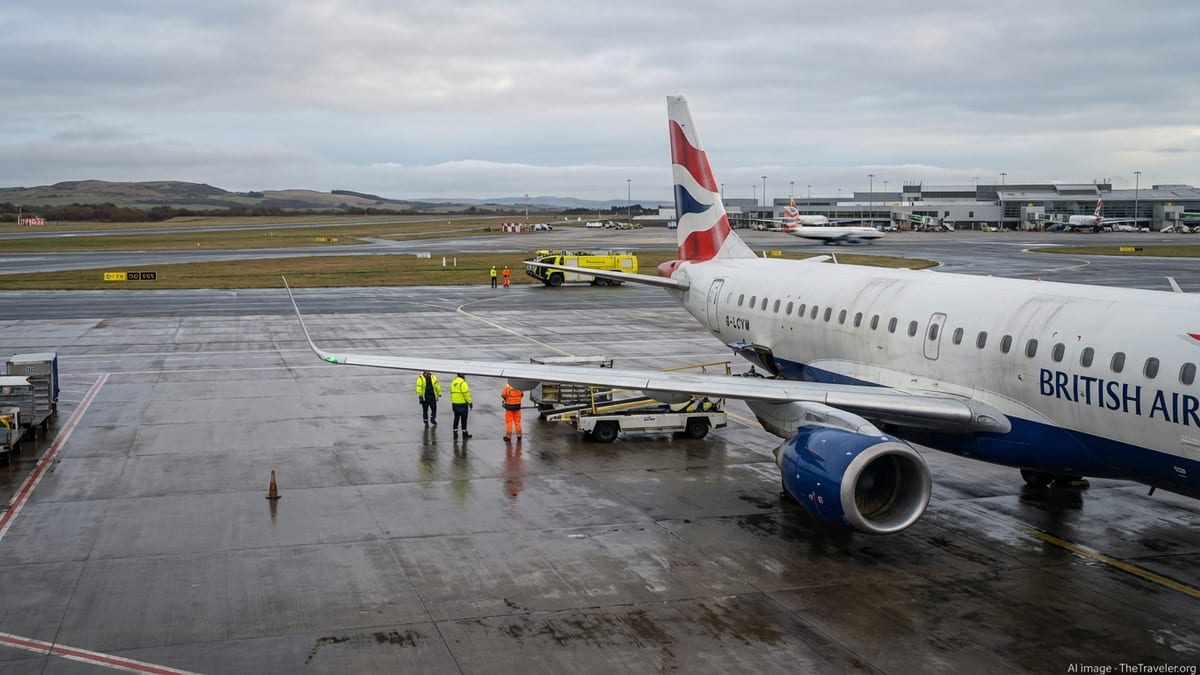
How the London Airspace Breakdown Unfolded
Publicly available information shows that the disruption began early afternoon on September 8, when National Air Traffic Services (NATS), which manages much of UK airspace, reported a technical problem affecting departing flights. Initial alerts referenced a systems issue in the London control area, prompting immediate restrictions on outbound traffic from multiple airports.
Reports indicate that Heathrow, Gatwick, Stansted, Luton and London City were all hit, alongside major regional hubs such as Manchester and Birmingham. Flight-tracking data and airline updates described a sharp drop in departures from early afternoon, followed by a growing wave of delays and cancellations as aircraft and crews became displaced across the network.
Several carriers issued online advisories warning of “significant disruption” and urging passengers to check flight status before travelling to the airport. Live radar feeds showed unusually empty skies above southern England for parts of the afternoon, underlining the scale of the airspace constraints.
Scope of the Disruption at London’s Major Airports
Heathrow, the UK’s largest airport, appeared to bear the brunt of the chaos, with many long-haul and European departures held at gates or forced into lengthy queues for takeoff slots. According to multiple published tallies, hundreds of services were either cancelled outright or delayed, with ripple effects continuing into the evening.
At Gatwick, a key hub for European leisure routes and low-cost carriers, departures were similarly curtailed as capacity restrictions were imposed on the London airspace system. Manchester, Stansted, Luton, Birmingham and several Scottish airports reported knock-on disruption, illustrating how a failure centered on London can quickly affect the wider UK and near-European network.
Some arrivals were able to continue operating under reduced flow rates, but the imbalance between incoming and outgoing services led to aircraft and crew being out of position. Airlines warned that recovery operations would extend into subsequent days as schedules were rebuilt and stranded passengers rebooked onto alternative flights.
What Is Known About the Technical Issue
NATS described the problem in public updates as a “technical issue” affecting departure flows, without immediately detailing the exact subsystem at fault. Previous incidents in UK air traffic control, including radar-related faults and flight data processing glitches, have resulted in similar, though usually shorter, ground stops and capacity cuts.
Early specialist commentary pointed to a failure in systems used to manage or display traffic in the London control area, which is among Europe’s most complex sections of airspace. To preserve safety margins, controllers moved to significantly limit the number of aircraft allowed to depart while work continued on isolating and resolving the fault.
By later in the day, NATS indicated that the underlying issue had been identified and that restrictions were being gradually lifted. However, because aircraft have to be carefully sequenced back into a congested airspace structure, a full return to normal operations lagged well behind the technical fix itself.
Impact on Travelers and Airlines
Passengers across London’s airports faced hours-long waits in departure lounges and on board aircraft held at gates or on taxiways. Social media posts from travelers described crowded terminals, long queues for rebooking and customer service, and difficulty securing last-minute hotel rooms as evening approached.
Airlines were forced to rapidly redraw schedules, prioritising certain long-haul and connectivity-critical services while cancelling others. Short-haul routes, especially high-frequency European and domestic services, saw some of the highest cancellation numbers as carriers attempted to consolidate operations and free up aircraft and crews.
Travel disruption spread far beyond the UK as inbound flights from Europe, North America and the Middle East were delayed or rerouted. In some cases, aircraft remained on the ground at overseas departure points until new takeoff slots into London airspace could be confirmed, creating a secondary wave of delays for passengers yet to start their journeys.
What Passengers Should Do Next
With airlines still working through backlogs, publicly available guidance from carriers and airports stresses that passengers should not assume flights are operating on time, even after NATS reported that the technical fault was contained. Travelers are being urged to check their airline’s app or website before leaving for the airport and to ensure contact details are up to date for direct notifications.
Those whose flights are cancelled are generally being offered rebooking on the next available services, subject to seat availability. For passengers with tight connections or time-sensitive itineraries, particularly at Heathrow and Gatwick, the advice from travel providers is to consider the likelihood of ongoing delays and to explore alternative routings where possible.
The incident is expected to renew scrutiny of resilience in the UK’s air traffic control infrastructure, especially given previous high-profile technical failures that have disrupted tens of thousands of passengers. Aviation analysts note that while the priority in such events is always to maintain safety by reducing traffic levels, the scale of the operational and economic fallout highlights the importance of robust backup systems and rapid recovery planning.
Key sources for this article include coverage and live updates from The Guardian, Reuters, The Independent, AP News, and airline and airport travel-advice pages published on September 8, 2026:
The Guardian: Air traffic control issue causes flight delays and disruption across UK
Reuters: Air traffic control issue disrupts departing flights at major UK airports
The Independent: Flights departing UK disrupted by air traffic control technical issue
AP News: Travel chaos at UK airports as flights cancelled after air traffic control issue
Aer Lingus: Latest travel updates on UK air traffic control issue