


More news on this day
Passengers at London Stansted are reporting scenes of chaos after security queues stretched to around two hours this week, with some travelers missing flights and others left stranded in packed departure halls.
Get the latest news straight to your inbox!
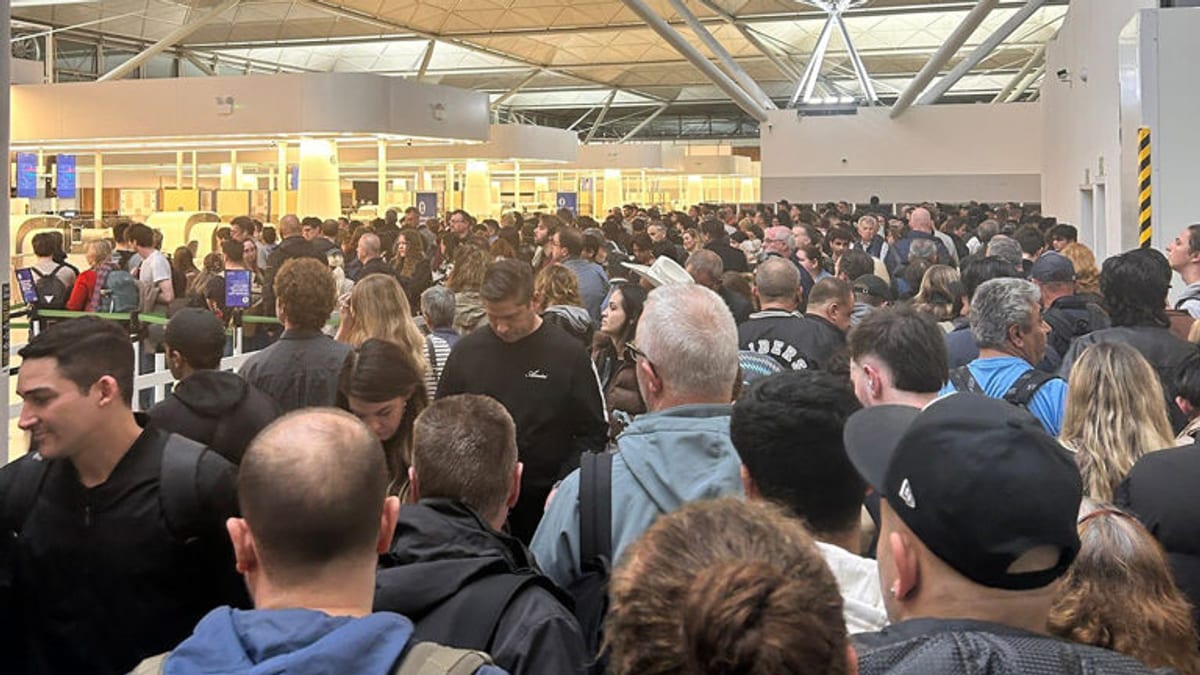
Reports of Two-Hour Bottlenecks at Security
Accounts shared on social media and travel forums in recent days describe unusually long security lines at Stansted, with some passengers estimating waits of up to two hours before reaching the scanners. Several described queues snaking back through the main security hall and into the check in area, creating a bottleneck at the entrance to departures.
Travelers recount arriving the recommended two hours ahead of short haul flights only to find themselves still in line close to boarding time. In a number of cases, posts indicate that passengers abandoned their place in the queue and gave up on their journeys altogether, while others reported sprinting to distant gates with only minutes to spare.
These experiences contrast sharply with the airport’s own performance updates, which regularly highlight that the vast majority of passengers typically clear security in less than 15 minutes. The recent wave of complaints suggests that when demand surges at peak times or staffing is stretched, pressure on the security hall can quickly spill over into the rest of the terminal.
Stranded Passengers and Missed Flights
The most serious impact of the latest congestion has been on passengers who say they missed flights despite arriving at the airport well before departure. Forum posts describe travelers reaching airline desks or customer service counters only after their flight had already closed, in some cases facing additional long queues to rebook or purchase new tickets.
Ryanair and other low cost carriers that dominate Stansted’s schedule operate tight turnaround times and often close boarding 30 to 40 minutes before departure. That model can leave minimal room for disruption when security queues lengthen. Publicly available information from recent travel advisories shows some airlines urging customers to arrive earlier than usual because of expected congestion at the airport’s checkpoints.
Once flights have departed, passengers have reported difficulty obtaining assistance, noting that self service options and automated notifications do not always account for delays caused by airport security constraints. Several accounts describe travellers left in limbo in the terminal concourse, trying to arrange last minute alternatives on their phones while queues continued to build around them.
Record Traffic Meets Infrastructure Limits
The problems are unfolding against a backdrop of sustained growth at Stansted. The airport has reported record annual passenger numbers and some of its busiest ever winter months, as low cost carriers add capacity across Europe. Industry briefings show that the airport handled well over 29 million passengers in 2024 and has continued to grow into 2026.
While overall operational statistics published by the airport indicate that security targets are usually met, the spike in complaints highlights the vulnerability of a system running close to capacity. When several large departures coincide in a short time window, even a small reduction in available staff or screening lanes can lead to sharp increases in waiting times.
Sector analysis also points to longer term questions over whether the current terminal layout and security hall can comfortably handle peak loads. Planning documents and industry reports note that the airport has been working on security hall extensions and technology upgrades, but many of these projects are still in progress as demand continues to rise.
Technology Upgrades and New Scanners in Focus
Across the United Kingdom, airports are in various stages of introducing next generation security scanners that allow larger liquids and electronics to remain inside cabin bags. At Stansted, industry publications report that upgrades to the main security checkpoint have recently been completed or are under way, part of a wider shift to computed tomography based screening.
These systems are expected to improve throughput once fully deployed and configured, but implementation phases can temporarily slow operations as new equipment is tested and staff adjust to revised procedures. Observers note that mixed lanes, where some passengers still follow older rules while others encounter updated instructions, can create confusion and contribute to delays when volumes are high.
In addition to hardware changes, Stansted offers paid fast track lanes that promise reduced waiting times at security. However, traveler accounts suggest that when the standard queues are heavily congested, the fast track route itself can become crowded, limiting its effectiveness during extreme peaks.
Calls for Better Communication and Travel Planning
The recent disruption has intensified calls from passengers and consumer advocates for clearer, more timely communication about expected waiting times. Independent queue tracking sites already provide live estimates for Stansted, but these tools are not always widely known among occasional travelers and are not consistently integrated into airline messaging.
Publicly available guidance generally advises arriving at Stansted at least two hours before European departures and three hours before long haul flights. In light of the latest queues, many frequent travelers are now recommending even earlier arrival at peak morning and evening periods, especially for those checking bags or traveling with children.
For now, the experiences reported this week underline the importance of monitoring live airport information and allowing generous buffers when flying from one of Europe’s busiest low cost hubs. Until planned capacity upgrades and process changes demonstrably ease peak time pressure, passengers using London Stansted are likely to continue weighing the convenience of its route network against the risk of long waits at security.