


Thailand offers a relatively advanced and rapidly digitizing financial system, yet expatriates encounter a distinct mix of strengths and constraints when interacting with local banking, payments, and credit. Understanding how accessible and functional this infrastructure is for non-citizens is essential for assessing the practical feasibility of a relocation.
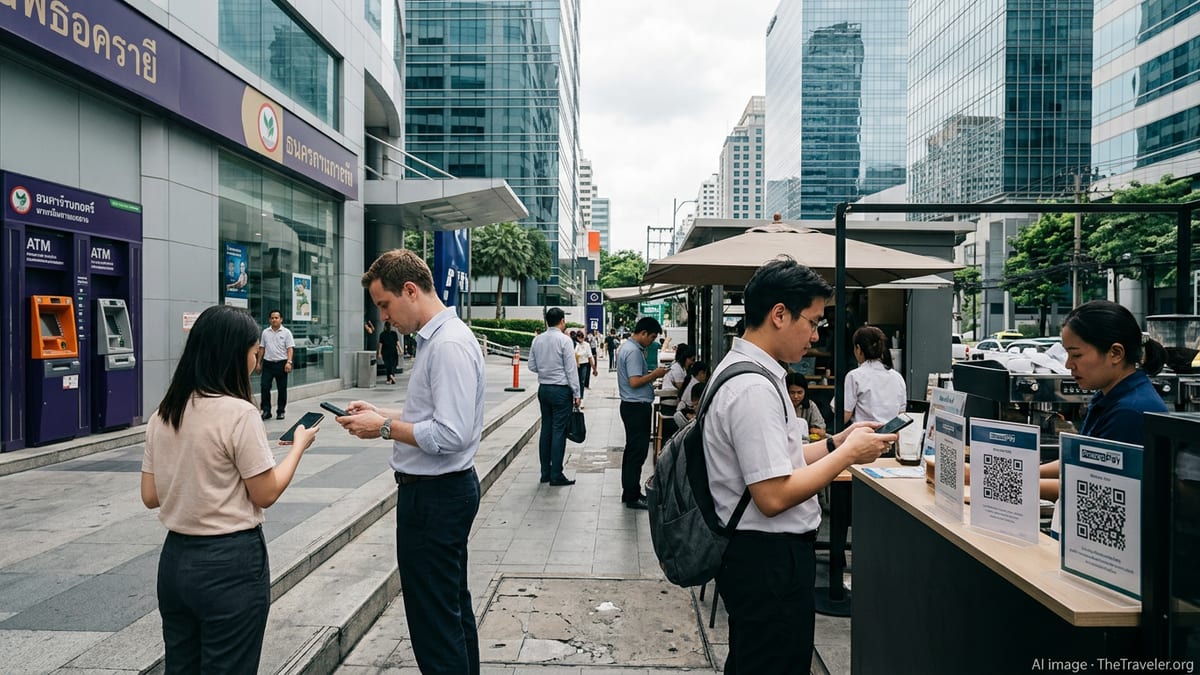
Overview of Thailand’s Financial Infrastructure for Expats
Thailand is a middle-income economy with a well-capitalized, tightly regulated banking sector and rapidly growing digital payments ecosystem. The core infrastructure is robust by regional standards, but access conditions and product design remain primarily tailored to citizens and long-term residents. For expatriates, this creates an environment that is technically sophisticated yet sometimes administratively restrictive.
The country’s financial system is bank-centric, with a handful of large domestic banks dominating retail services and payments. Digital channels are widely used: internet and mobile banking accounts number well above the total population, reflecting multi-account usage and high digital penetration. Real-time payments through the national PromptPay system process tens of millions of transactions per day, illustrating strong infrastructure depth even if foreign users may initially face onboarding hurdles.
From a relocation-planning perspective, Thailand’s financial infrastructure can generally support day-to-day living, remote income management, and business operations. However, expats should anticipate tighter scrutiny when opening accounts, limited access to local credit products, and evolving compliance-driven restrictions that can affect certain visa categories.
Banking Access and Onboarding for Foreign Residents
Access to a Thai bank account is the foundation of financial integration for expats, yet policies vary significantly by institution and branch. Most major banks require evidence of legal status such as a non-tourist visa, work permit, long-stay visa, or residency documentation. In recent years, some banks have stopped opening accounts for tourists and tightened verification for existing foreign clients, including requests for updated visa documents and proof of lawful stay.
Account opening conditions are not entirely standardized. One bank may accept education, retirement, or certain long-stay visas, while another applies narrower criteria. Newer visa types oriented to remote workers or lifestyle migrants can encounter additional friction; in some cases, such visa holders have reported being unable to open new accounts or being restricted from using specific digital banking applications. At the same time, those already integrated with work permits or corporate sponsorships generally report smoother processes and broader product access.
For foreign professionals on employment contracts, it is common for employers to assist in opening payroll accounts with partner banks, easing initial barriers. By contrast, self-employed expats, freelancers, and early-stage arrivals may need to visit multiple branches, provide extensive documentation, and accept limitations on services such as online banking, debit card issuance, or mobile app access. In practice, the onboarding process ranges from straightforward to highly bureaucratic depending on status, location, and risk policies at the time of application.
Retail Banking Services, Deposits, and Consumer Protection
Once onboarded, expatriates have access to a full spectrum of standard retail services, including current and savings accounts, fixed deposits, domestic transfers, and debit cards. Thai banks operate broad branch and ATM networks across urban and provincial areas, which helps ensure basic accessibility even for those who are less reliant on digital tools.
Deposit protection is provided by the national deposit protection agency, which currently insures eligible deposits up to approximately 1 million baht per depositor per institution. This limit covers the overwhelming majority of domestic depositors by number, though high-net-worth expats may need to diversify funds across multiple banks to remain fully covered. Average domestic deposit balances are relatively low, reflecting overall income levels and savings patterns, but the framework itself provides a clear safety baseline for ordinary retail clients.
From a risk standpoint, Thailand’s major commercial banks are subject to prudential supervision, capital adequacy requirements, and anti-money-laundering regulations. Although individual expats may experience account reviews, document requests, or occasional freezes pending verification, the system as a whole is considered stable. Foreign residents intending to hold significant balances in Thailand should nonetheless monitor regulatory changes, particularly around foreign exchange rules and enhanced due diligence for cross-border flows.
Digital Payments, PromptPay, and Everyday Transaction Infrastructure
Thailand’s standout feature for everyday financial life is its digital payments infrastructure, built around real-time account-to-account transfers and QR-based acceptance. PromptPay, the national instant payment system, enables low-cost or free transfers using national IDs, phone numbers, or QR codes and has become the default transaction rail for a large share of the population. Recent data indicate tens of millions of PromptPay transactions per day, with growth in both volume and value outpacing many card-based channels.
Mobile and internet banking usage continues to rise sharply, with total digital banking accounts far exceeding the population due to multi-account usage. QR code payments are heavily embedded in daily commerce: a significant portion of mobile payment transactions at physical points of sale are processed via QR, and Thailand ranks among the global leaders in QR payment adoption by share of population. Digital wallets and real-time transfers are increasingly replacing cash for small-value, high-frequency payments, particularly in urban centers.
For expatriates, the primary constraint is not the capability of the infrastructure but rather access to it. To use PromptPay and bank-linked QR payments, an expat generally requires a local bank account and compatible mobile app credentials. Where visa category or bank policy restricts access to apps, users may have to rely on workarounds such as over-the-counter transfers, ATM transactions, or nonbank wallets. Despite this, once a foreign resident is fully onboarded into a bank’s digital ecosystem, daily financial transactions are efficient, low-cost, and broadly comparable with advanced markets.
Security and fraud prevention are increasingly prominent themes. In response to rising online scams, regulators have mandated tighter controls such as default daily caps on certain online transfers, often around the mid tens of thousands of baht for vulnerable customer groups. These measures can protect less sophisticated users but may require expats to adjust limits or verify identity if higher-value transfers are needed.
Cards, Credit Access, and Borrowing Options for Expats
Thailand has a developed card payments market, with credit cards accounting for a large majority of total card transaction value. Card usage is strongest among middle- and higher-income consumers, especially in urban areas, and continues to grow in value terms. Contactless and online card payments are well accepted at modern merchants, hotels, airlines, and e-commerce platforms, complementing the widespread use of QR transfers for everyday spending.
Access to cards and consumer credit for expatriates is more restricted. Banks typically require stable local employment, minimum income thresholds, and documentary proof such as work permits or tax statements before issuing credit cards or personal loans. Even where formal eligibility is met, some institutions apply stricter internal criteria for non-citizens, leading to higher rejection rates or lower credit limits relative to similarly situated Thai customers.
Mortgage access is a key pain point. While it is technically possible for foreigners to obtain home loans from Thai banks, practical access remains limited and highly conditional. Many institutions either do not lend directly to non-residents or require substantial down payments, long local income histories, and strong collateral. As a result, a large proportion of foreign property buyers rely on cash purchases, offshore financing, developer-backed installment plans, or leasehold structures instead of standard domestic mortgages. Expats expecting easy access to local housing finance will generally need to recalibrate expectations.
Overall, the financial infrastructure supports a full range of credit products, but the foreigner-access layer is narrow. Professionals with corporate sponsorships and long-term visas can often secure basic card products after a period of local income history. New arrivals, digital nomads, and retirees without local employment face much more limited access to unsecured credit and are advised to plan around self-funding rather than domestic borrowing.
Cross-Border Transfers, Currency Management, and Fintech Integration
Thailand maintains a reasonably open framework for cross-border transfers for individuals, subject to documentation and reporting requirements, particularly for larger amounts. Commercial banks offer international wire services, including SWIFT transfers, but fees and foreign exchange spreads can be material compared with specialist money transfer providers. For salaried expats, remitting surplus income abroad or receiving overseas payments is possible but may require proof of source of funds and occasional compliance reviews.
The growth of real-time QR payment linkages within the region, as well as interoperability initiatives under regional payment connectivity programs, is gradually improving convenience for cross-border retail transactions. Selected corridors already allow tourists and business travelers to use domestic wallets to scan foreign QR codes and settle in local currencies. While these developments primarily target inbound and outbound visitors, long-term expats benefit indirectly through improved ecosystem familiarity and increased acceptance of digital payment tools across borders.
Fintech platforms, including multi-currency accounts and remittance services, are widely used by expatriates to manage international payments more efficiently. These providers typically integrate with Thai bank accounts for local funding and withdrawal, though their operating models can change as regulatory expectations evolve. Users should stay alert to shifting rules around e-money licensing, local account top-ups, and know-your-customer standards, as changes can affect fees, functionality, or onboarding options over time.
Currency risk is a practical consideration. The Thai baht can fluctuate in response to domestic and global conditions, and expats paid in foreign currencies often choose to maintain balances in both baht and hard currencies. The financial infrastructure supports multi-currency accounts, foreign-currency fixed deposits, and offshore brokerage links, but access and minimum balance requirements vary by bank and client profile, often favoring higher-income or priority banking clients.
Regulatory Environment, Financial Safety, and System Stability
Thailand’s financial system is overseen by a central bank and specialized agencies that set prudential standards, supervise payment systems, and administer deposit insurance. Post-crisis regulatory reforms in earlier decades have led to higher capital buffers, more rigorous supervision, and clear frameworks for bank resolution. There have been no recent systemic banking crises, and key indicators such as non-performing loan ratios and capital adequacy have remained within manageable ranges, supporting perceptions of overall stability.
Consumer protection has been gaining prominence. Authorities have introduced measures to reduce cybercrime and online fraud, including requirements for strong customer authentication, monitoring of suspicious transactions, and daily limits on certain high-risk transfer types. Banks have been encouraged to invest in improved fraud detection and customer communication, which can occasionally translate into conservative risk management practices affecting foreign clients, such as tighter onboarding or episodic account reviews.
From an expatriate’s perspective, the regulatory environment is sufficiently mature to provide confidence in the integrity of the financial system, but not always predictable at the micro level. Policy changes in response to fraud, scams, or compliance issues can be implemented quickly, leading to shifts in bank procedures or digital service eligibility, particularly for specific visa types or risk categories. Long-term residents should expect incremental tightening of controls rather than liberalization and should maintain flexibility in how funds are held and accessed.
In practical terms, this means maintaining clear documentation of income sources, adhering to declared purposes for transfers, and promptly responding to any bank queries. Those with complex cross-border activities may benefit from professional advice to ensure that both Thai and home-country reporting obligations are met while leveraging local infrastructure efficiently.
The Takeaway
Thailand’s financial infrastructure offers a strong foundation for expatriate life, combining robust banking institutions, nationwide digital payments, and increasing regional connectivity. The technical capabilities compare favorably with many advanced economies, especially in real-time payments and mobile banking adoption. For expats who successfully navigate onboarding, daily financial operations from paying rent and utilities to managing local spending can be handled seamlessly through digital channels.
The primary constraints lie not in the system’s capacity but in access conditions and product design. Foreign residents face variable rules on account opening, limited access to unsecured credit and mortgages, and occasional restrictions related to specific visa categories or risk profiles. These constraints are most acute for short-term residents, remote workers without local employers, and those seeking to leverage local financing for assets such as property.
For relocation decision-making, Thailand scores strongly on transactional convenience, digital readiness, and systemic stability, while scoring more modestly on inclusiveness and credit access for non-citizens. Expats who plan to rely primarily on self-funded arrangements, use foreign credit lines, and treat Thai bank accounts as operational rather than core wealth-holding vehicles will generally find the infrastructure supportive. Those whose relocation plans depend heavily on local borrowing or frictionless multi-bank access should conduct detailed, up-to-date checks with specific institutions before committing.
FAQ
Q1. Can expats open a bank account in Thailand without a work permit?
In many cases yes, but it depends on the bank, branch, and visa type. Non-tourist long-stay visas, retirement visas, and education visas are often accepted, while tourist visas face significant restrictions.
Q2. How reliable is Thailand’s deposit protection for foreign account holders?
Deposit insurance covers eligible deposits up to a defined baht limit per depositor per institution, and this protection generally applies equally to foreign and local customers within member banks.
Q3. Do expats have full access to PromptPay and QR payments?
Access is usually available once an expat has a local bank account and working mobile banking app, but some visa categories or bank policies may limit app usage or digital onboarding.
Q4. Is it easy for foreigners to get a credit card from a Thai bank?
It can be challenging. Banks typically require stable local employment, minimum income levels, and supporting documents, and even then may apply stricter criteria or lower limits for non-citizens.
Q5. Can expats obtain a mortgage to buy property in Thailand?
Mortgages for foreigners exist but access is narrow. Many banks either do not lend directly to non-residents or require high down payments and long local income histories, so many expats purchase using cash or offshore financing.
Q6. How advanced is Thailand’s digital payment infrastructure compared with other countries?
Thailand is advanced in real-time payments and QR-based transactions, with high usage of PromptPay and mobile banking, placing it among the leading digital payment markets in its region.
Q7. Are there controls on online transfer limits that affect expats?
Yes. To combat fraud, regulators have encouraged banks to impose default daily limits for certain online transfers, especially for vulnerable customers, though limits can often be adjusted with additional verification.
Q8. What options do expats have for low-cost international money transfers?
Expats commonly use a mix of bank wires and specialist fintech remittance services. Fees and exchange margins vary, so many compare multiple providers and maintain flexibility across platforms.
Q9. Is cash still necessary in everyday life despite digital payments?
Cash remains widely used, particularly in smaller towns and informal settings, but in major cities many bills, groceries, and services can be paid via QR or card, reducing day-to-day reliance on cash.
Q10. How should expats manage financial risk when holding significant funds in Thailand?
Common approaches include diversifying balances across banks within deposit insurance limits, keeping a portion of savings offshore, monitoring regulatory changes, and maintaining thorough documentation of fund sources.