


More news on this day
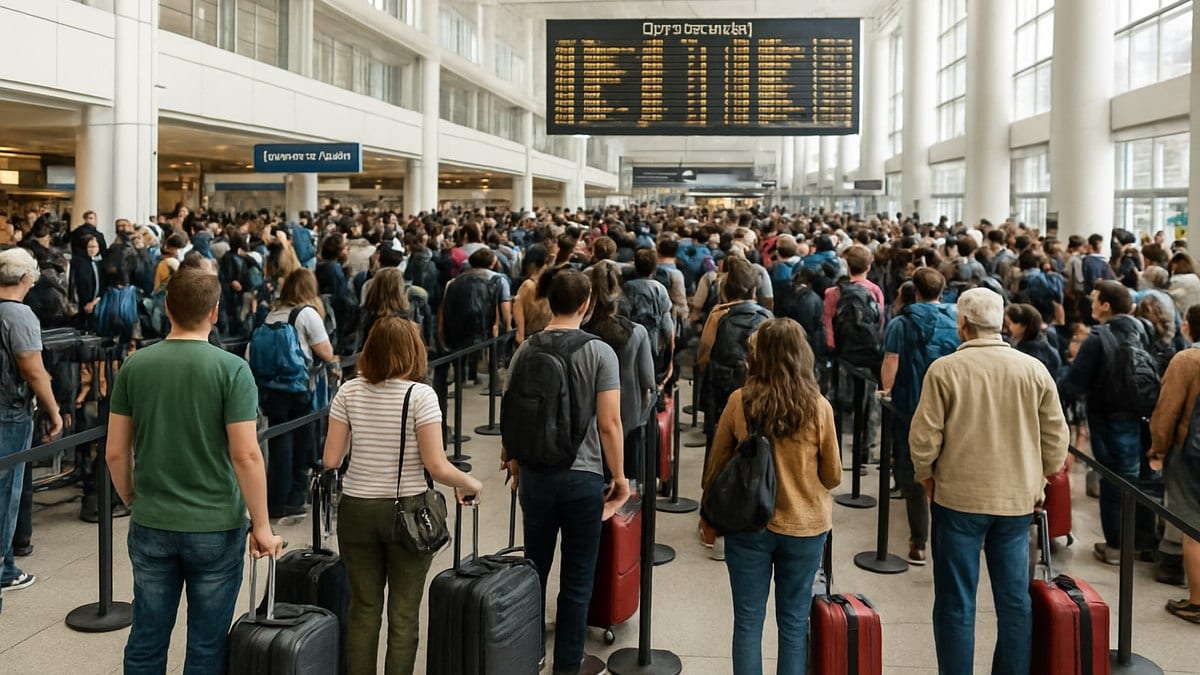
Images and reports of Ryanair passengers queuing for hours at Tenerife’s airports in early 2026 are putting a fresh spotlight on the strain facing Spain’s aviation infrastructure after years of record-breaking tourism growth.
Get the latest news straight to your inbox!
Ryanair Bottlenecks Put Tenerife in the Spotlight
Recent holiday-season and spring operations by Ryanair at Tenerife’s airports have drawn attention to long check in and security lines, as social media posts and local coverage describe crowded terminals and extended waits at key departure banks. These scenes come as low cost carriers concentrate high passenger volumes into narrow time windows, particularly on routes linking Tenerife with major UK and European cities.
According to publicly available traffic statistics, Tenerife South already handled more than 12 million passengers in 2024, while Tenerife North crossed its theoretical capacity threshold even before the current year’s schedules were finalised. In that context, any disruption, from weather delays to aircraft rotations, rapidly cascades into visible queues for budget airlines that operate with tight turnaround times and high load factors.
Ryanair’s business model, focused on rapid ground handling and dense seating configurations, amplifies the pressure on terminal space at peak periods. When several flights depart within a short window, check in counters, security lanes and boarding gates at Tenerife South and Tenerife North can become congested, especially in older parts of the terminals where circulation areas are narrow. Passenger accounts suggest that even modest delays can quickly translate into bottlenecks running the length of the departures hall.
These operational flashpoints provide a highly visible illustration of a deeper structural issue. While airlines have restored and, in many cases, expanded capacity beyond pre pandemic levels, terminal expansion and airside reconfiguration at several Spanish airports, including those in the Canary Islands, have lagged behind the growth in demand.
Record Passenger Growth Across Spain’s Airports
The queues in Tenerife are emerging against a backdrop of unprecedented traffic across Spain’s airport network. Aena, the listed operator that manages 46 airports and two heliports in Spain, closed 2025 with close to 385 million passengers across its global network, reaching the highest traffic in its history and marking a multi year streak of record volumes.
Spanish media reports indicate that Aena’s facilities in Spain alone handled more than 320 million passengers in 2025, and the company is forecasting further growth in 2026, albeit at a slower pace of around 1 to 3 percent. Even that modest percentage represents several million additional travellers moving through terminals that, in some regions, were already operating near or above their design limits.
Larger hubs such as Madrid Barajas and Barcelona El Prat have been absorbing a significant share of this growth, posting consecutive record years and driving investment plans that include runway and terminal upgrades. However, the acceleration in traffic has been particularly intense in tourism driven regions, including the Balearic and Canary Islands, where airport infrastructure must cope with extreme seasonality and heavy reliance on low cost carriers.
While Aena has announced a substantial investment programme for the period from 2027 to 2031, with billions of euros earmarked for regulated aeronautical projects and commercial improvements, the short term reality for travellers in 2026 is one of crowded departure lounges, constrained parking and pressure on support services such as assistance for passengers with reduced mobility.
Canary Islands Tourism Boom Meets Finite Terminal Space
The Canary Islands have been at the forefront of Spain’s tourism expansion. Regional data show that the archipelago processed more than 27 million airport passengers in the first half of 2025 alone, with Tenerife’s airports recording some of the fastest growth rates in the country. Tourism accounts for a large share of the Canary Islands’ gross domestic product, and air connectivity is the lifeline that sustains that model.
At Tenerife South, capacity challenges are less about runway slots and more about the layout of terminal facilities, particularly check in halls and baggage areas, according to technical assessments published in local planning documents. Tenerife North, meanwhile, has already exceeded the maximum annual passenger volume established in Spain’s Airport Regulation Document for the 2022 to 2026 period, highlighting the tension between forecast demand and physical constraints.
The concentration of flights operated by carriers such as Ryanair, combined with dense schedules from other low cost and leisure airlines, means that queues can form even on days without major disruption. Travellers may experience crowded queues for security or passport control during morning and late afternoon departure waves when multiple services to mainland Spain, the United Kingdom, Germany and other European markets depart in close succession.
Local commentary suggests that these conditions are feeding into broader debates about overtourism and quality of life on the islands. Protests in recent years have drawn attention to the strain on housing, public services and natural spaces, and airport congestion has become another tangible symbol of that pressure for both residents and visitors.
Regulation, Investment Plans and a Growing Capacity Gap
Spain’s airport policy is framed by multi year regulation documents, known as DORA, which set expected traffic levels, quality targets and investment commitments across the network. For the 2022 to 2026 cycle, forecast volumes for several Canary Island airports have already been overtaken by actual demand, leaving facilities such as Tenerife North operating beyond their theoretical capacity before the current regulatory period ends.
Aena has presented proposals for a substantial rise in regulated investment from 2027 to 2031, including upgrades to terminals and airfield infrastructure in both mainland and island airports. Construction industry coverage describes a portfolio of works worth around 13 billion euros over the period, although contractors have raised concerns about contract structures, margins and the feasibility of delivering so many projects simultaneously.
At the same time, the operator is preparing to raise airport charges from March 2026, with a fee increase per passenger that would mark the sharpest adjustment in around a decade. Aviation industry groups are pushing for lower tariffs, arguing that higher costs may filter through to ticket prices and potentially dampen demand. The debate underscores the delicate balance between funding much needed upgrades and preserving Spain’s competitive position as a value oriented destination.
For passengers stuck in long Ryanair queues in Tenerife, these regulatory and financial discussions can seem remote. Yet they are central to whether additional check in capacity, expanded security lanes and reconfigured boarding areas will arrive quickly enough to ease pressure in the years ahead. The risk, industry analysts warn, is that demand continues to outpace incremental improvements to the infrastructure.
What Tenerife’s Queues Signal for Spain’s Wider Travel Map
The scenes at Ryanair’s Tenerife operations are resonating beyond the Canary Islands because they mirror bottlenecks reported at other Spanish airports during peak travel periods. Long waits at security and passport control, crowded boarding gates and congested drop off zones have been observed at busy tourist gateways such as Palma de Mallorca and Malaga, particularly during summer holidays.
Spain’s status as a top global destination means that even small mismatches between capacity and demand are highly visible. Reports from March 2026 already show another uptick in passenger numbers and aircraft movements compared with the previous year, suggesting little respite for terminals as the summer season approaches. In this environment, operational resilience for airlines that rely on quick turnarounds becomes more difficult to maintain.
For travellers, the immediate implication is the need to build in more time at departure airports, especially in leisure hotspots where several low cost carriers share constrained terminal space. For policymakers and airport planners, Tenerife’s queues act as an early warning signal that the combination of structural growth in tourism, concentrated low cost operations and delayed infrastructure upgrades can quickly evolve into a perception of systemic overcrowding.
How Spain addresses these pressures over the next regulatory cycle, through a mix of targeted investment, schedule management and potential demand side measures, will shape the experience of millions of passengers. In the meantime, Tenerife’s Ryanair passengers are offering a real time snapshot of a network that is running increasingly close to its limits at the start of the 2026 high season.