


More news on this day
Flight delays linked to a technology failure in the Northeast rippled as far as Charleston, South Carolina, as airlines worked to reposition aircraft and crews after a key air-traffic facility experienced communications problems that slowed one of the nation’s busiest corridors.
Get the latest news straight to your inbox!
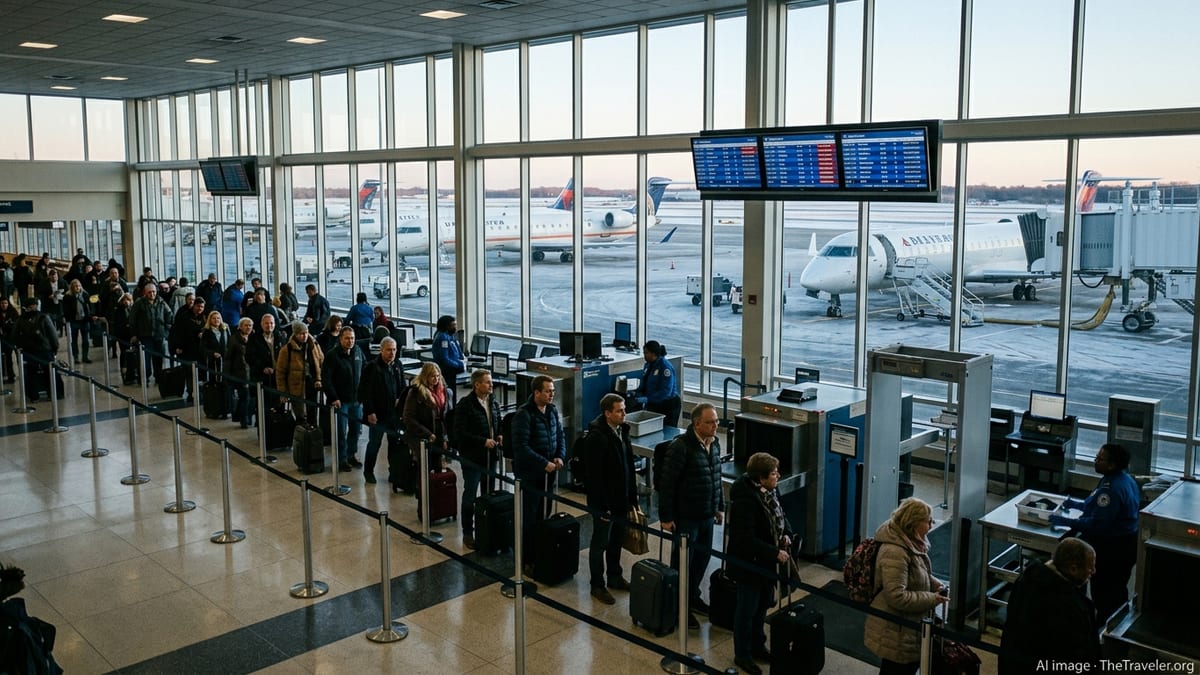
What happened, and why Charleston felt it
Published coverage described a communications or equipment outage tied to Philadelphia Terminal Radar Approach Control (TRACON), a facility that manages aircraft sequencing for a large slice of Northeast airspace. The disruption prompted the Federal Aviation Administration to temporarily pause some arriving traffic into airports including Philadelphia, Newark Liberty, and Teterboro, with knock-on impacts later reaching New York’s John F. Kennedy and LaGuardia airports.
When traffic constricts at major hubs, smaller airports like Charleston International Airport (CHS) can be affected even if local weather is manageable. Aircraft scheduled to fly CHS routes often cycle through Northeast airports earlier in the day; if those flights are held on the ground, diverted, or canceled, the same airplanes and crews may arrive late to Charleston and trigger cascading delays on subsequent legs.
While CHS is not a major hub, it has nonstop links to the Northeast and to hub airports that funnel traffic onward. That makes it vulnerable to “late inbound aircraft” situations: a delay at Newark or Philadelphia in the morning can turn into a delayed departure from Charleston hours later.
Scale of disruptions: 1,000-plus delays, with hours-long holds at big airports
Across the affected region, reports indicated hundreds of flights were delayed and canceled, with the day’s totals climbing into the thousands nationwide as schedules fell out of position. Publicly available flight-tracking data cited in published coverage showed especially heavy disruption at Newark and Philadelphia, where a large share of flights were delayed or canceled at the peak of the outage.
At Newark, published coverage described an extended period with little to no commercial arrivals, followed by a slow restart as traffic managers controlled demand into the congested airspace. Additional reporting noted that average delays at Newark at one point stretched into several hours, reflecting the backlog that built during the pause.
Even after arrivals resumed, delays often persisted into the evening because airlines had to untangle aircraft assignments, locate available crews within duty-time limits, and reposition planes that were stuck away from their next scheduled legs. That recovery phase is typically when secondary markets feel the ripple, as airlines prioritize restoring high-frequency hub routes.
What Charleston travelers may have seen at CHS
In Charleston, the disruption was most likely to show up as delayed departures to major connecting airports and delayed arrivals from cities in the Northeast and Mid-Atlantic. Travelers can also see same-day impacts on flights that never touch the Northeast if the aircraft or crew was scheduled to originate there.
Real-time airport dashboards can differ from airline apps because each source updates on slightly different timelines, but the pattern during systemwide disruptions is consistent: gate changes, longer-than-usual boarding holds, and last-minute equipment swaps as carriers try to keep the most constrained aircraft types moving.
Charleston’s schedule mix matters here. CHS relies heavily on flights to large hubs and business-heavy markets, and the Northeast is one of the country’s most capacity-constrained air corridors. When air-traffic flow programs tighten around New York and Philadelphia, the resulting “metering” can push back departure times at origin airports across the country, including in the Southeast.
How to track whether delays are still “in the system”
For travelers trying to determine whether a Charleston delay is likely to worsen or clear, the most actionable approach is to check the specific inbound aircraft and the status of the destination region. Many airline apps show whether a delay is driven by air-traffic restrictions, a late inbound aircraft, or crew and maintenance constraints.
The FAA’s public-facing status tools can also indicate whether an airport is under a Ground Delay Program or a ground stop, and those programs can change multiple times throughout the day as capacity returns. If the destination airport is still operating under flow restrictions, a flight out of Charleston may be held even if the plane is ready to go.
Published guidance from the FAA emphasizes that the agency manages airspace for safety and traffic flow, while airlines control customer rebooking and accommodation. In practice, that means travelers should monitor both the FAA’s airport status information and their airline’s rebooking options, especially if a delay threatens a same-day connection.
What to do if your CHS flight is delayed or you miss a connection
During tech-related disruptions, rebooking paths can shift quickly as carriers add recovery flights or consolidate schedules. If you are traveling out of CHS and your flight is delayed, it often helps to look at later departures to the same hub, as well as alternate hubs that still connect to your final destination. Many itineraries from Charleston can be rerouted through different connecting airports depending on carrier and availability.
Travelers concerned about overnight risk may consider moving to earlier departures where possible, since delays tend to compound later in the day as aircraft rotations slip. If you are already at the airport, keep an eye on gate-area announcements and the airline app for boarding time changes, and confirm whether a delay affects your baggage transfer if you are connecting.
If a delay turns into a cancellation, check whether your airline is offering fee-free changes tied to the disruption window and whether same-day standby or confirmed changes are available. Because the root cause was concentrated in Northeast airspace, travelers whose plans involve New York, New Jersey, or Philadelphia region airports may face residual impacts into the next day as networks rebalance.