


More news on this day
Rail passengers in Kolkata are preparing for a shift in their daily and long distance travel patterns as five trains are slated to move away from some of the city’s busiest existing terminals, part of a broader push to ease congestion and reconfigure capacity across the metropolitan rail network.
Get the latest news straight to your inbox!
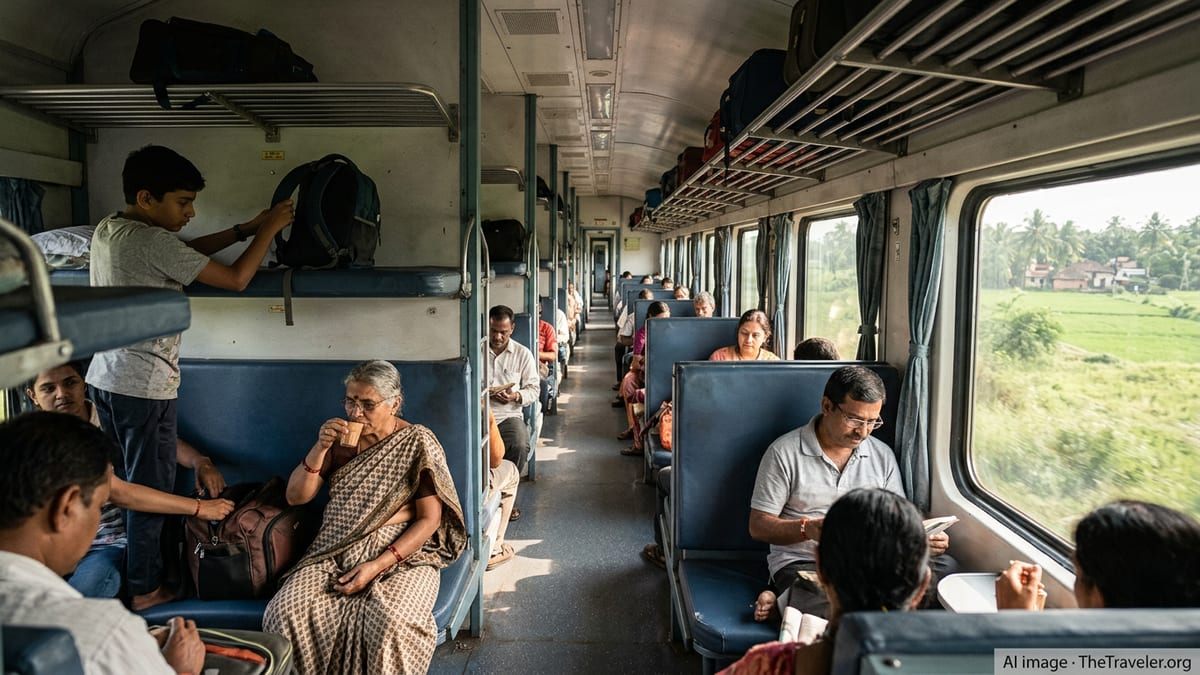
Five Trains Set To Move From Existing Terminals
According to recent coverage of operational changes across the Kolkata rail hub, planners are preparing to relocate five services that currently operate from the city’s most crowded terminals. The changes are expected to affect trains that use the central Kolkata and Sealdah precincts, with revised terminals likely to include secondary stations that have spare platform capacity and better path availability for long distance operations.
Reports indicate that the move is aimed at freeing up space at overburdened terminal platforms where suburban and long distance services compete for time on the same tracks. By shifting select long distance trains to alternative terminals, the rail network is expected to gain more flexibility in scheduling and reduce the extended platform occupation that has become common during peak hours.
While the precise combination of trains and destinations is being finalised, publicly available information on recent traffic planning around Kolkata suggests a blend of premium and regular long distance services could be involved. The focus appears to be on pairs that originate or terminate in Kolkata and Sealdah but can be handled from nearby outlying hubs without major route changes.
For passengers, the most immediate consequence will be a change in where journeys begin and end within the city. Many long distance travellers who are accustomed to boarding at a central terminal will need to adjust to new starting points that may fall on a different side of the metropolitan area and require more detailed last mile planning.
Decongesting Kolkata’s Core Rail Hubs
The potential relocation of five services is unfolding against a wider backdrop of efforts to decongest Kolkata’s core terminals. Published coverage on the metropolitan rail system has repeatedly highlighted the heavy simultaneous load of suburban and long distance trains at Howrah, Sealdah and Kolkata stations, where platforms are occupied for extended periods as rakes are prepared and turned around.
Recent reporting on infrastructure additions at Howrah points to the commissioning of new platforms specifically intended to handle long distance trains more efficiently, reducing waiting times at busy throat sections. At the same time, planning documents and regional news reports show an expansion of suburban services under Sealdah Division, including new local trains and extended routes designed to spread passenger demand across a larger number of services.
By diverting some long distance trains to less saturated terminals, planners expect to reduce conflicts between fast intercity services and dense suburban traffic. This can be especially significant in corridors where commuter trains must be slotted around premium expresses, resulting in delays that ripple across the timetable during peak periods.
The shift also aligns with a pattern seen in other Indian metros, where secondary terminals have gradually taken over some of the long distance load from flagship central stations. In the Kolkata region, previously introduced changes, such as moving select trunk route expresses to alternative terminals, have been used as a tool to re-balance traffic and provide room for new services.
Impact on Daily Travel Patterns and Last Mile Links
The reassignment of five trains away from existing terminals is likely to reshape how passengers plan their city side connections. Many long distance travellers choose trains based on convenient access to metro, bus and taxi links concentrated around central stations. When services move to less familiar terminals, those same travellers may need to reconsider their preferred routes or adjust their timing to account for extra transfer steps.
Reports on recent timetable and service expansions under Sealdah Division show that new local trains and an AC suburban service have been designed to strengthen links between key suburban nodes and the city’s core. That broader suburban build-out could help cushion the impact of terminal shifts by providing more frequent feeder trains to and from the new originating points for long distance services.
Travel planners note that the timing of arrivals and departures will be as important as the station change itself. Commuters connecting from long distance overnight trains to offices in central Kolkata, for example, depend on early morning suburban and metro links. Any move that places their arrival station farther from employment hubs will require coordinated local services if journey times are to remain competitive.
For outbound passengers, the new pattern may mean leaving home earlier or using different modes for first and last mile travel. Taxis and app based mobility services could see a short term adjustment in demand as travellers shift to terminals that previously handled fewer long distance departures.
Opportunities and Challenges for the Wider Network
The relocation of five trains is being framed, in publicly available information, as part of an ongoing process of rationalising routes and terminals to keep pace with demand growth. Parliamentary material and planning notes on the Kolkata area highlight how suburban and long distance services share finite track and platform resources, creating a need for continual fine tuning of where trains start and end.
One potential upside of the new pattern is the capacity it may unlock for future long distance services from the main terminals. By slightly reducing the pressure on heavily used platforms, rail authorities can create room for additional premium or seasonal specials targeted at periods of peak demand, such as festival travel or major examinations.
However, the transition period brings its own challenges. Passengers will need clear, prominently displayed information on revised terminals, coach positions and connecting services. Initial days of any shift often see confusion at both the old and new stations, as some passengers continue to arrive at the former terminal out of habit.
Timetable stability will also be under scrutiny. Experience from earlier diversions in and around Kolkata shows that while moving trains to alternative terminals can relieve local bottlenecks, it must be accompanied by careful pathing across junctions so that redirected services do not simply create new congestion points elsewhere on the network.
What Passengers Should Watch For In The Coming Weeks
With five trains expected to move from existing terminals, Kolkata bound and originating passengers are being advised in public notices and news coverage to monitor updated timetables, reservation charts and station departure boards in the coming weeks. Particular attention will be needed for trains that have long established boarding patterns, as regular travellers may instinctively head for the old terminal.
Passengers booking fresh tickets after the terminal changes are finalised can expect the new originating or terminating stations to be clearly reflected in reservation systems. For those holding earlier bookings on affected dates, published information suggests that journey details will be updated as schedules are recast, though travellers may wish to confirm particulars before the day of departure.
Travel planners also point to the importance of checking which side of the city the new terminal is located on relative to individual itineraries. A train that once offered a simple hop to a central business district may now require a suburban rail or metro connection from a different corridor, making it worthwhile to review route maps and interchange options in advance.
As Kolkata’s rail network continues to evolve, the movement of these five trains from their current terminals illustrates how even limited schedule and terminal adjustments can have a visible effect on how people move into and out of one of India’s busiest urban rail hubs. For many passengers, the coming weeks will be a period of experimentation as they adapt to a subtly reconfigured map of long distance travel from the city.