


More news on this day
A large fire next to a rail line in Walthamstow, northeast London, led to evacuations and significant disruption to local train services on Sunday, as flames spread through gardens, outbuildings and a railway embankment close to a busy commuter route.
Get the latest news straight to your inbox!
Blaze Erupts Beside Tracks Near Wood Street Station
Reports indicate that the incident began on the afternoon of Sunday 12 July near Vallentin Road and Shernhall Street, close to Wood Street station in Walthamstow. Flames were seen rising from vegetation and structures along the railway embankment, with smoke visible across parts of northeast London.
Information published by the London Fire Brigade describes a substantial response involving numerous fire engines and firefighters tackling the blaze along the line. Coverage from UK news outlets states that the fire affected at least one residential property, multiple gardens, sheds and lineside infrastructure, prompting an extended firefighting operation into the evening.
Residents shared images and descriptions on social media showing thick plumes of smoke, scorched trees and debris close to the railway. Witness accounts suggest that the fire moved quickly through dry vegetation near the tracks, underscoring how closely many homes, small businesses and community spaces sit to London’s rail corridors.
The incident unfolded on a busy suburban stretch of railway that links Chingford with central and east London, an important commuter route that also connects travelers to wider National Rail and Underground networks.
Evacuations and Local Disruption Around Walthamstow Village
Publicly available information indicates that residents on nearby streets were asked to leave their homes as a precaution while crews worked to contain the flames. Local reports refer to evacuations along roads adjacent to the railway, including properties backing directly onto the embankment where heat and smoke posed an immediate risk.
People in the area described being moved to safer locations while firefighters focused on stopping the fire from spreading further into residential streets and towards Walthamstow Village, a popular conservation area known for its narrow roads, independent shops and historic housing. Community venues and informal collection points were used to support those temporarily displaced.
Travelers and residents reported road closures and restricted access across parts of Walthamstow as emergency vehicles gained access to the railway and affected properties. Some local bus services were diverted, and drivers were advised to avoid the area while hoses and equipment were laid out across junctions near the tracks.
For visitors and travelers unfamiliar with the neighbourhood, the combination of road closures, smoke and suspended services created confusion, with many relying on live travel apps and news updates to reroute journeys away from the affected streets.
Rail Services Suspended as Crews Tackle Lineside Fire
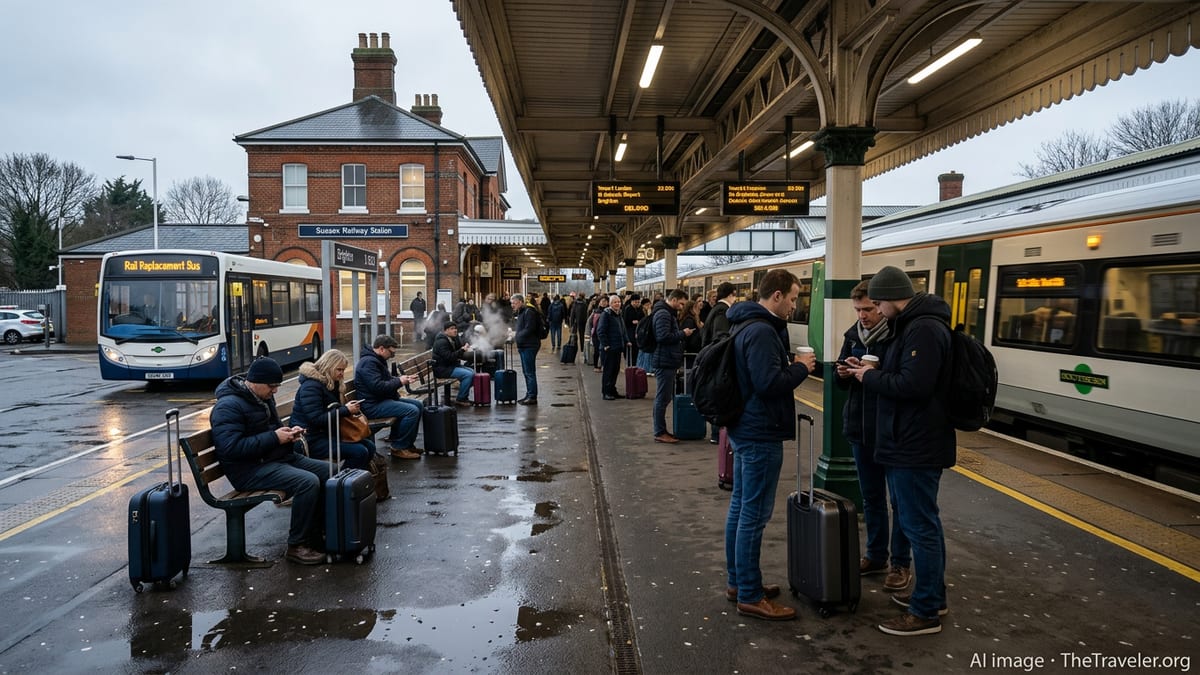
The fire had an immediate impact on rail operations, with services on the line through Wood Street suspended while crews worked beside the tracks. Information from rail operators and travel updates described a temporary halt to trains between stations on the Chingford to London route, affecting both local commuters and leisure travelers heading into the city.
Passengers reported being held on trains away from the fire zone or directed to disembark at earlier stations, with staff advising travelers to seek alternative routes via other Overground and Underground lines. Some services were later diverted or terminated short of their normal destinations, extending journey times and crowding alternative routes.
Rail infrastructure managers routinely close lines when fires occur near the track, both to give firefighters safe access and to protect signaling, power equipment and rolling stock from heat damage. This incident followed that pattern, with trains only expected to resume once inspections confirm that cables, track components and signalling equipment have not been compromised.
The disruption added another layer of stress for passengers already contending with a busy summer travel period, and highlighted the vulnerability of surface-level rail corridors to environmental incidents such as grass and embankment fires.
Hot, Dry Conditions Raise Concerns Over Lineside Fire Risk
While the exact ignition source in the Walthamstow incident has not been detailed in initial public information, the blaze occurred during a spell of warm, dry weather that has left many grass verges and embankments more susceptible to catching fire. Previous summers have seen similar lineside incidents across the UK during hot periods, occasionally leading to significant travel disruption.
Transport and fire safety assessments have long identified fires near rail lines as a recurring seasonal risk, particularly where dense vegetation grows close to wooden fences, sheds, garden structures and overhead cables. When conditions are dry, even small ignition sources can lead to fast-moving fires along embankments that border residential streets.
For rail travelers, these events can mean sudden line closures, emergency evacuations from trains stopped short of stations and rolling delays as operators inspect track and signalling. For nearby communities, they can bring smoke, evacuations and property damage, especially in densely populated areas like northeast London where back gardens often back directly onto the railway.
The Walthamstow fire is likely to renew attention on vegetation management, public awareness campaigns about fire risks in hot weather and the resilience of rail infrastructure that runs close to homes, small businesses and community facilities.
Advice and Next Steps for Affected Travelers
Following the incident, rail passengers heading through northeast London have been encouraged to check live journey planners and operator updates before setting out, as residual disruption can continue after major fires even once lines reopen. Timetables may be altered while inspections and any necessary repairs are completed along the affected stretch of track.
Travelers planning day trips or onward connections through east and northeast London may find it useful to allow extra time, particularly during peak commuting hours, and to familiarise themselves with alternative routes using Underground, Overground or bus services. Stations such as Walthamstow Central, Hackney Downs and Liverpool Street commonly act as hubs for rerouted journeys when the Wood Street line is disrupted.
Residents and visitors staying close to the rail corridor are advised, in general, to follow guidance from local councils and emergency services during and after such incidents, including keeping windows closed when smoke drifts across residential areas and avoiding closed-off streets so crews can work safely.
For travelers and travel planners, the fire near Wood Street station serves as a reminder that even short suburban rail journeys around London can occasionally be affected by sudden environmental incidents, making flexible plans and up-to-date information key to keeping trips on track.