


More news on this day
Severe weather systems over East and South Asia have led to thousands of flight cancellations and delays in recent days, as Typhoon Bavi batters China and neighboring regions while intense monsoon conditions disrupt air travel across India.
Get the latest news straight to your inbox!
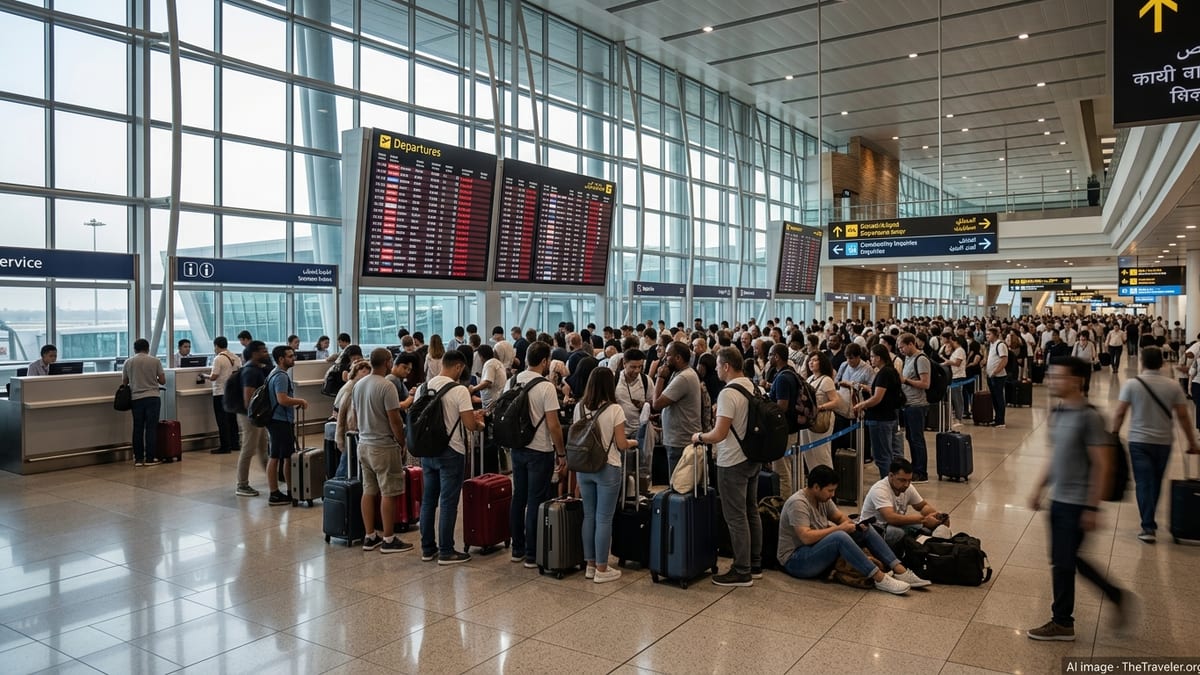
China’s Airports Face Large-Scale Disruptions
Publicly available aviation data and local media reports indicate that China has experienced some of the heaviest disruption, with thunderstorms and torrential rain linked to Typhoon Bavi forcing widespread cancellations at major airports. Coverage from regional outlets describes large clusters of flights scrubbed or severely delayed across eastern and southern provinces, particularly along the typhoon’s path.
Beijing Capital and Beijing Daxing, two of the country’s busiest gateways, have reported extensive knock-on delays as storms in southern and eastern China ripple through national schedules. Reports from financial and transport publications in China describe cascading effects, where aircraft unable to operate sectors in coastal regions fail to position for subsequent departures, amplifying disruption far from the storm’s core.
In the Yangtze River Delta, Shanghai’s two main airports have faced substantial schedule cuts. Domestic business media note that close to a third of flights at the city’s airports were reduced or canceled at one point as Bavi’s outer rainbands moved inland, a pattern consistent with earlier large-scale groundings during major typhoon events.
Further inland, reports from provincial news outlets highlight that airports in cities such as Chengdu have also preemptively canceled well over one hundred departures as the storm’s remnants and associated rain belts sweep westward. These proactive measures appear aimed at limiting airborne holding and diversion risks in regions forecast to experience sudden thunderstorms and heavy downpours.
Regional Ripple Effects From Singapore to Taiwan and Japan
The weather disruption is not confined to mainland China. According to published coverage from regional news organizations, at least 20 flights from Singapore bound for destinations in North Asia have been canceled as Typhoon Bavi moves from Japan toward Taiwan and the Chinese coast. Services operated by airlines including Singapore-based carriers and several Chinese and Taiwanese operators have been affected.
Media in Japan and Taiwan report that Bavi’s strong winds and heavy rain have led to suspended or reduced operations on multiple domestic and international routes. Images from ports and coastal cities show rough seas and intense squalls, illustrating the conditions that have prompted aviation authorities and airlines to pare back schedules.
In Taiwan, coverage from regional broadcasters and newspapers notes that international services have been particularly exposed, with several Asian carriers temporarily suspending or consolidating flights to Taipei as the island braced for severe weather. These adjustments echo previous typhoon seasons in which carriers reduced frequency and retimed departures to daytime windows considered operationally safer.
Across the wider region, travel forums and passenger reports describe missed connections and overnight stays as travelers rebook around the storm-affected hubs. While some airlines are offering flexible rebooking policies, capacity constraints on alternative flights are limiting options for last-minute changes, especially on popular summer routes between Southeast Asia and North Asia.
India’s Monsoon Adds to South Asian Travel Turbulence
While Typhoon Bavi dominates the weather narrative in East Asia, India is contending with its own seasonal disruptions as the southwest monsoon intensifies. Publicly available information from Indian meteorological bulletins points to heavy rain, low visibility, and periodic crosswinds at major airports including Mumbai, Delhi, and Bengaluru during peak storm episodes.
Domestic news coverage in India frequently highlights delays and rolling cancellations during strong monsoon bursts, particularly at coastal and western airports where localized flooding and waterlogged taxiways can slow ground operations. Air traffic controllers and airport operators often implement spacing measures between arriving and departing flights during intense cells, creating queues that can last for hours.
Airlines operating in India have continued to issue weather-related advisories each monsoon week, encouraging passengers to check flight status before heading to the airport. While many services eventually operate with delays rather than outright cancellations, tight turnarounds and interconnected networks mean even short disruptions can lead to missed onward flights on domestic and international sectors.
For South Asian travelers connecting via Southeast Asian and Gulf hubs into China, Taiwan, or Japan, this year’s combination of monsoon volatility in India and typhoon conditions further east is amplifying the risk of multi-leg itinerary disruption. Travel industry analysts in regional media have noted that such compound weather events are increasingly straining airline resilience and passenger patience alike.
Airlines Adjust Schedules and Advise Flexible Planning
Across Asia, publicly available airline advisories show carriers leaning heavily on advance cancellations and schedule rationalization to manage the latest bout of severe weather. In China, domestic airlines have published lists of preemptively canceled services, in some cases numbering in the thousands on peak days, as they seek to avoid last-minute turnbacks and diversion costs.
Internationally, carriers linking Southeast Asia to North Asia have trimmed frequencies to cities in the storm zone or temporarily shifted operations to alternative days. Regional news outlets report that some airlines are proactively rebooking passengers or waiving change fees on flights touching affected airports during the most intense periods of Bavi’s impact.
In South Asia, Indian carriers are emphasizing contingency planning around monsoon surges, with advisories recommending longer connection times and early arrival at airports. Travel agencies interviewed in local press coverage are urging clients to build in additional buffer days for complex multi-stop trips through weather-sensitive hubs.
Consumer advocates writing in regional business publications advise travelers to monitor airline mobile apps closely, keep contact details updated in reservations, and retain documentation of disruptions for potential compensation claims where applicable under local regulations. While policies differ by jurisdiction and carrier, passengers on some international routes may be eligible for vouchers, refunds, or accommodation support when significant delays or cancellations occur.
What Travelers Can Expect in the Coming Days
Meteorological forecasts across East Asia indicate that Typhoon Bavi and its associated weather systems will continue to influence flight operations as the storm completes its track across regional seas and makes or approaches landfall. Even as wind speeds diminish, trailing rainbands and lingering thunderstorms can sustain operational challenges, especially at congested coastal airports.
In China, published forecasts suggest ongoing heavy rain in portions of Fujian, Zhejiang, and neighboring provinces, which are home to some of the country’s busiest air hubs. This raises the likelihood of continued schedule adjustments, including further same-day cancellations if conditions deteriorate faster than expected.
In India, the monsoon is projected to remain active, with additional wet spells likely in central and western regions. Past seasons suggest that while operations generally continue throughout the monsoon, passengers should anticipate periodic disruption and allow extra time for key journeys, particularly during late afternoon and evening peaks when storms often intensify.
For travelers planning near-term trips across Asia, the latest developments underline the importance of closely tracking airline announcements and local weather updates. Flexible itineraries, travel insurance that explicitly covers weather-related disruption, and a willingness to adjust routing at short notice may prove essential as the region navigates another week of turbulent skies.