


More news on this day
A Delta Air Lines service operating as Flight DAL1063 diverted to Chattanooga, Tennessee, instead of reaching its planned destination, drawing fresh attention to how fast-changing weather and air-traffic conditions can disrupt even short domestic routes in the busy Southeast corridor.
Get the latest news straight to your inbox!
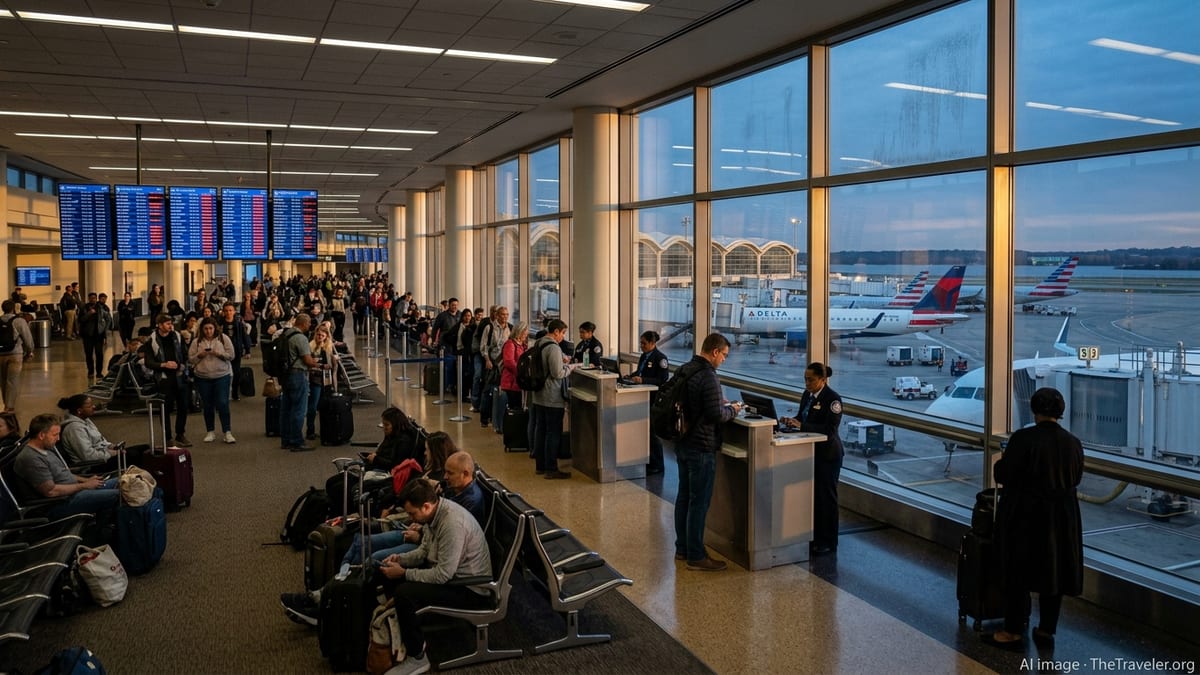
Unscheduled stop at Chattanooga for Delta service DAL1063
Publicly available flight-tracking information shows that a Delta Air Lines flight using the callsign DAL1063 made an unscheduled landing at Chattanooga Metropolitan Airport, a regional facility that frequently serves as a diversion point for traffic bound to or from Atlanta.
Data from aviation-tracking platforms indicates that DAL1063 normally operates as a domestic service between major U.S. cities, with routings that can include Atlanta and Chicago among its regular pairings. On the day of the diversion, the aircraft departed as scheduled but later altered course toward Chattanooga instead of continuing to its intended destination.
Reports shared by aviation enthusiasts and passengers on social media suggest the diversion was linked to weather and congestion in the Atlanta area, conditions that routinely affect flight operations across the southeastern United States in the summer months. No injuries were reported, and the landing at Chattanooga was completed without incident.
The aircraft later continued its journey after refueling and operational checks, with passengers either remaining onboard for the onward leg or being rebooked through Delta’s regular customer-service channels, according to traveler accounts.
Weather, fuel and airspace constraints behind many diversions
The DAL1063 diversion fits a well-established pattern for flights routed through Georgia and neighboring states, where summer thunderstorms and rapidly changing visibility can prompt crews to seek alternate airports. Chattanooga, with its location roughly halfway between several busy hubs, is often selected when air traffic into Atlanta becomes constrained or holding times lengthen.
Aviation forums and dispatch discussions describe previous periods when multiple aircraft diverted to Chattanooga in quick succession during significant weather disruptions, stretching the airport’s ramp and gate capacity. In such circumstances, flight crews balance fuel reserves, holding instructions and the evolving forecast before deciding whether to continue, hold longer or divert.
Federal rules on tarmac delays also shape those decisions. U.S. regulations limit how long passengers can remain onboard during extended ground delays, which can make a diversion to a smaller airport with available gate space preferable to circling near a congested hub. Operational manuals and public guidance from airlines outline that diversions are used to minimize risk while preserving options for onward travel.
For DAL1063, landing in Chattanooga allowed the crew to refuel and wait out conditions away from the most congested airspace, while ground teams coordinated the flight’s eventual continuation or passenger rebooking once the weather and traffic picture improved.
What passengers on DAL1063 likely experienced
Passenger accounts from this and similar diversions describe a sequence that often begins with a routine update from the flight deck about deteriorating weather or prolonged holding near the intended destination. Once the decision to divert is made, navigation systems are reprogrammed and the aircraft proceeds to the alternate airport, in this case Chattanooga.
Upon arrival, some flights are able to park directly at a gate, while others may wait for a stand to become available. Travelers report that they are typically informed of the expected ground time and whether they will deplane, remain onboard, or connect to alternative flights. In many diversion events through Chattanooga, some passengers whose final destination is the city opt to disembark and complete their journeys from there.
Where the schedule allows, airlines aim to continue the original flight once fuel, crew duty-time limits and weather conditions permit. In periods of heavy disruption, however, the diverted leg can be delayed for several hours or even canceled, with passengers moved to later services.
For DAL1063, public tracking records indicate that the diversion resulted in an arrival significantly later than originally planned, but still within the range commonly seen during severe-weather impacts across the region’s aviation network.
Chattanooga’s growing role as a diversion airport
Chattanooga Metropolitan Airport has steadily expanded its profile in recent years, not only as a local gateway but also as a practical diversion field for major carriers serving Atlanta and other southeastern hubs. The airport’s location, runway length and established relationships with major U.S. airlines make it a frequent choice for flights that need an alternate landing point on short notice.
Discussion within aviation communities has highlighted occasions when dozens of flights have used Chattanooga during severe-weather events, prompting airlines to send additional operations and ramp staff to help manage the temporary influx of aircraft and passengers. These surges underscore how regional airports can become critical pressure valves for the wider air-traffic system during storms and large-scale disruptions.
Delta’s broader schedule in and out of Chattanooga has also grown, with the carrier operating regular services alongside its role in diversion operations. This dual purpose gives flight planners and dispatchers flexibility when routing flights such as DAL1063 through weather-prone corridors.
For local travelers, the DAL1063 diversion is another reminder that their hometown airport plays a part not only in everyday regional connectivity but also in maintaining the resilience of the U.S. air network during periods of strain.
What this diversion means for travelers across the Southeast
The DAL1063 episode illustrates the practical realities of flying through one of the country’s busiest and most weather-sensitive aviation regions. Even when operations begin normally, thunderstorms, low clouds or congestion can trigger last-minute changes that reroute flights and lengthen journeys.
Travel experts often advise passengers connecting through Atlanta and neighboring hubs to build extra time into itineraries during peak storm seasons and to monitor airline apps for real-time updates. When diversions do occur, publicly available guidance from carriers explains that rebooking options, meal vouchers and overnight accommodations depend on the cause of the disruption and the specific terms of each ticket.
For Delta customers affected by the DAL1063 diversion, the experience underscores the value of flexible travel planning and the importance of staying informed through airline channels during fast-moving operational events. As climate patterns and travel demand continue to evolve, similar diversions to airports such as Chattanooga are likely to remain a feature of flying in the southeastern United States.