


More news on this day
Severe thunderstorms sweeping across north Georgia have triggered a temporary ground stop at Hartsfield-Jackson Atlanta International Airport, leading to widespread flight delays and cancellations across the United States at the height of the summer travel rush.
Get the latest news straight to your inbox!
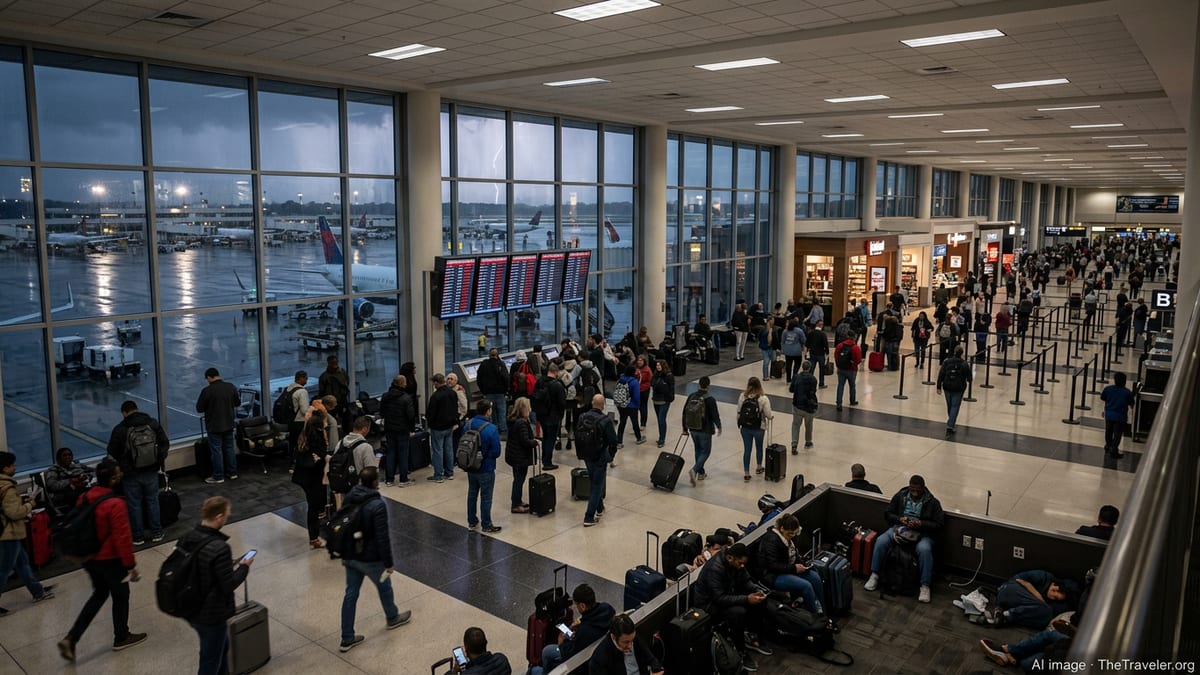
Storms Force FAA Ground Stop at Key U.S. Hub
According to publicly available Federal Aviation Administration data and local broadcast coverage, a ground stop was issued for flights bound for Hartsfield-Jackson Atlanta International Airport on Saturday, July 11, as intense thunderstorms moved through the metro area. The restriction paused many departures headed to the world’s busiest airport and slowed arrivals, as air traffic controllers reduced the rate at which aircraft could safely land and take off around lightning and heavy rain.
Reports from Atlanta-based outlets indicate that the initial ground stop window extended into the late afternoon, with some updates suggesting extensions as storms repeatedly redeveloped over central and north Georgia. FAA traffic management advisories and the agency’s national airspace status page showed Atlanta among the airports facing the most significant weather-related constraints.
While the ground stop itself was time-limited, its impact was amplified by the airport’s role as a primary hub for domestic and international connections. Delays at Atlanta quickly began to affect flights across the Southeast and beyond, as aircraft and crews were held out of position.
Widespread Delays and Growing Cancellations
Flight-tracking data and airline status boards on Saturday pointed to mounting disruptions as the afternoon wore on. Departures from Atlanta faced hold times that in some cases stretched well beyond an hour, while a number of inbound flights diverted or remained on the ground at origin airports awaiting clearance to depart.
Local news coverage highlighted reports from travelers describing long waits at gates and on taxiways as thunderstorms stalled over the region. Some passengers already aboard aircraft were held on the tarmac while ramp operations slowed or temporarily paused to protect ground crews from lightning in the immediate vicinity of the airfield.
As is common during weather-related ground stops, airlines began proactively canceling some services to prevent aircraft and crews from ending up in locations where they could not be efficiently redeployed. Disruptions were not limited to Atlanta itself, with knock-on delays reported at connecting airports across the country as missed connections forced last-minute rebookings and left some seats empty on departing flights.
Operations data reviewed late in the day showed departure and arrival delays at Atlanta running well above seasonal averages, signaling that recovery would likely extend into the evening and potentially affect early-morning departures on Sunday as aircraft and staff were repositioned.
Passenger Impact at the Height of Summer Travel
The ground stop and subsequent delays arrived as U.S. air travel demand remains high in mid-July, with summer vacationers, business travelers, and event-goers all passing through major hubs. Atlanta’s position as a primary connecting gateway meant the thunderstorms had an outsized impact on passengers whose journeys neither began nor ended in Georgia.
Travelers connecting through Atlanta reported missed onward flights, unexpected overnight stays, and difficulty securing alternative itineraries as seats filled on remaining departures. Social media posts and local television coverage described long security and customer-service lines as passengers sought assistance with rebooking and lodging.
Publicly available guidance from the FAA and airlines consistently advises travelers to monitor flight status closely during severe weather, use mobile apps for rebooking when possible, and build extra time into connections through major hubs during the summer storm season. The current disruption reinforced how quickly conditions can change when thunderstorms develop near a key airport.
Industry analyses also note that when a hub of Atlanta’s scale slows down, the ripple effects can persist for several schedule banks, particularly on routes with tight aircraft utilization. Travelers on later flights sometimes experience delays even after storms have cleared, as airlines work to reset their networks.
Why Thunderstorms Prompt Ground Stops
Published information from the FAA explains that ground stops are traffic management tools used when demand temporarily exceeds the ability of an airport or segment of airspace to handle flights safely. In the case of strong thunderstorms, controllers may reduce arrival and departure rates to keep aircraft separated from hazardous weather cells and to account for lower runway capacity in heavy rain, gusty winds, and reduced visibility.
At large hub airports such as Atlanta, severe convective weather can also disrupt standard arrival and departure routes, forcing aircraft to take longer paths around storm systems. Lightning presents an additional hazard for ramp workers, often requiring temporary pauses in baggage loading, refueling, and aircraft pushbacks until conditions improve, which further slows the flow of flights.
A series of such interruptions in quick succession can lead to backlogs that take hours to clear. Even after the FAA lifts a ground stop, airlines must contend with crew duty-time limits, aircraft inspections after severe weather, and the complex task of repositioning planes to where they are needed next, factors that can translate into continued delays and cancellations for passengers.
What Travelers Can Expect Next
Forecasts for north Georgia suggest the risk of additional scattered thunderstorms through the remainder of the weekend, raising the possibility of further intermittent slowdowns around Atlanta. Aviation planners typically use rolling forecasts and radar trends to adjust traffic management initiatives as conditions evolve, meaning that delays may ease or intensify with relatively little notice to travelers.
Publicly accessible FAA guidance encourages passengers scheduled to travel through Atlanta and other storm-prone hubs to stay alert to rapidly changing conditions, sign up for airline alerts, and consider allowing extra time for connections where itineraries permit. Those with flexible plans may find it advantageous to shift travel to less storm-prone times of day, such as early morning, when convective activity is typically lower.
While Saturday’s ground stop was limited in duration, the scale of the disruption underscored how vulnerable busy hub operations remain to summer thunderstorms. For many travelers, the episode served as another reminder that, during peak travel season, even a short-lived weather event over a critical airport can quickly ripple across the national air network.