


More news on this day
Travelers using Nice Côte d’Azur Airport in southern France are facing mounting delays and scattered cancellations this weekend, as peak summer traffic converges with wider congestion in French airspace and lingering weather disruptions across Europe.
Get the latest news straight to your inbox!
Real-time data show rising departure delays at Nice
Operational tracking platforms monitoring global air traffic indicate that Nice Côte d’Azur Airport is experiencing a noticeable build-up of departure delays on July 13, with average waits now exceeding half an hour on outbound flights and trending upward as the travel day progresses. These figures point to a busier and more challenging operating environment than earlier in the week, when punctuality across much of the European network had briefly improved.
Individual flight-status services for routes from Nice to major European cities such as Porto and Edinburgh on July 12 already showed late departures, signaling that constraints were beginning to emerge ahead of the weekend peak. Although many of those services ultimately operated, the knock-on effect of late turnarounds is now feeding into today’s timetable, particularly in the afternoon and evening waves when aircraft and crew are most tightly scheduled.
Arrivals into Nice remain generally more regular than departures, but late inbound aircraft are contributing to rolling delays on outbound sectors. Publicly available data suggest that while outright cancellations at Nice remain limited compared with some larger hubs, the pattern of recurrent 30-minute-plus delays is becoming a defining feature of the weekend operation.
French airspace bottlenecks and earlier strikes add pressure
Network briefings from Eurocontrol, the body that coordinates air traffic management across Europe, have highlighted France as one of the principal generators of en route delays so far this summer, citing capacity constraints, staffing issues and the ongoing roll-out of new traffic management systems. Although the latest weekly assessment noted an overall improvement in delay figures across the continent, France still accounts for a significant share of airborne holdups, particularly in sectors covering the south and Mediterranean approaches used by flights into and out of Nice.
In addition to structural capacity challenges, France’s aviation system has recently contended with industrial action. Previous strike notices affecting air traffic control and other aviation workers in recent months, including in the southeastern region, prompted pre-emptive schedule cuts and lengthy ground delays for flights serving Nice. While no major strike is reported today, residual congestion and crew-rostering knock-ons from earlier disruptions continue to complicate airline efforts to restore fully punctual operations.
Historical planning documents and mitigation plans for previous industrial actions have explicitly flagged Nice as an airport likely to experience a “very high impact” when south-of-France airspace is constrained. Even when no walkout is under way, those same underlying sensitivities make the airport more vulnerable to ripple effects from busy neighboring sectors and traffic rerouting elsewhere in the French network.
Weather and wider European disruption feed into Nice schedules
Meteorological outlooks for the French Riviera in recent days have pointed to generally favorable flying conditions around Nice, with warm temperatures and comparatively stable skies compared with the storms and high winds that affected other parts of Europe earlier in the summer. However, disruptions at distant hubs often cascade into Nice as aircraft cycle through multi-leg rotations.
During the winter and early part of 2026, major European hubs including Paris and airports further north endured severe weather episodes, such as windstorms and snow events, that forced hundreds of cancellations and long delays. These disruptions left airlines managing displaced aircraft and crews for days afterward. While those specific weather systems have passed, the combination of tight summer schedules and residual network imbalances continues to exert pressure on punctuality, especially at leisure-focused airports like Nice that see sharp peaks in demand.
Operational research on airport performance underlines how delays originating at one point in the network can propagate widely, particularly when aircraft are scheduled for multiple short- and medium-haul segments in a single day. Nice, serving both as a destination for holiday traffic and as a connecting point for some regional services, is exposed to such knock-on effects whenever upstream sectors encounter adverse conditions.
Summer 2026 traffic surge stretches airport and airline resources
Nice Côte d’Azur Airport has promoted an ambitious summer 2026 program, with around 130 destinations on offer and an expanded roster of airlines serving the Riviera. The schedule reflects strong demand for Mediterranean holidays and major events along the Côte d’Azur, but it also leaves limited margin for recovery when operations start to slip behind plan.
Higher frequencies to hubs such as Paris Charles de Gaulle and other major European cities mean more movements during peak hours on the airport’s runways and taxiways. Any small disruption, whether caused by a late inbound aircraft, a temporary ground-handling constraint, or minor technical inspections, can therefore generate disproportionate queues for departure slots. With aircraft usage optimized to maximize summer capacity, airlines have fewer spare machines or standby crews available locally to absorb unexpected disruptions.
Airport documentation on service charges for 2026 makes reference to compensation mechanisms linked to departure delays exceeding 30 minutes in cases where the airport operator is deemed responsible. The existence of such clauses underscores the recognition that punctuality is a key concern for both airlines and passengers at Nice, especially at a time when the airport is marketing the breadth of its summer network as a competitive advantage.
What passengers flying via Nice should expect now
For travelers heading through Nice this weekend, publicly available performance data and recent operational patterns suggest a high likelihood of moderate delays on departures, especially in the afternoon and evening. While most flights are still expected to operate, the growing average wait times point to a travel experience that may involve extended stays at the gate or on board before takeoff.
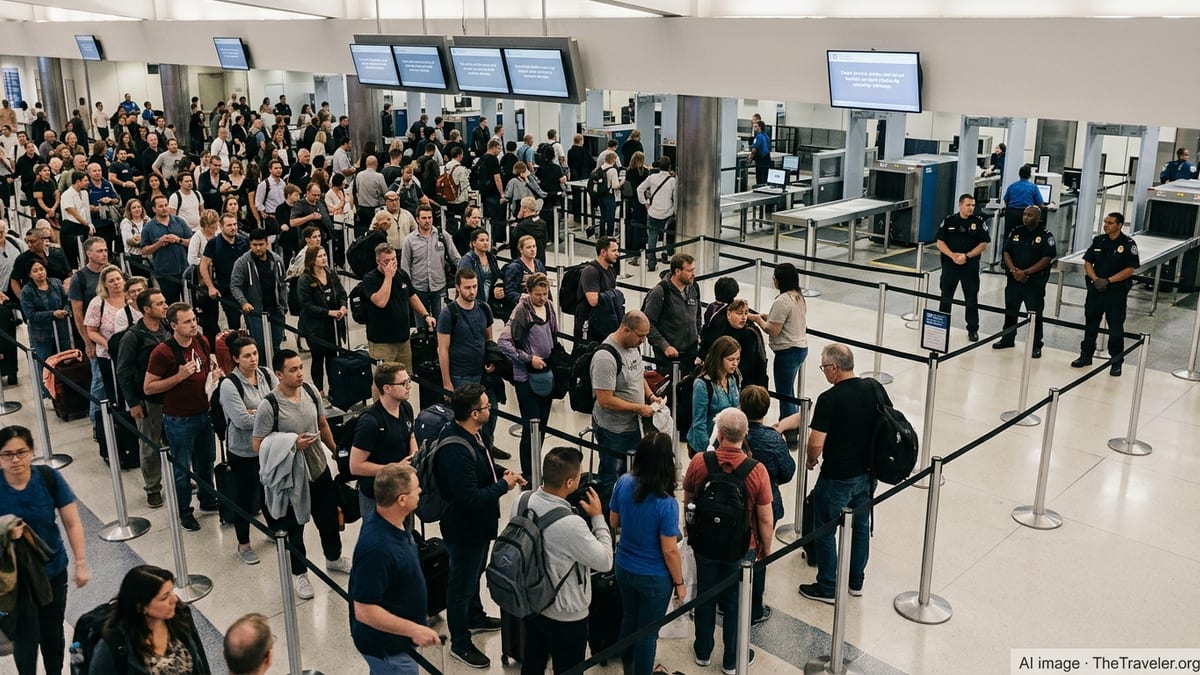
Passengers are likely to see longer queues at check in, security and boarding as busy banks of flights depart in close succession. Social media posts and community forums focused on Nice in recent weeks have described periods of congestion at security and occasional temporary closures of screening lanes, although many contributors also report that the airport can move quickly when all checkpoints are staffed and running normally.
With the broader European network still experiencing intermittent weather and airspace-related disruptions, airlines using Nice continue to adjust schedules and aircraft routings on short notice. Travelers booked on tight same-day connections via other European hubs may be particularly exposed to missed onward flights if departure delays from Nice extend beyond current averages. Industry guidance and traveler advocates routinely recommend allowing generous buffers between connecting flights and monitoring flight status closely during high season.