


More news on this day
China’s tourism industry is entering 2026 with powerful momentum, as domestic travel, peak holiday journeys and inbound visitor numbers collectively set new benchmarks following several years of uneven recovery.
Get the latest news straight to your inbox!
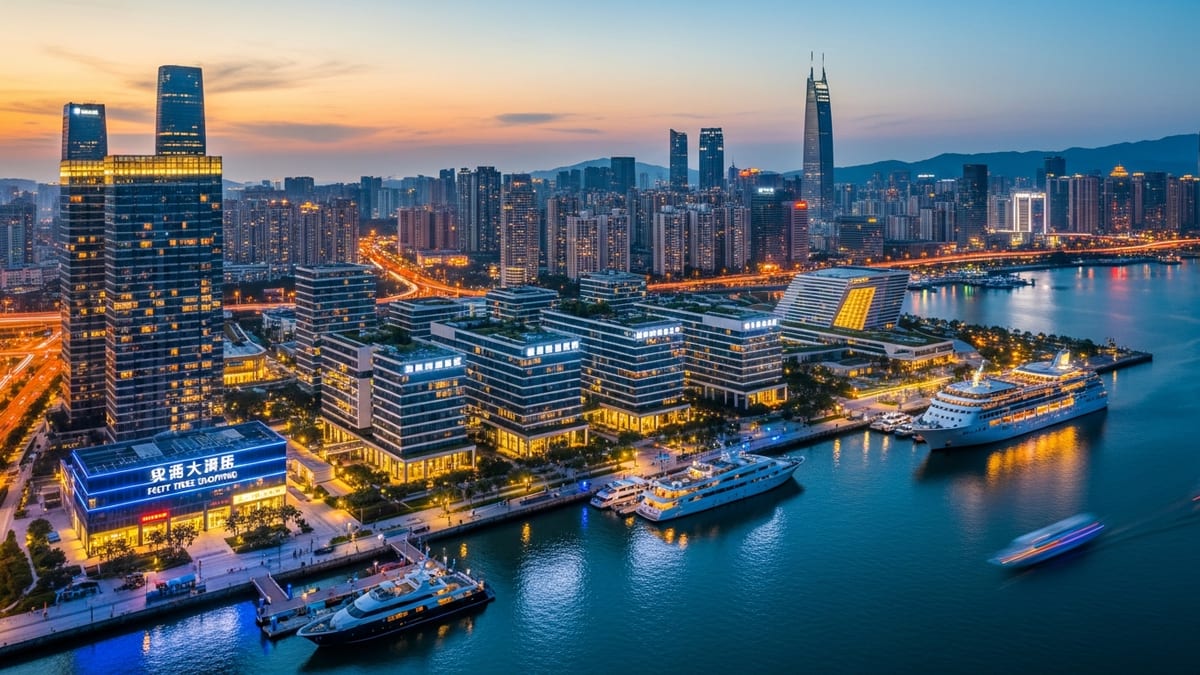
Domestic Tourism Hits Record Highs in 2026
Publicly available data from national tourism authorities and state media show that China’s domestic tourism market has shifted from recovery to record expansion. In late January 2026, coverage in Chinese outlets reported that total domestic tourist trips in 2025 reached about 6.5 billion, representing high single-digit growth over 2024 and moving decisively beyond pre-pandemic levels. That baseline has set the stage for even stronger performance this year.
The 2026 Spring Festival holiday has emerged as a key milestone. According to aggregated figures reported by official information platforms and trade media, the nine-day break from 15 to 23 February generated around 596 million domestic trips nationwide, a new high for the Lunar New Year period and an increase of roughly 95 million compared with the 2025 holiday. Estimated tourism spending during the same window surpassed 800 billion yuan, underlining the scale of pent-up demand for family reunions, cultural experiences and leisure travel.
Early spring data points reinforce the trend. For the three-day Qingming Festival holiday from 4 to 6 April 2026, the Ministry of Culture and Tourism’s published statistics, cited by travel-industry media, indicate about 135 million domestic trips and more than 61 billion yuan in related spending. Year-on-year growth across both indicators suggests that Chinese travelers are not only moving more frequently but also spending more per trip, especially on accommodation upgrades, cultural attractions and local cuisine.
Industry analysts interpret these numbers as evidence that domestic tourism has become a central pillar of China’s consumption strategy in 2026. Government economic planning documents and commentary emphasize tourism’s role in supporting services-led growth, with transport networks, scenic areas and smaller cities all positioned to benefit from the surge in internal mobility.
Holiday Travel Peaks Redefine the “Golden Week” Economy
China’s major holiday periods are once again acting as powerful demand accelerators. The extended Spring Festival break in 2026, building on the already busy travel rush known as Chunyun, concentrated hundreds of millions of journeys into a short window, filling high-speed trains, highways and airports across the country. Forecasts for the broader Spring Festival travel season, spanning roughly 40 days, have pointed to passenger volumes in the hundreds of millions, underscoring how holiday travel has fully reasserted its role in the national economy.
Historical benchmarks help explain the shift. During the eight-day Spring Festival in 2025, China recorded about 501 million domestic tourist trips and more than 677 billion yuan in tourism-related revenue, according to previously released figures from the Ministry of Culture and Tourism. The 2026 holiday not only exceeded those counts but did so with a longer official break and stronger participation from lower-tier cities and rural destinations, as reported by regional tourism bureaus and domestic research institutes.
Other holiday windows are contributing to the upturn. Data published by the China Tourism Academy and national media for the 2025 May Day holiday highlighted approximately 314 million domestic trips over just five days, alongside close to 180 billion yuan in spending. Travel platforms and hotel operators reported rising occupancy and room rates, particularly in popular urban centers and coastal provinces. These patterns are widely expected to continue into the 2026 May Day period, with tour operators already marketing early booking discounts and themed routes.
Short-break travel is also gaining prominence. For holidays like Qingming and upcoming summer weekends, booking data cited in travel trend reports indicate strong interest in two to three-day escapes from major metropolitan areas. This shift further supports regional tourism economies, including smaller cultural towns, countryside homestays and nature reserves reachable by high-speed rail or expressways.
Inbound Tourism Rebounds on Expanding Visa-Free Access
Alongside booming domestic demand, China’s inbound tourism segment is staging a notable comeback in the run-up to the peak 2026 travel season. Published figures from the Ministry of Culture and Tourism show that foreign visitor numbers nearly doubled in 2024 compared with the previous year, reaching close to 27 million. That rebound continued into 2025, when immigration authorities reported more than 30 million inbound visits under visa-free arrangements alone, accounting for the majority of foreign entries.
Policy shifts are playing a central role. In February 2026, international news coverage reported that China extended visa-free entry to citizens of the United Kingdom and Canada, bringing the number of countries benefiting from such access to nearly 80. For eligible travelers, stays of up to 30 days are permitted for tourism, business and family visits, significantly reducing planning friction and costs. Many European countries, along with selected markets in Latin America, Southeast Asia and the Middle East, now fall under some form of visa-free scheme.
Earlier steps include the expansion of 144-hour visa-free transit options and mutual visa waiver agreements with several Asian partners. Travel industry reports have linked these changes to sharp increases in inbound bookings from markets such as Southeast Asia and parts of Europe, particularly for urban sightseeing, shopping and cultural experiences in cities like Beijing, Shanghai, Guangzhou and Chengdu.
Although inbound volumes have not yet matched the peaks of the late 2010s, the current trajectory suggests that 2026 could mark the strongest year since the pandemic for international arrivals. Analysts note that further improvements in flight capacity, digital payment accessibility and multilingual services will be key to sustaining this momentum, especially as competing destinations in Asia and Europe also court long-haul travelers.
Shifting Traveler Preferences Reshape Destinations and Products
The latest wave of data from national tourism authorities, combined with booking insights shared by major online travel platforms, illustrates how Chinese travelers’ preferences are evolving in 2026. There is growing demand for culture-rich itineraries, outdoor activities and bespoke experiences, rather than simple sightseeing at traditional hotspots. Reports on the 2026 Spring Festival and Qingming holidays highlight strong growth for museum visits, historical districts, local festivals and performing arts venues.
Rural and “small-city” tourism continues to expand as infrastructure improves. High-speed rail networks and highway upgrades are bringing lesser-known destinations within easy reach of first-tier metropolises. Provincial statistics and media features describe rising visitor numbers in heritage towns, agricultural tourism villages and minority cultural regions, where homestays, farm-to-table dining and nature hikes are increasingly popular. These trends are seen as aligning with national goals to revitalize rural economies and diversify income sources.
Technology is also reshaping the travel experience. Mobile-first booking, dynamic pricing and algorithm-driven recommendations have become standard across platforms, helping travelers assemble complex itineraries that mix urban and rural stays. During major holidays, platforms report spikes in searches for self-drive routes, family-friendly attractions and pet-friendly accommodations, reflecting broader lifestyle shifts among younger and middle-class consumers.
At the same time, sustainability considerations are gaining more attention in public discourse. While hard data on low-carbon travel adoption remains limited, tourism development plans released by several regions reference ecological protection, capacity management and off-peak promotion. This focus is likely to intensify as domestic tourist flows expand and pressure grows on popular natural and cultural sites.
What International Travelers Need to Know for 2026
For international visitors eyeing trips to China in 2026, the current environment offers both new opportunities and practical considerations. Visa-free access now covers a significantly wider range of nationalities, but eligibility, permitted length of stay and entry points vary by country and policy type. Travelers are advised, based on publicly available guidance from embassies and immigration agencies, to check the latest entry rules, including transit allowances, before departure.
With domestic tourism already running at or above former records, capacity constraints are a key factor around major holidays such as Spring Festival, May Day, National Day and long summer weekends. Transport networks, popular scenic sites and major urban attractions can become extremely crowded, and pricing for flights and hotels typically rises sharply. Many travel advisories and commercial guides suggest that international visitors either book far in advance for those peak periods or consider shoulder seasons, when weather conditions can still be favorable and attractions are less congested.
On the ground, the rapid normalization of mobile payments and app-based services has made day-to-day travel more seamless but can present an adjustment for newcomers. Recent improvements to allow broader use of foreign bank cards on leading payment platforms, as widely reported in financial and travel coverage, are gradually lowering barriers. However, having multiple payment options and some cash on hand remains prudent, especially in smaller cities and rural areas.
Overall, the combination of record domestic travel, strengthening holiday spending and expanding visa-free entry suggests that 2026 will be a defining year for China’s tourism sector. For both domestic and international travelers, the country’s vast geography, upgraded infrastructure and renewed focus on cultural and experiential tourism are creating a broad array of options, from megacity skylines to remote landscapes.