


More news on this day
China’s latest special tourist service, the Y404 train, is drawing attention across the country by transforming a conventional rail journey into a mobile classroom that blends long-distance travel with immersive lessons in history, geography and science.
Get the latest news straight to your inbox!
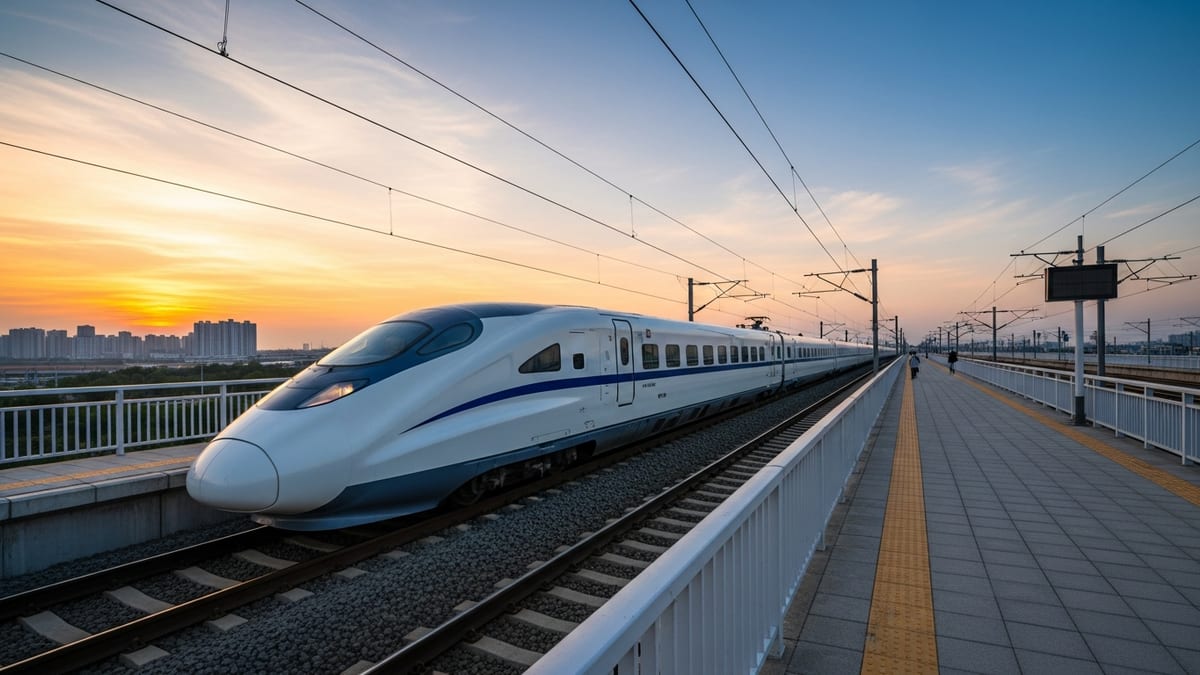
A Flagship For China’s Expanding Tourism Train Strategy
The Y404 train is emerging at a moment when China is rapidly scaling up its portfolio of themed and customized tourist trains, reflecting a broader national push to link transport infrastructure more closely with culture and education. Publicly available policy documents describe plans to operate more than 160 special tourist train units nationwide by 2030, positioning rail as a core platform for new travel products ranging from senior-friendly tours to youth study trips.
Within that framework, the Y404 service is being framed as a showcase for how educational content can be woven directly into the travel experience. Rather than simply moving passengers from one city to another, the route is marketed as a curated journey through multiple regions, highlighting topics such as engineering achievements, environmental conservation and regional folk culture. Analysts note that this fits with a wider trend in China’s domestic tourism sector toward more themed, experience-driven products rather than purely scenic sightseeing.
The introduction of Y404 also coincides with a broader rebound and diversification in China’s rail tourism market. Reports on the sector point to rising demand for rail-based holidays that combine comfort with deeper engagement, whether through culture-focused trains in central China, cross-border tourism services in the southwest, or maglev tourist lines linked to major resorts. Against that backdrop, the Y404 train is being presented as part of a new generation of services designed to appeal especially to families, students and organized school groups.
Onboard Classrooms, Curated Lessons And Interactive Spaces
What sets the Y404 apart from earlier tourism-oriented trains is the degree to which the onboard environment has been built around structured learning. Public descriptions of the service indicate that several carriages have been adapted as multipurpose teaching and activity spaces, with modular seating, large display screens and exhibition walls that can host rotating educational content. These carriages are intended to support lectures, hands-on workshops and guided activities during longer stretches between major stations.
The educational themes are closely tied to the regions the train passes through. As the route crosses areas known for significant engineering projects, passengers are introduced to rail technology, bridge design and tunnel construction. When the train approaches ecologically sensitive landscapes, the focus shifts toward biodiversity, wetlands protection and sustainable development practices. For younger travelers, materials are reportedly tailored with age-appropriate visuals, games and quizzes to maintain engagement over multi-hour segments of the journey.
Service design also reflects many of the comfort and accessibility upgrades that have been appearing on other new tourist trains in China. Industry coverage of recent customized services highlights features such as hotel-style sleeper cabins, improved sanitation facilities and dedicated spaces for medical support. While details vary from route to route, Y404 is described as incorporating similar passenger-friendly touches so that study groups, including very young students and older chaperones, can rest, dine and attend activities in a relatively self-contained environment.
Linking Schools, Scenic Spots And Regional Heritage
Education-focused rail journeys like Y404 are being promoted as a response to growing demand for structured study tours that extend beyond traditional classroom settings. Over the past several years, local governments and railway-affiliated travel companies in China have experimented with dedicated “study tour” trains that connect major cities with historical towns, museums and ecological reserves. The Y404 line is positioned squarely within that movement, with itineraries that emphasize curriculum-linked stops and guided site visits.
Along the route, participating schools and youth groups are offered access to destinations selected for their educational value. These may include heritage districts that illustrate different stages of China’s modern urbanization, industrial museums that document the evolution of rail technology, and natural attractions where students can examine geology or biology topics firsthand. Travel segments aboard the train serve as extensions of these visits, with instructors able to consolidate learning using onboard materials and region-specific data.
Observers of China’s domestic tourism market note that this model aligns with efforts in many provinces to integrate cultural and tourism resources more systematically. Rail corridors are increasingly viewed as spines that can knit together clusters of attractions into coherent routes, and educational trains such as Y404 help package these routes in a form that is easy for schools and parents to adopt. By bundling transport, accommodation-style services and structured learning, organizers seek to reduce logistical complexity while raising the perceived value of each trip.
Economic And Social Ambitions Behind Educational Rail Tourism
Beyond the novelty of turning train carriages into classrooms, Y404 reflects broader economic and social objectives attached to China’s rail network. Research on high-speed and conventional rail development in the country has highlighted how new lines can reshape regional economies by redirecting passenger flows, strengthening urban-rural links and encouraging tourism investment around stations. Educational tourism trains are seen as one way to channel those dynamics in a targeted and inclusive direction.
By running a specialized service that attracts school groups and families, Y404 and similar trains can help distribute tourism spending more evenly across smaller cities and less-visited counties along the line. Local governments in several regions have been encouraging the development of railway-adjacent museums, cultural parks and science centers that can host visiting students. When bundled into an educational itinerary, these facilities may benefit from a more predictable flow of visitors spread across the school year, not just during peak holiday seasons.
The social aims are equally prominent. Public commentary on China’s tourism train strategy often emphasizes the potential to improve access to travel and learning experiences for young people from interior provinces, minority regions and smaller towns. By making long-distance journeys safer, more structured and explicitly educational, services like Y404 are framed as tools for broadening horizons, reinforcing classroom learning and fostering greater awareness of national history and geography among the next generation of travelers.
A Glimpse Of Future Rail Experiences For Young Travelers
The emergence of the Y404 educational train underscores how quickly expectations for rail travel in China are evolving. Where overnight or long-distance services were once judged mainly on speed and comfort, there is now growing interest in what happens during the journey itself. Themed trains featuring cultural performances, wellness programs or hotel-like amenities have already begun to diversify the market, and Y404’s classroom-forward model adds another dimension to that evolution.
Industry observers suggest that if the Y404 concept proves successful, similar educational trains could be replicated on other major corridors, potentially tied to regional strengths such as maritime heritage along coastal lines, agricultural innovation in central provinces, or cross-border cultural exchange on international routes. The modular nature of onboard learning spaces and digital content makes it relatively straightforward to adapt the experience to different audiences and curricula.
For now, Y404 stands as a prominent example of how rail operators and tourism planners in China are experimenting with new ways to use existing infrastructure. By elevating the journey from simple transit to structured exploration, the train points toward a future in which students and families increasingly view the rail network not only as a way to reach scenic destinations, but as a destination and learning environment in its own right.