


More news on this day
A powerful rebound in outbound Chinese travel is helping to drive a faster-than-average tourism recovery in the Middle East, as Gulf Cooperation Council countries court high-spending visitors with visa easing, new flight capacity, and tailored luxury experiences.
Get the latest news straight to your inbox!
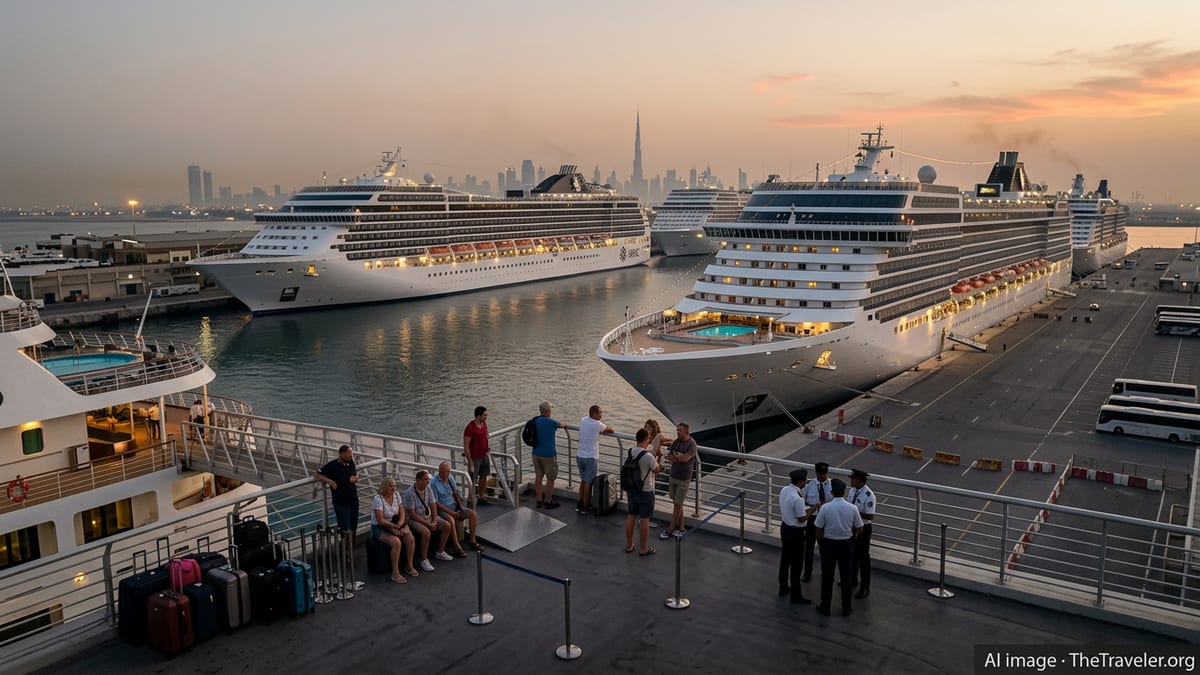
Middle East Leads Global Recovery in Chinese Arrivals
Tourism data released over the past year indicates that the Middle East has emerged as one of the earliest regions to regain a substantial share of pre-pandemic Chinese visitor volumes. Research presented around major trade events such as Arabian Travel Market points to the region as among the first globally where Chinese inbound travel is approaching or exceeding 2019 benchmarks, even while many long-haul markets in Europe and North America remain below pre-crisis levels.
Industry analyses of global tourism patterns show that the Middle East recorded some of the strongest overall arrival growth compared with 2019, reflecting aggressive investment in airports, airlines, hospitality and destination marketing. Within that trend, Chinese travelers are viewed as a critical driver of incremental growth rather than merely a return to the status quo, particularly in Gulf markets that historically relied on shorter-haul regional visitors.
Market forecasts from Chinese and international tourism research institutes suggest that outbound travel from China continues to climb toward full recovery, with Middle East destinations capturing a disproportionate share of early long-haul demand. This has underpinned a shift in strategy among Gulf tourism boards, which are seeking to lock in Chinese travelers now as repeat visitors in the coming decade.
Gulf States Target High-Value Chinese Visitors
Gulf destinations including the United Arab Emirates, Saudi Arabia and Qatar are positioning themselves as hubs for high-value Chinese tourism by aligning infrastructure, retail offerings and payment systems with visitor expectations. Dubai’s visitor reporting highlights China among its fastest-growing source markets since borders reopened, helped by the city’s extensive air links, large inventory of upscale hotels, and reputation for luxury shopping.
Saudi Arabia, which is in the midst of a broad tourism push tied to its Vision 2030 economic diversification plan, has reported sharp gains in international arrivals and spending, supported by expanded e-visa access and promotion of heritage destinations such as AlUla. While the bulk of visitors still come from regional and Muslim-majority markets, publicly available data and trade commentary describe China as a rising long-haul priority, particularly for premium cultural itineraries and destination mega-projects along the Red Sea and in the capital Riyadh.
Qatar, building on the exposure it gained from hosting the FIFA World Cup, has also flagged China as an important growth market as it works to sustain visitor numbers in excess of pre-tournament levels. Tourism updates show that China now appears among the top international source markets by volume, reinforcing the Gulf state’s shift from event-led spikes to a more diversified, year-round tourism base.
Visa Easing and Air Links Lower Barriers to Travel
Visa liberalization across both sides of the China–Gulf corridor is reshaping travel flows and encouraging higher-frequency visits. The United Arab Emirates grants visa-free entry to Chinese passport holders for short stays and recently extended the maximum stay period, strengthening its role as a natural transfer point and holiday gateway for mainland travelers. These measures dovetail with the UAE’s status as a major aviation hub, with Chinese carriers and Gulf airlines gradually rebuilding routes and adding frequencies.
Saudi Arabia has broadened its tourist visa regime in phases, rolling out e-visas and visa-on-arrival options for a growing number of nationalities and streamlining application processes for leisure and business travelers. While requirements for Chinese citizens still involve formalities in many cases, local and regional coverage indicates that easing barriers for this market is a stated objective as the kingdom competes directly with neighboring hubs.
On the Chinese side, recent moves to expand visa-free access for visitors from Gulf states and to simplify procedures for cross-border travel are expected to reinforce two-way flows. Policy updates show that all Gulf Cooperation Council members now benefit from visa waiver or simplified entry arrangements into China, a step that deepens air connectivity and supports joint tourism promotion initiatives that bundle itineraries across multiple cities and regions.
Spending Power and New Travel Patterns
Chinese travelers to the Middle East are widely regarded as high-value guests, with spending patterns that favor branded retail, fine dining and curated experiences. Regional tourism research based on card transactions and survey data suggests that average per-trip spending by Chinese visitors in Arab destinations is significantly above that of many other markets, supporting luxury malls, designer outlets and entertainment venues in cities such as Dubai, Abu Dhabi and Doha.
At the same time, travel behavior is evolving beyond classic shopping and city breaks. Reports from operators active in the region describe rising interest from Chinese groups and independent travelers in desert resorts, cultural festivals, art districts and coastal escapes, particularly in Saudi Arabia and the United Arab Emirates. This has encouraged developers to design products that pair iconic city skylines with heritage sites, nature reserves and adventure activities.
Payment infrastructure is also adapting to this demand. Acceptance of Chinese mobile payment platforms is expanding quickly in Gulf retail and hospitality outlets, making it easier for visitors to transact without cash or international cards. This convergence of digital ecosystems reduces friction at the point of sale and positions the region to capture a larger share of discretionary spending among affluent Chinese tourists.
Competition, Diversification and Risks Ahead
The growing importance of Chinese tourism to the Middle East is unfolding against a backdrop of intense global competition for the same market. Southeast Asian destinations have moved aggressively with visa waivers and promotional campaigns tailored to China, while Europe and North America are working to rebuild air capacity and address backlogs in consular processing. Gulf states are seeking to differentiate themselves with shorter flight times compared with Europe, favorable winter weather, and a concentration of high-end hotels and attractions.
To sustain momentum, regional tourism planners are emphasizing diversification within the Chinese segment itself. Instead of relying solely on large package-tour groups, strategies increasingly focus on attracting repeat visitors, younger independent travelers, and niche interests such as sports, wellness, meetings and exhibitions. New direct routes beyond the main megacities, combined with Mandarin-language services and digital outreach on Chinese social platforms, are seen as critical to unlocking demand from emerging second-tier urban centers.
Analysts also note that the reliance on a small number of long-haul source markets carries risks, including exchange-rate volatility, geopolitical tensions and changing domestic policy priorities in China. As a result, Gulf destinations are trying to balance a strong bet on Chinese high-value travelers with efforts to deepen ties to India, Europe, Central Asia and intra-GCC tourism. For now, however, the rapid return of Chinese visitors is providing a visible boost to hotel occupancy, retail sales and aviation revenues across the region, underscoring their central role in the Middle East’s tourism rebound.