


More news on this day
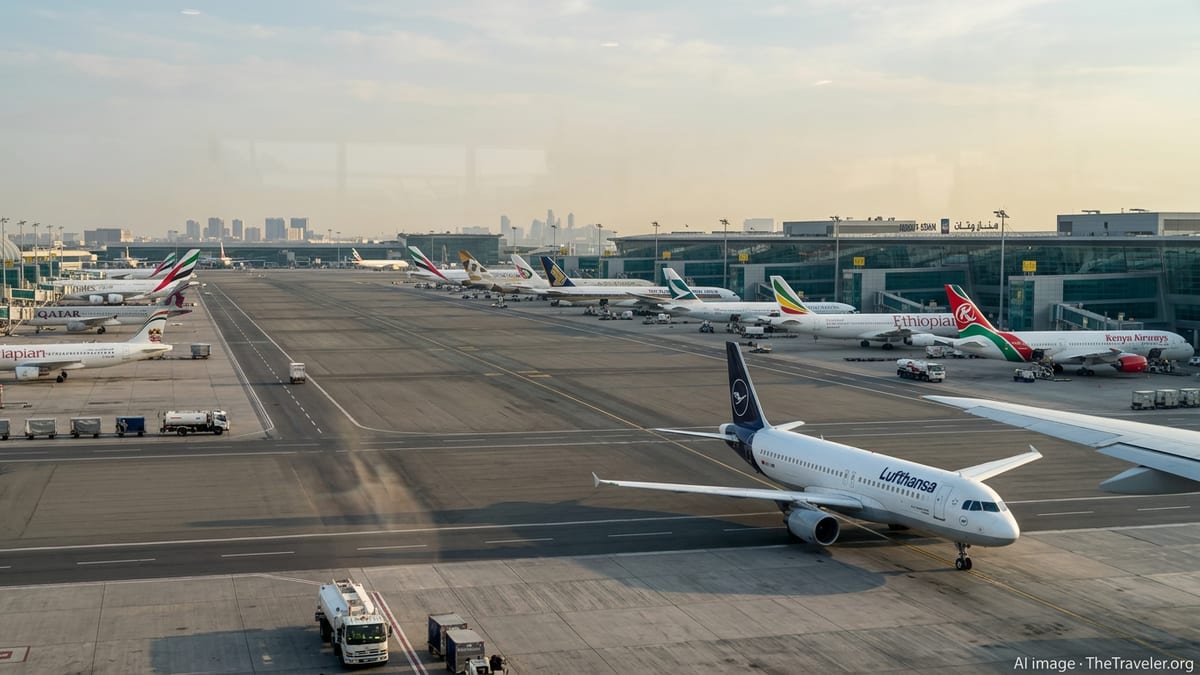
Lufthansa Group has confirmed further cancellations on its routes to Dubai, prolonging the suspension of flights between Europe and the Gulf hub and forcing thousands of summer and early autumn travelers to rethink their plans.
Get the latest news straight to your inbox!
Suspension window stretches toward late September
Recent schedule updates and industry summaries indicate that Lufthansa and its group carriers have extended the freeze on regular passenger services to Dubai into September, lengthening what was initially framed as a short interruption into a months long suspension. Internal policy circulars circulated to trade partners in March placed Dubai flights on hold at least through late March, but later digests tracking the Middle East crisis show Dubai remaining off the network until mid September.
The move affects Lufthansa and partner brands that had been operating or planning services into Dubai International and Dubai World Central from key European hubs. Timetables that once showed summer capacity into the United Arab Emirates now display gaps, with Dubai listed among destinations where service is suspended for an extended period. Travel industry analyses of airline schedules list Lufthansa, SWISS and ITA Airways among carriers maintaining a Dubai pause deep into the off peak shoulder season.
This latest adjustment comes on top of earlier cancellations linked to the wider disruption of traffic between Europe and the Middle East. Early projections that flights might resume in time for the main summer holiday period have now been replaced by more cautious timelines, with some publicly available summaries noting that the group is planning for Dubai suspensions until at least 13 September.
Security situation and airspace constraints weigh on planning
The underlying drivers of the prolonged cancellations are rooted in the ongoing security situation across parts of the Middle East and the knock on effect on overflight permissions and routing options. Policy notices from Lufthansa Group in early March stated that flights to Dubai and Abu Dhabi were being halted due to the situation in the region, alongside existing suspensions to cities such as Tel Aviv, Beirut and Tehran.
Subsequent industry reports tracking the impact of the conflict describe a sharp reduction in daily flights between Europe and the broader Middle East, as airlines rework or withdraw services on selected city pairs. Eurocontrol data cited in travel sector briefings point to a significant fall in total frequencies, with tens of thousands of flights canceled in the first weeks of the crisis and many carriers forced to fly longer detours around closed or restricted airspace.
For Lufthansa Group, the combination of extended routings, higher operating costs and uncertainty around the stability of key air corridors appears to have made a near term restart of Dubai services less feasible. Analysts following the European airline sector note that long haul flights into the Gulf often rely on predictable flight times and high aircraft utilization, conditions that are difficult to guarantee when airspace restrictions can change on short notice.
Ripple effects for European travelers and the Dubai hub
The decision to keep Dubai off the schedule for longer is being felt most immediately by passengers who had planned to use Lufthansa and its partners as a bridge between European cities and the Gulf. Consumer posts on travel forums show itineraries involving Lufthansa or other European carriers being rerouted, with Dubai sectors removed and replacement connections offered through alternative hubs or on partner airlines.
For Dubai, the sustained absence of a major European airline group reduces the diversity of nonstop options into key markets such as Germany, Switzerland and Italy. While Gulf based carriers continue to operate extensive networks into Europe, the loss of direct services by a large European group can affect competitive dynamics on fares and connectivity, particularly for corporate travelers tied to specific alliance networks and frequent flyer programs.
Travel planners note that capacity constraints on remaining routes may translate into higher prices and fewer choices at peak times. Some agencies are advising clients to secure seats earlier than usual on alternative carriers, especially for late summer and early autumn departures when the Lufthansa Group suspension window is expected to still be in effect.
Rebooking, refunds and what affected passengers can do
For travelers holding tickets on canceled Dubai services, the main avenues are rebooking on different routings or seeking refunds, subject to fare rules and the policies the group has set out for this disruption. Trade circulars shared with agents in March outline options for customers whose flights are canceled, including rebooking on alternative dates or routes and, in some cases, refunds without additional fees when unused coupons remain on the ticket.
Passengers who booked through third party platforms are being reminded that changes usually need to be handled by the original point of sale. Discussions on consumer forums highlight cases in which travelers have been shifted from Lufthansa operated flights to itineraries involving other European or Gulf carriers, sometimes with additional layovers or overnight connections. Others report being encouraged to opt for full refunds and to make fresh bookings with airlines that still operate to Dubai.
Industry observers recommend that passengers monitor their reservations closely through airline apps and regularly check departure airports and times, as timetables continue to evolve. Schedule changes can occur weeks in advance or, in some cases, within days of departure, and holding accurate contact details in booking records is seen as essential for receiving automated notifications.
Broader outlook for Europe to Dubai connectivity
The Lufthansa Group’s latest extensions feed into a wider pattern of European airlines scaling back direct links to Dubai during the current crisis period. Travel advisories circulating in expatriate and worker communities in the Gulf list multiple European brands that have suspended Dubai services into the summer, reflecting a cautious approach to both security and commercial risk.
At the same time, Gulf carriers based in the United Arab Emirates and neighboring states continue to anchor much of the long haul connectivity between Europe and the region. For many European travelers, this has meant shifting loyalty in the short term toward airlines that maintain dense hub operations in Dubai and other Gulf cities, even as they navigate occasional schedule tweaks and equipment changes.
Looking ahead, analysts suggest that a sustained improvement in regional stability and a clearer outlook on airspace access will be needed before European groups commit aircraft back to suspended Dubai routes. For now, the extended cancellations by Lufthansa signal that uncertainty is likely to persist into at least early autumn, and that travelers planning trips involving Dubai should build in extra flexibility and closely track developments in airline schedules.