


More news on this day
Travellers heading into several major city centres in early September face disruption as key streets close for planned works, prompting renewed warnings to check routes and allow extra journey time.
Get the latest news straight to your inbox!
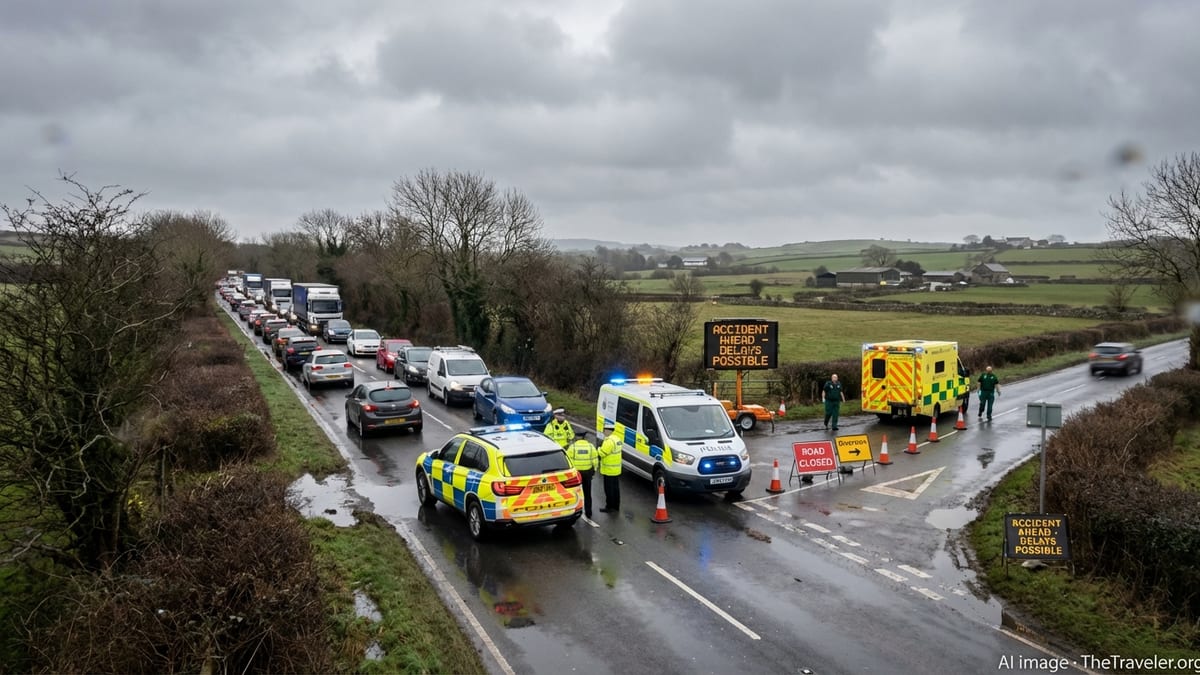
Central London streets shut to general traffic
In the City of London, the latest road closure register lists a cluster of central streets shut to general traffic on 6 September 2026, with access generally limited to works vehicles and local servicing. Publicly available information from the City of London Corporation shows Aldermanbury is closed between Gresham Street and Love Lane for building related activity affecting the carriageway.
The same register highlights nearby restrictions on Gresham Street, King Edward Street and surrounding junctions, creating a pocket of reduced vehicle access close to key financial and retail areas. The works are scheduled to run throughout the day, affecting typical commuting, delivery and visitor patterns into the Square Mile.
Transport updates indicate that these closures sit alongside ongoing traffic management on Transport for London’s red routes, with diversion signing deployed on approach roads. Drivers are advised to follow marked alternatives around St Paul’s Cathedral and Moorgate, while those unfamiliar with the area are encouraged to rely on live navigation updates before entering the central zone.
Published guidance also points to wider construction embargoes in Manhattan and other global financial districts during major events, underlining how central business areas can see rapid changes to normal access as local authorities coordinate works with security and event timetables.
York prepares for overnight highway shutdowns
In northern England, travellers heading towards York are being warned about significant night-time disruption on one of the main approaches to the city. Coverage in regional outlets summarising City of York Council notices reports that around three miles of the A1079 between the York Road junction at Dunnington and the city boundary at Kexby Bridge will be resurfaced overnight from Monday 7 September 2026.
The scheme is expected to last for 14 nights, with full closures from 8 pm until 6 am. While daytime travel will remain possible, the shut sections during overnight periods will affect late returning holiday traffic, freight movements and early airport transfers using the route to connect with the A64 and wider motorway network.
Detour plans direct drivers onto alternative A roads running north and south of the main corridor, adding distance and time to typical journeys into York. Local analysis recommends that visitors with hotel bookings in the city centre check whether evening arrival by car coincides with the closures, and if so consider earlier departure times or rail alternatives.
Officials have framed the resurfacing as essential maintenance on a heavily used interurban link, timed for the end of the main summer holiday period but before autumn weather sets in. However, the location and timing of the works mean that late season city breaks and business trips in mid September will need more careful planning.
Denver lane reductions on key downtown arteries
In the United States, Denver’s Department of Transportation and Infrastructure has issued a detailed travel advisory for central corridors close to the city’s entertainment and sports districts. Publicly available bulletins describe lane closures on Auraria Parkway between Speer Boulevard and 11th Street for paving and concrete panel replacement.
Related works require the closure of two far left lanes on southbound Speer Boulevard between Chopper Circle and the Blake Street and Auraria Parkway junction, leaving reduced capacity on a stretch that carries traffic between downtown, the Auraria campus and key venues. One travel lane on Auraria Parkway will remain open, but congestion is expected during peak commuter periods and around events.
The advisory notes that the restrictions will be in place across several days in early September, overlapping with regular weekday traffic and planned stadium activities. Drivers heading to downtown offices or attractions by car are being directed to use signed detours or consider parallel routes where available.
Local coverage suggests that public transport and cycling connections may offer more predictable journey times while the lane reductions are in force. Visitors arriving from Denver International Airport and transferring to hotels in the central business district are encouraged to check whether their shuttle or ride share routes normally rely on Speer Boulevard or Auraria Parkway and adjust accordingly.
Perth announces CBD closures for infrastructure works
In Australia, the City of Perth has updated its public notices to flag short term but high impact closures around Roe Street and Queen Street in the central business district. A notice dated 7 September 2026 confirms a road closure affecting the Roe Street and Queens Street intersection for scheduled works.
This location sits on the edge of Perth’s entertainment precinct and connects with key access routes leading towards Northbridge and the central shopping area. The closure will temporarily limit cross city movements and may divert traffic onto surrounding streets that are already heavily used at peak times.
According to the published notice, signage and traffic management personnel will be in place to guide vehicles and pedestrians around the works area. Local businesses remain accessible, but visitors are advised to allow extra time when entering or exiting city centre car parks that typically rely on Roe Street as a preferred approach.
The Perth update follows a series of earlier temporary closures in the same district linked to both events and infrastructure upgrades. Travel planners note that repeat visitors who rely on habitual routes into the CBD should verify up to date conditions rather than assuming that previously familiar turns and exits remain available.
What urban travellers should do before setting off
While the individual schemes in London, York, Denver and Perth differ in scale and timing, they share a common pattern of targeting busy central corridors for resurfacing, safety upgrades and construction access. Recent weeks have also seen advisories for other cities, including one way reductions and rolling closures in central Baltimore and around major freeway approaches into San Francisco, showing how quickly city networks can change from one weekend to the next.
Travel reports emphasise that many closures operate only overnight or on selected days, which can make them easy to overlook for travellers returning to a destination after several months. Even where one lane remains open, lane drops and shifting alignments can lengthen queues and complicate turns around junctions close to cultural venues, stadiums and historic centres.
Journey planners recommend that anyone driving into city centres over the coming weeks checks official closure maps or traffic advisory pages on the morning of travel, rather than relying solely on static sat nav data. Some recent online discussion has highlighted cases where navigation apps were slow to incorporate temporary closures, leaving drivers to turn back at barriers or navigate narrow side streets.
Visitors are encouraged to consider park and ride sites or rail connections where available, particularly for evening events and late flights that coincide with overnight resurfacing schedules. Allowing a wider arrival window, checking hotel access routes in advance and having an alternative route saved in a navigation app can all reduce the risk of missed reservations or connections when key streets close for works.