


More news on this day
Cleanup and repair efforts are progressing in Upstate New York following a multi-car freight train derailment that damaged track infrastructure, disrupted rail service and prompted an intensive safety review of the affected corridor.
Get the latest news straight to your inbox!
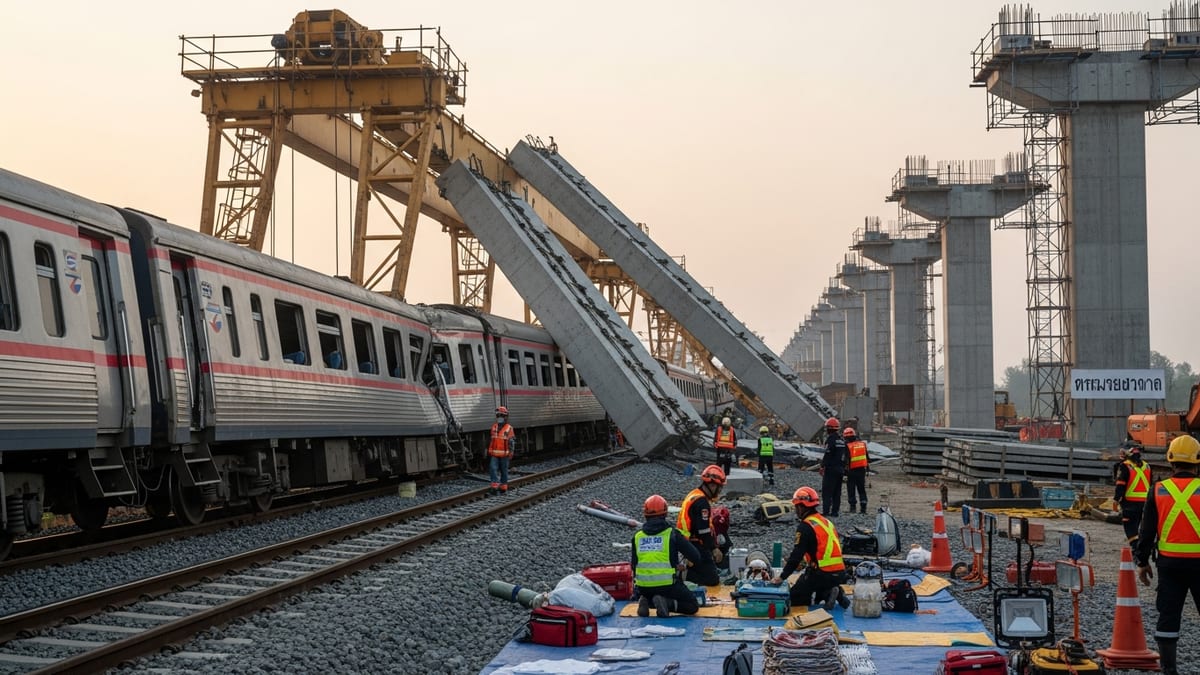
Rail corridor reopens in stages as debris is cleared
According to published coverage from regional outlets, the derailment occurred along a key freight corridor in Upstate New York, where multiple railcars left the tracks and came to rest across adjacent lines and access roads. Initial response efforts focused on stabilizing the railcars, assessing damage to the rail bed and overhead systems, and securing the immediate area to keep the public away from heavy equipment and debris.
Publicly available information shows that wrecking crews have since removed most of the derailed cars using cranes and specialized rail re-railing equipment. Ballast contaminated by fuel and lubricants is being excavated and replaced, while damaged ties and fasteners are being swapped out along the affected stretch of track to restore proper alignment.
Rail operators in the corridor are gradually restoring service through the area using reduced speeds and temporary operating procedures. Service patterns have been adjusted to route some trains around the work zone, while others are operating under slow orders as inspectors verify that repairs meet current safety standards.
Local traffic near the tracks remains affected in some locations, with grade crossings intermittently closed to allow contractors to move heavy machinery on and off the right of way. Detours and lane restrictions continue where rail bridges and access roads are being inspected or repaired.
Track repairs focus on long-term safety and reliability
Based on details summarized in recent reports, the most serious structural damage involves sections of track where multiple railcars left deep ruts in the ballast and bent or displaced rails. Engineering teams are replacing those sections entirely rather than attempting spot fixes, a process that involves removing damaged rail, installing new welded rail segments and tamping fresh ballast to restore correct geometry.
Publicly available technical guidance indicates that crews are using automated track machinery to verify gauge, cross-level and alignment once new rail is installed. These measurements help confirm that the corridor can safely accommodate both heavy freight trains and, where applicable, any passenger services that share the line.
In areas where derailment forces damaged signaling or communications cables, contractors are installing new conduit and junction boxes, followed by testing from centralized dispatch centers. Any mismatched or damaged equipment is being replaced to avoid intermittent faults that could disrupt train detection or crossing protection systems.
Officials have also emphasized, in previous public statements on similar incidents, that post-derailment repairs now routinely include reviews of drainage, vegetation management and subgrade stability. Those factors are being evaluated along the Upstate corridor to reduce the risk of future track washouts or heat-related kinks.
Environmental monitoring continues as freight is removed
Reports indicate that the derailed train was hauling a mix of general freight, including covered hoppers and boxcars, with at least some cars carrying materials classified as non-hazardous. Early assessments did not identify a large-scale hazardous-material leak, but environmental monitoring has continued as a precaution while each car is documented and removed.
Contracted environmental teams are sampling soil and nearby surface water for signs of fuel, lubricants or other contaminants associated with locomotive and railcar operations. Where contaminated ballast or soil is identified, it is being excavated and transported to approved disposal or treatment facilities before clean material is placed.
Publicly available guidance from state environmental agencies shows that longer-term monitoring is likely to include follow-up sampling after heavy rain or snowmelt, when residual contaminants can migrate through the subsurface. In similar Upstate incidents, monitoring wells have sometimes been installed near waterways to track groundwater conditions over months or years.
Agencies responsible for wildlife and fisheries in the region are tracking any reported impacts on streams or wetlands, particularly where rail lines run parallel to rivers popular with paddlers, anglers and other outdoor travelers. So far, published coverage has not described significant fish kills or large-scale habitat damage associated with this derailment.
Travelers face detours, substitute transport and schedule shifts
The derailment has had noticeable effects on travel patterns through this part of Upstate New York, even as cleanup advances. Rail passengers using regional and long-distance services have experienced delays and occasional cancellations while trains are rerouted around the work zone or held to accommodate single-track operations.
According to recent transportation updates, substitute bus services have been used on select routes during the most intensive repair periods, especially when both tracks were temporarily blocked by heavy equipment. These substitute services add time to journeys but have allowed essential connections to continue for travelers heading to major Upstate hubs and onward to larger cities.
Highway users in communities closest to the derailment site have been navigating detours where local roads pass under or over the affected tracks. Temporary closures have been scheduled to minimize conflicts between construction traffic and everyday drivers, but some congestion remains during peak hours, particularly near popular commuter corridors.
Travel advisories recommend that visitors and residents alike check the latest rail and highway conditions before setting out, build extra time into itineraries and consider alternative routes where practical. For travelers connecting to airports or long-distance trains in Albany and other regional centers, conservative planning remains advisable until full rail capacity is restored.
Investigations and upgrades shape the corridor’s future
While cleanup and repairs continue, investigative work is underway to determine the underlying factors that contributed to the multi-car derailment. Publicly available information indicates that investigators typically review train handling data, track inspection records, recent maintenance activity and weather conditions, among other variables.
Rail safety specialists often look for combinations of issues, such as minor track defects combined with heavy axle loads or operational factors, rather than a single, isolated cause. Findings from these reviews can influence how frequently certain stretches of track are inspected, whether new sensors are installed and how speed limits are set through curves, bridges and yards.
In recent years, Upstate New York rail corridors have seen incremental safety upgrades, including wayside detectors that monitor bearing temperatures and wheel impacts, along with expanded use of continuous welded rail to reduce joint-related defects. Observers expect that lessons from this derailment will inform the prioritization of future investments along the affected line.
For communities and travelers who rely on the corridor, the current focus remains on safe restoration of service and transparent communication about progress. Over the coming weeks, additional milestones are likely to include full reopening of all tracks, removal of remaining work restrictions and the publication of preliminary investigative findings that help explain what went wrong and how similar incidents might be prevented.