


More news on this day
Cleanup operations are still underway at multiple recent freight train derailment sites across North America, with work crews, investigators, and transportation providers focused on clearing damaged railcars, restoring key corridors, and minimizing disruption for travelers in nearby regions.
Get the latest news straight to your inbox!
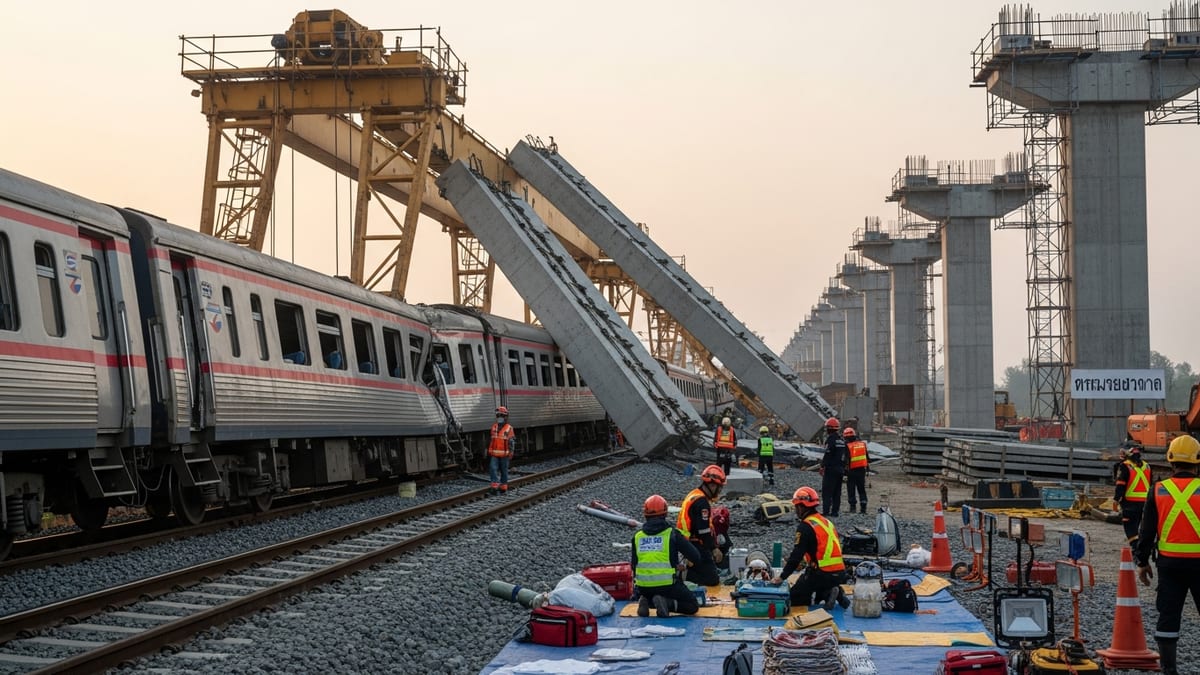
Active Cleanup Sites From Ohio to Quebec
Recent weeks have brought a series of derailments that remain in various stages of recovery, from industrial corridors in the U.S. Midwest to busy commuter and freight lines near major Canadian cities. In Bucyrus, Ohio, published local coverage describes crews still removing wreckage and inspecting tracks after a Norfolk Southern freight train left the rails near Whetstone Street in early July. As of this week, a short evacuation zone remains in effect around the site and residents have been urged to avoid the area while work continues.
North of Montreal, reports indicate that rail operations have only partially resumed near Repentigny after a major derailment on a Canadian National line earlier this week. Freight and passenger trains are again moving through the sector at reduced speed, while investigators document damage and maintenance teams continue to repair track and overhead systems. The gradual reopening reflects a common pattern in modern derailment response, where limited traffic is restored even as cleanup and assessment extend for days or weeks.
These more recent incidents join a longer list of complex, multi‑month responses such as the East Palestine, Ohio, derailment of 2023, where federal and state agencies report that environmental sampling, creek restoration, and site monitoring are still in progress more than a year after the initial crash and chemical release. Publicly available documentation shows that work along small waterways and in surrounding neighborhoods has continued through 2024, underscoring how long rail‑related cleanups can last when hazardous materials are involved.
Travel Disruptions for Commuters and Tourists
For travelers, the most visible impacts of ongoing cleanup efforts are changes to rail schedules, substitute bus services, and detours on surrounding roads. In northern Indiana, for example, regional television and rail operator notices have highlighted temporary schedule changes on the South Shore Line, where a freight derailment near the Indiana Toll Road led to a sustained period of weekend and holiday timetables on commuter trains serving Chicago and nearby communities. Passengers heading to Lake Michigan beaches and summer festivals have been advised to build in additional time and monitor alerts closely.
Elsewhere in the Midwest, social media and service advisories have documented delayed or canceled Amtrak departures when freight derailments blocked key main lines used by both passenger and freight traffic. On some occasions, long‑distance trains such as the Pennsylvanian between Pittsburgh and Harrisburg or the California Zephyr through the Reno corridor have faced annulments or significant delays while crews worked to clear wreckage from remote mountain passes and desert stretches.
Road traffic is also affected as cleanups unfold. In Hickman County, Kentucky, state transportation updates in June reported that U.S. 51 reopened only after extended recovery work at a derailment site, with temporary closures and lane restrictions in place during removal of damaged railcars and repairs to adjacent highway structures. Drivers in affected regions are often directed to marked detours, adding time to summer road trips and regional commutes.
Environmental and Safety Concerns Shape Long-Term Response
Beyond immediate travel disruptions, continuing cleanup activities reflect ongoing concern over environmental quality and long‑term rail safety. Federal environmental summaries for the East Palestine derailment describe extensive efforts to excavate contaminated soil, treat or remove millions of gallons of impacted water, and conduct widespread air and surface‑water monitoring across the region. Similar documents show that work in smaller waterways, such as Leslie Run and Sulphur Run, has involved repeated cleanouts and habitat restoration over multiple construction seasons.
Historic precedents, including the Lac‑Mégantic disaster in Quebec and other major derailments cataloged in public databases, show how cleanup and site recovery can extend for years when fuels or industrial chemicals are released. Municipal and national records from these earlier events detail long‑running remediation projects, cost‑recovery disputes, and changes to operating rules covering brake requirements, staffing levels, and train securement procedures. These precedents continue to shape expectations every time a new derailment prompts questions about contamination.
Academic research on derailment risk and hazardous materials transport has also gained attention as new incidents occur. Studies comparing unit trains carrying a single commodity with mixed‑freight “manifest” trains have emphasized that, although rail remains more fuel‑efficient than road transport, the consequences of a derailment can be severe when tank cars are involved. This body of work is informing policy debates on train length, track inspection regimes, and investment in predictive maintenance technologies intended to reduce the likelihood of future accidents.
Rail Operators and Agencies Work to Restore Confidence
Publicly available information from railroads and government agencies highlights an emphasis on both rapid reopening and visible safety measures as cleanup progresses. Freight carriers have publicized track repairs, replacement of damaged ties and ballast, and structural inspections of bridges and culverts at recent derailment sites. In some locations, temporary speed restrictions and additional patrols by track inspectors remain in place even after trains begin rolling again.
Passenger operators such as Amtrak and regional commuter systems rely on service alerts and real‑time status tools to keep riders informed about diversions or canceled trips linked to freight derailments. Online dashboards and mobile notifications have become central to managing traveler expectations, particularly on shared corridors where passenger trains depend on freight rail infrastructure. During major incidents, notices sometimes extend for days as crews work through backlogs and adjust schedules to reflect limited track capacity.
For travelers who depend on rail as a lower‑carbon alternative to driving or flying, the continuing stream of derailment headlines can create uncertainty. At the same time, many regional tourism boards and transport agencies continue to describe rail as a key part of sustainable travel strategies, emphasizing that derailments remain rare events relative to overall train movements. Cleanup operations, though disruptive, are framed as evidence of systems in place to respond when incidents occur.
What Travelers Should Know in the Weeks Ahead
With cleanup work still active at several sites and summer travel near its peak, transportation planners and travel advisers suggest a few practical steps for those moving through affected regions. Rail passengers are encouraged to check status pages shortly before departure and again on the day of travel, since reroutes, schedule changes, or substitute buses may be announced on short notice when tracks remain partially blocked.
Drivers should be prepared for brief closures and lane shifts near rail crossings and bridges where heavy equipment is in use. Even when primary highways like U.S. 51 in Kentucky have fully reopened, intermittent restrictions can appear as crews return to complete secondary tasks such as ditch clearing, shoulder repairs, or signal replacement. Mapping applications do not always capture short‑term closures around work zones, so local radio, news outlets, and state transportation feeds can offer more current information.
For destinations that rely on rail‑served tourism, from small towns along long‑distance passenger routes to suburbs connected by commuter lines, the continuation of cleanup efforts is a reminder of how closely travel and freight infrastructure are intertwined. As investigations proceed and damaged rights‑of‑way are rebuilt, the balance between efficient rail operations and public confidence will remain a central focus, shaping both regulatory conversations and the experience of travelers watching work crews from station platforms and highway overpasses.