


More news on this day
Travellers across China, Indonesia, Thailand, India and Taiwan are facing widespread disruption as airlines adjust schedules, suspend services and delay flights in response to severe weather linked to Typhoon Bavi and broader operational pressures during Asia’s peak summer travel period.
Get the latest news straight to your inbox!
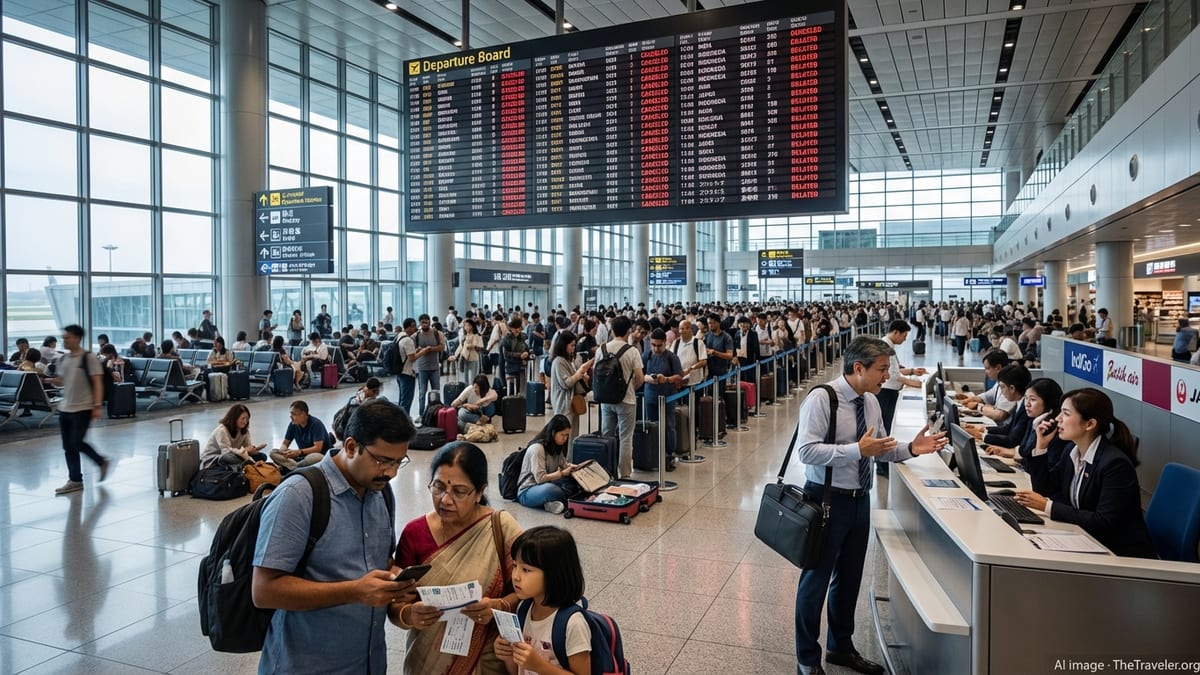
Storm Conditions Drive Widespread Cancellations
Published coverage from Taiwan and regional outlets indicates that the most acute disruption is currently centered on Taiwan’s main international gateway, Taoyuan International Airport, where more than 150 flights have been altered as Typhoon Bavi closes in on the island. Local reports describe a sharp increase in cancellations and delays, with domestic carriers planning to halt all scheduled services on some days as the storm’s strongest winds and rain bands pass over northern Taiwan.
Typhoon Bavi is tracking toward Taiwan and eastern China, prompting aviation authorities and airlines across the region to preemptively trim schedules for safety reasons. Information from airline advisories and airport notices shows cancellations and retimings on routes linking Taipei with major hubs in East and Southeast Asia, including Shanghai, Seoul, Tokyo, Kuala Lumpur and Singapore, as carriers seek to avoid operations at times of anticipated peak impact.
China-based airlines, including XiamenAir, Hainan Airlines, China Eastern and Juneyao, have significant networks serving Taiwan and eastern China, and have been adjusting their flight programs in line with storm forecasts. These changes add to existing seasonal strain on China’s aviation system, which is already handling a surge in domestic demand during the summer holidays and coping with higher fuel prices and route rationalisations.
Operational data and recent passenger accounts suggest that, taken together, the combined changes by Chinese carriers and regional airlines amount to well over one hundred flight suspensions and many hundreds of delays in the wider East Asia corridor, with disruptions anticipated to ripple outward over several days as aircraft and crews fall out of position.
Major Asian Hubs Feel the Knock-on Effects
The impact of the storm-related schedule changes is being felt far beyond Taiwan. In China, major airports such as Shanghai Pudong, Shanghai Hongqiao, Hangzhou and Changsha are preparing for deteriorating weather and potential air traffic control restrictions as Bavi approaches the eastern seaboard. XiamenAir, China Eastern and Juneyao all maintain substantial operations at these hubs, and public timetables show adjustments on flights into and out of affected coastal and inland cities.
In Indonesia, recent experience with weather and systems-related disruptions has already put carriers and airports on alert. Travel forums and flight tracking data highlight delays affecting services in and out of Jakarta, where heavy seasonal rains and regional weather patterns can quickly cascade into longer queues on the tarmac and congestion at immigration and baggage reclaim. With aircraft and crews tied up by diversions or late arrivals elsewhere in the network, some passengers in Jakarta are reporting extended wait times and rebookings.
Thailand, another key transit point for journeys between South Asia, Southeast Asia and China, is also seeing turbulence in its schedules. Published reports from Bangkok note that services between the Thai capital and Taipei have been cancelled for certain days as airlines serving the route respond to Bavi’s path. These moves not only affect point-to-point travellers between Bangkok and Taiwan but also those connecting onward to mainland Chinese cities such as Shanghai and Xiamen, increasing the risk of missed connections and overnight stays.
India is indirectly exposed through its growing web of links to East and Southeast Asia. Flight databases show that Indian travellers bound for China, Taiwan or onward destinations in Northeast Asia often route via Bangkok, Singapore, Kuala Lumpur or Hong Kong. As those hubs grapple with altered schedules, passengers departing cities such as Delhi, Mumbai and Bengaluru may find their itineraries subject to last-minute retiming or rerouting, particularly where segments are operated by Chinese partner airlines.
Chinese Carriers Under Pressure During Peak Season
The latest wave of disruption is landing at a sensitive moment for Chinese airlines. Official forecasts from Hainan province, for example, project more than eight million air passenger trips through the island’s main airports during the July and August peak, highlighting how tight aircraft utilisation has become. With such intense seasonal demand, even a short-lived storm or systems issue can force carriers into difficult choices about which routes to protect and which flights to suspend.
Publicly available airline notices and passenger experiences posted on travel forums suggest that some Chinese carriers have been periodically reshaping their international and regional schedules in recent months. Travellers describe instances of flights between China and Southeast Asia or Japan being cancelled or brought forward by a day, sometimes with limited advance notice, as airlines adapt to fuel costs, regulatory constraints and shifting demand.
Hainan Airlines, China Eastern, XiamenAir and Juneyao all operate extensive domestic networks that feed passengers into major coastal hubs like Shanghai and Xiamen. When a storm targets eastern China, it can quickly disrupt this delicate choreography, leading to rolling delays and short-notice cancellations. Aircraft that were scheduled to operate multiple sectors per day may be grounded for weather or diverted to alternate airports, leaving subsequent flights without equipment or crews.
Industry data compiled by airports and aviation authorities over recent seasons indicate that, on busy days, this kind of cascading disruption can translate into more than one hundred suspended flights and many hundreds of delayed departures and arrivals across a broad region, particularly when multiple carriers with overlapping networks adjust schedules at the same time.
Travellers Face Missed Connections and Uncertain Plans
For passengers across China, Indonesia, Thailand, India and Taiwan, the practical effects of these disruptions are being felt in missed connections, unexpected stopovers and reworked itineraries. Reports shared by travellers describe scenarios in which a single cancelled leg between a second-tier Chinese city and a coastal hub forces a complete reshuffle of long-planned trips, sometimes with separate tickets on non-partner airlines complicating rebooking options.
In Taiwan, warnings from Taoyuan International Airport about rapidly changing flight information have led many travellers to arrive at the airport significantly earlier than usual, only to find that services have been delayed or cancelled at short notice. Similar experiences are being reported in Jakarta and Bangkok, where passengers connecting from regional or domestic flights onto long-haul services have faced tight turnaround times and, in some cases, missed departures.
Travelers relying on Chinese carriers to reach holiday destinations in Indonesia or Thailand via Chinese hubs have also encountered reconfigured routes, such as being moved to flights one day earlier or later than originally booked. While some passengers have secured refunds or alternative options, others have had to rearrange hotel bookings, ground transport and onward activities, often at additional personal expense.
With storm conditions expected to persist over parts of Taiwan and eastern China for at least several days, aviation observers anticipate that schedules will remain volatile. Even after Typhoon Bavi moves away, it may take time for airlines to clear backlogs, reposition aircraft and restore regular operations across the intricate network linking cities such as Changsha, Jakarta and Bangkok with hubs in mainland China and Taiwan.
What Travellers Can Expect in the Coming Days
Airlines and airports throughout the region are urging passengers, through public advisories and online updates, to monitor their flight status closely and to anticipate last-minute changes as Typhoon Bavi continues its passage. Experience from previous storm events in East Asia suggests that some carriers may opt for rolling adjustments rather than announcing large blocks of cancellations far in advance, especially where the exact path and intensity of the storm remain uncertain.
In practical terms, travellers booked on services operated or marketed by XiamenAir, Hainan Airlines, China Eastern, Juneyao and other carriers serving affected routes should expect the possibility of altered departure times, route changes or aircraft swaps. Those connecting through key hubs like Shanghai, Taipei, Bangkok and Jakarta may face longer layovers as airlines seek to rebuild buffers into their schedules to cope with air traffic control restrictions and rapidly changing weather conditions.
For journeys involving multiple tickets or combinations of different airlines, travel specialists generally recommend building in additional time between connections during volatile periods and considering flexible booking options where possible. While many carriers offer waivers or free date changes in response to major weather events, these policies typically apply only to tickets issued directly by the airline or its official partners.
As the situation evolves, publicly available flight data and airport announcements will provide the clearest picture of actual operations on any given day. For now, the combination of Typhoon Bavi’s approach, elevated summer demand and the operational pressures facing several Chinese airlines is creating a challenging environment for travellers across China, Indonesia, Thailand, India and Taiwan, with further disruptions likely before networks can fully stabilise.