


More news on this day
As global air travel surpasses pre-pandemic levels, airlines are racing to redefine what a good flight feels like, investing in technology, cabins and data to smooth every step of the journey.
Get the latest news straight to your inbox!
From Pain Points to End-to-End Journey Design
Recent industry research highlights a clear shift in how travelers judge their journeys. Rather than focusing on a single moment such as boarding or in-flight service, passengers increasingly evaluate the experience as a connected sequence that starts with booking and ends well after arrival. Surveys compiled by international industry bodies show high overall satisfaction scores, but also reveal frustration with fragmented digital tools, inconsistent communication and airport bottlenecks.
To transform this, airlines are being pushed to design around the full journey rather than discrete touchpoints. That means aligning mobile apps, airport processes, onboard service and post-trip follow-up as one continuous experience. Data from global passenger surveys indicates that convenience, speed and transparency are now as important as price for many travelers, especially frequent flyers and business passengers.
Carriers that treat disruption handling as part of the core product, rather than an exception, are beginning to stand out. Proactive rebooking options, clear explanations of issues and integrated notifications across channels are emerging as essential components of a modern service baseline, rather than extras offered only during severe delays.
Biometrics, Bag Tracking and the Frictionless Airport
Digital identity and automation at the airport are central to current passenger-experience strategies. Global passenger survey findings released by airline associations show that a growing share of travelers has already used biometric identification for check-in, bag drop or border control, and many say they would choose it again if data protection is clearly explained. Adoption rates have risen steadily over the last two years, pointing to a rapid normalization of these technologies.
For airlines, the opportunity lies in orchestrating biometric touchpoints so they reduce, rather than multiply, friction. One clear direction is the creation of opt-in digital identities that can be reused at different airports and with partner carriers, cutting time spent in queues and reducing the need to repeatedly show documents. Industry reports also point to strong interest in real-time information on baggage status, with many passengers saying that even simple notifications at key moments significantly reduce anxiety.
Technology providers are responding with end-to-end platforms that combine digital identity, self-service bag drop and tracking updates delivered through airline apps. Early adopters in North America, Europe and Asia are piloting or scaling these systems, betting that shorter lines and more predictable processes will become a core differentiator as travel volumes continue to rise.
Cabin Upgrades, Premium Seats and Wi-Fi as a Utility
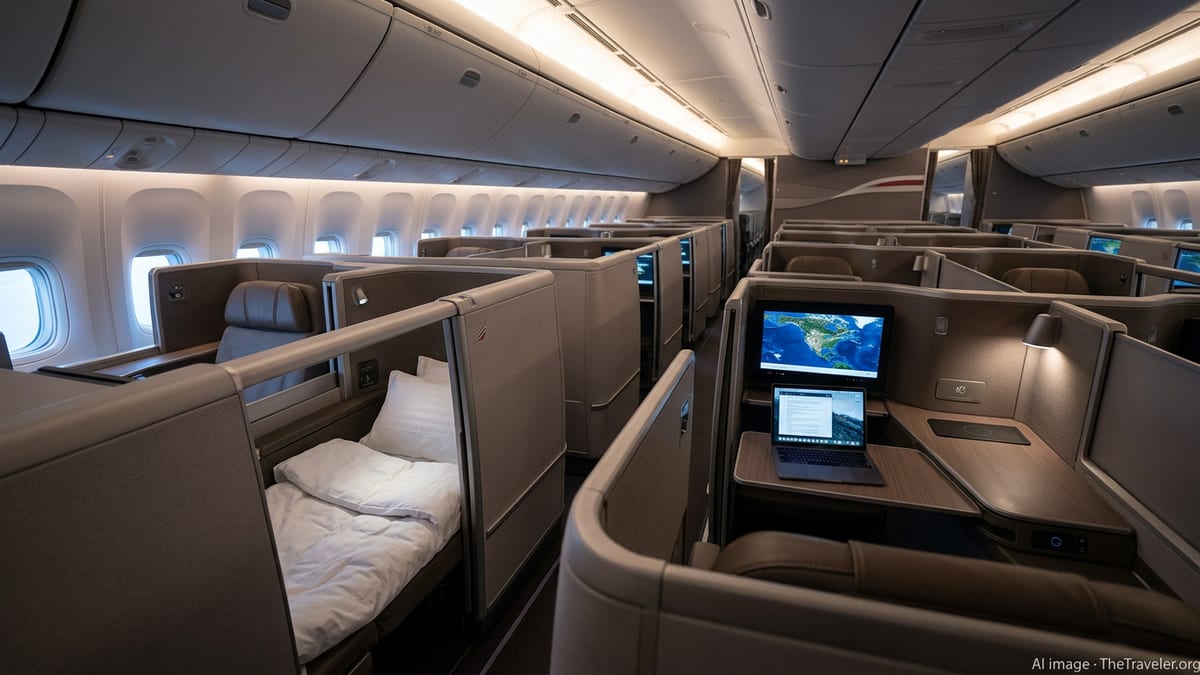
Inside the aircraft, the most visible transformation is occurring in seats and connectivity. Several major network carriers have launched large-scale retrofit programs to refresh long-haul cabins, add or expand premium economy sections and install new seat hardware. Publicly available information from airlines in the Middle East, Europe and North America points to multibillion-dollar investments scheduled through the middle of the decade, covering hundreds of aircraft.
Premium economy, sometimes rebranded simply as “Premium,” has become the focal point of many cabin strategies. Airlines describe these cabins as offering wider seats, more recline and enhanced privacy screens, along with dedicated service touches and more generous baggage allowances. In parallel, some carriers are reconfiguring aircraft to include a higher proportion of premium seats overall, seeking to capture demand from travelers willing to pay more for comfort without committing to full business class.
Connectivity is shifting from a paid add-on to a near-expected utility. Airline groups in Europe and the United States have announced strategic investments in high-speed satellite services across large portions of their fleets, with some carriers promising complimentary Wi-Fi on regional and mainline aircraft. Individual airlines in Japan and elsewhere in Asia have publicized upgraded inflight internet offers, including free messaging in economy cabins and expanded access for premium customers on long-haul routes.
These moves signal a competitive race to position Wi-Fi as part of the core product, on par with seat comfort and entertainment. Industry commentary suggests that once one major carrier in a market offers reliable, fast and often free connectivity, others are quick to follow, reshaping passenger expectations in the process.
Generative AI, Personalization and Real-Time Communication
Beyond physical cabins, airlines are turning to data and artificial intelligence to change how they communicate with passengers. Coverage in technology and business media over the last two years has documented how major US carriers are using generative AI tools to craft clearer, more detailed explanations of flight delays inside their apps. Instead of generic notices, travelers receive messages that draw on operational data, weather patterns and crew scheduling to provide context in near real time.
These systems still rely on human review, but they show how automation can be used to improve transparency, one of the most frequently cited weaknesses in traditional airline communication. Reports on customer feedback suggest that passengers value specific, timely updates even when the news is negative, and that better information can meaningfully improve satisfaction scores during disruptions.
Airlines are also experimenting with AI-powered chatbots for basic service questions, from baggage rules to same-day flight changes, freeing human agents to handle complex cases. Over time, the same technologies could support deeper personalization, recommending seats, ancillaries or loyalty offers based on a traveler’s history and stated preferences. Academic work on airline satisfaction has already pointed to the importance of streamlined digital interactions, particularly around online check-in and boarding pass management.
However, observers note that personalization must be balanced with robust privacy protections and clear consent mechanisms. Travelers are increasingly aware of how their data is used, and missteps in this area can quickly erode trust that airlines are trying to rebuild.
Accessibility, Sustainability and the Next Phase of Differentiation
As investment accelerates, there is growing attention on how inclusive and sustainable the next generation of passenger experience will be. Advocacy groups and policy debates have raised questions about accessibility, from boarding procedures for travelers with reduced mobility to the design of seats, lavatories and inflight entertainment systems that can be used comfortably by a wider range of passengers.
Some airlines have begun publicizing initiatives to improve wayfinding, captioning and assistive technologies on board, as well as training programs for staff. Industry analysts argue that embedding accessibility into product development, rather than treating it as a retrofit obligation, will be an important marker of genuine transformation.
Sustainability concerns are also influencing expectations. Academic and policy discussions about the environmental impact of premium cabins have highlighted the trade-offs between comfort and efficiency, particularly as airlines add more space-intensive seating. In response, carriers are emphasizing newer aircraft with lower fuel burn, lighter cabin materials and the use of sustainable aviation fuels where available, framing these moves as part of a broader commitment to responsible growth.
For passengers, the most meaningful changes over the next few years are likely to be incremental but cumulative: shorter queues, more intuitive digital tools, cabins that feel both more comfortable and more connected, and service that adapts more fluidly when things go wrong. Taken together, these shifts indicate that the real transformation will come not from a single headline feature, but from rebuilding the entire travel experience around the needs and behaviors of modern travelers.