


More news on this day
Rail passengers in east London are facing significant disruption after a trackside fire led to the closure of Stratford station and the suspension of services through one of the capital’s busiest interchanges.
Get the latest news straight to your inbox!
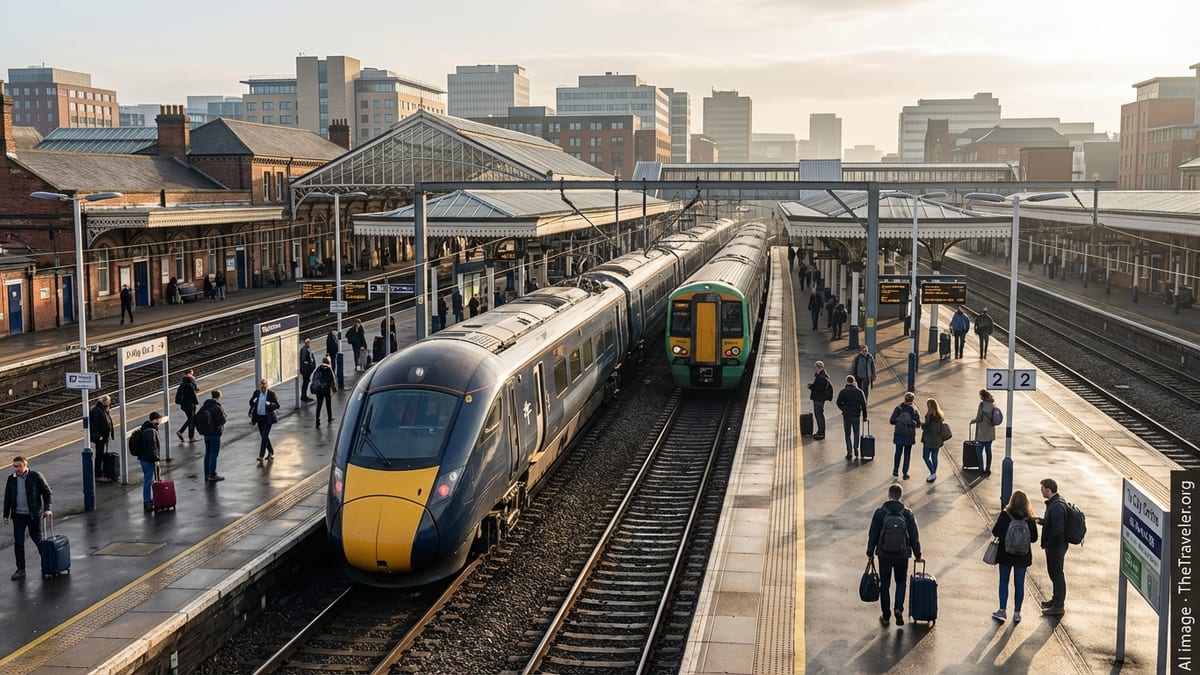
Trackside blaze triggers sudden station closure
Reports from passengers and local rail information services indicate that services into Stratford were abruptly halted after a fire broke out in vegetation beside the tracks near the station. Trains approaching Stratford were reportedly held outside the station or terminated short, while those already in the platforms were emptied and withdrawn from service as a precaution.
Initial accounts shared by rail users suggest that the incident began when smoke was seen drifting across the lines close to the station, prompting staff to stop movements through the affected area. Some passengers describe being asked to leave trains that had been expected to continue into Stratford, with services turned around at stations further down the line.
Publicly available journey planning tools show widespread disruption on routes that normally call at Stratford, with cancellations and revised stopping patterns appearing within a short time of the first reports of a fire. Updates describe the issue as a trackside blaze affecting the safe operation of trains, with services unable to use several platforms while checks are carried out.
According to published coverage and rail disruption feeds, the closure affects a mix of regional and commuter services that funnel large numbers of passengers into Stratford for onward connections across London and to key venues nearby. Travellers have been advised to check live departure boards and allow extra time for journeys that would usually pass through the station.
Impact on commuters and long-distance travellers
The sudden closure has left both daily commuters and longer-distance passengers scrambling to replan journeys at short notice. Stratford is a crucial junction for services linking east London with Essex, Suffolk and beyond, and disruption at the station often ripples across a wider area of the network.
Rail users posting journey experiences describe trains from the east being terminated early, requiring passengers to disembark and seek alternative routes into London. Some have reported missing onward connections to other mainline or Underground services as timetables unravel around the blocked section of track.
With services unable to pass through Stratford, crowding has been reported at other stations on parallel routes as travellers divert via alternative lines into the capital. Replacement road transport has been limited, according to publicly available information, leaving many passengers reliant on slower, more indirect rail options.
The closure is particularly disruptive for travellers heading to major attractions and shopping districts around the Queen Elizabeth Olympic Park and Westfield Stratford City, both of which normally depend heavily on rail access. Local businesses that rely on a steady flow of visitors from the station are expected to feel a short-term impact while services remain curtailed.
Operational response and safety checks on the line
Network information services state that trains cannot operate through the affected area until the trackside location has been fully inspected and any damage confirmed. Trackside fires can affect cabling, ballast and lineside equipment, all of which must be checked before normal speeds can resume.
Fire crews were reported to have attended the scene to tackle burning vegetation near the railway, working alongside rail staff responsible for isolating the area and cutting power where necessary. Once the blaze is out, engineers typically carry out a visual assessment of the line, signaling systems and overhead or third-rail power infrastructure before allowing limited movements under caution.
Operational updates this morning describe a phased approach to restoring service, with some lines held for longer while equipment checks are completed. Even after the station reopens, delays and alterations are expected to continue as trains and staff are moved back into position and displaced rolling stock returns to its usual diagrams.
According to publicly available rail industry guidance, timetable recovery after an incident of this nature can take several hours, particularly at a major hub like Stratford where multiple operators share tracks and platforms. Knock-on delays may persist well into the day as services are gradually re-sequenced and gaps in the service are filled.
Advice for affected passengers navigating the disruption
Travel information services advise passengers intending to use Stratford to check live departures and route planners before setting out, and to be prepared for longer journey times and last-minute changes. Those with flexible plans are encouraged to travel later in the day, once the immediate backlog has eased and more reliable patterns have been restored.
Alternatives for some east-of-London travellers include diverting via other London terminals served by the same operator, then transferring onto the Underground or Elizabeth line for onward travel. For local journeys, buses and other rail stations in the area can provide partial workarounds, although capacity may be stretched while Stratford remains constrained.
Passenger watchdog groups generally recommend that travellers keep tickets and receipts for any additional costs incurred when making enforced diversions, as compensation policies can apply in the aftermath of significant disruption. Rail operators typically outline delay-repay arrangements and ticket acceptance agreements on their websites and social channels once the scale of an incident becomes clear.
With the cause of the trackside fire under review and full inspections still under way, passengers are being urged to build in extra time, stay alert to station and onboard announcements, and consider alternative routes where possible until Stratford’s full service is confirmed as running again.