


More news on this day
A substantial trackside fire on the approach to Stratford in east London has led to the closure of the busy rail station, causing severe disruption across Elizabeth line and Greater Anglia routes during one of the network’s peak travel periods.
Get the latest news straight to your inbox!
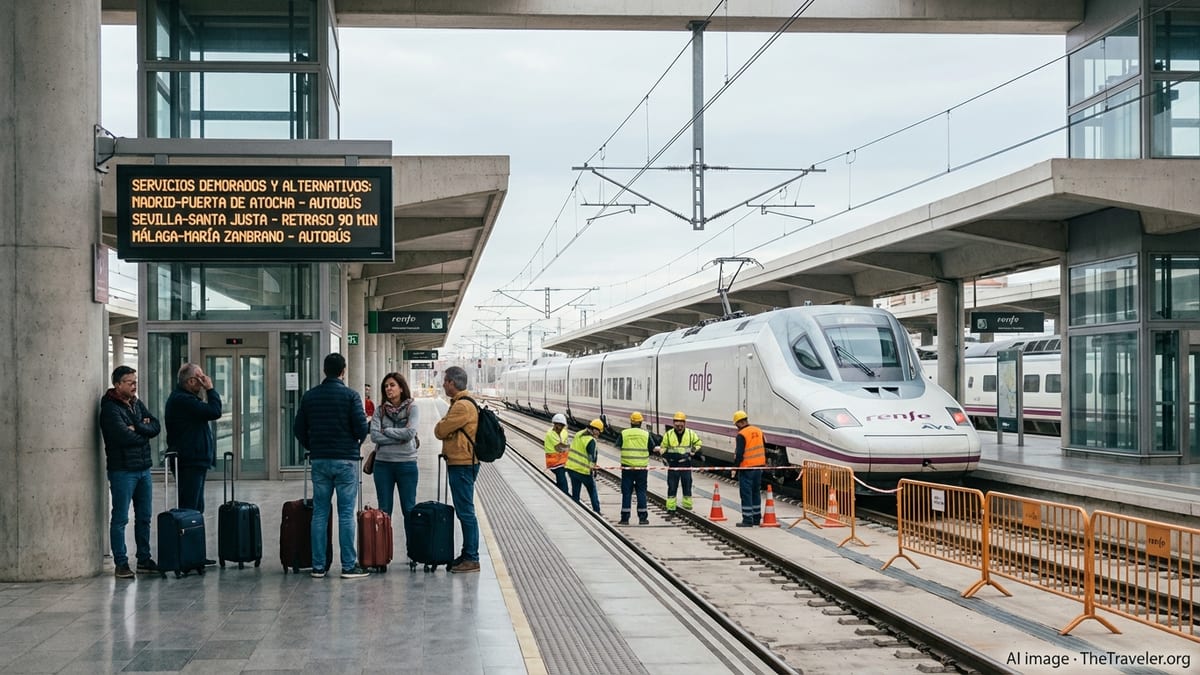
Major interchange brought to a standstill
The incident unfolded near Stratford, a key rail and Underground interchange in east London handling National Rail, Elizabeth line, London Overground, Docklands Light Railway and London Underground services. Reports indicate that services using the mainline approaches into the station were halted after a significant blaze was discovered beside the tracks.
Publicly available service updates show that trains were prevented from entering or leaving the station while rail staff and emergency crews responded. Passengers on approaching services reported being held outside the station or diverted away from Stratford, with some mainline trains terminating short at Shenfield or being re-routed towards Abbey Wood instead of continuing through the affected area.
Stratford’s role as a major interchange has amplified the impact of the closure. The station links regional services from Essex and East Anglia with cross-London Elizabeth line trains, as well as multiple Underground and DLR routes, meaning disruption on the mainline approaches rapidly spread across several operators and routes.
Early indications from passenger accounts and rail disruption feeds describe “substantial” disruption in the wider area, with delays and cancellations persisting even after the initial fire was brought under control.
Trackside blaze and infrastructure concerns
Initial reports suggest the fire broke out in trackside vegetation and railway infrastructure close to the station throat, where multiple lines converge on the approaches to Stratford. Images and descriptions shared publicly show smoke rising from the lineside area and trains brought to a standstill while the blaze was assessed.
Railway operating procedures typically require services to be halted when there is a risk to signalling, power equipment or overhead lines near an active fire. Guidance on railway fire incidents also notes that even relatively small trackside fires can damage signalling cables, power systems and safety-critical assets, prompting precautionary shutdowns until inspections confirm it is safe to resume movements.
Warmer, drier conditions in recent weeks have increased concern about trackside fires on busy commuter routes. Commentary in recent transport reports has highlighted how increasingly hot and dry spells can leave embankments and railway margins more prone to ignition, particularly where dry grass and shrubbery sit close to electrified infrastructure.
While the precise cause of the Stratford incident has not yet been confirmed in public reporting, the location beside a heavily used mainline corridor and the description of a substantial trackside fire point to a combination of vegetation and railway equipment being involved.
Severe disruption for commuters and long-distance passengers
The closure of Stratford station and the blocking of its mainline approaches created widespread disruption for commuters travelling between central London, east London, Essex and beyond. According to service updates issued during the incident, Elizabeth line services were diverted or curtailed, with some trains no longer calling at Stratford and others turning back short of their intended destinations.
Greater Anglia services linking London Liverpool Street with destinations such as Shenfield, Southend, Colchester and Norwich were also affected, with a number of trains being cancelled, heavily delayed or diverted. Some passengers reported being advised to seek alternative routes via Liverpool Street or to use other lines where possible, while others were left waiting on trains that could not proceed towards Stratford.
The incident also had knock-on effects for interchange passengers who routinely use Stratford to switch between mainline rail, the Central and Jubilee lines, the DLR and London Overground. When the station’s mainline platforms are closed or restricted, journey plans across the wider east London transport network can quickly unravel, leading to crowded alternative routes and longer door-to-door travel times.
Rail user comments shared on social platforms and travel forums described extended journey times, missed connections and uncertainty over the duration of the closure as rail operators worked to update timetables and provide replacement options where possible.
Safety procedures and inspection work
Publicly available railway safety documents outline how incidents involving trackside fires generally trigger a sequence of protective measures. These can include isolating electrical power, imposing temporary speed restrictions, suspending movements through affected sections and arranging thorough inspections of signalling and power equipment once the blaze has been extinguished.
Reports surrounding the Stratford fire indicate that trains were kept away from the affected stretch of line while emergency crews dealt with the flames. Once the visible fire is out, specialist rail teams typically inspect cables, overhead line equipment, sleepers and ballast for heat damage before routes can be fully reopened to traffic.
Experience from previous incidents on other parts of the network shows that even when a fire is contained quickly, damage to signalling or communications cabling can require repair work that prolongs disruption. Operators may initially run a reduced or altered service, with trains diverted via alternative lines or missing certain stations until full functionality is restored.
The Shakespearean coincidence of a “substantial” fire affecting services at Stratford has not been lost on some passengers, but the overall tone of public reaction has focused on the practical difficulties created for journeys, particularly for those travelling to and from work or airports during busy periods.
Ongoing travel advice and wider network pressures
At the time of reporting, journey planners and live departure boards continue to advise passengers to check for the latest information before travelling through east London, particularly if their route normally passes via Stratford on Elizabeth line or Greater Anglia services. Some lingering delays and alterations are still being reported as operators work to restore normal timetables.
The incident at Stratford comes at a time when parts of the rail network are already under seasonal pressure. Hotter summer conditions have prompted warnings about potential speed restrictions and heat-related disruption, while an increase in leisure travel has left some services busier than usual. In this context, any closure at a major hub such as Stratford can quickly ripple across a wide geographic area.
Travel organisations and passenger groups frequently encourage rail users to allow extra time for journeys during such incidents, to consider alternative routes where available, and to pay close attention to real-time updates from transport operators. The Stratford fire and resulting station closure underline the continued vulnerability of critical rail interchanges to relatively localised infrastructure events.
For passengers, the episode serves as a reminder that a single trackside incident at a complex node like Stratford can have a disproportionate effect on connectivity across east London and the wider region, at least until inspections, repairs and timetable adjustments allow the network to settle back into its usual rhythm.