


More news on this day
A routine family visit turned into a 32-hour odyssey for one grandmother after a sudden rail shutdown forced her off the tracks and onto a maze of long-haul buses, exposing how fragile many travelers’ backup options remain when major train corridors abruptly go dark.
Get the latest news straight to your inbox!
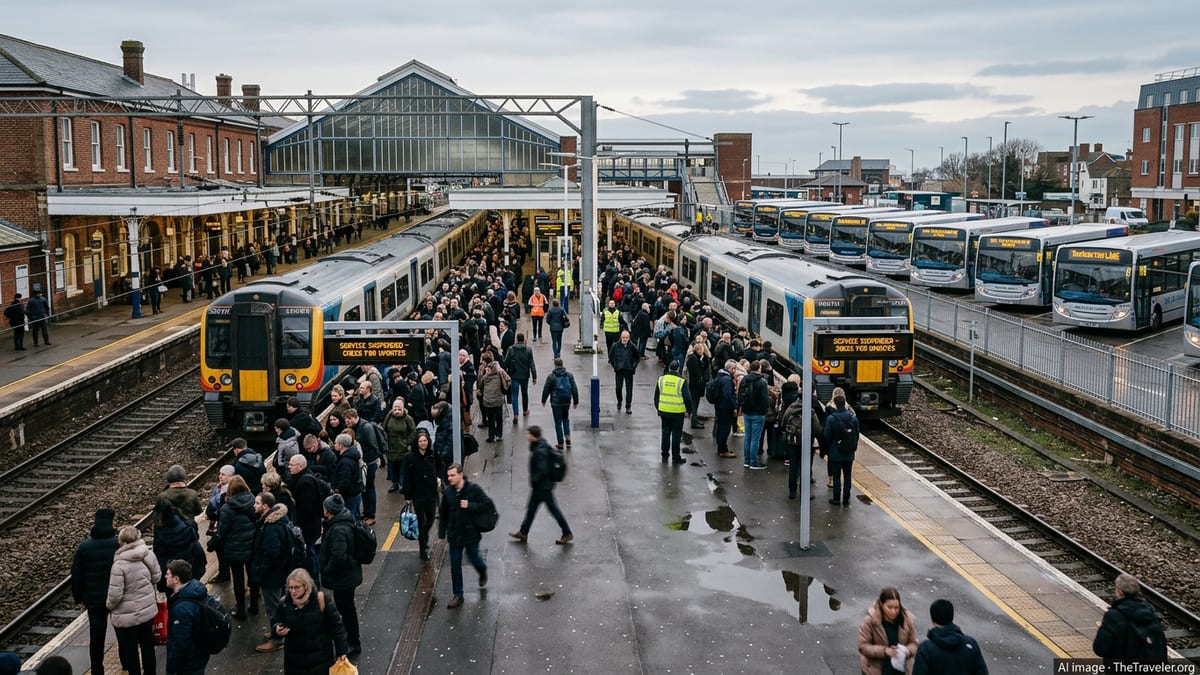
Rail shutdown strands passengers far from home
According to recent published coverage, a regional rail corridor was taken out of service at short notice for emergency work, halting intercity trains and leaving passengers to scramble for alternatives. Among them was a grandmother returning home after visiting relatives, whose straightforward itinerary unraveled as services were suspended and tickets were hastily rebooked onto buses.
Reports indicate that the shutdown, framed as necessary to protect safety and tackle overdue maintenance, came with limited advance notice for many riders already in motion. While operators activated replacement buses on some stretches, the capacity and coverage were not enough to absorb every disrupted journey. For travelers making multi-leg trips, the change from rail to road introduced new bottlenecks, missed connections and overnight delays.
In this case, what should have been a same-day journey stretched into well over a full day, as the traveler was routed through unfamiliar stations and roadside bus terminals, often arriving just after a connecting service had departed. Publicly available information shows that she eventually pieced together a sequence of buses and shuttles to complete the trip, arriving home exhausted after roughly 32 hours on the move.
From reserved seat to rolling improvisation
The grandmother’s experience highlights the sharp contrast between the predictability of a reserved train itinerary and the on-the-fly improvisation that can follow a corridor-wide shutdown. Rail timetables typically lock in seat reservations, transfer windows and arrival times; once those trains are taken out of service, travelers are pushed into a much looser network of buses where schedules can be more fluid and journeys more vulnerable to road congestion.
In many rail disruptions, operators arrange dedicated replacement buses along the affected line. However, published accounts of recent shutdowns show that these services often focus on shorter commuter hops between nearby stations, rather than on recreating the longer intercity links that many passengers rely on. That can leave travelers like this grandmother stitching together public buses, commercial coaches and, in some cases, ride-hail or taxis to bridge gaps.
During her 32-hour trip, rest breaks and layovers frequently took place in transit centers not designed for long waits, with limited seating, food options or quiet corners for older passengers to rest. The shift from a single rail cabin to multiple crowded buses also meant repeatedly managing luggage, navigating queues and re-confirming tickets with different operators.
Older travelers face mounting stress in long diversions
Extended detours can be draining for any traveler, but they present particular challenges for older passengers and those with mobility or health concerns. A multi-day journey that substitutes a series of buses for one direct train can mean many more steps, stairs and curb edges to negotiate between vehicles, platforms and street-level stops.
Transport advocacy groups cited in recent reporting note that bus substitutions often lack the accessibility features and boarding assistance available at major rail stations. For an older traveler, boarding from a curb rather than a raised platform, or searching for a temporary stop on a busy street, can add both physical strain and anxiety to an already stressful situation.
In this case, publicly available descriptions suggest that fatigue, disrupted meal times and irregular access to restrooms compounded over the 32 hours. While fellow passengers and staff reportedly helped at points along the way, the overall experience underscored how quickly a well-planned rail journey can become a test of endurance when backup systems are patchy.
Gaps in emergency planning and passenger information
Transport authorities typically defend large-scale shutdowns as a necessary tool to accelerate long-delayed repairs, pointing to faster track replacements and safety improvements when entire lines are taken offline at once. Yet recent analyses of similar closures indicate that planning for passengers, particularly those making longer trips, often lags behind the engineering work.
In several high-profile shutdowns in North America and Europe, replacement-service plans have emphasized peak-hour commuters while providing fewer tailored options for intercity travelers, tourists and older riders. The grandmother’s 32-hour bus route illustrates how these gaps play out in practice: long waits between buses, limited late-night options and little clarity about alternatives if a connection is missed.
Information channels can also prove inconsistent. While digital alerts and social media updates may outline broad changes, nuanced details on which tickets are honored on which buses, or how to reach smaller destinations beyond major hubs, can be harder to find in real time. Travelers without constant internet access, or those unfamiliar with local languages and apps, may find themselves relying mainly on station announcements and hurried conversations at ticket counters.
Calls grow for more resilient, rider-focused backups
The story of this grandmother’s unintended bus marathon is feeding into a broader conversation about how to make large rail shutdowns less punishing for passengers. Advocates for riders argue that when entire corridors are closed, contingency planning should be measured not only in track-miles repaired, but also in how many people successfully complete their journeys without extreme detours.
Proposed measures in policy discussions include stronger requirements for through-ticketing between rail and coach operators, clearer guarantees for same-day completion of long-distance trips where feasible, and better coordination with regional “guaranteed ride home” or emergency-ride programs. Some mobility programs already reimburse workers stranded by a missed train or bus, and experts suggest similar frameworks could be expanded to cover major rail shutdowns.
For older travelers in particular, advocacy groups emphasize the importance of accessible transfer points, staffed wayfinding support and the option to rebook on a different date without penalty if the only available route would involve an overnight bus odyssey. While projects to repair and modernize rail infrastructure continue, cases like this 32-hour journey home are prompting questions about whether the human cost of massive shutdowns is being fully counted in the planning process.