


More news on this day
Rail traffic through central Portland faced delays on Friday after several Union Pacific freight cars derailed near the Steel Bridge in the city’s northeast riverfront area, with early reports indicating no injuries and no hazardous materials release.
Get the latest news straight to your inbox!
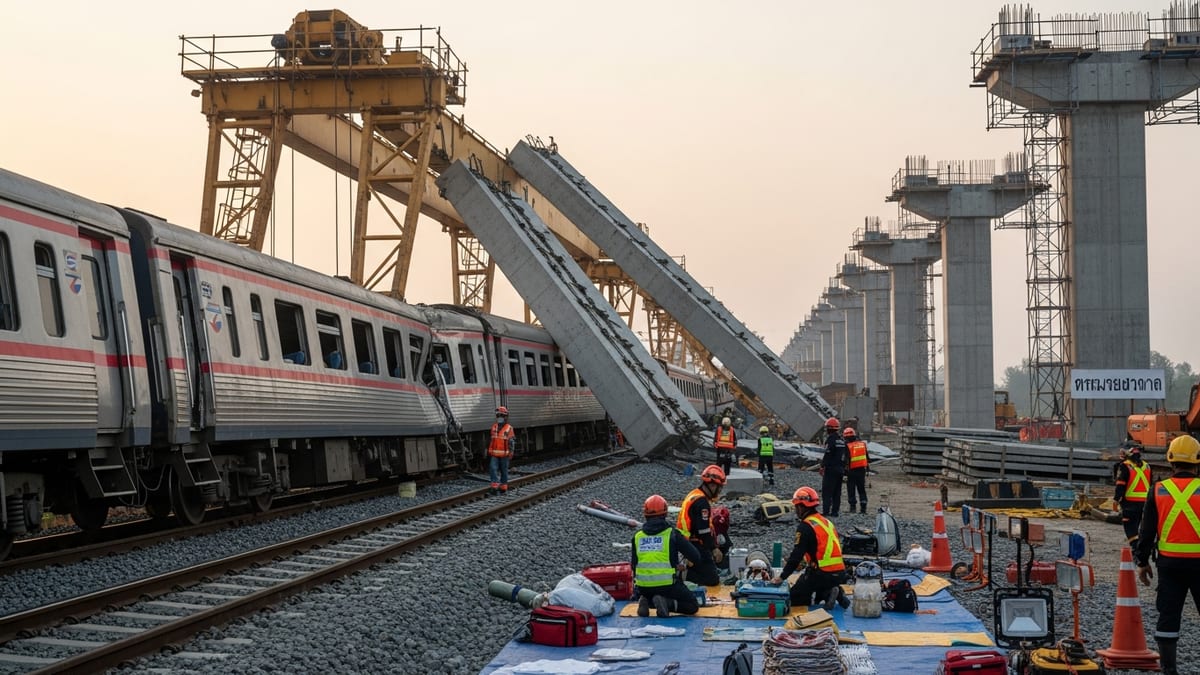
Freight cars off the tracks near key river crossing
Publicly shared images and descriptions posted on Friday point to a line of Union Pacific freight cars derailing on tracks at the west and north side of Portland’s Steel Bridge, a critical rail and roadway crossing over the Willamette River just north of downtown. Witness accounts describe at least eight cars off the rails in a tight curve approaching the bridge, creating a tangle of equipment but leaving nearby streets open.
The incident appeared to affect freight movements along a major north–south rail corridor that threads directly through the city center. The Steel Bridge area carries a mix of freight, intercity passenger trains and regional light rail, making any disruption there particularly visible to travelers and residents along the riverfront.
Comments from individuals sharing photos from the scene describe the railcars remaining largely upright despite leaving the tracks, limiting debris and making it possible for rail crews to access the site. There were no early indications of structural damage to the bridge itself or to surrounding roadways.
Local discussion referenced an earlier incident in the same general area in recent years, underscoring that the approaches to the Steel Bridge are a known operational pinch point where slow speeds and tight curvature make train handling especially sensitive.
No injuries or hazardous materials problems reported
Initial public information circulating on Friday afternoon indicated that there were no reported injuries among train crew or people in the surrounding area. The derailed consist was described by observers as a freight train, and there were no widely shared reports of leaking cargo, visible fire or smoke, or other signs of a hazardous release.
The apparent absence of injuries and hazardous materials issues places this derailment among a significant number of U.S. rail incidents that primarily create operational and economic disruption rather than direct physical harm. Recent federal safety data and regional news coverage show multiple freight derailments around the country this year in which cars left the tracks but crews and nearby communities avoided serious injury.
Emergency and railroad response teams typically conduct additional inspections after such events to confirm that no hidden damage has occurred to track, signaling equipment, or nearby utilities. As of the latest publicly available information on Friday, no broad evacuation orders or long-term safety advisories around the Steel Bridge area had been reported.
Travelers and residents in the immediate riverfront corridor were still advised through various transit and community channels to anticipate intermittent noise, heavy equipment movements and possible short-term access changes as cleanup progressed.
Passenger rail and transit service experience delays
The derailment’s location near the Steel Bridge had immediate ripple effects on passenger movements. One rider on an intercity train reported being held south of Portland, noting that the service could not initially cross the bridge while railroad personnel assessed the derailed freight cars and inspected the approaches.
Based on rider accounts shared publicly, the disruption for at least some passenger trains was measured in tens of minutes rather than hours, with services eventually permitted to cross once inspectors confirmed the main alignment was clear or could be safely routed around the affected track. Light rail operations, which also rely on the Steel Bridge corridor, appeared to continue with caution, although schedules may have been adjusted while freight traffic was restricted.
Transit agencies typically coordinate closely with freight railroads when incidents occur on shared structures like the Steel Bridge. In many cases, passenger operators wait for confirmation that freight equipment has been stabilized and that there is no risk of additional car movement before resuming full operations.
For travelers, the event served as a reminder that complex, shared rail infrastructure can be vulnerable to disruption when freight incidents occur, even if passenger trains are not directly involved in a derailment.
Curve geometry and stringline derailment concerns
Discussion among rail observers online highlighted the sharp curves leading to the Steel Bridge as a likely contributing factor in Friday’s derailment. Commenters described the event as resembling a stringline derailment, a type of incident that occurs when a train moving through a tight curve experiences forces that pull lighter or empty cars inward, lifting wheels over the inner rail.
The approach tracks to the bridge include pronounced curvature where train speeds are already restricted. Rail safety analyses note that, in such locations, train handling practices, car loading patterns and train makeup can be critical to maintaining stability, particularly for long or mixed-length consists.
Although the precise cause of the Portland derailment has not yet been detailed in official public documents, the visual pattern of cars off the inner side of a curve is consistent with the type of event described by rail professionals as a stringline scenario. Any formal investigation would be expected to consider track condition, train speed, braking, and the distribution of loaded versus empty cars.
Nationally, recent reports from rail regulators and safety boards have emphasized the role of train length, dynamic forces in curves and operating practices in a series of derailments that did not involve hazardous releases but still caused significant service disruptions and cleanup costs.
Cleanup, inspections and next steps for rail travelers
In the immediate aftermath of the derailment, railroad crews were expected to focus on stabilizing equipment, clearing derailed cars from the right of way and inspecting track, bridge approaches and signaling infrastructure. In similar freight derailments elsewhere in the United States this year, recovery operations have involved cranes, side-boom tractors and specialized rerailing equipment working for many hours or even overnight to restore full capacity.
Once the damaged cars are removed, track inspectors typically perform detailed checks of rail, ties and ballast, followed by test movements at reduced speeds before normal operations resume. Where bridge approaches are involved, structural engineers may also carry out visual and instrument-assisted inspections to ensure that neither the bridge deck nor supporting elements have suffered hidden damage.
For travelers using intercity trains through Portland over the coming days, publicly available information suggests preparing for potential minor schedule adjustments or temporary speed restrictions near the Steel Bridge while inspections and any follow-up repairs are completed. Freight customers moving goods along the north–south corridor through Portland may also see residual delays as dispatchers work through backlogs created while the line was partially blocked.
While Friday’s derailment did not result in injuries or a hazardous materials emergency, it added to a growing list of rail incidents that have drawn public attention to the reliability and resilience of shared rail corridors in busy urban centers. For Portland, the event underscores how closely freight operations, passenger mobility and the city’s riverfront infrastructure are intertwined at one of its most recognizable crossings.