


More news on this day
Cleanup operations are progressing at the site of a recent Union Pacific train derailment, where rail crews, contractors, and local agencies are working to clear damaged cars, restore track infrastructure, and address any potential environmental impacts.
Get the latest news straight to your inbox!
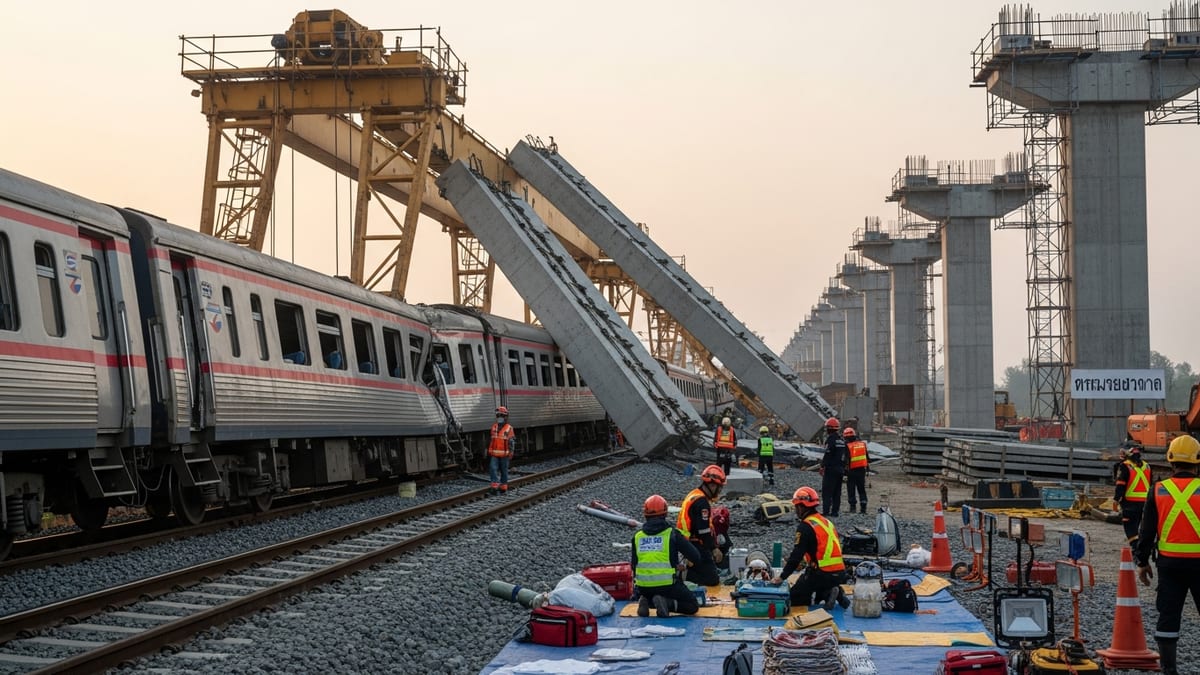
Rail Cars Cleared and Track Repairs Under Way
Published coverage indicates that derailment cleanup typically begins with stabilizing damaged rail cars and securing the site so heavy machinery can move safely around the wreckage. At the current Union Pacific site, excavators, cranes, and specialized rail equipment are being used to remove derailed cars and twisted metal from the right of way so that work on the underlying track bed can proceed.
Reports from recent Union Pacific incidents in states such as Nevada, Wisconsin, and along the West Coast describe similar operations, in which dozens of freight cars and containers had to be lifted, cut apart, or re-railed before track reconstruction could begin. Publicly available information on those events shows that rail traffic in the affected corridors often resumes partially once one track is cleared, even as full restoration and ballast work continue on adjacent lines.
According to published coverage of comparable derailments, railroads typically prioritize reopening key mainlines while continuing more detailed repairs in the background. That pattern appears to be unfolding at the latest Union Pacific site, where crews are combining debris removal with grading, new tie installation, and the replacement of damaged rail sections.
Environmental Assessment and Hazard Mitigation
Publicly available information about the current incident indicates that responders have been monitoring for leaks and possible contamination in soil and nearby waterways. In many recent Union Pacific derailments, hazardous materials were not released, but officials still carried out air monitoring and precautionary sampling to confirm there was no threat to surrounding neighborhoods or drinking water sources.
Coverage of other derailments, including events where ethanol, fuels, or industrial chemicals were involved, shows that containment booms, vacuum trucks, and temporary earth berms are commonly deployed when a spill is detected. In those cases, contaminated soil is excavated and transported off site to approved facilities, while longer term remediation plans are developed under state and federal oversight.
At the present cleanup site, early reports suggest that any releases have been limited and localized. Environmental contractors continue to survey the derailment area, inspect drainage pathways, and document conditions so that regulators can determine whether additional remediation or long term monitoring is required once the immediate wreckage has been cleared.
Community Disruption and Reopening of Roads and Crossings
Derailments of long freight trains often block road crossings, affect local traffic, and generate noise and dust from heavy equipment. Published accounts from communities near recent Union Pacific incidents describe temporary closures of arterial streets, detours for school and emergency vehicles, and delays for residents who rely on rail-adjacent routes for daily travel.
Available reports indicate that a similar pattern has emerged at the current site, where nearby roads and crossings were initially shut as a safety measure. As cleanup advances, some access points are being reopened in stages, with flaggers or temporary barriers in place while cranes and trucks continue to move debris and new track materials.
Municipal updates from previous derailment locations show that local agencies generally coordinate with the railroad to shorten closure times, particularly near hospitals, industrial zones, and major commuter routes. In the present case, travel advisories remain in effect around the derailment zone, and drivers are being encouraged to use alternate routes until full rail service and normal traffic patterns have been restored.
Investigation and Safety Review
While the focus at the site is currently on cleanup and restoration, the derailment is also subject to a broader safety review. Public records from past Union Pacific derailments indicate that mechanical failures, track conditions, weather, and operating practices have all been examined as potential contributing factors in previous incidents across the network.
According to summaries from federal accident dockets, investigators typically collect data from event recorders, inspect rail and wheel components, review maintenance logs, and analyze train handling in the moments before a derailment. Those findings are often released months later, alongside recommendations intended to reduce the likelihood of similar events on busy freight corridors.
In the meantime, publicly available information suggests that Union Pacific and regulatory agencies are monitoring the current site as trains begin to move again over newly repaired track. Additional inspections, slow orders, or temporary operational limits may be used in the short term, while any longer term infrastructure changes are evaluated based on the outcome of the investigation.
Longer Term Cleanup and Rail Corridor Recovery
Even after tracks are rebuilt and normal train operations resume, cleanup at a derailment location can continue for weeks or months. Documentation from previous Union Pacific sites shows that follow up work may include final grading of the rail bed, seeding or restoration of disturbed land, and removal of any temporary access roads built for cranes and heavy trucks.
Environmental records from long running railroad cleanup projects also highlight the possibility of extended groundwater or soil monitoring when a hazardous release has occurred. In some cases, railroads have entered voluntary cleanup or corrective action programs that require periodic reporting, ongoing sampling, and installation of physical barriers to prevent contaminants from migrating.
At the current derailment site, publicly available information indicates that the immediate priority remains reopening the corridor and clearing visible wreckage. As those milestones are reached, attention is expected to shift to confirming that the surrounding environment is stable, the repaired infrastructure meets safety standards, and nearby communities can return fully to their normal routines alongside one of the country’s most heavily used freight networks.