


More news on this day
Seattle cruise passengers sailing with MSC Cruises now have a new way to avoid embarkation queues, with a digital remote check-in service at Seattle-Tacoma International Airport that allows eligible guests to bypass traditional lines at the city’s busy cruise terminal.
Get the latest news straight to your inbox!
How MSC’s Seattle Airport Check-In Works
The new option, introduced for MSC Poesia’s inaugural Alaska season from Seattle, allows passengers on the line’s official airport transfers to complete most embarkation formalities before they ever see the pier. According to published coverage, the process takes place at Seattle-Tacoma International Airport, where staff equipped with the cruise line’s digital tools handle identity checks, document verification and issuance of boarding credentials.
Once check-in is finalized at the airport, guests join their MSC transfer coach to the Smith Cove Cruise Terminal at Pier 91. On arrival at the port, they are directed straight to security screening and then boarding, skipping the traditional terminal check-in desks entirely. Publicly available information indicates that this is intended to shorten wait times and smooth passenger flows at one of North America’s most in-demand cruise gateways.
Reports indicate that the remote process is integrated with MSC’s existing digital systems, including pre-cruise registration on the company’s website or app. Travelers still need to complete online check-in before arrival in Seattle, but the airport service removes the final in-person document steps that typically create bottlenecks inside the terminal.
At this stage, the remote check-in is only available to guests who have purchased MSC’s official airport transfer from Seattle-Tacoma International Airport to the cruise terminal. Independent travelers using taxis, rideshares or private shuttles continue to follow the standard terminal check-in procedures.
A First for MSC’s New Seattle Homeport
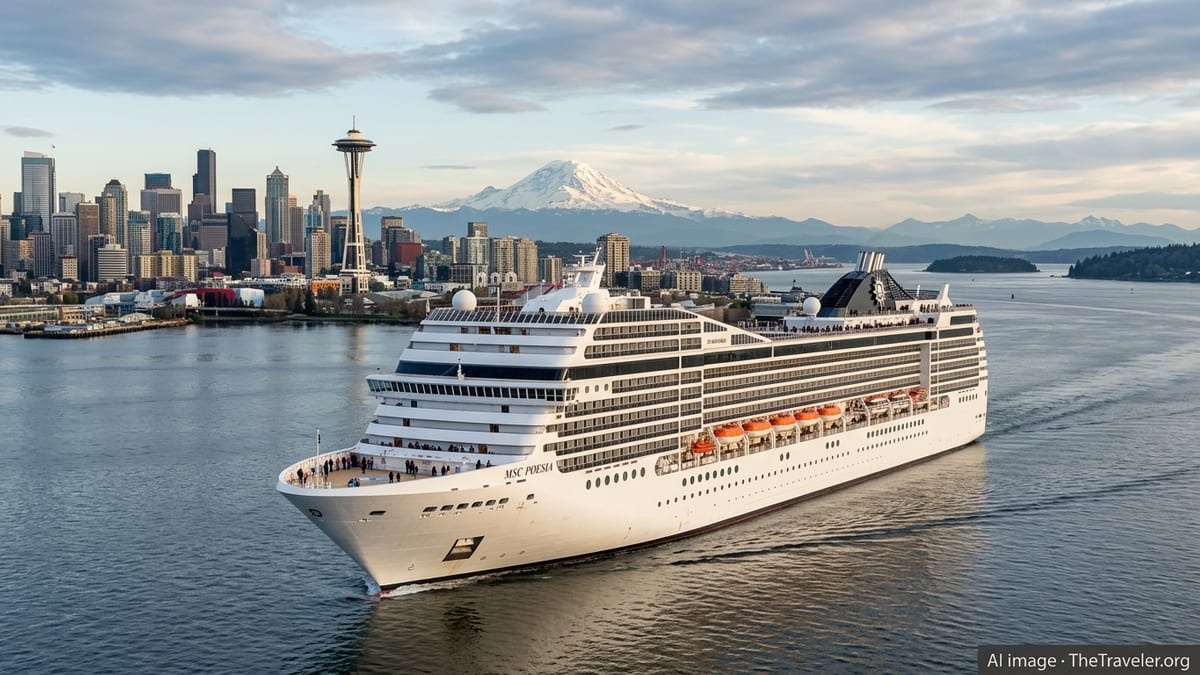
The launch of airport-based check-in coincides with MSC Cruises’ first full Alaska season from Seattle. MSC Poesia, homeporting at Pier 91, is operating itineraries that include calls in Ketchikan, Icy Strait Point and scenic cruising in areas such as Tracy Arm, positioning the brand in a highly competitive market dominated by established North American operators.
Port of Seattle planning documents and cruise industry reports had already identified 2026 as a growth year, with more lines and larger ships using the city as a turnaround port for Alaska voyages. MSC’s arrival as a new operator has added to that expansion and increased pressure on ground operations at both the airport and cruise terminals.
By shifting a significant portion of embarkation procedures away from the pier, MSC’s remote check-in is designed to ease strain on terminal infrastructure. The approach also aligns with broader trends in passenger processing, with ports and cruise companies adopting more pre-arrival digital options to reduce face-to-face administrative steps on the day of sailing.
Industry coverage suggests that Seattle is serving as a test bed for MSC’s digital remote check-in model. The line has indicated that, following the rollout in the Pacific Northwest, it plans to expand the concept to additional airports and ports in its global network over time.
Benefits for Travelers Navigating Busy Seattle Hubs
For passengers, the most immediate advantage of MSC’s Seattle airport check-in is time. Embarkation days in Seattle can involve multiple queues, from airline check-in and security at the airport to transportation lines and terminal processing at the pier. Shifting cruise check-in upstream to Seattle-Tacoma International Airport removes one of those layers once travelers reach the waterfront.
Publicly available information from the Port of Seattle highlights existing initiatives to manage congestion, including baggage-handling programs and security line reservation tools at the airport. MSC’s decision to move embarkation tasks to Seattle-Tacoma fits within this wider effort to distribute passenger flows across facilities rather than concentrating them at a single bottleneck on the pier.
For guests booked on MSC’s official transfers, the experience is marketed as an end-to-end journey: check bags and clear cruise formalities at the airport, board a dedicated coach and proceed directly toward ship security and embarkation. Travel media reports describe the process as particularly appealing for first-time Alaska cruisers or visitors unfamiliar with Seattle’s layout, who may prefer a guided, bundled experience on a busy embarkation morning.
However, the program does not eliminate the need for standard travel checks. Passengers must still comply with all document requirements, arrive within their assigned timeframes and pass security screening before stepping on board. The remote check-in simply relocates where and when certain steps occur, with an emphasis on minimizing crowding at the terminal itself.
Limited Availability and Key Restrictions
While the new option has drawn attention for its line-skipping potential at Pier 91, cruise trade publications stress that it is not universally available to all MSC passengers in Seattle. Eligibility is currently tied to the purchase of MSC’s official airport transfer from Seattle-Tacoma International Airport to the cruise terminal, and check-in is conducted prior to boarding those coaches.
Travelers who arrange their own ground transportation, whether by ride-hail, rental car or independent shuttle, continue to follow the standard procedure at the cruise terminal, including document checks at the check-in desks. As a result, the terminal is expected to remain busy, particularly during peak weekend departures, though MSC’s new system may ease volumes at certain times of day.
Reports also indicate that the digital remote check-in feature does not replace the need for online pre-registration via MSC’s website or mobile platform. Guests are advised to complete online check-in within the typical pre-cruise window so that airport staff can quickly finalize details, verify documents and issue boarding materials using handheld devices.
As with many new operational tools, the airport check-in program may evolve during its first season. Industry coverage notes that MSC plans to refine the service and, where successful, extend similar remote check-in options to other airports, hotels and designated departure points in different homeports worldwide.
What This Signals for Future Cruise Embarkation
MSC’s move in Seattle reflects a wider shift within the cruise industry toward more distributed, technology-supported embarkation models. As ships grow larger and itineraries attract higher volumes of fly-in passengers, operators are examining ways to move processing steps away from terminal choke points and closer to where journeys begin.
Airports are a natural focal point for that effort. Many major cruise ports already coordinate bag-transfer or airline check-in programs for disembarking guests, allowing luggage to move independently from ship to plane. MSC’s Seattle initiative effectively flips that concept to the start of the trip, embedding cruise procedures within the airport environment rather than relying solely on the port.
If the Seattle pilot proves successful in easing lines and improving guest satisfaction, similar models may appear in other North American homeports and in European gateways where cruise and air traffic intersect. For now, the digital remote check-in at Seattle-Tacoma International Airport offers MSC’s Alaska passengers a new way to step around the terminal crowds and begin their cruise experience with fewer queues between the plane and the ship.