


More news on this day
Norwegian Sky’s last scheduled voyage for Norwegian Cruise Line has undergone a major itinerary change linked to heightened security risks in the Middle East, turning a long‑anticipated farewell sailing into another example of how regional conflict is reshaping cruise routes.
Get the latest news straight to your inbox!
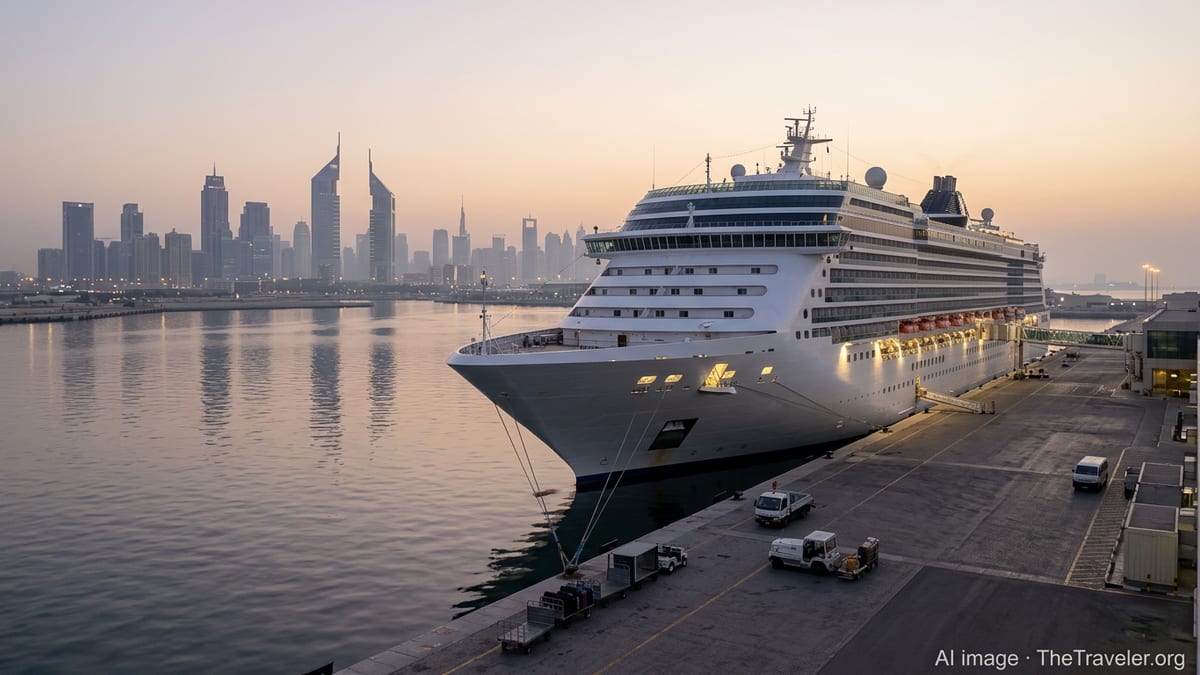
Farewell Sailing Loses Dubai Finale
Norwegian Sky, a nearly three‑decade‑old ship preparing to exit the Norwegian Cruise Line fleet, had been scheduled to operate a 21‑day repositioning cruise in September from Piraeus, near Athens, to Dubai. The voyage was marketed as the ship’s final sailing under the brand, featuring a Suez Canal transit and calls in the Eastern Mediterranean and Red Sea before concluding in the Persian Gulf.
Industry coverage indicates that the end point of this sailing has now been altered, with the cruise no longer finishing in Dubai. Instead, publicly available information shows that the itinerary has been reworked to end in Muscat, Oman, effectively removing the final leg into the Persian Gulf that had been a central feature of the original route.
The change means guests who had planned onward travel from Dubai will now have to reroute their post‑cruise arrangements from Muscat. Reports indicate that booked passengers were informed of the shift via direct communication from the cruise line outlining the revised itinerary and compensation options.
Norwegian Sky is expected to leave the company’s fleet after this voyage and transfer to India‑based Cordelia Cruises. The farewell itinerary had attracted interest from long‑time fans of the ship, who saw the transit to Dubai as a symbolic final chapter for one of Norwegian’s best‑known mid‑size vessels.
Security Advisories Tighten Around Persian Gulf and Red Sea
The adjustment to Norwegian Sky’s final itinerary comes against a backdrop of escalating security concerns for commercial shipping in parts of the Middle East. Recent advisories from Norwegian maritime authorities have moved from cautionary guidance to formal restrictions in certain waters, citing a critical threat environment for civilian vessels.
Norwegian regulators now prohibit Norwegian‑flagged ships from entering the Persian Gulf via the Strait of Hormuz, following a series of attacks and attempted attacks on merchant traffic. Public notices describe conditions as highly hazardous, with military operations and targeted strikes contributing to an elevated risk profile for passenger ships operating in the region.
Separate advisories strongly recommend that Norwegian‑flagged vessels avoid the southern Red Sea, the Bab el‑Mandeb Strait and the nearby Gulf of Aden wherever possible. These routes are key chokepoints for itineraries that link Europe and the Mediterranean with the Gulf states and the broader Indian Ocean, including repositioning cruises similar to Norwegian Sky’s planned farewell voyage.
These warnings mirror a broader pattern across the cruise sector, in which lines have spent the past two seasons reconfiguring schedules to bypass conflict‑adjacent waters. Published coverage notes that world cruises, Middle East itineraries and Red Sea passages have been among the most heavily affected, with some voyages canceled outright and others significantly rerouted.
Passenger Impact and Compensation Measures
For guests booked on Norwegian Sky’s final sailing, the shift in endpoint and the removal of Dubai from the schedule represent a substantial change in both logistics and expectations. Many passengers typically arrange independent flights, hotel stays and tours around a cruise’s advertised embarkation and disembarkation ports, which means any late alteration can trigger a cascade of rebookings.
Reports on the revised farewell itinerary indicate that the cruise line has offered financial measures intended to offset the disruption. Publicly available information shows that guests keeping their reservations are being provided a future cruise credit equal to a percentage of the voyage fare, framed as a gesture of goodwill in response to the unforeseen development.
In addition, coverage of the notice sent to booked passengers indicates that the company is offering reimbursement up to a specified amount for change or cancellation fees tied to independently arranged air or land travel, in cases where those costs are not covered by insurance or the carrier. Such gestures have become more common as operators seek to balance contractual flexibility with customer expectations in a volatile security environment.
Travel commentators note that, while ticket contracts give cruise lines broad discretion to modify ports, routes and even final destinations, the sector has come under growing scrutiny when large portions of complex itineraries are altered at relatively short notice. As a result, companies have increasingly turned to a mix of refunds, credits and expense coverage to maintain passenger loyalty.
Wider Middle East Conflict Disrupts Cruise Planning
Norwegian Sky’s altered farewell cruise reflects a more extensive reshaping of deployment plans across Norwegian Cruise Line Holdings and the wider industry. Public filings and earnings commentary from the company point to disruptions in the Middle East, including the conflict in Israel and fighting affecting Red Sea and Gulf shipping lanes, as key factors behind modified itineraries and softer demand for some European and regional sailings.
Industry reports describe a wave of cancelations and redeployments across multiple brands since late 2023, as instability in and around Israel, the Red Sea and the Gulf of Aden prompted operators to bypass affected ports or overhaul full seasons. Some cruise lines have pulled entire winter Red Sea programs, while others have removed calls to Israeli ports such as Haifa and Ashdod and substituted alternative Mediterranean destinations.
For Norwegian Cruise Line, the shift has meant redirecting ships that were originally scheduled for Middle East and Red Sea itineraries into other markets, including Europe, the Caribbean and Asia. Company statements cited in financial and trade press highlight higher fuel costs tied to longer routes that avoid conflict zones, as well as evidence that some travelers are reevaluating plans that involve proximity to the region.
The reconfiguration of Norwegian Sky’s final voyage, though focused on a single ship nearing the end of its service with the brand, underscores how quickly marquee sailings can be reshaped by geopolitical events. The decision to avoid a final approach into the Persian Gulf aligns with a wider pattern in which itineraries are being redesigned to track evolving security assessments, often only months before departure.
What the Change Means for Future Deployments
While Norwegian Sky is scheduled to leave the fleet after this season, the handling of its last sailing may offer an indication of how cruise lines will approach routing decisions in sensitive regions going forward. Analysts following the sector suggest that operators are likely to maintain a cautious stance on itineraries that rely on passages through the Red Sea and into the Persian Gulf as long as threat levels remain elevated.
Promotional materials for upcoming seasons already show a shift in emphasis toward alternative long‑haul routes, including extended European, South Pacific and Africa itineraries that avoid the most exposed corridors. Norwegian’s own deployment plans highlight more port‑intensive schedules in relatively stable regions, a strategy that appears designed to reassure travelers while keeping ships fully utilized.
Cruise planners note that repositioning voyages, often marketed as once‑in‑a‑lifetime or farewell experiences, are particularly vulnerable to late changes because they depend on complex, multi‑region transits. As Norwegian Sky’s experience demonstrates, such sailings can be reshaped rapidly in response to external events, even when they carry symbolic weight for a ship’s final chapter with a brand.
For travelers, the episode reinforces longstanding advice to treat itineraries that transit conflict‑adjacent waters as subject to change and to consider insurance options that address schedule disruptions. For cruise operators, Norwegian Sky’s rerouted farewell underscores the operational reality that Middle East conflict dynamics can upend even high‑profile voyages, prompting swift adjustments to keep guests and vessels out of harm’s way.