


More news on this day
Passengers travelling through Manchester Airport today are facing a mixed picture of disruption, with a number of departures and arrivals delayed or cancelled while much of the schedule continues to operate close to time.
Get the latest news straight to your inbox!
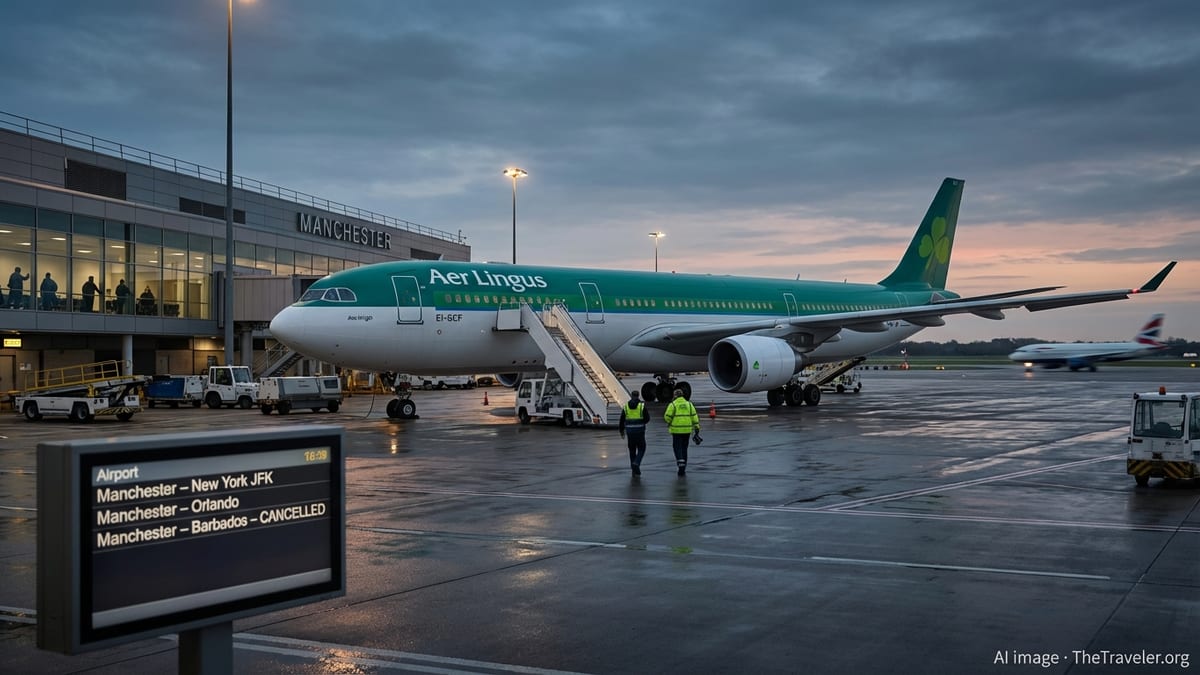
Overall level of disruption at Manchester Airport
Live departure and arrival boards for Manchester Airport on 10 July indicate that the majority of flights are operating, but with a steady stream of services showing delays ranging from minor hold-ups to longer waits. A smaller number of flights are marked as cancelled, affecting both short-haul and selected long-haul routes.
Data from real-time flight tracking and airport information platforms shows that delays are spread throughout the day rather than concentrated in a single peak period. Many early morning departures left close to schedule, while mid-morning and early afternoon services display a higher proportion of late running times. Some long-haul departures have recorded late arrivals at their destinations, reflecting earlier pushback or en route delays.
Publicly available information suggests that disruption today is being driven more by operational and scheduling factors than by any single major incident at the airport. There are no indications of a full runway closure or terminal shutdown, and queues at security and check in are reported as busy but within typical summer holiday ranges.
For travellers, the impact is highly route and airline specific. Some carriers are maintaining near-normal punctuality, while others show clusters of late departures and isolated cancellations, underlining the importance of checking individual flight status rather than relying on overall averages.
Routes and airlines most affected
Based on real-time flight status boards, short-haul European services account for a notable share of today’s delayed flights from Manchester, particularly on leisure routes to Mediterranean destinations. A number of departures to Spain, Portugal, Greece and Turkey are showing pushed-back departure times, with knock-on effects on later rotations for the same aircraft.
Selected long-haul leisure flights have also reported extended journey times. Tracking data for services such as holiday routes to the Caribbean reveals late arrivals against the planned schedule, in some cases following delayed departures from Manchester. These longer-haul delays typically run to well over half an hour and occasionally more, which can be significant for tour operator itineraries and hotel transfers.
Among airlines, the pattern is uneven. Some low-cost and leisure-focused carriers show lines of flights with modest to moderate delays, while others appear closer to schedule. Legacy and transatlantic operators have generally kept to planned timings, though there are isolated examples of delayed and cancelled services on their networks as well.
Domestic connections linking Manchester with other UK hubs and regional airports are also experiencing pockets of disruption. Rail maintenance and residual issues on routes serving Manchester Airport’s rail station are adding further complexity for passengers making multi-leg journeys that combine train and air travel.
Key causes behind today’s delays and cancellations
Analysis of today’s operational picture suggests that a combination of factors is contributing to the delays and cancellations at Manchester Airport, rather than a single overarching cause. Published information from air traffic and aviation data sources points to general congestion across parts of the European airspace network, which can lead to flow control measures and airborne holding that feed back into departure schedules.
Weather is playing a role, although not necessarily in the form of severe local conditions at Manchester. Seasonal storms and unsettled weather patterns across parts of Europe and the North Atlantic are affecting air traffic control capacity on certain routes, which can in turn lead to departure slots being pushed back. When this interacts with busy summer schedules and high load factors, relatively small disruptions can escalate into longer knock-on delays.
Operational constraints are another factor. Airlines with tightly timed aircraft rotations are vulnerable when an incoming flight arrives late, leaving limited margin to turn the aircraft around for its next departure. Ground handling capacity, aircraft availability, and crew duty time limits can all compound the effect of a late inbound service, occasionally resulting in cancellations when schedules can no longer be safely maintained.
In the background, ongoing infrastructure and network pressures highlighted in recent European aviation performance reports continue to influence punctuality. These include works on taxiways and stands at some airports, staffing levels within air traffic management, and continuing high demand on peak leisure days.
Advice for passengers flying from Manchester today
Given the variable pattern of disruption, passengers travelling through Manchester Airport today are being encouraged by airlines and travel providers to monitor their flight status closely before setting off. Online departure boards and carrier apps are being updated throughout the day, often showing changes to departure times well before they appear on physical screens in the terminal.
Travellers with connecting journeys, particularly those changing planes in European hubs or combining rail and air travel, are more exposed to the impact of delays. Industry guidance suggests allowing extra time between connections where possible and being prepared for rebooking options if a missed connection appears likely. Some airlines may proactively reroute passengers when knock-on delays become clear.
At the airport itself, reports indicate that arriving earlier than the minimum recommended time can provide a useful buffer, especially during the busy summer holiday period. Longer check-in and security queues are not universal today, but they can develop quickly when several delayed or retimed flights converge on the same time window.
Passengers whose flights are cancelled or heavily delayed are advised to consult airline policies on rebooking and compensation, which vary by carrier, route and the underlying cause of disruption. While not every delay will qualify for financial redress, understanding the relevant terms and conditions can help travellers make informed decisions about alternative arrangements.
What today’s disruption means for the days ahead
Looking beyond today, aviation performance data and recent seasonal patterns suggest that Manchester Airport is likely to see continued periods of intermittent disruption through the peak summer travel weeks. High passenger volumes, dense schedules and ongoing pressures within the European air traffic system mean that even minor issues can have outsized effects on punctuality.
However, there is also evidence that airlines and airports have strengthened their planning around peak travel after recent years of heightened disruption. Measures such as expanded staffing in key customer-facing areas, refined inclement weather procedures and closer coordination with air traffic management are aimed at keeping delays contained when problems arise.
For passengers, this means that while days like today may bring an elevated risk of delays and occasional cancellations, many flights will still run close to schedule. The most practical response is to build flexibility into travel plans, rely on real-time information from airlines and airport channels, and be ready to adjust connections or local transport arrangements if timings change at short notice.
As the day progresses, Manchester Airport’s live departure and arrival data will continue to provide the clearest picture of how disruption is evolving, which services are most affected, and how quickly operations are returning to the planned timetable.