


More news on this day
Rail passengers across the Midlands and on long distance routes faced significant disruption after a fire near the tracks prompted the evacuation of Birmingham New Street station and a temporary suspension of services through one of the country’s busiest rail hubs.
Get the latest news straight to your inbox!
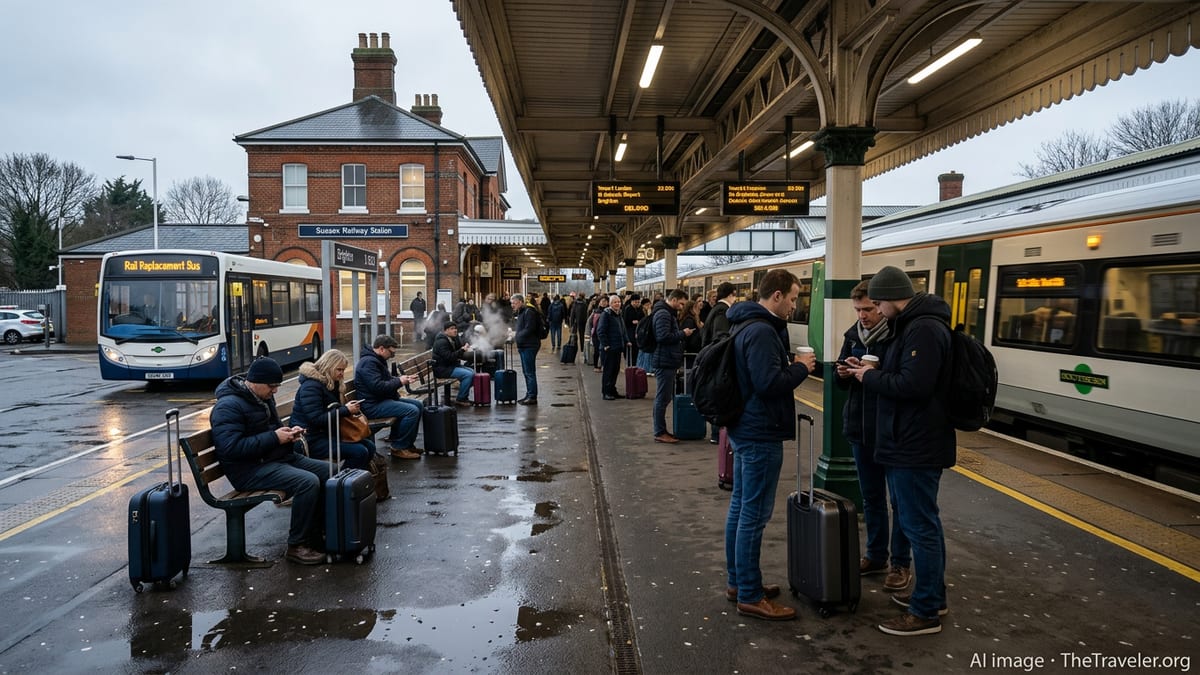
Evacuation at major interchange halts services
Reports from rail operators and live journey updates indicate that services through Birmingham New Street were halted on Thursday after a fire was reported close to the railway. As a precaution, the station concourse was cleared of passengers while emergency teams and rail staff responded to the incident.
The interruption affected both local and long distance trains using the city centre hub, which is a key interchange on the West Coast Main Line and for regional services across the West Midlands. Departures and arrivals were suspended while checks were carried out on the affected section of track and station facilities.
Passenger information systems showed multiple cancellations and severe delays as trains were held outside the station or diverted away from the affected area. Crowding was reported at nearby stations and on alternative routes as travellers attempted to re-plan journeys at short notice.
Publicly available travel updates suggest that the evacuation remained in place for a limited period while safety inspections were completed, after which a controlled return of passengers to the station began and a reduced train service was restored.
Knock-on delays for long distance and regional routes
The disruption at Birmingham New Street had a wider impact on services linked to the West Coast Main Line and cross-country routes. Journey planners showed that trains between London Euston, Birmingham, the North West and Scotland were among those affected, with some services diverted or terminated short of their planned destinations.
Live updates from several train operators highlighted delays of up to an hour on key intercity services, including those connecting Birmingham with Glasgow, Edinburgh and Manchester. Some southbound trains were reported as being diverted via alternative routes such as Birmingham International, adding time to already busy summer schedules.
Regional services across the West Midlands also experienced disruption, with alterations on routes serving destinations such as Wolverhampton, Worcester and the wider commuter network. In some cases, trains were turned back before reaching Birmingham New Street to help manage congestion on the approaches to the station.
Although the most severe disruption was concentrated around the time of the evacuation, timetables remained fragile for several hours as delayed trains and displaced rolling stock continued to ripple through the network.
Passengers advised to check before travelling
As services began to resume, journey planning tools and operator updates continued to advise passengers to check live information before travelling. Travellers were encouraged to allow extra time, expect last minute platform changes and be prepared for residual delays, even after the immediate fire risk had been addressed.
National passenger information services indicated that disruption on some routes passing through Birmingham New Street could continue into the afternoon and early evening. Short-notice alterations, including revised stopping patterns or partial cancellations, were highlighted as operators worked to bring trains and crews back into their correct positions.
Rail users with flexible tickets were advised through public information channels that they could postpone travel until later in the day, while those who chose to continue their journeys were warned to anticipate crowded trains and concourses as normal timetables were gradually reintroduced.
Published guidance from operators also reminded passengers that journeys arriving significantly late may be eligible for compensation under established delay repay schemes, depending on the train company and ticket type.
Safety checks and investigation into cause
According to publicly accessible operational notices, safety assessments were carried out on the line and surrounding infrastructure before services were allowed to resume at Birmingham New Street. These checks focused on confirming that any fire near the track was fully extinguished and that signalling, power and structural elements were not compromised.
Once engineers and incident teams confirmed that the immediate area was safe, rail operators began a controlled reintroduction of services, prioritising routes with the greatest numbers of stranded passengers and those connecting to wider national and regional networks.
The precise cause and location of the fire have not yet been fully detailed in public updates, but early information points to it originating close to the railway rather than within a train. Further investigation is expected to determine whether infrastructure, external activity or weather conditions played a role, and whether additional preventative measures are required on the approaches to the station.
Any findings are likely to feed into existing safety procedures at Birmingham New Street, where the concentration of platforms and frequent train movements mean that even relatively small incidents can have an outsized impact on the national rail timetable.
Wider context for a key national rail hub
Birmingham New Street is widely recognised as one of the busiest and most important interchange stations in Britain, handling large volumes of commuter, regional and long distance traffic each day. Its central role in the network means that incidents in or around the station often generate widespread knock-on effects for passengers far beyond the West Midlands.
The latest disruption comes at a time when rail operators and infrastructure managers are already managing a mixture of planned engineering work, seasonal demand and ongoing operational challenges. Even short periods of unplanned closure at a hub like New Street can generate complex rescheduling tasks and long recovery periods for timetables.
Travel commentators note that recent events highlight the importance of robust contingency plans, clear real-time information and coordination between multiple train companies using shared infrastructure. For passengers, the incident serves as another reminder of the value of checking live departure boards and journey planners before setting out, particularly when travelling through major interchanges.
As services continue to stabilise following the evacuation and fire-related disruption, attention is likely to focus on how quickly normal patterns can be restored and what lessons can be learned to minimise the impact of similar incidents in future at Birmingham New Street and comparable rail hubs across the country.