


More news on this day
AirAsia Philippines has canceled its Taipei flights scheduled for July 11, 2026, as Typhoon Inday moves closer to northern Taiwan, prompting widespread disruption across regional air travel networks.
Get the latest news straight to your inbox!
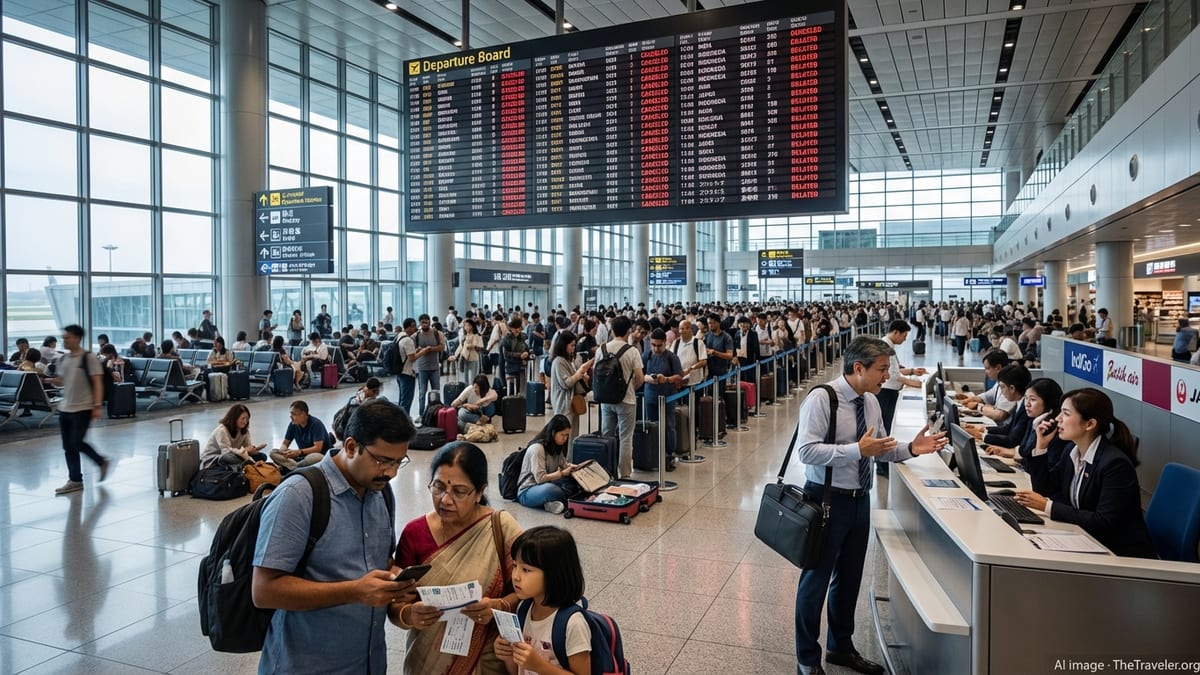
Weather disruption as Typhoon Inday nears Taiwan
Publicly available forecasts from Philippine and Taiwanese weather agencies indicate that Typhoon Inday is tracking toward the northern part of Taiwan, with the most severe conditions expected from the evening of July 10 into July 11, 2026. Strong winds and heavy rainfall are anticipated to affect key transport hubs, including the greater Taipei area and Taoyuan International Airport.
Reports from local media in Taiwan show that airport and aviation planners have been preparing for significant operational impacts, with authorities highlighting the potential for strong crosswinds and poor visibility around peak arrival and departure periods. These conditions create safety concerns for takeoffs and landings, especially on short regional sectors frequently operated by narrowbody aircraft.
Given the projected path and intensity of the storm, airlines serving Taipei have been adjusting schedules, consolidating operations, or canceling selected services in advance of the worst weather. The decision by AirAsia Philippines to cancel its Taipei flights on July 11 forms part of this broader wave of preemptive measures, aimed at limiting last minute disruption while prioritizing operational safety.
Typhoon season in the northwest Pacific regularly disrupts aviation across Taiwan, Japan, and the Philippines, but early planning and coordinated communication are increasingly being used to reduce the risk of passengers being stranded at airports once conditions deteriorate.
AirAsia Philippines adjusts Manila Taipei services
Information compiled from flight schedules and aviation tracking platforms shows that AirAsia Philippines operates regular services between Manila and Taipei, typically routing through Taoyuan International Airport. For July 11, 2026, the airline has removed its Taipei flights from active schedules, reflecting a complete halt of operations on this route for the day.
Industry timetable data indicate that at least one AirAsia Philippines flight linking Taipei and Manila on July 11 was originally timetabled as a direct service of just over two hours. Its removal from the operating schedule aligns with a pattern of cancellations across multiple carriers serving Taipei on the same date.
Published coverage from Philippine and Taiwanese news outlets notes a surge in schedule changes affecting regional routes, including services linking Taipei with major Southeast Asian gateways. AirAsia Philippines appears to have opted for an early, full day cancellation of its Taipei flights rather than operating a reduced or delayed schedule that might have been vulnerable to last minute weather related suspensions.
Travel industry observers point out that low cost carriers such as AirAsia typically have less flexibility to swap aircraft or crews once disruption ripples through their network. Canceling entire flight rotations on days of peak weather risk can help limit further knock on delays across other routes in the system.
Broader impact on flights at Taoyuan International Airport
According to local Taiwanese media reports, Taoyuan International Airport is preparing for a near shutdown of many domestic and regional operations on July 11 as Typhoon Inday approaches. Some coverage indicates that a large share of flights operated by Taiwan based airlines for that day have already been canceled, with other carriers from around the region following suit.
The concentration of cancellations is expected to affect both departures and arrivals, including flights from the Philippines, Japan, South Korea, and major hubs in Southeast Asia. Passengers connecting onward through Taipei may face additional disruption as onward sectors are rescheduled or consolidated in the days after the storm passes.
Airport related notices emphasize that the heaviest wind and rain could occur during periods that normally handle a high volume of early morning and evening flights. In such conditions, even aircraft that manage to depart or arrive may do so outside their planned windows, which can lead to missed connections and extended ground time.
Observers of recent storm related disruptions note that once conditions improve, airlines often need several days to normalize operations. Limited aircraft and crew availability, combined with backlogs of rebooked passengers, can result in fuller than usual flights and reduced seat availability on popular routes such as Manila Taipei.
What affected travelers can expect
Publicly available passenger advisories for AirAsia Philippines encourage travelers affected by weather related cancellations to review options that may include rebooking on alternative dates, converting the value of their ticket into travel credits, or requesting refunds, depending on the type of fare and prevailing conditions. Specific options for those booked on the canceled July 11 Taipei services have not been summarized in a single public document, but general policies continue to apply.
Travel forums and recent consumer reports suggest that passengers should monitor their booking status closely through the airline’s mobile app or website, as schedule changes may appear there earlier than through third party agents. Some travelers also highlight the importance of checking email and text notifications regularly in the days leading up to a major storm, since airlines sometimes adjust flights multiple times as forecasts evolve.
Individuals with onward connections on separate tickets, such as independent itineraries beyond Manila or Taipei, may face added complexity. Travel planners often recommend allowing additional buffer days for long haul segments during peak typhoon activity, or considering flexible tickets that can be changed without large penalties if significant weather is forecast.
Passengers already in transit when cancellations are announced may need to work with ground staff at the airport to secure hotel accommodation, meal vouchers, or alternative routings, depending on the length of delay and individual airline policies. However, entitlements differ by jurisdiction and carrier, and weather disruptions are often categorized separately from operational issues.
Travel planning in an era of stronger typhoons
Climate related analyses focusing on the northwest Pacific suggest that while the overall number of tropical cyclones affecting the region may fluctuate over time, the proportion of intense systems has been trending higher. This pattern increases the likelihood of powerful storms such as Inday that can compel airports and airlines to suspend operations entirely for defined periods.
Travel risk specialists note that for destinations along typical typhoon tracks, including Taiwan and the northern Philippines, flexible itineraries and comprehensive travel insurance are becoming more important considerations for both leisure and business travelers. Policies that explicitly cover weather related disruption can help mitigate the financial impact of last minute cancellations and extended stays.
For airlines like AirAsia Philippines, recurring typhoon seasons reinforce the need for robust contingency planning around aircraft positioning, crew duty time limits, and customer communication channels. Visible early decisions, such as the July 11 Taipei flight cancellations, can reduce uncertainty for passengers even if they cause immediate inconvenience.
As Typhoon Inday moves through the region, travelers are being urged by aviation and meteorological agencies alike to monitor updated forecasts and flight information and to remain prepared for further adjustments across the wider East and Southeast Asian air travel network.