


More news on this day
Crews are working to clear debris and repair damaged rail infrastructure after a loaded Union Pacific coal train derailed near Eureka, Missouri, sending dozens of cars off the tracks and disrupting freight and passenger service across the region.
Get the latest news straight to your inbox!
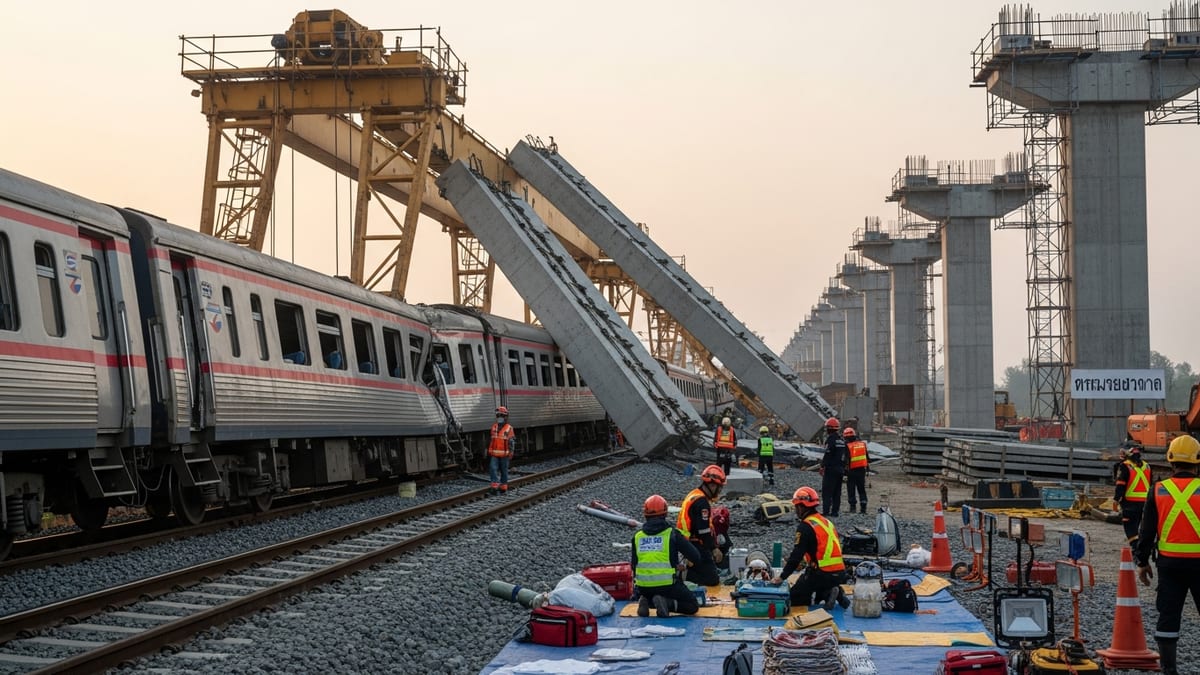
Derailment Near Eureka Sends Coal Cars Off the Tracks
Reports indicate that the derailment occurred on July 26 near Eureka, a community southwest of St. Louis, along Union Pacific’s Jefferson City Subdivision. A 135-car coal train left the rails in the area near Lewis Road and the Crescent Farms golf course, scattering loaded coal hoppers beside the right-of-way.
According to publicly available information, roughly two dozen cars left the tracks, with several lying on their sides and spilling coal along the corridor. Initial images and video from the scene show long strings of dark hopper cars buckled and piled up next to the line, while locomotives and remaining cars remained upright farther down the train.
The derailment did not result in a fire or hazardous materials release, as the train was carrying coal rather than chemicals or fuel. Emergency responses focused on securing the scene, assessing structural damage to nearby infrastructure, and beginning the process of clearing and rerailing affected equipment.
Local coverage describes a large presence of fire crews, rail personnel, and heavy machinery converging on the site as daylight faded on Sunday, with activity continuing into the start of the week as clean-up and inspection work expanded along the corridor.
Bridge Closure and Local Traffic Impacts
Publicly available reports show that the derailment compromised rail infrastructure and an overpassing roadway bridge near the site. The structure, which carries local road traffic over the Union Pacific tracks in the Lewis Road area, was closed shortly after the incident as a precaution while engineers assessed potential damage.
Images from the scene indicate coal cars and debris resting close to or beneath the bridge, prompting concerns about possible stress on supports and substructures. As a result, drivers in and around Eureka faced detours, with traffic redirected to alternate crossings until inspections and any required repairs could be completed.
Residents in nearby neighborhoods reported seeing coal dust and debris along the right-of-way, though publicly available information does not indicate any residential evacuations. Rail and roadway crews focused on stabilizing rail equipment, removing spilled coal from travel and work areas, and protecting drainage features and nearby property from additional runoff as heavy equipment moved in.
Local updates suggest that the bridge is expected to remain closed while structural evaluations are finalized, adding short-term inconvenience for commuters but aiming to avoid longer-term safety risks.
Regional Rail Disruptions for Freight and Amtrak
The derailment near Eureka occurred on a busy freight corridor that also supports passenger operations, leading to wider transportation impacts beyond the immediate crash site. According to regional coverage, both main tracks on the Jefferson City Subdivision were taken out of service, forcing dispatchers to reroute or temporarily suspend trains.
Service on Amtrak’s Missouri River Runner, the state-supported route linking Kansas City and St. Louis, was among the operations affected. Publicly available notices describe adjustments and cancellations while crews worked to reopen at least one line through the area. Some trains were truncated or replaced with bus connections, while others did not operate between certain points.
Freight traffic through the St. Louis region also faced delays as coal trains, intermodal service, and mixed freight movements were held or diverted. The disruption added pressure to a summer rail network already contending with heavy demand and seasonal heat-related track maintenance across several Midwestern subdivisions.
Rail observers commenting publicly noted that reopening a single main track is often the first milestone after such events, enabling a limited flow of trains at restricted speeds while full repairs continue. Early indications from local reports pointed to multi-day work before normal capacity could be restored.
Investigation and Safety Questions Around Coal Shipments
As crews continue to remove wrecked cars and repair the damaged right-of-way, attention is turning to the cause of the derailment. At this stage, no definitive explanation has been released in publicly available information, but common factors examined in similar incidents include track conditions, equipment failure, and the effects of summer heat on steel rails.
Coal trains are among the heaviest regular movements on North American railroads, with each loaded hopper adding significant weight to long, continuous strings of cars. In the Eureka case, the train’s length and load raised questions among rail watchers about rail stress, track alignment, and the performance of fastenings and ballast under sustained high temperatures.
National data from recent years show that derailments involving bulk commodities such as coal can spill large volumes of material, requiring extensive cleanup even when there are no injuries or hazardous releases. Environmental monitoring typically focuses on nearby waterways, drainage ditches, and soil where coal or ballast may have shifted, with remedial work ranging from simple collection to more substantial earthmoving and restoration.
Regulators and company investigators are expected to review data from locomotives, track inspection records, and maintenance logs to determine whether any defect, operational factor, or weather-related condition contributed to the failure near Eureka. The findings from such investigations often influence future maintenance priorities and capital investments along busy freight corridors.
Community Concerns and Next Steps for the Corridor
The derailment has reignited local conversations about rail safety in communities that live alongside major freight routes. Residents in the St. Louis outer suburbs have previously expressed interest in the condition of aging bridges, retaining walls, and drainage structures along the corridor, and the sight of toppled coal cars near a golf course and residential areas has added urgency to those concerns.
Public commentary in local media and online forums reflects a mix of relief that no injuries were reported and frustration over travel disruptions and the visual impact of coal and debris. Some residents have called for more frequent inspections and clearer public communication when incidents occur near populated areas or recreational spaces.
In the coming days, attention is expected to shift from the immediate emergency response to longer-term recovery along the rail line. This includes not only reopening both tracks and the nearby bridge, but also restoring the embankments, fencing, and landscaping affected by the derailment and cleanup operations.
For travelers and rail users across Missouri, the incident near Eureka serves as another reminder of the pivotal role freight infrastructure plays in both local mobility and national supply chains. As rail operators and public agencies work to return the corridor to normal operations, they also face renewed pressure to demonstrate that systems are in place to minimize the risk and impact of similar events in the future.