


More news on this day
Hundreds of air travellers across France have faced severe disruption as more than 430 delays and at least 60 cancellations were recorded on Friday at major airports including Paris, Nice and Marseille, affecting services operated by Air France, easyJet, Ryanair and several other carriers.
Get the latest news straight to your inbox!
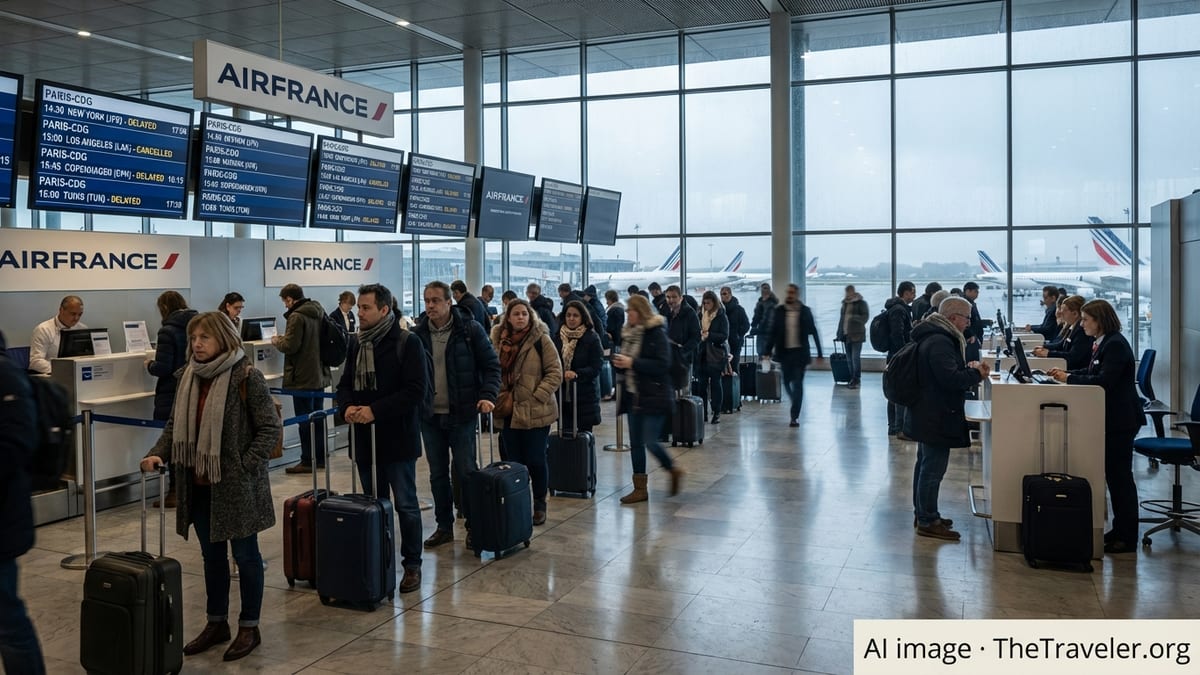
Delays and Cancellations Ripple Across French Network
Available operational data and live tracking services show widespread disruption across the French air traffic network, with knock-on effects particularly visible at the country’s busiest hubs. Paris Charles de Gaulle and Paris Orly, together with Nice Côte d’Azur and Marseille Provence, all reported elevated levels of delayed and cancelled movements as airlines adjusted schedules and air traffic control capacity fluctuated.
Aggregated figures from multiple flight-tracking and schedule-monitoring platforms indicate that, over the course of the day, more than 430 flights linked to French airports were delayed and around 64 were cancelled outright. The impact was felt on both domestic and short-haul European routes, with services linking Paris to Mediterranean destinations such as Nice and Marseille among those hit.
Publicly available arrival and departure boards for French airports show consecutive late departures building through the morning and early afternoon, followed by a rise in cancellations as airlines sought to reset their operations. This pattern left travellers facing missed connections, rebookings for later in the weekend and, in some cases, overnight stays while waiting for replacement flights.
Domestic routes that typically see frequent shuttles between Paris and regional cities were particularly exposed, as any single cancellation immediately reduced frequency and increased crowding on remaining flights. Short-haul European services operated by low-cost carriers from French bases also registered growing delays as aircraft and crews became out of position.
Air France, easyJet and Ryanair Among Most Affected Carriers
Air France, which runs dense domestic and European networks from Paris Charles de Gaulle and Orly, was among the airlines most visibly affected. Real-time flight histories show that several of the carrier’s short-haul sectors, including links between Paris and Marseille, were cancelled on Friday, while others departed significantly behind schedule as the day progressed.
Low-cost carriers also saw operations come under strain. easyJet and Ryanair, both of which maintain substantial programmes linking French airports with the United Kingdom and wider Europe, recorded multiple delays across their French rotations as congestion in French airspace and at key hubs pushed turnaround times beyond their scheduled windows. Delayed arrivals early in the day contributed to late departures on subsequent sectors.
Budget carriers are particularly sensitive to disruption because their aircraft typically operate full-day sequences of tightly timed flights. Once an early leg is delayed or cancelled, later flights can be affected even if conditions improve. Friday’s figures suggest that this effect was clearly in play, with some afternoon and evening services running hours behind schedule despite periods of relatively stable weather at departure and arrival airports.
Regional and leisure-focused airlines operating from provincial French airports also reported scattered cancellations, particularly on routes dependent on smooth overflights through busy French control sectors. As schedules compressed, passengers faced gate changes, rolling delay estimates and, in some cases, last-minute notifications that flights would not operate.
Airspace Capacity and Staffing Constraints Add Pressure
Reports from European network managers and air traffic control monitoring bodies point to continuing structural pressures in French airspace that help explain the scale of Friday’s disruption. Recent briefings highlight capacity constraints and staffing challenges at several French area control centres, including those responsible for busy sectors around Reims and Marseille, where traffic levels are high during the summer travel season.
In addition, France has been progressing with technical transitions in its air traffic management systems, adjustments that can temporarily limit capacity while new procedures and tools are implemented. When combined with seasonal storms or localised weather disruptions, these constraints can quickly generate long sequences of airborne holding and ground delays, particularly on peak travel days.
French airports have also been operating close to their practical limits during busy periods, which leaves little room to absorb irregular operations. Even a short window of reduced arrival or departure capacity can trigger queues of flights waiting for take-off or landing slots. On Friday, this manifested in clusters of flights departing late from Paris and other hubs, feeding back into schedules at airports across the continent.
Industry observers note that, while overall en-route delays across the European network have improved compared with previous years, France continues to account for a large share of airspace-related constraints. This means that disruptions at French control centres can affect not only flights to and from France but also services that merely overfly the country on routes between other European states.
Passengers Face Long Queues, Missed Connections and Rebookings
The spike in delays and cancellations translated into long queues at check-in counters, security lines and airline service desks, particularly at Paris Charles de Gaulle, where both Air France and a number of international carriers manage complex connecting banks. Travellers reported extended waits to receive updated boarding passes, rebook itineraries or secure hotel accommodation for unexpected overnight stays.
Missed connections were a recurring problem, especially for passengers relying on short domestic hops into Paris in order to catch onward long-haul flights. When an early regional service was heavily delayed or cancelled, travellers frequently had to be moved to flights departing the following day, severely impacting holiday plans and business trips.
At leisure-focused destinations such as Nice and Marseille, the timing of delays often coincided with weekend turnover days for holiday rentals and cruises, amplifying the effect of late arrivals and departures. Families arriving hours behind schedule faced compressed holiday itineraries, while those due to fly home risked missing subsequent rail links or internal flights in their home countries.
Social media and traveller forums reflected mounting frustration as departure boards repeatedly adjusted estimated times. While some passengers reported being offered refreshments and, where required under EU rules, hotel accommodation, others described confusion over which airline entity or partner carrier was responsible for assistance when codeshare arrangements and multi-leg itineraries were involved.
What Travellers Should Know About Their Rights
Under European air passenger protection rules, travellers impacted by Friday’s disruptions may be eligible for assistance and, in some cases, financial compensation. The extent of these rights depends on the cause of the disruption, the length of delay at arrival and the distance of the flight, as well as whether the journey was departing from an airport in the European Union or operated by an EU-based carrier.
When delays become lengthy, airlines are generally expected to provide basic care such as meals, refreshments and, where necessary, hotel accommodation and transport between the airport and the place of stay. If a flight is cancelled, passengers are typically offered a choice between reimbursement of the unused ticket and re-routing at the earliest opportunity or at a later date that suits their plans, subject to seat availability.
Eligibility for additional financial compensation can hinge on whether the airline can demonstrate that the disruption was caused by extraordinary circumstances that could not have been avoided even if all reasonable measures had been taken. Airspace closures due to severe weather or external industrial action, for example, are often treated differently from disruption arising from airline staffing or technical issues.
Travel experts advise passengers who were affected to retain boarding passes, booking confirmations and any written communications received from airlines on the day of travel, as these documents can be important when submitting claims. Travellers are also encouraged to check the latest guidance on passenger rights published by national aviation regulators or European consumer bodies, as procedures and processing times can vary between carriers and jurisdictions.