


Nice is packed with cultural stops, from the Matisse Museum on the hill of Cimiez to the blockbuster collections at the Museum of Modern and Contemporary Art downtown. In that crowded field, the Marc Chagall National Museum has an almost meditative atmosphere and a very specific focus: the spiritual, dreamlike world of Marc Chagall. Whether it deserves a place on your itinerary depends on what kind of traveler you are, how long you are staying in Nice, and how you like to experience art. Here is a detailed, real-world look at what the museum offers and when it is genuinely worth your time and ticket money.
Get the latest updates straight to your inbox!
What Exactly Is the Marc Chagall National Museum?
The Marc Chagall National Museum, in the residential Cimiez area of Nice, is a French national museum created during Chagall’s lifetime and inaugurated in 1973. It was conceived around his monumental Biblical Message cycle, a series of large canvases inspired by stories from the Old Testament. Rather than a broad survey of his career, the museum is built around this spiritual, narrative core, supplemented by other paintings, drawings, stained glass and mosaics from different periods of his life.
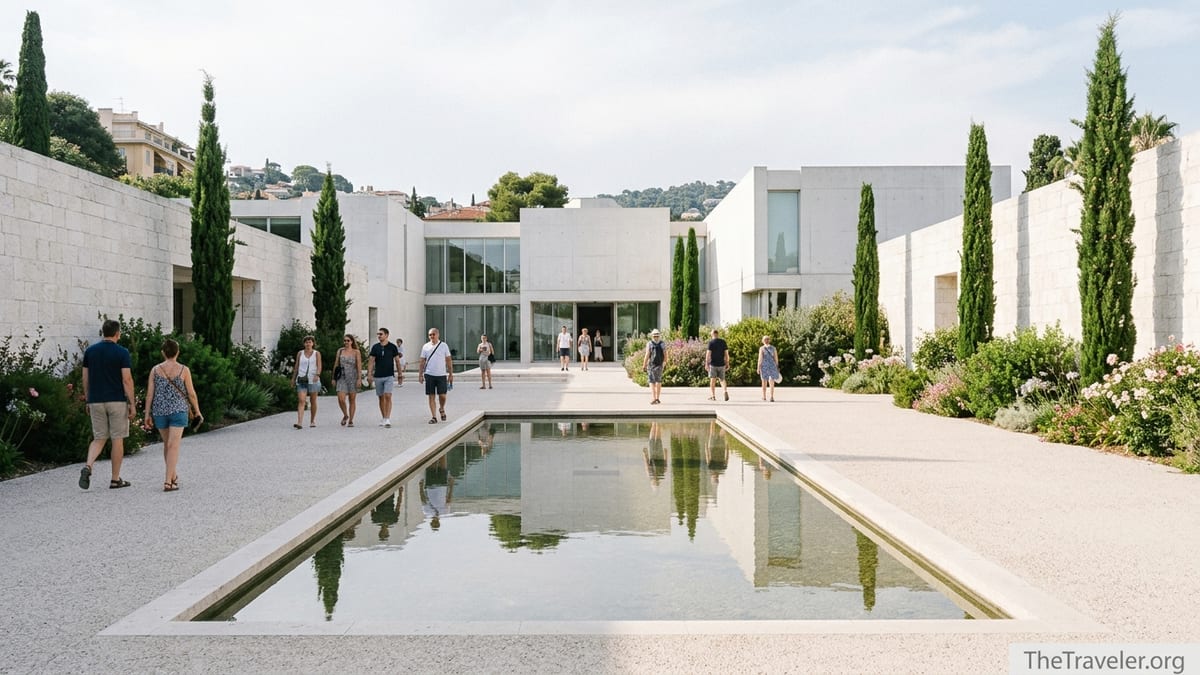
The building is relatively low and modern, arranged around gardens and calm courtyards. Unlike many grand European museums that repurpose palaces or 19th century mansions, this one was purpose-built to show Chagall’s work, and he was deeply involved in its design and layout. Visitors typically move through a sequence of white, naturally lit rooms that frame intense blues, reds and greens on the walls. Even if you are not an art specialist, it immediately feels different from the mixed collections at larger museums in Nice.
The collection here is also focused in a way that many travelers appreciate. Instead of hundreds of different artists and movements to absorb in a single visit, you are invited to go deep with one: his biblical canvases, his luminous stained glass, his mosaics, and a selection of later works. This makes the museum especially attractive if you prefer a concentrated, one- to two-hour art experience rather than an all-day marathon.
Because the museum is national, it often borrows important works from other French institutions, notably the Centre Pompidou in Paris. In 2026, for example, the long-running exhibition "Chagall at Work" brings an exceptional loan of works that entered national collections through donations from Chagall’s family, offering a rare chance to see studio pieces, studies and lesser-known works in the same space as the famous Biblical Message cycle.
What You Actually See Inside: Highlights of a Visit
Most visits begin in the Biblical Message room, a sequence of large-scale paintings illustrating episodes from Genesis, Exodus and the Song of Songs. These works, some more than two meters wide, are hung at eye level in a space designed to feel almost like a chapel. Travelers often comment that even those indifferent to biblical themes are struck by the color: deep cobalt skies, emerald fields, floating figures and animals rendered in Chagall’s unmistakable style. A typical visitor might spend fifteen or twenty minutes just slowly circling this single room, letting their eyes adjust to the details.
Off this main hall are smaller rooms with additional paintings and preparatory sketches. These give context to the big canvases: you might see a looser study of a prophet’s face in graphite next to the finished figure glowing in oil paint. Audio guides and wall labels, available in English and French, translate the stories behind the works without overwhelming you with text. For many travelers who are not experts in religious art, this explanation is what turns Chagall’s dreamlike compositions into something readable and emotionally engaging.
The museum also includes a small auditorium whose back wall is filled with Chagall’s stained glass windows. On a bright Mediterranean afternoon, light pours through these panels in bands of blue and ruby, spilling color onto the seats and stone floor. Concerts and chamber music events are often held here in the evenings, but even during the day, visitors can sit for a few minutes in near silence, watching the light slowly change. It contrasts dramatically with the busier beaches and Old Town streets just twenty minutes away.
Another highlight is the sculpture and mosaic work installed in the garden and around the reflective pool. On a typical summer visit you might walk out from the cooled interior to see Chagall’s mosaics shimmering in the sun, framed by cypress trees and flowering shrubs. Many travelers use this area as a quiet break between galleries, sitting on a bench with a takeaway coffee from the small café and leafing through a museum booklet before heading back into town.
Practical Details: Tickets, Opening Hours and How Long to Plan
For most of 2026, standard adult entry to the Marc Chagall National Museum is around 12 euros for the permanent collection and current major exhibition combined. Concessions are typically available for young adults, teachers and certain other categories, while children and teens from EU countries often benefit from reduced or free admission. Exact prices can change slightly from year to year, so it is wise to check just before you go, but you can expect the cost to be in line with other major museums in Nice rather than a premium attraction.
The museum generally opens daily except Tuesdays, with morning hours starting around 10 a.m. and closing times in the late afternoon. Last admission is usually about 30 minutes before closing. In peak summer months or during major exhibitions, it is not unusual for the museum to close earlier on certain days for events or security reasons, so if your schedule is tight, it is worth verifying hours on the official museum or Nice tourism pages the day before your visit.
For timing, most travelers find that 60 to 90 minutes inside the museum is enough for a satisfying experience. If you are the type to read every label and pause in front of each canvas, plan for up to two hours. The museum is compact: even if it is your main cultural activity of the day, you probably will not spend half a day here the way you might at the Louvre. Many visitors combine it with a trip to the nearby Matisse Museum or the Roman ruins and archaeology site in Cimiez, making a full morning or afternoon of that hilltop neighborhood before heading back down to the Promenade des Anglais.
From central Nice, reaching the museum is straightforward. City bus line 5 and a tourist hop-on, hop-off route both stop at or near a "Musée Chagall" stop a short walk from the entrance. If you are based near the main Nice-Ville train station, you can also walk; it is roughly 15 minutes uphill along residential streets. Travelers with rental cars will find limited but free parking on site, and the museum advertises step-free access for visitors with reduced mobility, including in the gardens and restrooms.
When Is It Worth Prioritizing This Museum on a Nice Itinerary?
If you have more than one full day in Nice, the Marc Chagall museum is easy to recommend, particularly if you have any interest in modern art, religious imagery, or quieter, contemplative spaces. In three- or four-day stays, many visitors set aside a half day for Cimiez: they start at the Roman amphitheater, continue to the Matisse Museum, and finish with Chagall before descending to the Old Town for dinner. In that context, the museum feels like a well-balanced part of a broader cultural circuit.
For art-focused travelers, the museum can even be a major reason to choose Nice over other Riviera bases. A traveler who loves Matisse and Chagall, for example, could spend one day in Nice exploring both artists’ museums, then another on a day trip to nearby Vence and Saint-Paul-de-Vence to see the Chapelle du Rosaire designed by Matisse and the Fondation Maeght, which often includes Chagall works as part of its modern art collection. In this network of sites, the Marc Chagall National Museum is a central anchor.
The museum is also very much worth visiting if you are traveling with someone who is wary of huge, crowded galleries. Compared with the often packed rooms of major Paris museums, the Chagall museum tends to be calmer and easier to navigate, with fewer large tour groups. Reviews from recent seasons frequently mention the relaxed pace and manageable size as a relief, especially for older visitors or families who can feel overwhelmed in larger institutions.
On the other hand, if you are in Nice only for a single night, just enough time to stroll the Promenade, explore the Old Town and squeeze in one museum, the choice becomes more personal. Travelers primarily interested in contemporary art might favor the Museum of Modern and Contemporary Art closer to the center. Those looking for an overview of Riviera painting from the 19th century might opt for the Musée des Beaux-Arts. The Chagall museum is most compelling when you are open to its narrow focus and ready to give that one artist a bit of quiet attention.
Who Will Love It Most (And Who Might Not)
The Chagall museum is a particular joy for travelers who already feel even a mild curiosity about Marc Chagall, biblical themes, or color-driven painting. If you have ever paused in front of a Chagall print in another museum and found yourself smiling at the floating figures or luminous blues, this is likely to be a highlight of your time in Nice. The museum’s structure, with large narrative cycles and clear explanations, helps connect the dots for visitors who know the Bible stories in broad outline but may not remember every detail.
It is also an excellent fit for couples or solo travelers looking for a quieter alternative to beach time in the heat of the day. On a typical July afternoon, the crowds at the public beach near the Old Town can be intense, and the sun unforgiving. By contrast, the Chagall museum offers air-conditioned galleries, shaded gardens, and an atmosphere where raised voices feel out of place. After an hour and a half of slow looking, many visitors report feeling refreshed enough to return to the promenade or climb Castle Hill for sunset.
Families can also find the museum surprisingly accessible. While some children may be indifferent to biblical narratives, others are drawn to the animals, fantastical scenes and bold colors in Chagall’s canvases and stained glass. The museum occasionally offers creative workshops and family-oriented tours where kids might sketch their own dreamlike scenes or search for specific figures in the paintings. Even without a special program, a compact visit of 45 to 60 minutes can introduce older children to the idea that art museums do not always mean long, crowded corridors and endless portraits.
That said, not everyone loves Chagall’s style. Some visitors who prefer strictly realistic or classical painting can find his floating figures, distorted proportions and overlapping symbols difficult to engage with. If you already know that his work leaves you cold and you have very limited time in Nice, you might reasonably decide that the ticket cost and journey up to Cimiez are better spent elsewhere. The museum’s strength is its singular focus, but that can feel like a limitation if you simply do not connect with the artist.
How the Museum Fits Into a Day in Nice
In practice, a visit to the Marc Chagall National Museum is easy to weave into a typical Nice day. One popular pattern is to start early along the Promenade des Anglais, perhaps with a coffee from a beachfront kiosk, then catch the bus up to Cimiez before late-morning heat and crowds build. Arriving around opening time means the galleries are usually quiet, and you can move at your own pace without jostling for space in front of the largest canvases.
After an hour or so inside, many travelers step into the garden to regroup. The museum café, while small, offers simple refreshments such as espresso, soft drinks, and light snacks, which you can enjoy under trees or at a shaded table. This is a good moment to decide whether you want to continue exploring Cimiez or head back downtown. If you choose to stay, it is roughly a 15- to 20-minute walk to the Matisse Museum and the archaeological site, both of which share the same hillside.
Alternatively, you might visit Chagall in the afternoon and follow it with an evening in the Old Town. From the museum, bus line 5 can carry you back down toward the city center, where you can wander through Cours Saleya’s flower market area as the stalls close and restaurants start setting up for dinner. The contrast between the quiet, almost monastic mood of the museum and the lively, café-filled streets of Vieux Nice can make for a satisfying shift in atmosphere over the course of a single day.
Travelers using Nice as a base for regional day trips can also factor the museum into arrival or departure days. For example, if you arrive from Paris by TGV around midday and your hotel is near the train station, you might leave your bags, stretch your legs with the uphill walk to the museum, and spend the rest of the afternoon there before returning to the seafront for sunset. Because the visit is relatively short and focused, it works well on days when your energy is limited but you still want a meaningful cultural experience.
The Takeaway
So, is the Marc Chagall National Museum in Nice worth visiting during your trip? For most travelers with at least a couple of days in the city, the answer is yes, provided you have some openness to modern art and the idea of spending focused time with a single artist. The museum’s strengths are clear: a coherent and deeply personal collection, a tranquil setting, an approachable scale, and architecture that supports rather than competes with the art.
At roughly the cost of a modest restaurant lunch in Nice, your ticket buys one to two hours in a space designed to slow you down and draw you into Chagall’s luminous, symbolic world. It also situates you in Cimiez, a neighborhood that rewards further exploration, whether at the Matisse Museum, the Roman ruins, or simply the quiet residential streets themselves. For many visitors, especially those coming from the bustle of larger European cities, this alone feels like good value.
The museum may be less compelling if you have only a single tightly packed day in Nice, know you do not enjoy Chagall’s style, or prefer collections that jump across centuries and movements. In those cases, central museums or simply more time along the seafront might align better with your priorities. But if the idea of vivid color, spiritual themes, and an almost meditative museum environment appeals, then the Marc Chagall National Museum is likely to be one of the most memorable stops on your Riviera itinerary.
FAQ
Q1. How much time should I plan for a visit to the Marc Chagall National Museum?
Most visitors are satisfied with 60 to 90 minutes inside the museum. If you like to read every label and sit for a while in front of the major canvases and stained glass, plan up to two hours, plus extra time if you want to linger in the gardens or at the café afterward.
Q2. What is the typical ticket price and are there discounts?
In 2026, a standard adult ticket is around 12 euros for access to the permanent collection and current major exhibition. Reduced rates are usually available for young adults, students, teachers and some other categories, and children or teens from certain regions can sometimes enter free. Prices may change slightly, so it is best to confirm shortly before your visit.
Q3. Is the museum suitable for children and families?
Yes, the museum can work well for families, especially with older children. The visit is relatively short, the rooms are not crowded, and the bright colors, animals and fantastical scenes often engage kids more than traditional portrait galleries. Some days there are creative workshops or family tours, but even without them, a focused 45- to 60-minute visit is realistic.
Q4. How do I get to the Marc Chagall National Museum from central Nice?
From the city center or near Nice-Ville train station, you can take city bus line 5 or a hop-on, hop-off sightseeing bus to a stop near the museum entrance. The uphill walk from the railway station takes around 15 minutes along residential streets. If you are driving, there is limited free parking, and visitors with reduced mobility will find step-free access into the museum and around most of the grounds.
Q5. Is the museum accessible for visitors with reduced mobility?
The museum is generally well adapted to visitors with reduced mobility. Entrances are step-free, interior spaces are on a single main level, and garden paths and restrooms are designed to accommodate wheelchairs and mobility aids. If you have specific needs, it is still wise to check current details in advance, but most travelers with mobility concerns report a comfortable experience.
Q6. When is the best time of day to visit to avoid crowds?
Arriving close to opening time in the morning or in the later part of the afternoon usually offers the calmest experience. Midday visits during peak summer or on weekends can be busier, especially when a major temporary exhibition is running, but even then the museum rarely feels as crowded as large institutions in bigger cities.
Q7. Can I combine the Marc Chagall museum with other nearby attractions?
Yes, many travelers combine it with the Matisse Museum and the Roman ruins and archaeology site in Cimiez. From the Chagall museum, it is a pleasant walk or short bus ride to these other attractions, making it easy to build a half-day or full-day cultural itinerary on the same hillside before returning to the beachfront or Old Town.
Q8. Do I need to buy tickets in advance?
For most of the year, it is possible to buy tickets on site without long waits, especially early in the day. During peak summer, on holiday weekends, or when a special exhibition like "Chagall at Work" is running, advance purchase can save time and offer peace of mind. If your schedule is tight, checking availability and considering advance tickets is a good idea.
Q9. Is there a dress code or any special rules I should know?
There is no strict dress code beyond standard expectations for a museum: comfortable, modest clothing and covered footwear. Large backpacks may need to be left in lockers or carried at your side, flash photography is typically prohibited, and food and drinks are not allowed in the galleries. Quiet behavior is appreciated, as the atmosphere is deliberately calm and reflective.
Q10. Is it still worth visiting if I am not religious or do not know the Bible well?
Yes. While the central works are inspired by biblical stories, the museum provides accessible explanations, and many visitors appreciate the art on a purely visual and emotional level. The vivid colors, dreamlike compositions and interplay of light and space resonate even with those who have little interest in religious themes, making the experience worthwhile for a broad range of travelers.