


On paper, Backroads is an “active travel company”: small-group biking, hiking, and multi-adventure trips in destinations ranging from Tuscany to the Dalmatian Coast. Before my first Backroads itinerary, I pictured something closer to a well-organized group bike ride: decent hotels, a couple of guides, a few scenic routes. What I did not expect was how unmistakably premium the whole experience would feel from the moment I landed to the final toast. Backroads markets itself as luxury active travel, but it was only once I was on the road that I understood what that actually looks like day to day.
Get the latest updates straight to your inbox!
The First Hint: Pricing That Signals Something Different
My first clue that Backroads would feel more premium than a typical guided tour came long before I clipped into a bike. A six-day Backroads bike trip in Tuscany by the Sea, staying in premier hotels, is currently listed from roughly $6,500 per person based on double occupancy. A similar-length Backroads bike tour along Croatia’s Dalmatian Coast comes in just under $5,000, while some four-day hiking and walking itineraries in North America start around $2,900 per person. Those price points instantly put Backroads in a different category from mainstream group operators and most self-arranged itineraries.
I had traveled previously with value-focused group tour brands where a weeklong trip, including accommodations and basic activities, might hover around $2,000. The trade-off is usually larger group sizes, simpler hotels, and a lot of optional add-ons once you arrive. By contrast, Backroads’ rates build in high-touch logistics, small groups that often average around 16 guests on hiking and walking trips, and a level of support that more closely resembles a hybrid between an expedition team and a concierge desk.
Looking at the inclusions explained a lot. The trip price typically covers carefully chosen hotels, most meals, route support, gear, local guides, and a slate of extra experiences that might be priced as premium add-ons elsewhere. That explains the sticker shock some travelers feel at first glance. But it also sets expectations. Once I realized just how much Backroads was folding into that daily rate, the question shifted from “Why is this expensive?” to “Does it feel worth it on the ground?”
Hotels That Quietly Raise the Bar
Where the “premium” label really came into focus was the lodging. Before traveling with Backroads, I assumed an active trip would prioritize location and practicality over indulgence: maybe a couple of charming inns with a few forgettable business hotels in between. Instead, I found myself checking into properties that would not feel out of place on a honeymoon short list.
On a Europe itinerary, Backroads used a mix of historic countryside estates and boutique hotels that were already on my personal “someday” list. Some of its itineraries partner with brands like Relais & Châteaux members, Small Luxury Hotels of the World properties, and occasional stays at big names such as Four Seasons or similar-tier resorts, depending on the region and trip style. In wine regions like Bordeaux or the Dordogne, for example, sample itineraries highlight nights at grand wine estates with vineyards directly outside your door. In coastal Croatia, Backroads showcases design-forward seaside hotels that you would happily book on a standalone vacation, with sunset-facing terraces and refined restaurants that draw local diners as well as hotel guests.
Even on less obviously glamorous routes, like a six-day hike in the Canadian Rockies or a walking trip in the U.S. Southwest, the accommodations feel curated rather than convenient. Instead of anonymous roadside hotels, Backroads often selects mountain lodges with strong sense of place or historic inns in walkable town centers. That meant returning from a long day of climbing to find a glass of wine waiting beside an outdoor firepit or soaking in a heated pool while looking up at actual peaks, not a parking lot. That level of thoughtfulness around where you sleep each night is a big part of why the experience feels premium rather than simply well-organized.
Guides Who Operate Like a Dedicated On-the-Road Team
Most tour companies promise “great guides,” but Backroads trip leaders stand out in a way that surprised me more than any fancy hotel. Each trip is supported by multiple leaders plus at least one dedicated support van, sometimes two on busier departures. On our European bike itinerary, there were three leaders for a group of 18 guests. One rotated between riding with the group and managing lunch setups, another drove the van and handled logistics, and the third focused on advance scouting and guest support on the road.
The effect was that it felt like traveling with a small, highly trained team whose sole job was to make sure the trip ran smoothly. When a guest’s chain snapped halfway up a climb, the van appeared within minutes with a spare bike already adjusted to roughly the right fit. When an afternoon thunderstorm rolled in ahead of schedule in the Dolomites, our leaders diverted us to a nearby family-run rifugio where they had arranged hot chocolate and a private corner of the dining room while we waited it out. It was an unplanned detour, but felt like an orchestrated experience.
Backroads emphasizes that it does not subcontract trip leadership to local agencies; the leaders are all company employees, trained under its own standards and systems across more than 60 countries. That continuity shows. Our leaders seemed to know the rhythm of the day the way a good restaurant team anticipates a dinner rush, adjusting start times, picnic locations, and even riding groups based on weather, traffic, and how everyone was feeling. It created a level of confidence that, for many guests, justified a cost close to or above 1,000 dollars per person per day on some itineraries.
The Little Luxuries Built into the Active Day
On a Backroads trip, the time between breakfast and dinner is where the premium touches add up. Many guests arrive expecting sturdy bikes and a well-marked route. What they encounter instead feels closer to a rolling support system that turns a challenging day outdoors into something almost indulgent.
For starters, the gear is far from basic. Backroads provides quality bikes fitted by the leaders, along with helmets, GPS units preloaded with routes, water bottles, and options like e-bikes or high-performance road bikes on many itineraries. On multi-adventure trips, they layer in equipment for hiking, kayaking, or snorkeling, so you are not scrambling to rent gear at every stop. Having a Wahoo or similar GPS mounted on the handlebars with turn-by-turn directions meant you could ride at your own pace without constantly worrying about getting lost, a comfort that is hard to overstate when you are pedaling through unfamiliar French backroads or along quiet Portuguese coastal roads.
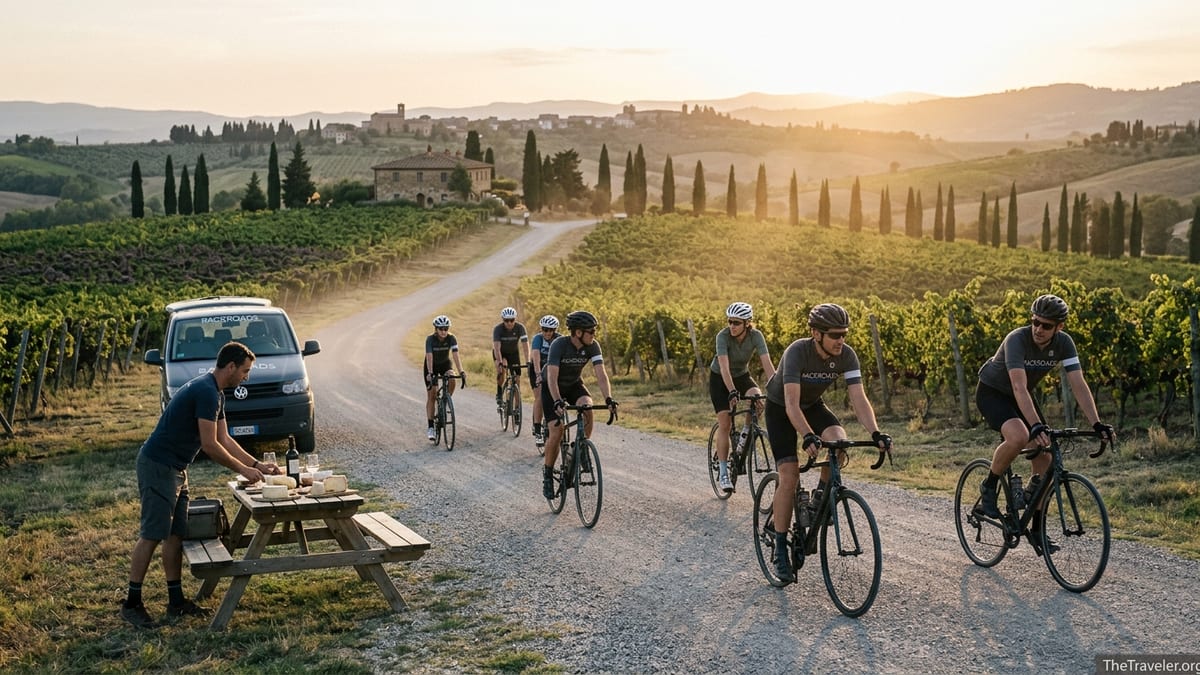
Then there are the “Backroads moments” that rarely appear in glossy brochures but define the experience: a pop-up snack table with ripe fruit, local cheeses, and cold drinks waiting at the top of a long climb; a shaded tent set up in a vineyard lane where a local winemaker pours a tasting while you rest your legs; an impromptu gelato stop in a Tuscan hill town covered by the trip budget, not your wallet. These touches transform what could be a straightforward bike ride into a string of micro-experiences that feel curated rather than incidental.
Perhaps the ultimate luxury, though, is flexibility. Because leaders are in constant contact and the van is never far away, guests can shorten or extend their miles most days. A couple of people on my trip decided after lunch that they had hit their limit for the day’s elevation gain. Within ten minutes, they were sipping espresso at a village café while their bikes were loaded into the van for a shuttle to the hotel. Others opted for an extra loop through a nearby valley, guided by GPS tracks that leaders had ready for “avid” riders. Not having to choose between “keeping up” and “dropping out” is an underrated premium feature.
Food, Wine, and the Art of Making Every Meal Count
Another reason the Backroads experience felt unexpectedly premium was the consistent quality of meals. Trip prices include most breakfasts, many lunches, and a majority of dinners, plus special events like wine tastings or cooking demonstrations on certain itineraries. Instead of large buffets at anonymous restaurants, we often ate at small, locally owned spots that would be right at home in a serious traveler’s guidebook.
In Burgundy, for example, our leaders arranged dinner at a 20-seat bistro tucked off a side street, where the owner-chef walked us through the menu and poured a local Pinot Noir from a producer whose vineyards we had ridden past earlier that day. On the Dalmatian Coast, a seaside lunch featured grilled fish purchased that morning from the harbor market, paired with Dalmatian white wine and a simple salad of tomatoes and olive oil from the owner’s family farm inland. These are the types of dining experiences many independent travelers spend hours researching; with Backroads, they were woven into the fabric of the itinerary.
Not every meal is a formal event. Picnic lunches appeared in scenic spots with checkered tablecloths, local breads and cheeses, fresh salads, and desserts that tasted far better than you would expect from a roadside setup. At least once per trip, there was a special “wow” moment: a private wine tasting in a château cellar in Bordeaux, a farm-to-table dinner at an organic agriturismo in Tuscany, or a multicourse tasting menu in a modern Nordic restaurant on a Scandinavia itinerary. Alcoholic beverages are not universally included, but wine and beer showed up at select events, and the included tastings meant that you sampled regional specialties without worrying about the bill at the end.
The premium feeling came less from white tablecloths and more from curation. It was clear that Backroads had tested these restaurants and wineries over time, fine-tuned the pacing of the meals to match our daily activity level, and negotiated menus that highlighted regional flavors while still accommodating dietary restrictions. Guests with celiac disease, vegetarian preferences, or dairy intolerance consistently had thoughtful options, which is not always the case on more budget-conscious tours.
Logistics So Smooth They Almost Disappear
One of the more subtle ways Backroads feels luxurious is in how little you need to think about logistics. Transfers, luggage, entry fees, and complex route timing are all handled in the background, so your mental energy goes almost entirely toward the actual experience. That may sound basic, but after years of self-organized travel it felt almost decadent to look at a day’s plan and realize that every moving part had already been tested.
Take baggage, for example. On a typical six-day trip, your suitcase is transferred seamlessly from one hotel to the next without you ever seeing the handoff. When we arrived at a 15th-century château hotel in the Dordogne, our rooms were not only pre-assigned; our bags were waiting, already delivered to the correct doors. On point-to-point days that involved a boat crossing or a train, leaders handled tickets and timing while we enjoyed the ride. Entry fees to national parks, UNESCO sites, or museums were included, with local guides sometimes brought in for private or small-group tours.
This level of coordination becomes particularly clear on more complex itineraries, such as a multi-adventure trip in the Azores or the Portuguese Algarve and Alentejo, where you might hike crater rims one day, kayak sea caves the next, and cycle through vineyards on the third. Coordinating guides, permits, and transport for that variety of activities on your own would be a full-time job. With Backroads, it simply appears as a colorful line in the day’s schedule, ready and waiting when you wake up.
Even weather and contingencies were handled with a professionalism that felt inherently premium. When strong afternoon winds threatened a planned coastal ride in Spain, our leaders quietly reorganized the schedule: a morning walking tour of a hilltop village with a local historian followed by a shortened, more sheltered bike route in the late afternoon. Guests received an updated briefing over breakfast, along with a freshly printed route profile in our handlebar bags. We did not lose a day; it was simply reshaped to maximize safety and enjoyment.
Why the Experience Resonates With a Certain Kind of Traveler
It is worth acknowledging that Backroads is not the cheapest way to see the world, nor is it the only company offering high-end active travel. What surprised me is how clearly its trips speak to a particular type of traveler: people who value movement and immersion, want genuine comfort and food that feels like a highlight rather than an afterthought, and are willing to pay more to remove friction from the experience.
On my trips, the demographic skewed to active travelers in their 40s through 60s, with a notable number of repeat guests who had already sampled Backroads itineraries in places like Patagonia, Thailand, or the U.S. National Parks. Many could easily have planned their own journeys, but chose not to. One couple from Seattle explained it this way over a glass of Chianti after a full day of riding: “We can afford the hotels and the restaurants on our own. What we are really paying for is not having to spend six months planning and then worrying about every detail once we get here.”
Backroads has also expanded into thoughtfully designed segments such as family trips with age-specific departures, women’s adventures, trips geared toward travelers in their 30s and 40s, and Dolce Tempo itineraries with gentler activity levels. In each case, the core promise is the same: high-touch support, small-group camaraderie, and lodging and food that feel aspirational rather than utilitarian. That consistency, more than any single “wow” moment, is what makes the experience feel premium across such a wide range of destinations.
Of course, whether the value equation makes sense is deeply personal. Some travelers will look at a 4,800 dollar price tag for six days in the Azores and decide they would rather rent a car, book local guesthouses, and plot their own hikes. Others, especially those with limited vacation time and a preference for comfort, find that outsourcing the planning and daily decision-making is worth every extra dollar.
The Takeaway
My biggest surprise about Backroads was not any single luxury flourish, but how consistently elevated the entire experience felt from start to finish. The premium nature of the trips reveals itself in tangible ways: beautifully chosen hotels with strong sense of place, trip leaders who function like a private on-the-road team, thoughtfully prepared food and wine experiences, quality gear, and logistics so calm and seamless that you rarely think about them at all.
For travelers used to handling every detail themselves or booking more budget-conscious group tours, the price of a Backroads itinerary can be a shock. But if you value high comfort paired with genuinely active days, if you like the idea of riding past vineyards all morning and checking into a château or design hotel in the afternoon, if you want to spend your energy on the experience rather than the logistics, then the premium is not just about nicer hotels. It is about the cumulative effect of a thousand small decisions handled so well that you are free to simply show up, move, and enjoy.
FAQ
Q1. Why are Backroads trips more expensive than many other tour companies?
Backroads includes carefully vetted hotels, most meals, high-quality gear, multiple dedicated trip leaders, small groups, and seamless logistics in its pricing. You are paying not just for lodging and food, but for a high level of support and curation throughout the trip.
Q2. What kinds of hotels does Backroads typically use?
Backroads often works with upscale boutique hotels, historic inns, wine estates, and occasionally well-known luxury brands, chosen for character, comfort, and location. The accommodations tend to feel like places you would book for a special trip on your own.
Q3. How small are Backroads groups, really?
Group sizes vary by itinerary, but many hiking and walking trips average around the mid-teens in guest count, with multiple leaders present. That allows for individual attention, flexibility in pacing, and a more personal atmosphere than on large-coach tours.
Q4. What is actually included in the trip price?
Typical inclusions cover accommodations, most breakfasts and many lunches and dinners, on-trip transportation, high-quality bikes and gear where relevant, park and entry fees, and special events mentioned in the itinerary. Airfare, leader gratuities, and most alcoholic beverages are usually not included.
Q5. Do I need to be very athletic to enjoy a Backroads trip?
You do not need to be an elite athlete, but you should be comfortable with regular physical activity. Many itineraries offer a range of route options each day, and e-bikes or shorter hikes can make trips accessible to a wide spectrum of fitness levels.
Q6. How flexible are the daily routes and activities?
One of Backroads’ strengths is flexibility. Leaders typically provide options for shorter and longer routes, and a support van is available if you want to skip a climb, end the day early, or take a break without holding up the group.
Q7. Is the food on Backroads trips really that special?
While it varies by region, Backroads generally emphasizes local, high-quality dining, from intimate bistros and farm-to-table restaurants to well-planned picnics in scenic spots. Many guests find the meals to be a highlight of the experience.
Q8. How do Backroads trip leaders differ from standard tour guides?
Backroads leaders are company employees trained to manage both logistics and guest experience, often working in teams of two or three per departure. They handle everything from bike fitting and route support to restaurant coordination and last-minute weather adjustments.
Q9. Is a Backroads trip worth the higher price if I usually plan my own travel?
If you enjoy trip planning and are comfortable managing logistics on the fly, you may prefer to travel independently. If you would rather invest more money to save time, reduce stress, and enjoy small-group camaraderie with premium comforts, you are more likely to feel the Backroads price is justified.
Q10. How far in advance should I book a Backroads itinerary?
Popular departures and destinations can fill many months, even a year, in advance, especially for peak seasons and school holidays. Booking early gives you a better chance of securing your preferred dates, room types, and bike choices.