


Webjet is one of the most widely used online travel agencies in Australia and New Zealand, offering an easy way to compare and book flights, hotels, and packages in a few clicks. Yet the very convenience that makes Webjet attractive can also lull travelers into rushing through the process, overlooking fees, fare rules, or small warnings that later turn into big headaches. Recent regulatory action against Webjet over how it displayed certain compulsory fees is a timely reminder that you need to treat any booking platform as a tool, not an infallible authority. Used carefully, Webjet can help you build complex trips and find competitive deals. Used carelessly, it can leave you with nonrefundable tickets, extra charges, or bookings that do not match what you thought you bought.
Get the latest updates straight to your inbox!
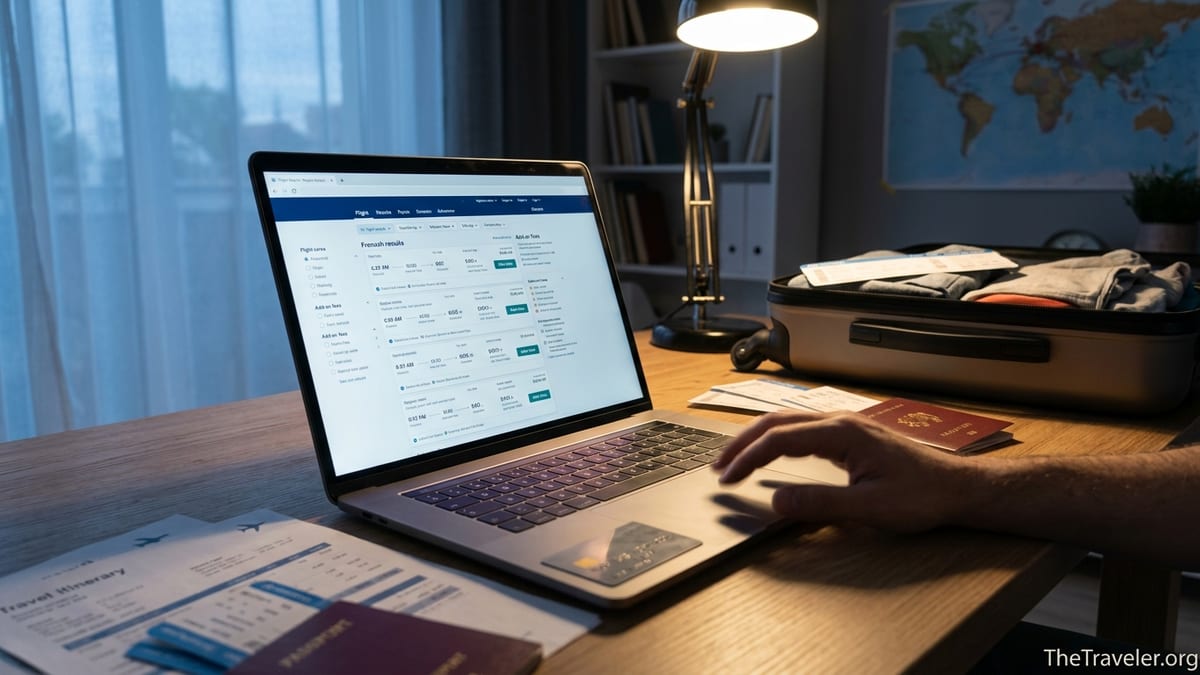
Not Understanding Webjet’s Role as an Agent
One of the most fundamental misunderstandings travelers have is assuming Webjet is the airline or the hotel, rather than an agent that sits in between. Webjet itself makes clear that it acts on behalf of “Third Party Providers” such as airlines and hotels, and that your booking ultimately follows the supplier’s terms and conditions. In practice, that means if you buy a nonrefundable economy fare on a full-service airline through Webjet, the airline’s own rules determine whether you can claim a refund or credit, not Webjet’s internal policy. Webjet can help you process changes or cancellations, but it cannot simply override an airline’s “no refund” rule because your circumstances changed.
Consider a traveler who books a Sydney to Bali return flight on a low-cost carrier via Webjet to take advantage of a tempting promotional fare. They see Webjet’s logo on the confirmation email and assume Webjet controls everything. When they later need to cancel for family reasons, they contact Webjet expecting a refund. Instead, they are told that the airline’s ticket is strictly nonrefundable, in line with the fare rules they agreed to at checkout. The traveler feels like Webjet is blocking the refund, but in reality the agency is bound by the underlying airline policy. Confusion over who actually sets the rules is at the heart of many Webjet complaints.
This distinction matters even more when flights are disrupted. If an airline cancels or significantly changes your flight, the airline typically holds the money or credit and decides what you are entitled to. Webjet’s support team can help you apply for a refund or rebooking, but they are relaying and processing what the airline allows. Travelers who do not understand this agent relationship often direct their frustration at Webjet for decisions that, behind the scenes, are entirely controlled by the carrier or the hotel chain.
The practical takeaway is to read the fare rules and cancellation conditions that appear on Webjet’s checkout screen as if you were booking directly with the airline or hotel, because in almost all cases those are the rules that will actually apply to your booking.
Ignoring Fees and Price Add-ons Until the Final Screen
Another common mistake is focusing only on the headline fare that appears in a Webjet search result and not watching what happens as you proceed through the booking flow. Like many online travel agencies, Webjet layers in various fees and charges during the checkout process. The Australian Competition and Consumer Commission has alleged that, between late 2018 and 2023, Webjet promoted flights at “from $X” prices while omitting mention of compulsory servicing and booking price guarantee fees that typically added roughly 35 to 55 Australian dollars per booking. While the courts will ultimately decide the case, it highlights how easy it is for travelers to underestimate their final cost when they concentrate only on the first price they see.
Even today, travelers can face additional payment-related fees depending on how they choose to pay. Webjet’s own payment breakdown shows that using a standard credit card can add close to 1 percent or more to the total, while options like certain digital wallets or Pay by Bank may avoid those charges altogether. On a 1,200 dollar family booking from Melbourne to Queenstown, a 1 percent payment fee is not catastrophic, but it still means you are paying around 12 dollars more than you expected. Add that to a per-booking service fee and seat selection or baggage upgrades and the gap between the “from” fare and what actually leaves your bank account can become substantial.
A practical real-world example: a couple sees a return flight from Brisbane to Tokyo advertised around 950 dollars for two people. They are happy with the price and quickly click through, only noticing in the final review that their total has climbed closer to 1,050 dollars after service and payment charges. At that late stage, many travelers simply accept the increase because they have already entered their details and chosen dates. Yet if they had paused earlier to test different payment methods or compare Webjet’s total cost against booking directly with the airline, they might have chosen a different path or at least known the true price from the outset.
The safest habit is to treat the initial search results as a starting point only. Before committing, go all the way to the final payment page to see the complete breakdown, including any service, payment, or guaranteed-price fees. If the total jumps by more than you are comfortable with, step back and check what is driving the increase rather than assuming it is all government taxes or unavoidable airline surcharges.
Rushing Past Fare Rules, Change Policies, and Flexible Options
In the race to lock in a cheap deal, many travelers barely glance at the small-print summaries of fare rules, change penalties, and flexibility options that Webjet displays before you pay. Yet those few lines can determine whether a 500 dollar ticket becomes a total write-off if your plans move by a day. Webjet’s own support material and external consumer guides both stress that, for flights and hotels, cancellation and change rules are set by the supplier. This can range from a fully flexible fare on a full-service airline that allows free date changes, to a nonrefundable “basic” economy product on a low-cost carrier that cannot be changed after purchase.
Imagine a family from Adelaide booking peak-season flights to Fiji for school holidays. Webjet shows multiple fare types on the same airline: a cheapest “Lite” option with no checked baggage and strict no-change rules, and a slightly more expensive “Flex” option that allows changes with a modest fee. Focused on saving a couple of hundred dollars, they choose the Lite fare through Webjet without reading that any change could mean buying a completely new ticket. When their child’s school exam schedule shifts, they discover that moving the trip by two days will cost nearly as much as the original tickets, because the airline will not allow a simple re-date on that particular fare type.
Hotels are similar. A city-center hotel in Singapore might appear on Webjet at 210 dollars per night for a nonrefundable advance rate and 245 dollars for a flexible booking with free cancellation until 48 hours before arrival. Travelers who pick the lowest nightly price and ignore the cancellation terms sometimes find themselves paying full price for unused rooms when a work meeting is moved or a connecting flight is cancelled. Webjet’s confirmation voucher will clearly spell out those rules, but at that point it is too late to change your mind.
To avoid these problems, slow down long enough to compare fare families or room types, not just total price. On Webjet’s flight results page, click through to see the airline’s fare conditions, which often list whether date changes are permitted, what change fees apply, and whether refunds are possible. For hotels, check the cancellation deadline and whether you are paying now or at the property. On higher-risk trips, such as long-haul journeys with multiple connections or travel during cyclone season, it may be worth paying a little more via Webjet for a flexible fare that gives you realistic options if something goes wrong.
Assuming a Confirmation Email Means the Airline Has Ticketed You
In late 2024, Australian regulators alleged that Webjet, in several hundred instances, displayed a confirmation page and sent confirmation emails even though the underlying flight had not actually been booked with the airline. Travelers believed they held confirmed seats because Webjet had taken payment and issued a booking reference, only to discover later that the airline had never ticketed their reservation. While such cases are rare compared with the total volume of bookings, the episode illustrates a broader mistake: assuming that any third-party confirmation is automatically identical to an airline-issued ticket.
A practical example: a traveler books a complex multi-leg itinerary from Perth to London via the Middle East with a tight connection, enticed by a good Webjet price. They see a Webjet booking reference and a “confirmed” status appear immediately after payment. Relieved, they close their browser and move on with their day, never checking the airline’s own manage-my-booking page. Days later, they receive an email advising that their booking could not be ticketed due to a fare issue and a refund is being processed. By that point, replacement fares on their desired dates are hundreds of dollars higher.
Even when no glitch is involved, there can be delays between Webjet taking payment and the airline formally issuing e-tickets, especially for complex international itineraries or bookings that involve multiple carriers. If a technical issue or miscommunication occurs during this window, having a Webjet reference alone may not be enough to convince ground staff that you have a valid booking.
The safer habit is to treat your Webjet confirmation as step one, and verification with the airline or hotel as step two. Once you receive your email from Webjet, log in to the airline’s website using the airline’s reservation number, which is usually included in the Webjet documentation. Confirm that your flights show as ticketed and that your name, dates, and routes are correct. For hotels, contact the property directly or use the hotel chain’s own app to ensure your reservation appears in their system. It takes a few extra minutes but substantially reduces the risk of discovering a problem at the airport check-in desk.
Using Webjet for Complex Trips Without Double-Checking Alternatives
Webjet has invested in technology to help travelers build complex multi-city trips, and in many cases it can stitch together routes that would be tedious to piece together manually. Earlier in 2026, the company promoted new multi-city capabilities designed to make it easier for Australians to book extended overseas itineraries in a single search. For travelers planning, for example, a Sydney–Bangkok–London–Rome journey with staggered dates, this can be appealing. However, assuming that Webjet’s first multi-city result is automatically the best or most reliable option is a mistake.
Travelers sometimes rely entirely on a single Webjet search to price intricate trips that involve different alliances, low-cost carriers, and tight connections. In practice, an apparently cheaper multi-city combination can hide trade-offs, such as overnight airport layovers, self-transfer segments that require you to recheck luggage, or legs operated by separate airlines with no protection if one flight is delayed. A Webjet itinerary that suggests flying a budget carrier from Melbourne to Kuala Lumpur and a separate long-haul flight to Europe might look 200 dollars cheaper than booking a through-ticket on a full-service airline, but you could end up stranded in Kuala Lumpur if the first leg is delayed.
Real-world reports from travelers planning complicated trips often show a pattern: they find an attractive multi-city deal via a third-party site, but when they attempt to replicate the same routing directly on airline websites, some combinations either are not available or carry very different conditions. For example, a traveler planning a Melbourne–Singapore–Paris–Rome trip might discover that when booked as separate tickets, the Singapore–Paris leg offers no flexibility, while booking the whole journey as a through-ticket with a major carrier includes protected connections and rebooking rights if delays occur.
To use Webjet effectively for complex itineraries, start with it as a research tool rather than the single source of truth. Run multi-city searches to explore possible routings and approximate prices, then cross-check key sectors directly with airlines or with another reputable agent. Pay particular attention to connection times and whether you are on one ticket or multiple separate ones. If Webjet’s itinerary involves very short layovers across different airlines or airports, consider whether saving a few hundred dollars is worth the risk and hassle if you miss a connection and must rebook at walk-up prices.
Underestimating Customer Service and Dispute Resolution Challenges
Many travelers who use Webjet only for simple, trouble-free bookings never need to interact with customer service at all. But when something does go wrong, such as a schedule change, a medical cancellation, or a refund dispute, some are surprised by how long it can take to resolve issues through an intermediary. Public review sites are full of contrasting experiences: some customers describe prompt, polite assistance and quick resolutions, while others recount months-long waits for refunds, unreturned messages, or being passed back and forth between Webjet and airlines as each party claims the other is responsible.
One common scenario involves airline-initiated cancellations. Suppose you book a return trip from Auckland to Los Angeles via Webjet, and several months later the airline cancels one of the legs or significantly changes the time. The airline might indicate on its own website that you are entitled to a refund or a free rebooking, but because you booked via an agent, you are typically instructed to contact Webjet to process that change. Travelers who assume that everything will be handled automatically sometimes wait weeks, only to find out that they needed to fill in a form or confirm their preferred dates through Webjet’s support channels.
There are structural reasons why resolution can take time. Webjet often must wait for the airline or hotel to approve a refund or credit and then pass that amount back to you, which can add several weeks or more. External consumer guides point out that, in many cases, Webjet does not hold your funds itself beyond the initial settlement; it is facilitating the flow of money from you to the supplier and back again. Understanding this helps explain why an airline cancellation refund might take longer if you booked through Webjet compared with booking direct.
To reduce frustration, familiarize yourself with Webjet’s own complaints and support processes before you hit a problem. The company publishes a complaints guide that outlines how to escalate issues, what information to provide, and typical timelines for responses. Keep copies of airline notifications, screenshots of any fare conditions shown at the time of booking, and your payment receipts. If you need to challenge a decision, having clear documentation makes it easier to demonstrate what you were shown and agreed to at the time of purchase.
The Takeaway
Webjet remains a powerful tool for comparing flights and hotels across multiple airlines and destinations, especially for travelers in Australia and New Zealand who want a broad snapshot of options without visiting a dozen airline sites. Yet convenience can come at a cost when travelers rush bookings or treat the platform as if it controlled every aspect of their trip. The most common mistakes fall into a few predictable categories: misunderstanding Webjet’s role as an agent, overlooking fees until the final payment screen, skimming past fare rules and cancellation terms, assuming a confirmation email guarantees ticketing, relying on complex multi-city results without cross-checking, and underestimating how long dispute resolution can take.
Used thoughtfully, Webjet can complement direct airline and hotel bookings. For straightforward domestic trips, it can provide a quick comparison and competitive fares. For more complex international journeys, it can serve as a research engine to map out possible routings and relative prices before you finalize details directly with a carrier or stick with Webjet if its total offering makes sense. The key is not to abandon your own due diligence. Read the conditions, track the fees, verify bookings with the underlying supplier, and keep records. These simple steps can mean the difference between a smooth, fairly priced trip booked through Webjet and an expensive lesson in how online travel agencies really work.
FAQ
Q1. Is it cheaper to book flights through Webjet or directly with the airline?
It depends on the route, timing, and promotions. Sometimes Webjet surfaces competitive sales or combinations that match or slightly beat airline prices. In other cases, once you factor in Webjet’s service and payment fees, booking direct with the airline comes out similar or cheaper. The best approach is to use Webjet to compare options, then check the same itinerary on the airline’s own site and compare final, all-in prices before deciding.
Q2. Why did my Webjet booking show as confirmed, but the airline could not find it?
In rare cases there can be a delay or technical failure between Webjet processing your payment and the airline issuing tickets. That is why it is important to use the airline reservation number from your Webjet confirmation to log in on the airline’s website and verify that your flights are ticketed. If the airline does not recognize the booking within a reasonable time, contact Webjet support immediately and keep a record of all messages.
Q3. Can Webjet give me a refund if the airline says my ticket is nonrefundable?
Generally no. Webjet acts as an agent and must follow the airline’s fare rules. If you bought a nonrefundable ticket, Webjet cannot simply decide to refund you out of the airline’s funds. In some cases, the airline may permit a credit or a change with a fee, and Webjet can help process that. It is worth checking whether travel insurance covers your situation, especially for cancellations due to illness or emergencies.
Q4. How can I avoid paying extra Webjet payment fees?
Webjet lists payment options and associated fees at checkout. Certain methods, such as Pay by Bank or specific partner reward programs, may carry no additional fee, while standard credit cards can attract around 1 percent or more. Before paying, experiment with different methods on the final screen to see how the total changes. If you prefer to use a card that carries a higher fee, factor that cost into your decision when comparing Webjet with booking directly.
Q5. What is the safest way to book a complex multi-city trip involving several countries?
Use Webjet to explore routings and approximate pricing, but do not rely solely on the first multi-city result you see. Check key segments directly on airline websites and see whether you can book them on a single ticket, which usually provides better protection if flights are delayed. Pay attention to connection times, whether luggage is checked through, and whether different legs are on one booking or separate ones. In some cases, paying slightly more for a through-ticket with a full-service airline is safer than juggling several separate budget flights stitched together by an intermediary.
Q6. How do Webjet’s hotel cancellation policies usually work?
Hotel bookings made through Webjet follow the hotel’s own cancellation rules. Some rates are fully flexible and allow free cancellation up to a certain deadline, while cheaper advance-purchase rates are often nonrefundable. Always read the cancellation section before you commit, and check your confirmation voucher afterward to confirm the deadline and whether you paid in advance or will pay at the property. If your plans are uncertain, choosing a flexible rate even at a higher nightly price can be worthwhile.
Q7. What should I do if the airline cancels or changes my Webjet-booked flight?
If you booked through Webjet and receive notice of a cancellation or major schedule change, start by checking the airline’s communication to see what options they say are available, such as refunds or free rebooking. Then contact Webjet through its manage-my-booking or support channels to request your preferred option. Because Webjet often needs the airline’s approval, refunds can take time to process, so keep records of all notifications and follow up periodically if you do not see progress.
Q8. Does Webjet offer customer support if I am overseas and something goes wrong?
Webjet provides online support and messaging channels, and in many cases can help with rebooking or liaising with airlines and hotels. However, response times may vary, and if you are at an airport dealing with a same-day disruption, it can be faster to speak directly with the airline’s check-in staff or call the airline’s own helpline first. After you stabilize your immediate travel plans, you can follow up with Webjet about any refunds or credits related to your original tickets.
Q9. How can I reduce the risk of problems when booking through Webjet?
Take a few simple precautions: compare total prices, including fees, against booking direct; read fare and cancellation rules carefully; verify flight ticketing on the airline’s site after receiving your Webjet confirmation; keep screenshots or PDFs of what you were shown at checkout; and avoid extremely tight self-transfer connections on multi-airline itineraries. These steps do not eliminate all risk, but they significantly reduce the chances of unpleasant surprises.
Q10. Is it safe to use Webjet for last-minute flight bookings?
Many travelers successfully use Webjet for last-minute bookings, especially on straightforward routes. The main risks are technical delays in ticketing and potential mismatches between availability shown by Webjet and the airline’s real-time inventory. For very time-sensitive trips, such as same-day international departures, you may prefer to book directly with the airline to minimize any lag between payment and ticket issuance. If you do use Webjet, monitor your email closely and confirm the booking on the airline’s site as soon as possible.