


Los Angeles International Airport is one of the busiest and most confusing hubs in the United States. With nine terminals, constant construction and heavy traffic on the roads and in the air, LAX can feel overwhelming, especially if you only pass through once or twice a year. This guide walks you through what to expect in 2026 from curb to gate and back again, with real world examples so you can plan a smoother trip.
Get the latest updates straight to your inbox!
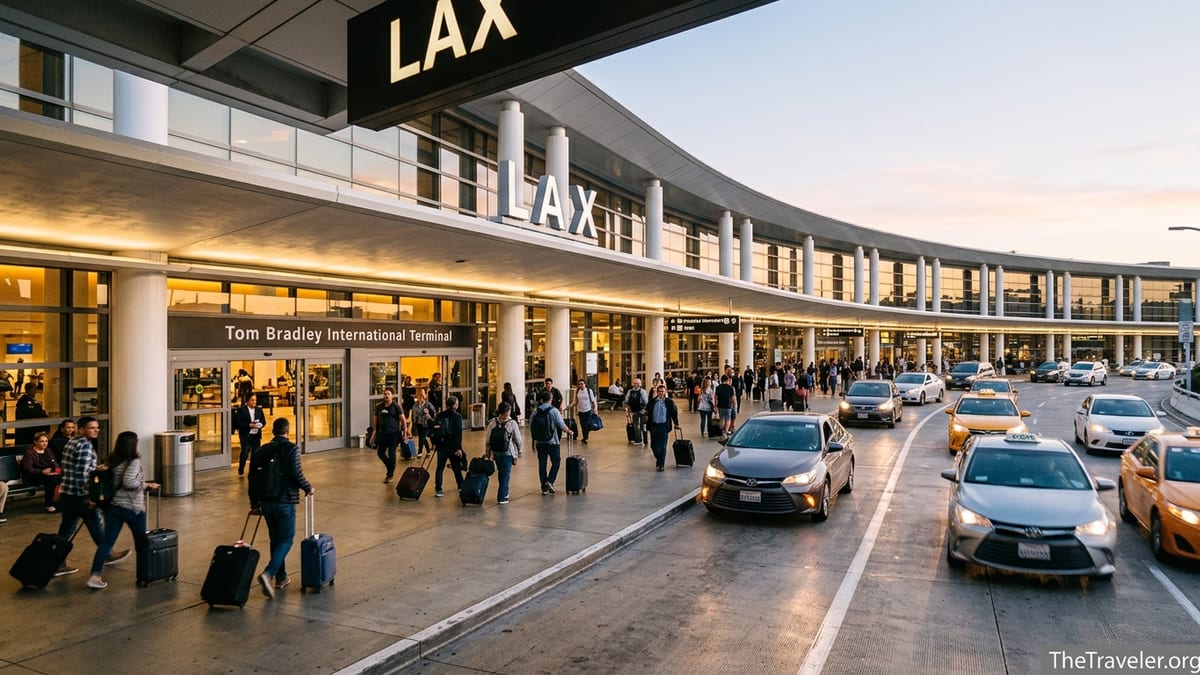
Understanding LAX in 2026: Layout, Projects and What Has Changed
LAX still uses the familiar horseshoe shaped Central Terminal Area, with Terminals 1 through 8 plus the Tom Bradley International Terminal, often signed as Terminal B. Domestic heavyweights like Southwest operate primarily from Terminal 1, Delta from Terminals 2 and 3, American from Terminals 4 and parts of 5, and United from Terminals 7 and 8. Most foreign carriers use Tom Bradley, though a few, such as some Canadian and Mexican airlines, may depart from the other terminals depending on schedules and gate availability.
One major change for 2026 is the ongoing rollout of the Automated People Mover, also branded as SkyLink, a 2.25 mile elevated train intended to link the terminals with the new rental car center, parking garages and the LAX/Metro Transit Center. As of mid 2026, testing runs are underway but the system is not yet open to passengers, so you should still plan to move between terminals on foot or via the existing airside shuttle buses. That means a connection from, for example, Terminal 1 to Tom Bradley can still take 20 to 30 minutes, especially if you walk during a busy afternoon bank of flights.
Inside the horseshoe, you will also notice significant renovation work. Terminal 1 has been modernized and now handles not just Southwest but also additional carriers added during 2025. Terminals 2 and 3 have been rebuilt for Delta and partners, and Tom Bradley continues to operate as the main long haul international hub with expanded security and customs areas. Construction walls and temporary walkways are still common, so give yourself extra time to follow detours, especially if you are arriving at night or with children.
On the landside, a new consolidated rental car center opened in 2026, replacing many of the individual brand lots scattered around the airport. Major firms like Enterprise, Hertz and Sixt now operate from this complex. Instead of each company running its own shuttle, you ride a common, branded bus from the curb to the rental center. In practice, this can simplify wayfinding but adds a step, so budget 20 to 30 minutes from baggage claim to reaching the rental counter at a busy time like 6 p.m. on a Friday.
Arriving at LAX: Check In, Terminals and Timing
Airlines at LAX strongly encourage arriving at least two hours before a domestic departure and three hours before an international flight. That broad recommendation still makes sense in 2026, especially during peak windows like 6 a.m. to 9 a.m. and late afternoon into early evening. For example, a traveler on a 7:30 a.m. flight to Denver from Terminal 7 who pulls up at the curb at 6 a.m. might find a 25 minute standard security wait plus another 10 to 15 minutes walking to a far gate. If they hit traffic getting to the airport, that cushion vanishes quickly.
Check in procedures themselves are familiar but increasingly automated. For a typical American Airlines domestic flight out of Terminal 4, you can check in online, add a mobile boarding pass to your phone, and then head directly to an exterior bag drop where staff scan your code and take your luggage. Many carriers at LAX, including Delta and United, offer similar curbside or lobby bag drops with self service kiosks. At peak times, lines for full service check in desks for international flights, such as a Japan Airlines departure from Tom Bradley, can stretch 30 to 45 minutes, so online check in is highly recommended.
Locating your terminal before you arrive is critical. LAX freeway signs still list terminals by number, and ride hail apps like Uber and Lyft show terminal letters or numbers that match the airport signage. If you are flying Southwest, you can confidently head for Terminal 1. If you are flying a codeshare flight, such as a KLM ticket operated by Delta, double check whether you leave from Terminal 2 or 3 rather than Tom Bradley. Spending 15 minutes in traffic looping the horseshoe because you were dropped at the wrong terminal is one of the most common time wasters at LAX.
Travelers connecting through LAX should build in extra margin between flights. Although many terminals are linked airside, the distances are long. A realistic example: a passenger arriving from Seattle in Terminal 6 on Alaska and connecting to a Qantas flight in Tom Bradley might face a 10 to 15 minute walk to Terminal 4, then more walking or a shuttle to Tom Bradley, plus a separate security check if they must exit and re enter. A scheduled 60 minute connection for that pairing can feel very tight, especially in the evening when international security lines lengthen.
Security, TSA PreCheck, CLEAR and Getting Airside Faster
LAX security lines in 2026 are variable but generally fall in the 10 to 45 minute range for standard screening, depending on the time of day and terminal. Morning peaks from around 5:30 a.m. to 8:30 a.m. and evening international banks from about 7 p.m. to 11 p.m. are consistently the busiest. At Tom Bradley, it is not unusual for a standard line to be quoted at 30 to 40 minutes for passengers heading to flights to London, Sydney or Seoul on a busy summer evening.
TSA PreCheck is widely available in every LAX terminal and remains a strong time saver. Nationwide data suggests that about 99 percent of PreCheck passengers wait less than 10 minutes, and that pattern generally holds at LAX, though short surges still happen when many early morning flights depart at once. A traveler with PreCheck flying United out of Terminal 7 at 6 a.m. may clear security in 5 to 10 minutes, while their friend without PreCheck in the standard lane could wait closer to 20 minutes.
CLEAR, the paid identity verification service, continues to operate in multiple LAX terminals, including those used by Delta, United and some other large carriers. CLEAR members typically bypass the ID check queue and then merge into either a PreCheck lane or a standard lane, depending on their enrollment. For example, a frequent flier who pays the annual CLEAR fee and also has PreCheck might step out of a long general queue and be in the screening area within a few minutes, turning a 25 minute wait into something closer to 5 minutes on a busy Monday morning.
A few practical tips can shave additional time off your security experience. Check the status of your terminal’s lanes in your airline app or in independent wait time apps before you leave home to avoid surprises. If you are traveling as a family, remember that children 12 and under can accompany enrolled adults through PreCheck, which can make early morning departures with kids less stressful. Finally, organize your bags before you join the line. LAX security staff are strict on liquid rules and oversized electronics; resolving a bag search can easily add another 5 to 10 minutes.
Inside the Terminals: Food, Services and Lounges
Once you clear security, LAX offers a wide range of places to eat and relax, though availability varies sharply by terminal. Modernized terminals like 2, 3, 4 and Tom Bradley feel more like contemporary shopping malls, while older spaces in some parts of 5, 6 and 8 are simpler. For instance, in Tom Bradley you can grab a fast poke bowl or a burger, sit down at a full service restaurant with table service, or browse duty free shops selling cosmetics and liquor, all within a few minutes’ walk of many gates.
Budget and midrange dining options remain fairly expensive compared to city prices, so plan on paying airport premiums. A basic sandwich and bottled water at a chain cafe in Terminal 4 might total around 18 dollars, while a glass of wine at a bar in Terminal 7 could run 14 to 16 dollars plus tax and tip. If you want to save money, consider eating before you arrive or carrying snacks purchased in the city, as long as they comply with security regulations.
LAX also hosts a dense network of airline and independent lounges. Delta Sky Club operates in the renovated Terminal 3, American has multiple Admirals Club and Flagship lounges in Terminals 4 and 5, and United runs United Clubs and Polaris lounges in Terminals 7 and the international terminal for eligible passengers. Access rules vary by airline and ticket type, but a typical example is an American Airlines passenger flying economy to New York from Terminal 4 who can purchase a one day Admirals Club pass rather than holding an annual membership. Independent lounges in Tom Bradley and a few other terminals sometimes accept Priority Pass or allow paid entry when not at capacity.
Basic services like water refill stations, device charging points and restrooms have improved with recent renovations. Most terminals now feature bottle filling taps near restrooms and numerous charging outlets at seating areas and gate clusters. Nonetheless, it is still worth carrying a small power strip or a portable battery, since power outlets near popular gates, such as those serving Hawaii flights in Terminal 5, can be in high demand during evening waves.
Connections, Transfers and Navigating Between Terminals
Connecting at LAX remains one of the trickiest parts of using the airport. Although there are airside corridors linking many terminals, the distances can surprise first time visitors. Walking from Terminal 1 through the northern terminals to Tom Bradley can take 20 to 30 minutes at a steady pace without stopping, longer if you are pushing a stroller or pulling heavy bags. In poor weather or during construction detours, some paths may temporarily close, requiring short bus transfers.
Airline alliances concentrate their operations to simplify connections, but mixed airline itineraries still require extra planning. If you are flying in on Southwest into Terminal 1 and connecting to an international flight on British Airways in Tom Bradley on separate tickets, leave ample time to claim any checked baggage, re check it, pass through security again, and walk or shuttle to your departure gate. Booking a minimum of two and a half to three hours between such flights is a realistic target, even if the theoretical minimum connecting time is shorter.
For tight connections on a single ticket, airline staff can sometimes assist by arranging an escort or expediting bags, especially in premium cabins. For example, Delta may have agents at the jet bridge in Terminal 3 to meet late arriving passengers connecting to long haul partners in Tom Bradley. However, travelers should not rely on this and should still build conservative itineraries when booking. If you are forced into a tight connection by limited scheduling options, familiarize yourself with the airport map ahead of time and consider sitting near the front of the plane for a quicker exit.
Keep in mind that customs and immigration lines for international arrivals can vary widely. Passengers arriving from Europe or Asia into Tom Bradley in the mid afternoon may see significantly shorter waits than those arriving in the late evening, when many long haul flights land back to back. Enrollment in Global Entry or Mobile Passport programs can reduce the time you spend in these lines, sometimes turning a 45 minute wait into a 10 or 15 minute stop. After clearing formalities, connecting passengers must still re check their bags and pass through security again before heading to their onward terminal.
Ground Transportation: Rideshare, Taxis, Rental Cars and Transit
Leaving LAX efficiently can be challenging, especially during the ongoing construction period. Ride hail services like Uber and Lyft remain popular, with designated pickup zones in the Central Terminal Area. At busy times, such as 9 p.m. on a Sunday, surge pricing can push a standard UberX fare from LAX to downtown Los Angeles into the 45 to 70 dollar range, compared with around 30 to 40 dollars in light traffic outside peak periods. Wait times for cars can also swell to 15 or 20 minutes when many flights land simultaneously or when lanes around the horseshoe are congested.
Taxis line up at stands near each terminal and charge regulated rates, which can be competitive for solo travelers on short trips or shared among multiple passengers going to the same destination. A typical metered fare from LAX to nearby areas like Culver City might be around 35 to 45 dollars, while rides to Hollywood or West Hollywood can run 60 dollars or more depending on traffic. Drivers are accustomed to tourists and can usually offer some guidance on timing and routes, but language and customer service can vary.
The consolidated rental car center opened in 2026 houses most major brands under one roof. Upon arrival, you board a common shuttle bus from designated stops outside baggage claim. The ride to the facility often takes 10 to 20 minutes, depending on traffic through the airport loop and surrounding streets. Once there, expect a further 15 to 30 minutes to complete paperwork and pick up your vehicle at busy times like Saturday mornings in summer. If you are landing at midnight, on the other hand, the shuttle ride can be quicker and rental counters less crowded, but confirm operating hours in advance for smaller companies.
Public transit options are improving around LAX as the Metro rail connection nears full integration with the airport complex. Today, you can reach the LAX/Metro Transit Center by shuttle and connect to rail lines that run to downtown Los Angeles and beyond. Bus services, including the FlyAway coach to Union Station and other city points, continue to provide fixed price options that are often cheaper than taxis. For example, a one way FlyAway fare to downtown may fall in the 10 to 12 dollar range per person, a significant savings for solo travelers compared with a 50 dollar rideshare, though less convenient if you are carrying heavy luggage or arriving late at night when frequencies drop.
The Takeaway
LAX in 2026 is a study in contrasts: a sprawling legacy airport in the middle of a major modernization program. The new rental car center and the forthcoming people mover promise a future of smoother connections, but for now, travelers still face long walks, shifting construction patterns and sometimes unpredictable traffic on the airport loop. Understanding the layout and giving yourself generous buffers are the single best ways to protect your trip.
In practical terms, that means arriving earlier than you think you need to, especially at peak security hours; choosing TSA PreCheck or CLEAR if you pass through LAX several times a year; confirming your exact terminal and gate the day before your flight; and budgeting extra time for connections that cross between domestic terminals and Tom Bradley. Groundside, it means pricing out your options in advance, whether that is a rideshare into the city, a taxi, the FlyAway bus or a rental car from the consolidated center.
Handled with realistic expectations and a bit of planning, LAX can be a functional, if not always relaxing, gateway to Los Angeles and the wider Pacific. Use the examples and strategies in this guide to turn an often stressful experience into a more predictable part of your journey, and you will be better prepared the next time your itinerary takes you through this giant of an airport.
FAQ
Q1. How early should I arrive at LAX before my flight?
For most travelers, two hours before a domestic departure and three hours before an international flight is a safe baseline, with extra time added for early morning or evening peaks, checked bags, or unfamiliar terminals.
Q2. Is TSA PreCheck worth it at LAX?
Yes for frequent travelers. PreCheck lanes at LAX often move significantly faster than standard security, and many passengers clear in under 10 minutes, especially outside the busiest rush periods.
Q3. Does LAX have CLEAR, and does it replace TSA PreCheck?
LAX offers CLEAR in several terminals, but it does not replace PreCheck. CLEAR speeds up ID checks, while PreCheck speeds the screening process; using both together offers the greatest benefit.
Q4. Can I walk between terminals at LAX after security?
Yes, many terminals are connected airside, but distances are long. Walking from Terminal 1 to Tom Bradley, for example, can take 20 to 30 minutes, so allow sufficient time for connections.
Q5. How long does it take to get from LAX to downtown Los Angeles?
By car, it typically takes 30 to 60 minutes depending on traffic. A rideshare to downtown can cost roughly 45 to 70 dollars at busy times, while the FlyAway bus is cheaper but may take a similar amount of time.
Q6. What are typical security wait times at LAX?
Standard security lines commonly range from about 10 to 45 minutes, with the heaviest waits during early morning and evening peaks. Tom Bradley can see longer lines before large clusters of international departures.
Q7. Is the LAX Automated People Mover fully open to passengers?
As of mid 2026, the elevated train is in advanced stages and testing but is not yet fully open to the public, so travelers should still plan on walking or using shuttles between key points.
Q8. Where do rideshare services pick up at LAX?
Uber, Lyft and similar services pick up in designated zones around the Central Terminal Area. Signs and app instructions guide you to the correct island or curb depending on your terminal and time of day.
Q9. How long does it take to get a rental car after landing?
From stepping outside baggage claim to driving away, budget roughly 30 to 60 minutes, which covers waiting for the rental shuttle, the ride to the consolidated center, check in, and vehicle pickup during normal busy periods.
Q10. What is the best way to handle tight connections at LAX?
Whenever possible, book longer layovers than the minimum, especially if changing airlines or terminals. Study terminal maps, sit toward the front of the plane, and move promptly between gates to protect your connection.