


Landing at Copenhagen Airport (CPH) is usually smooth and efficient, but knowing exactly what comes next will save you time and stress. This guide walks you through every step after touchdown, from clearing passport control and finding your bags to buying a SIM card, getting cash, and choosing the best way into the city or beyond.
Get the latest updates straight to your inbox!
Understanding the Layout: Where You Actually Arrive
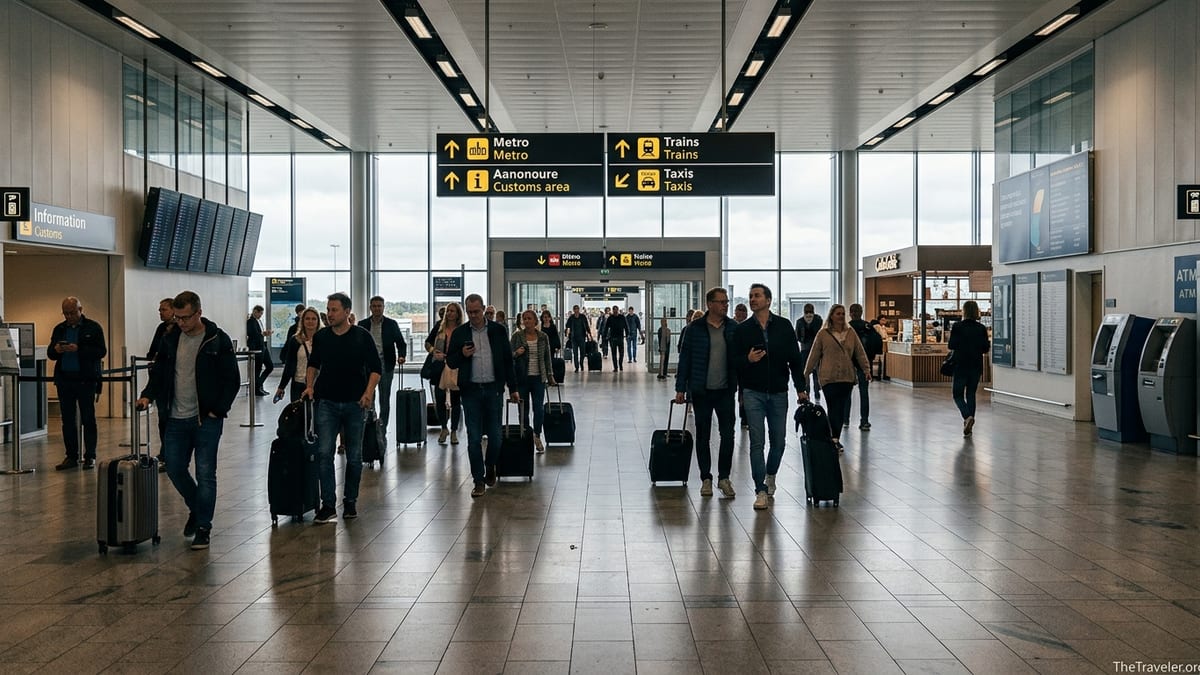
Almost all international arrivals at Copenhagen Airport funnel into Terminal 3, which is the main arrivals hall and ground transport hub. Terminals 2 and 3 are connected inside the building, so you do not need to go outdoors to move between them. Once you leave the aircraft, you simply follow the yellow “Baggage claim” and “Exit” signs; they eventually bring you to the shared arrivals area in Terminal 3, where you will find customs, ATMs, shops, car rental desks, the train station, and the metro.
Signs are clear and bilingual, in Danish and English, with icons similar to most European airports. If you are connecting onward within Schengen, you will generally follow the purple or white “Transfer” signs instead of exiting, but if Copenhagen is your final destination the key path is: Passport Control → Baggage Claim → Customs → Arrivals Hall. It typically takes 20 to 45 minutes from aircraft door to arrivals in normal conditions, though it can be longer at peak times.
Wi-Fi is free throughout the terminal, which is useful as soon as you land. Look for the airport network name that includes “CPH” and connect using your email or social login. Many travelers use this to download local transport apps or to show online hotel confirmations before reaching mobile data or a local SIM card.
Passport Control: Schengen vs Non-Schengen Arrivals
Your experience at passport control depends on where you are flying in from. If you arrive from another Schengen Area country, such as Germany, France, Spain, Sweden, or the Netherlands, you usually will not go through formal passport control on arrival. You are treated like a domestic passenger, walking directly toward baggage claim and customs, though there may occasionally be random checks by border police.
If you arrive from a non-Schengen country – for example the United States, United Kingdom, Canada, Turkey, or most of Asia – you will pass through Danish border control. Queues are usually well managed, but they can be longer when several long-haul flights land close together. EU and Nordic passports often have a separate lane, while non-EU citizens line up in the “All passports” lane. Keep your passport and completed landing form, if your airline provided one, ready in hand to speed things up.
Border officers commonly ask simple questions such as where you are staying, how long you will remain in Denmark, and whether you have a return ticket. For many nationalities, proof of accommodation and onward travel may be requested, so having a hotel booking email and return ticket accessible on your phone is sensible. If you are entering on a Schengen visa, make sure you know your allowed length of stay and that your passport has at least a few blank pages available.
Baggage Claim and Customs: What to Expect
Once you clear passport control, follow the “Baggage claim” signs to the carousel area. Information screens list arriving flights with carousel numbers, and Copenhagen Airport’s displays are in English as well as Danish. If you arrived on a larger wide-body aircraft, such as a Boeing 787 or Airbus A350 from North America or Asia, allow a bit of extra time for luggage to appear; most regional European flights see bags arriving more quickly.
Baggage trolleys are free to use and are available directly beside the carousels and along the walkways; you do not need coins or tokens. If your luggage is missing or damaged, look for your airline’s handling agent desk near the carousels. For example, SAS handling desks serve many Star Alliance airlines, while other carriers may have clearly branded lost-luggage counters nearby. Report any problems before you leave baggage claim, as it is harder to resolve once you have exited.
After collecting your bags, you will pass through customs on the way to the arrivals hall. Denmark uses the standard green and red channel system common in Europe. If you have nothing to declare and are carrying only personal goods within allowed limits, you simply walk through the green “Nothing to declare” lane; routine checks are infrequent but can occur. If you are carrying large amounts of cash, commercial goods, or items over duty-free allowances, use the red “Goods to declare” lane for inspection and questions.
Money, ATMs, and SIM Cards on Arrival
Denmark uses the Danish krone (DKK). Copenhagen is an extremely card-friendly city, and most visitors rely heavily on contactless debit or credit cards instead of cash for everything from metro tickets to coffee. That said, you may want a small amount of cash for occasional situations. ATMs operated by major providers are spread through Terminal 3, including near the arrivals exit and along the corridor toward the train and metro area. These machines typically dispense Danish kroner and sometimes euros.
For many travelers, withdrawing a modest amount of cash from an ATM with a bank card gives a better overall rate than exchanging physical currency at airport desks. When the ATM screen offers to charge you “in your home currency,” it is usually cheaper to decline this conversion and instead choose to be charged in DKK, letting your own bank handle the rate. Currency exchange counters are also present in the arrivals hall if you prefer cash exchange, though their rates are often less favorable than ATMs or your home bank.
Getting mobile data at Copenhagen Airport is straightforward, though there are fewer dedicated telecom shops than at some bigger hubs. Recent travelers report that you can buy prepaid SIM cards for Denmark and the wider EU at convenience stores like WHSmith or 7-Eleven in the arrivals area, as well as from SIM-card vending machines near baggage claim. Typical options include brands such as Lebara and other EU-ready prepaid cards, which often include roaming data across the European Union. Expect to pay an everyday price level for a short-stay SIM, for example for a couple of weeks of data and calls, depending on the package and brand.
As an alternative, many visitors arrive with an eSIM already installed, purchased from global providers or directly from European mobile operators that support digital activation. This can be the easiest option if your phone is compatible, since you are online as soon as you land and can use local transport apps, mapping, and digital tickets without hunting for a physical card.
Finding the Metro, Trains, Buses, and Taxis
The strongest advantage of Copenhagen Airport is how directly it connects to public transport. The main ground transport area is directly linked to Terminal 3. After exiting customs into the arrivals hall, look for the large yellow and black signs for “Train,” “Metro,” and “Bus.” To reach the railway station, you generally go down one level from arrivals; the metro station sits at the far end of Terminal 3 on an upper level, reachable by escalators and elevators.
The Copenhagen Metro’s M2 line runs 24 hours a day between the airport and the city. Trains typically run every few minutes in daytime, with slightly longer intervals at night. The ride into central stations like Kongens Nytorv or Nørreport usually takes around 15 minutes, making the metro one of the fastest ways into town. The metro uses driverless trains with level boarding, which makes it easy to manage luggage and strollers.
Regional and intercity trains depart from the adjacent railway platforms under Terminal 3. From here, you can go to Copenhagen Central Station, Malmö in Sweden via the Öresund Bridge, or on to other Danish cities. Trains to Copenhagen Central Station are frequent and take approximately 15 minutes. If your hotel is near the Central Station area, Tivoli Gardens, or Vesterbro, this regional train is often the most straightforward option.
Buses, including local lines such as the 5C toward the city, stop just outside the terminal. They use the same ticket system as trains and the metro. Buses can be useful for specific neighborhoods or late-night travel when you want a surface route, but most visitors find the metro or train quicker into central areas.
Tickets, Travel Cards, and Navigating Public Transport
Greater Copenhagen’s public transport system is integrated, which means one ticket covers metro, trains, and city buses within the zones you have paid for. The airport lies in an outer zone relative to central Copenhagen, so a standard single ticket to the city costs slightly more than a short inner-city ride. Ticket machines are placed by the entrances to the metro and near the train platforms, with interfaces in English and card payment available; you generally do not need cash to buy tickets.
For a short visit, many travelers choose a city pass or similar time-based ticket that covers unlimited travel in the relevant zones for 24, 48, 72, or more hours, including to and from the airport. These passes can sometimes be purchased online in advance and activated in an app on arrival, or bought directly from machines at the airport. They are especially good value if you plan to use public transport several times a day, such as combining the airport trip with sightseeing by metro and bus.
If you prefer pay-as-you-go, you can buy a standard single ticket from the machine before you board the metro or train. Inspectors check tickets on board rather than at turnstiles, and fines for traveling without a valid ticket are substantial, so make sure you have bought and activated the correct ticket before you step onto the platform. Some visitors also use a local smart card or travel pass recommended by conference organizers or hotels, often collected at event desks in the arrivals area.
Download a Danish public transport journey-planning app before or just after landing using the airport Wi-Fi. These apps usually show real-time departure information for metro, bus, and train, and they can suggest the fastest combination of lines from the airport to your exact address, whether that is an inner-city hotel at Rådhuspladsen or a conference venue near Bella Center.
Taxis, Ride Services, and Car Rental
If you prefer door-to-door transport, official taxis line up directly outside Terminal 3. After customs, walk straight ahead and follow the taxi icons; you will emerge at a covered roadway with clearly marked taxi ranks. Licensed Copenhagen taxis display their company names on the roof and have meters, as well as card terminals accepting major credit and debit cards. You generally do not need cash for taxis, and tipping is modest in Denmark; most people simply round up the fare.
The cost of a taxi from Copenhagen Airport to the city center is typically in a moderate range depending on traffic and time of day. The ride usually takes 20 to 30 minutes to central hotels around the City Hall Square or Tivoli Gardens. If you are heading across the Öresund Bridge to Malmö in Sweden, the fare will be significantly higher and may include the bridge toll, so confirm with the driver or check approximate prices online beforehand.
Several international car rental brands, along with Danish companies, have desks at Copenhagen Airport. You will find their counters in the arrivals area or reachable via a short indoor walk from Terminal 3. If you have a reservation with a company such as Avis, Hertz, Europcar, Sixt, or a local brand, follow the “Car rental” signs after exiting customs and present your booking confirmation, driving licence, and payment card. Cars are usually picked up from a multi-storey parking structure adjacent to the terminal.
Renting a car makes sense if you plan to explore smaller towns or rural areas of Denmark, such as North Zealand’s castle region or the beaches of Jutland, but it is unnecessary for central Copenhagen itself. The city center is compact, and parking can be expensive. Many travelers therefore combine public transport in Copenhagen with a rental car only for specific days when they head out into the countryside.
Onward Journeys: Sweden, the Rest of Denmark, and Connections
Copenhagen Airport functions as a regional hub, so many travelers use it as a gateway not only to Copenhagen but also to Sweden and the rest of Denmark. Direct trains run from the airport station across the Öresund Bridge to Malmö and onwards into southern Sweden. If you are flying in from abroad and continuing by train to Swedish cities, you simply buy a ticket for the Öresund service and follow the signs to the appropriate platform, watching the departure board for trains labeled for Malmö or other Swedish destinations.
Within Denmark, regional and long-distance trains from Copenhagen Central Station connect to cities such as Odense, Aarhus, and Aalborg. If your final destination is outside the capital region, it is often easiest to take the short airport train ride to Central Station, then transfer to a reserved intercity service. For example, a traveler flying in from North America to attend meetings in Aarhus might land at CPH in the morning, take the airport train to Central Station, and from there board an intercity train across Zealand and Funen to Jutland.
If you are connecting to another flight at Copenhagen Airport rather than exiting, check whether your bags are checked through to your final destination. If they are, you usually remain airside and follow transfer signs to your next gate. If not, you will need to collect your luggage in Terminal 3, pass through customs, then move to the departures level and re-check your bags at the relevant airline counter. This is common for separate tickets or when mixing low-cost and full-service carriers.
Coaches and long-distance buses also serve the airport, offering budget connections to other Danish cities and sometimes cross-border routes. These usually depart from marked bays outside the terminals. If you have pre-booked a coach ticket, your confirmation will specify the bay number; look for company logos and staff in branded jackets if you are unsure where to stand.
Practical Tips Inside the Terminal
The arrivals hall in Terminal 3 offers the essentials for freshening up and organizing your onward journey. Restrooms are available before and after customs, and some areas have power outlets and charging stations where you can top up your phone or laptop before heading into the city. Drinking water taps are typically available in washrooms, and you can safely refill bottles with cold tap water, which is of high quality in Denmark.
Several cafés, bakeries, and fast-food outlets are located in and just outside the arrivals area, offering an easy first taste of Danish pastries, sandwiches, or a simple coffee before you travel onward. You will also see convenience kiosks selling snacks, drinks, newspapers, and basic travel items such as travel adapters and phone chargers. If you forgot your toothbrush or need a quick umbrella, the arrivals shops can usually cover those last-minute needs.
If you are meeting someone at the airport, Terminal 3’s arrivals area is the logical rendezvous point. There is a clearly marked public arrivals zone just beyond the sliding doors from customs, where friends, family, and drivers wait with signs. Some hotels and event organizers operate welcome desks or information counters here, especially during major conferences, so check your booking information to see if anyone will be greeting you on arrival.
For passengers with reduced mobility or special assistance needs, services can be arranged through your airline in advance. On arrival, assistance staff typically meet you at the aircraft door or just after passport control and accompany you through baggage claim to your onward transport, whether that is a taxi, private car, or train. Elevators and ramps are available throughout the terminal, and the metro and trains have level or near-level boarding, making Copenhagen relatively accessible compared with many older European airports.
The Takeaway
Copenhagen Airport is designed to move you from runway to city quickly, with clear signage, integrated public transport, and a compact terminal layout. After landing, your core steps are simple: clear passport control if required, collect your bags, walk through customs, then choose your preferred route into the city or onward across Denmark or to Sweden.
For most visitors staying in central Copenhagen, the metro or regional train offers the best mix of speed and cost, bringing you into the heart of the city in about 15 minutes. Taxis and rental cars are easy to find in Terminal 3 if you value comfort or are heading somewhere beyond the reach of trains and metros. With contactless payments widely accepted and free Wi-Fi available from the moment you land, you can handle almost everything digitally, from buying tickets to checking hotel addresses.
Arrive with a rough plan, but know that the airport’s layout is logical, staff generally speak excellent English, and most onward travel decisions can be made on the spot. Whether Copenhagen is your final stop or just a gateway to Scandinavia and the wider region, a little preparation will turn your arrival at CPH into a straightforward, even pleasant, start to your trip.
FAQ
Q1. How long does it usually take to get from the plane to the city center?
In normal conditions, expect 45 to 75 minutes from aircraft door to your hotel in central Copenhagen, including passport control, baggage, and a 15-minute metro or train ride.
Q2. Is it better to take the metro or the train from the airport?
Both are fast and frequent. The metro is ideal if you are heading to stations like Kongens Nytorv or Nørreport, while the regional train is often best for Copenhagen Central Station and nearby hotels.
Q3. Can I pay for transport and taxis with a foreign credit card?
Yes. Copenhagen is highly card-oriented, and most ticket machines, shops, and taxis accept major international debit and credit cards, often with contactless payment.
Q4. Do I need Danish kroner in cash when I arrive?
You can manage almost everything with cards, but having a small amount of kroner can be useful. ATMs in Terminal 3 allow you to withdraw cash on arrival.
Q5. Where can I buy a local SIM card at Copenhagen Airport?
You can usually buy prepaid SIM cards at convenience stores like WHSmith or 7-Eleven in the arrivals hall, and from SIM vending machines near baggage claim.
Q6. How late do the metro and trains run from the airport?
The metro line serving the airport runs 24 hours a day with varying frequency, and regional trains operate from early morning until late at night with reduced services overnight.
Q7. Is there anything special I need to know about customs on arrival?
If you have nothing to declare, simply walk through the green channel. Use the red channel if you are carrying commercial goods, large cash amounts, or items above duty-free limits.
Q8. Are taxis from the airport safe and regulated?
Yes. Official taxis queue outside Terminal 3, use meters, and are regulated. They should display company names and can usually be paid by card without issues.
Q9. How do I get from the airport to Malmö in Sweden?
Take an Öresund train from the airport railway station directly across the bridge to Malmö. The journey normally takes about 25 to 30 minutes, plus any time for ticket purchase and passport checks if in place.
Q10. Is Copenhagen Airport easy to manage for first-time travelers to Europe?
Generally yes. The terminal is compact, signage is clear in English, staff are used to international visitors, and the direct metro and train links make onward travel straightforward even for first-timers.