


Planning a trip to Copenhagen, Malmö or southern Sweden gives you a surprising choice: fly into major Copenhagen Airport on the Danish side of the Øresund, or use smaller Malmö Airport in Sweden. The right decision can save you time, money and stress, especially if you rely on low cost airlines or need seamless onward transport by train or bus. This guide compares both airports in practical, real world terms so you can choose the one that actually works best for your itinerary.
Get the latest updates straight to your inbox!
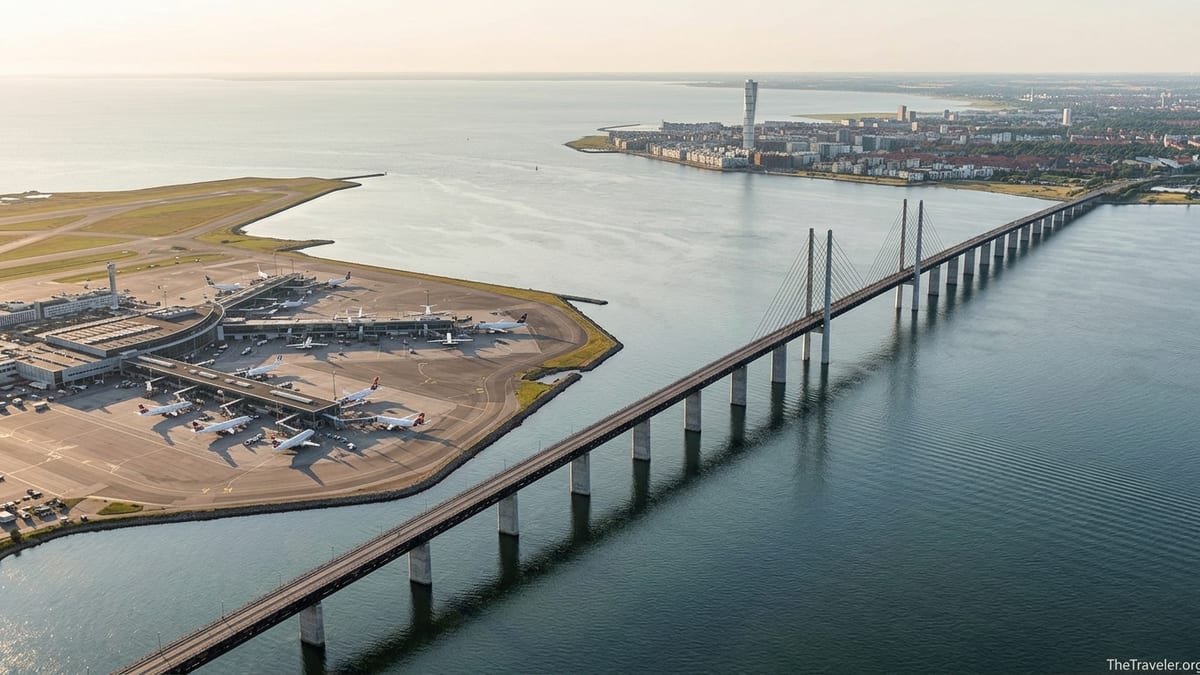
Big hub vs small regional: what kind of airports are CPH and MMX?
Copenhagen Airport (CPH), located at Kastrup about 8 kilometers south of central Copenhagen, is the main international gateway for all of eastern Denmark and much of southern Sweden. It handled more than 30 million passengers in 2025, with around 60 airlines and hundreds of direct destinations across Europe, North America, the Middle East and Asia. In practice, this is the airport you will see first when searching flights to anywhere in the Øresund region.
Malmö Airport (MMX), often called Malmö Sturup, is a much smaller Swedish regional airport about 30 kilometers east of Malmö. Passenger numbers are under one million per year and the route map is limited. The airport primarily serves domestic Swedish flights and a rotating cast of low cost and charter operations that come and go based on seasonal demand.
The size difference matters in several ways. At CPH you get multiple daily frequencies to key hubs like London, Amsterdam or Frankfurt, plus a dense web of point to point routes run by SAS, Norwegian, Ryanair, easyJet, Wizz Air and others. At MMX, you might find only one or two departures a day to Stockholm and a handful of low cost routes to secondary European cities. If your priority is choice and schedule flexibility, Copenhagen Airport wins immediately.
On the other hand, a smaller airport like Malmö often feels calmer and more manageable. Security lines are usually shorter, walking distances are smaller and the parking lots sit near the terminal. For a quick domestic hop or a single cheap charter flight, MMX can be an easy in and out experience, especially for travelers based in Skåne who are driving their own car.
Flight options and low cost carriers
If you search for flights from a major European city, such as Paris or Madrid, you will almost always see more options and often better timings into Copenhagen Airport than into Malmö. CPH is a full scale hub for SAS and a major base for Norwegian and Ryanair, alongside a long list of full service carriers. As of mid 2026, the airport advertises direct flights to well over 200 destinations, from regional cities like Aarhus and Bergen to long haul routes such as New York, Chicago, Dubai and Bangkok.
Low cost carriers are firmly established at CPH. Ryanair and easyJet both operate a wide range of European leisure and city break routes, including Barcelona, Rome, Manchester and Edinburgh, and Wizz Air serves several Central and Eastern European destinations when demand allows. This means that if you live in, for example, Manchester or Milan and want a cheap weekend in Copenhagen, chances are high that the cheapest non stop ticket lands you at CPH, not MMX.
Malmö Airport has historically relied on low cost airlines trying to lure Danes across the bridge with very low fares, but that strategy has become less central as Ryanair and others expanded directly at CPH. Today the MMX route map is modest: mostly domestic Swedish flights to Stockholm plus a changing set of budget routes and charters to sun destinations. You might see a seasonal Ryanair flight to a place like Alicante or a holiday charter to the Canary Islands, but you will rarely find broad year round coverage.
In practice, travelers often discover that a nominally cheaper MMX flight becomes less attractive after adding the cost and time of getting there. For example, if you live in Copenhagen and see a Malmö departure that is 250 Danish kroner cheaper than an equivalent CPH flight, by the time you pay for the airport coach across southern Sweden and factor in an extra hour or more of travel, the savings can look far less impressive.
Getting from the airport to Copenhagen or Malmö
For most visitors, ground transport is where the difference between CPH and MMX really shows. Copenhagen Airport is directly integrated into the Danish rail and metro networks. From Terminal 3 you walk a few minutes to the station and can be at Copenhagen Central Station in about 13 minutes by regional train. The fare for a three zone ticket, valid on both trains and metro, is around 30 Danish kroner as of 2026. Metro line M2 runs straight from the airport to central stops like Kongens Nytorv and Nørreport in roughly 15 minutes with trains running every few minutes most of the day and evening.
This means that a typical arrival scenario is extremely straightforward. A traveler landing on a late afternoon SAS flight from London can clear passport control, buy a ticket from one of the many machines in the arrivals hall, walk up one level and board a metro or train that takes them to their hotel area in under 20 minutes. Even past midnight there are night buses and less frequent trains, so arriving on a late Norwegian or Ryanair service rarely leaves you stranded.
Malmö Airport has a very different setup. There is no rail connection. The primary public transport option is the Flygbussarna airport coach that runs between the terminal and Malmö city. Journey time to Malmö Central is typically 35 to 45 minutes depending on traffic. Tickets tend to be significantly more expensive than a local city bus, and the service frequency is tied closely to flight schedules rather than a metro style timetable. Travelers have noted that after around 21:00 in the evening, departures can become sparse, so a delayed flight risks missing the last convenient coach.
If you are ultimately staying in Copenhagen but land at Malmö, you will need to connect again in Malmö by train over the Øresund Bridge to Denmark. In practice this means a coach from the airport to Malmö Central Station, then an Øresundståg regional train to Copenhagen Airport or Copenhagen Central. The combination often takes around 70 to 90 minutes in total, compared with 15 to 25 minutes total from CPH itself into central Copenhagen. For most short city trips, that is a major difference in convenience and fatigue after a long flight.
Cross border considerations and the Øresund Bridge
Because Copenhagen and Malmö sit in two different countries, nationality and border formalities can influence which airport makes more sense. Flying into Copenhagen Airport places you in Denmark right away, which for most European Union, Schengen and many visa free travelers is straightforward. From there, the train over the Øresund Bridge to Sweden is treated as an internal Schengen movement, although identity checks can occasionally appear during periods of heightened border control.
For travelers whose final destination is in Sweden, such as Lund, Helsingborg or Ystad, it is usually still simpler to fly into CPH and cross the bridge by train. Regional trains run from the airport station directly to Malmö Central, Triangeln and Lund, often in under 40 minutes door to door from terminal to Malmö Central. A one way ticket from Copenhagen Airport to Malmö Central typically costs the equivalent of 120 to 150 Swedish kronor, varying slightly depending on currency rates and ticket type.
Using Malmö Airport as the entry point requires starting your journey in Sweden before later crossing into Denmark if you plan to visit Copenhagen. You would arrive at MMX, take the airport coach into Malmö, then board an Øresundståg train to Copenhagen. For some non European travelers this might mean dealing with Swedish immigration first rather than Danish. The difference is minor for most, but if you need to collect a specific Danish residence permit card at the airport or meet a transfer agent there, arriving into CPH can be more practical.
Driving changes the calculation slightly. If you rent a car and plan a road trip around Skåne and rural southern Sweden, landing at Malmö Airport can be attractive, since you exit the small terminal directly into nearby parking and are on quiet country roads within minutes. The Øresund Bridge toll for cars between Sweden and Denmark is substantial, so if you intend to stay mostly on the Swedish side, starting at MMX and avoiding bridge crossings might offset a higher ticket price.
Costs beyond the ticket: transport, time and hassle
When comparing airports, it helps to think in door to door costs rather than just airfare. Copenhagen Airport has slightly higher fees than many small regional fields, which can show up as a modest ticket premium. Yet its excellent rail and metro links often mean you avoid taxis entirely. A solo traveler staying near Copenhagen Central Station might easily pay under 40 Danish kroner for the entire airport transfer, using a single public transport ticket and walking the last few blocks to a hotel like the Axel Guldsmeden or the area around Vesterbro.
By contrast, from Malmö Airport many travelers end up paying substantially more per person to reach the city, especially at off peak times. A family of four landing on a late evening charter could easily spend more on airport coach tickets than they saved by choosing a slightly cheaper flight compared with one landing at CPH. If the coach is no longer running and they need to order a taxi into Malmö, the fare can approach or exceed the Swedish equivalent of several hundred Danish kroner.
Time is another hidden cost. From Copenhagen Airport to a hotel near Nyhavn, a typical total journey might be 30 minutes including baggage claim, walking to the metro, a short ride and a final stroll through the harbor area. From Malmö Airport to that same hotel, you would usually budget around two hours including the coach into Malmö, the train across the bridge, a change to the Copenhagen metro and walking. For a three day weekend trip, losing three or four hours purely to longer transfers can noticeably shrink your usable holiday time.
On the other hand, there are cases where Malmö Airport offers real value. A traveler from a regional Swedish city might find an inexpensive domestic flight into MMX that connects neatly with a Flygbussarna service into Malmö and then a local train to Ystad or Trelleborg. For them, the cost and time of backtracking to Copenhagen might not make sense. The key is to map out the whole journey and compare realistic arrival and departure times for both airports, not just headline airfares.
When Malmö Airport can make sense
Although Copenhagen Airport is the default choice for most visitors to Copenhagen and even many heading to Malmö, there are situations where Malmö Airport can be the right answer. One is if you are staying in or near Malmö itself and you find a non stop flight to MMX at a good time and price from your origin city. For example, a seasonal low cost flight from a German secondary city that lands mid afternoon and connects directly to a waiting airport coach might deliver you to Malmö Central in under an hour from touchdown.
Another scenario is for travelers who are renting a car and touring the Swedish countryside. If you are planning a week exploring Österlen, Skåne’s coastal villages and national parks like Stenshuvud, landing at MMX puts you on the right side of the Øresund from the start. You avoid the cost and minor administrative hassle of driving a rental car across an international bridge and can return the vehicle to the same airport without cross border drop off fees.
Malmö Airport can also work if you are combining air travel with long distance Swedish rail. Certain domestic tickets are sold as through journeys that include a flight to MMX and then rail onward to central or northern Sweden. In this case the small airport simply functions as a feeder. You are less concerned about shopping, lounges or airline choice and more about smooth connections and manageable security lines, which a compact terminal can provide.
Finally, some frequent travelers based in Malmö or Lund simply prefer the quieter environment at MMX for short domestic hops to Stockholm, especially at peak times when CPH can feel crowded. If your routine is to take a morning flight, walk off the plane in Bromma or Arlanda, conduct meetings and fly back the same day, the convenience of parking close to the Malmö terminal and avoiding bridge traffic might outweigh the broader benefits of Copenhagen Airport.
The Takeaway
For the vast majority of international visitors whose primary goal is Copenhagen or a combined Copenhagen and Malmö city break, Copenhagen Airport is the more practical and time efficient choice. Its huge route network, dense schedule, and seamless integration with metro and train services mean you can step off the aircraft and be in the heart of the Danish capital within minutes, usually at modest cost and without needing a taxi.
Malmö Airport fills a narrower set of niches. It can work if your destination is specifically Malmö or rural southern Sweden, if you are renting a car and staying entirely on the Swedish side, or if a particular low cost or charter flight lands there at an unbeatable fare and reasonable time. Even then, it pays to calculate the added cost and time of airport coaches and bridge crossings before deciding that a cheaper ticket is truly cheaper.
The most reliable way to choose is to look at the whole picture for your exact trip. Check outbound and return timings, compare total journey times from your front door to your hotel, and factor in local transport prices on both sides of the Øresund. In many real world scenarios, especially for short city breaks and business trips, Copenhagen Airport emerges as the airport that simply works better. Malmö Airport remains a useful backup or specialist option rather than a full alternative hub.
FAQ
Q1. Is Copenhagen Airport or Malmö Airport better if I am staying in central Copenhagen?
Copenhagen Airport is almost always better. You can reach central Copenhagen by metro or train in around 15 minutes, using an inexpensive three zone ticket. From Malmö Airport you would need a coach into Malmö and then a train over the bridge, which usually takes well over an hour door to door.
Q2. When does it make sense to fly into Malmö Airport instead of Copenhagen?
Malmö Airport makes sense if your main destination is Malmö or the Swedish region of Skåne, if you are renting a car and staying on the Swedish side, or if you find a direct low cost or charter flight to MMX that is significantly cheaper and still connects conveniently with the airport coach into Malmö.
Q3. How much does it cost to get from Copenhagen Airport to the city center?
A standard three zone ticket covering the airport and central Copenhagen costs around 30 Danish kroner and is valid on both metro and trains. This usually gets you from the terminal to major central stations like Copenhagen Central, Nørreport or Kongens Nytorv in under 20 minutes.
Q4. How do I get from Malmö Airport to Malmö city?
The main option is the Flygbussarna airport coach, which runs between Malmö Airport and Malmö Central Station in about 35 to 45 minutes depending on traffic. Tickets are more expensive than a standard city bus fare, and departures follow flight schedules, so late evening services can be limited.
Q5. Can I use public transport at night from Copenhagen Airport?
Yes. The metro and regional trains from Copenhagen Airport run late into the night, supplemented by night buses. Frequencies are lower than during the day, but it is still usually possible to reach the city center without relying on a taxi, even after late European arrivals.
Q6. Is it easy to travel from Copenhagen Airport to Malmö or Lund?
Yes. Regional Øresundståg trains run directly from the airport station to Malmö and onward to Lund. Typical journey times are around 20 minutes to Malmö Central and roughly 35 minutes to Lund, making Copenhagen Airport a practical gateway for both cities.
Q7. Do low cost airlines fly to both Copenhagen and Malmö?
Low cost airlines such as Ryanair, easyJet and Wizz Air have a strong presence at Copenhagen Airport, with many point to point routes across Europe. Malmö Airport sees some low cost and charter activity, but the choice of destinations and flight frequencies is much more limited and can vary seasonally.
Q8. Are security lines shorter at Malmö Airport than at Copenhagen Airport?
Generally yes. Malmö is a smaller airport with fewer flights, so security and check in areas tend to be less crowded. Copenhagen Airport can be busy at peak hours, though it also has more lanes open and better staffing, so wait times are often manageable outside of major holiday peaks.
Q9. Is renting a car easier from Copenhagen Airport or Malmö Airport?
Both airports have car rental services, but the experience differs. Copenhagen Airport offers more rental brands and vehicle types and direct access to Danish motorways. Malmö Airport has fewer options, but driving out is quick and calm, and it is ideal if you plan a road trip around southern Sweden without crossing the Øresund Bridge.
Q10. If I care most about minimizing total travel time, which airport should I choose?
In most cases you should choose Copenhagen Airport, especially if your accommodation is in central Copenhagen or you are on a short city break. The combination of high flight frequency, short transfer times and efficient metro and train links usually results in a faster overall journey than flying into Malmö and relying on coaches and cross border trains.