


More news on this day
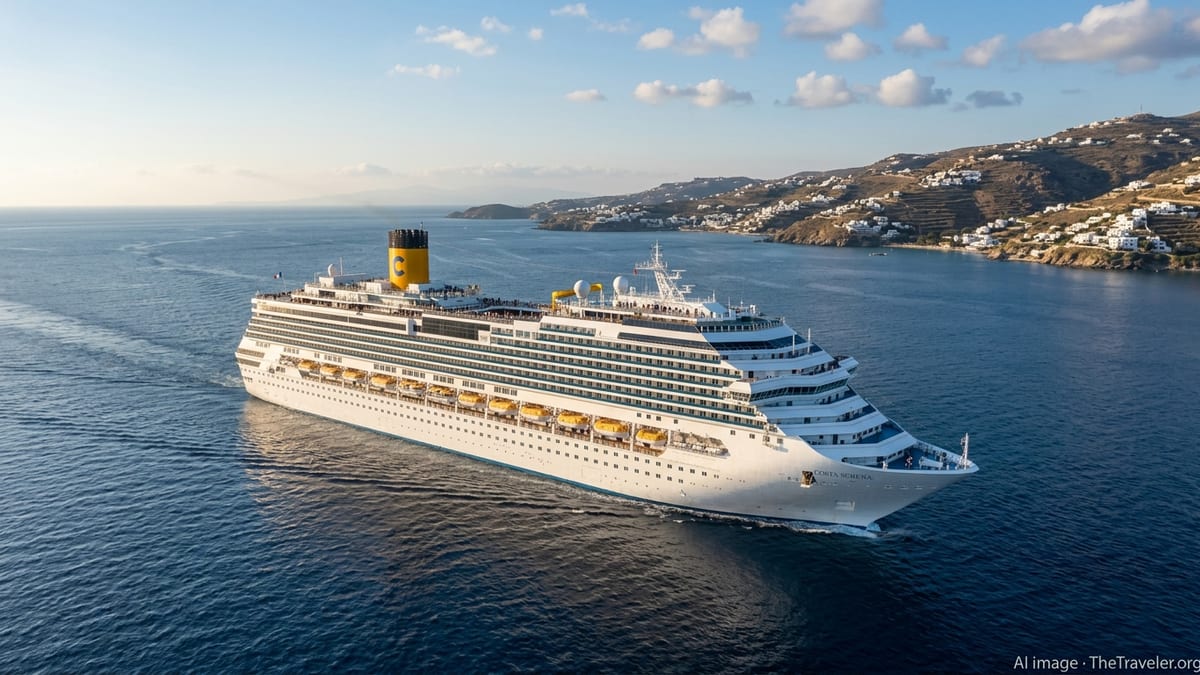
The Costa Serena has opened what reports describe as its farewell season in Asia, launching a mix of short cruises from Japan and Taiwan, charter sailings around Northeast Asia, and longer regional voyages before the ship repositions to the Western Hemisphere later in 2026.
Get the latest news straight to your inbox!
Final Asia Season After a Decade in the Region
Publicly available fleet information shows that Costa Serena has been a mainstay in Asian waters for much of the past decade, sailing primarily from ports in China, Japan, South Korea, Taiwan and Southeast Asia. The 2007-built ship, which carries more than 3,000 passengers, is now entering what industry coverage describes as a farewell season in the region before returning to South America and, later, Europe.
According to recent deployment updates, the ship’s current program includes departures from Naha in Japan and Keelung in Taiwan. From these hubs, Costa Serena is operating a series of two to five night cruises that call at popular island destinations such as Ishigaki and Miyakojima, as well as additional ports across the Ryukyu chain. Longer itineraries extend to Japanese cities including Nagasaki, Sasebo and Fukuoka, and to South Korean ports such as Busan and Yeosu.
Reports indicate that in September the vessel will shift north to Shanghai for a final run of China-focused sailings. These cruises are expected to link Chinese departure ports with destinations in Japan and South Korea, reflecting the ship’s long association with the outbound Chinese market since its initial redeployment to Asia in the mid-2010s.
Industry background materials note that Costa Serena’s sustained presence in Asia helped Costa Cruises build brand recognition in the region, particularly in China, Taiwan and South Korea. The decision to end the ship’s Asian chapter in late 2026 is being viewed by analysts as part of a broader reshaping of the line’s global fleet, with capacity redirected to markets where demand for fly-cruise and long-haul itineraries is growing.
Short Breaks, Regional Voyages and Charter Operations
The farewell season is structured around a blend of shorter break cruises and longer regional sailings. Schedules compiled from cruise brochures and booking platforms show numerous two to five night itineraries from Naha and Keelung through mid-year 2026, appealing to domestic and regional travelers seeking compact vacations to nearby islands and coastal cities.
At the same time, Costa Serena is being used on longer 9 to 15 night routes that link multiple countries in Northeast and Southeast Asia. These itineraries include combinations of Japan, South Korea, Taiwan, Hong Kong, Vietnam, Thailand, Singapore, Brunei and the Philippines, reflecting a pattern of alternating two week circuits that trace different arcs around the region over the winter 2025 to 2026 and 2026 seasons.
The ship’s program also incorporates dedicated charter sailings. Trade coverage highlights a six day, five night “golden route” voyage chartered from a South Korean operator, calling at three countries across Korea, Japan and China. Homeport arrangements at Sokcho in South Korea and other regional ports have been promoted by local authorities as part of efforts to strengthen their role as cruise hubs in Northeast Asia.
Analysts note that this mix of regular deployments and charters allows Costa Serena to maintain a high profile in key source markets while accommodating regional partners that package cruises with flights, coach transfers and land programs. For travelers, it results in a broad range of itineraries and pricing across the ship’s final Asia season.
From Farewell Asia Season to a 65-Night World Cruise
Costa Serena’s departure from Asia is not being marked by a direct repositioning voyage alone. Instead, the ship is scheduled to operate an extended, 65 night world cruise later in 2026, effectively bridging its Asian era with its future deployment in the Americas and Europe.
According to cruise line itinerary information, the long voyage is due to depart from Tokyo in October 2026, crossing the Western Pacific with calls in the Philippines and other Asian destinations before reaching Australia and the South Pacific. The route continues across French Polynesia and onward to South America, with an overnight stop in Bali highlighted among the key calls earlier in the season.
After crossing the Pacific, the ship is expected to visit ports in Chile and Argentina, ending the cruise in Buenos Aires. Regional industry outlets report that Costa Serena will then launch a program in South America, including shorter holiday sailings between Argentina and Uruguay, before eventually redeploying to the Mediterranean for the 2027 season.
Travel advisors describe the extended voyage as an opportunity for guests in Asia and beyond to book a one time itinerary that connects the ship’s long running presence in the Far East with its renewed role in the Western Hemisphere. The combination of iconic Pacific islands, Australian ports and South American capitals positions the cruise as a highlight of the ship’s transition year.
Role as Floating Accommodation at Major Sporting Event
An unusual element of Costa Serena’s final Asia season is a scheduled role as floating accommodation during a major multi-sport event in Japan. Cruise industry coverage notes that before sailing to South America, the vessel is expected to serve as a temporary hotel for athletes and delegations during the 2026 Aichi-Nagoya Asian Games and Para Games.
Based on the published outlines of this arrangement, the ship will be berthed in Japan and used to supplement local accommodation capacity, reflecting a trend in which cruise vessels are periodically deployed as floating hotels for large scale events. Similar uses have previously been recorded during international sporting competitions in Europe and South America.
For Costa Serena, this role extends its visibility in the Japanese market at the very end of its regional assignment, bringing the ship into contact with a wide mix of national teams and officials traveling from across Asia. Travel observers point out that such deployments also showcase a ship’s facilities, from cabins and restaurants to leisure spaces, to a new audience that may consider future cruises in other parts of the world.
The timing of the floating hotel commitment, followed by the start of the 65 night world cruise, creates a compressed schedule that underlines how tightly planned the vessel’s final months in East Asia have become. For port cities involved in the arrangement, the ship’s presence also contributes to local tourism exposure, even as its long term base of operations shifts elsewhere.
Impact on Asia’s Cruise Landscape
The decision to conclude Costa Serena’s long running Asia deployment is being closely watched across the regional cruise market. While the ship will be replaced and supplemented by other vessels over time, its withdrawal at the end of 2026 represents the end of one of the more recognizable brands in the contemporary Asian cruise sector.
Analysts following fleet redeployments argue that Costa Serena’s shift reflects several trends, including a gradual rebalancing of capacity between Asia and other markets, more selective use of charter partnerships, and rising interest in extended world and grand voyages. Although the ship is leaving, Costa Cruises continues to promote Asia itineraries on a seasonal basis, suggesting that the region remains important even as specific hardware is reassigned.
For destinations such as Shanghai, Naha, Keelung, Sokcho and multiple island ports around Japan and Taiwan, the farewell season provides a final opportunity to benefit from the ship’s passenger flows. Local tourism boards and port authorities have highlighted upcoming calls in promotional materials targeting both domestic travelers and international visitors already in the region.
For travelers, the current deployment offers a last chance to experience Costa Serena in an Asian context, whether on a short island-hopping break, a longer regional voyage linking several countries, or the ambitious world cruise that will close this chapter of the ship’s career before it sails toward new routes in the Western Hemisphere.