


More news on this day
Passengers flying from Edinburgh Airport to popular European sun destinations this summer are being urged to brace for potential queues of up to six hours at overseas border control, as new biometric checks combine with peak-season crowds to test airport capacity across the continent.
Get the latest news straight to your inbox!
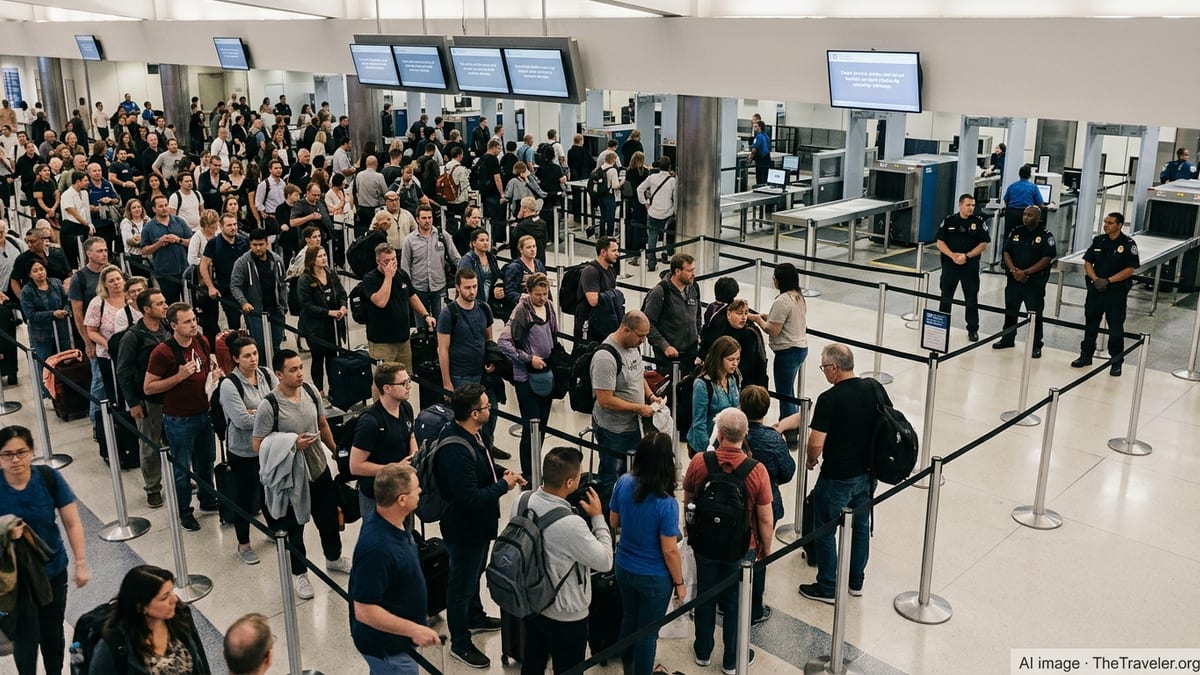
Warnings over six-hour waits at key EU holiday airports
Recent industry commentary and traveller reports indicate that non-EU passengers arriving at some major European airports are already encountering queues of several hours at passport control as the bloc’s new Entry/Exit System is gradually introduced and stress-tested at busy hubs.
According to published coverage, airline and industry bodies have pointed to waits of around four hours at peak times, with warnings that delays could stretch to six hours at some airports as the system beds in during the height of the summer holiday season. These pressures are most acute at large gateway airports serving Mediterranean resorts, where volume is highest and staffing and infrastructure are still catching up with demand.
The new checks are designed to improve border security by capturing fingerprints and facial images from non-EU visitors on arrival. However, early experience in pilot and initial rollout locations suggests that the extra processing time, combined with uneven staffing and facilities, can lead to bottlenecks when several full flights arrive in close succession.
For Edinburgh-based travellers heading to such hotspots, the impact will not be felt in Scotland but when they land, particularly at peak weekend and school-holiday times. Travel advisers are therefore encouraging passengers to factor in lengthy waits at immigration when planning onward connections, transfers and accommodation check-ins.
What Edinburgh-bound holidaymakers can expect this summer
Edinburgh Airport has continued to emphasise that its own security operation is running within normal parameters, with most passengers reportedly clearing security within minutes during typical periods. Publicly available information and recent passenger commentary suggest that the airport’s main challenges lie not in the length of its queues, but in how wider pressures in the aviation system, including overseas border controls, can spill over into local experiences.
The airport has seen record traffic as Scotland’s busiest hub, with passenger numbers surpassing pre-pandemic levels. That growth has brought a sharper focus on pinch points such as early-morning departures, busy school-holiday weekends and late-evening waves of returning flights. At these times, even modest disruptions elsewhere in the network can translate into queues at check-in, security or arrivals.
For travellers, the most visible pressure this summer is expected to arise at foreign border checkpoints rather than in Edinburgh’s own security lanes. Families travelling with young children, older passengers and those with tight connection windows are considered particularly vulnerable to disruption when confronted with unexpectedly long lines at immigration or baggage reclaim after a short-haul flight.
Travel industry analysts note that these conditions can be especially frustrating for passengers who have enjoyed a smooth experience at their departure airport, only to be caught in prolonged waits on arrival while tired and eager to reach their final destination.
Biometric border checks and the EU’s Entry/Exit System
The core source of concern for this summer is the EU’s new Entry/Exit System, a large-scale biometric database intended to register non-EU travellers each time they enter or leave the Schengen area. Public information on recent trials and early use indicates that the system involves taking fingerprints and facial images as well as verifying passport data, a process that can be significantly slower than traditional stamp-only checks, particularly for first-time registrants.
While the long-term goal is to automate and speed up border crossings, the transition phase is widely regarded as the most fragile. In this period, staffing levels, training, equipment reliability and passenger familiarity with the process all play a role in determining how fast queues move. Reports compiled from several major European airports suggest that when multiple flights carrying large numbers of non-EU passengers arrive together, queues can extend far beyond the roped areas and persist for several hours.
Industry bodies have cautioned that unless additional resources and streamlined procedures are introduced quickly, some airports could see recurrent peak-time waits stretching up to six hours at border control, particularly in popular leisure destinations in southern Europe. That warning is of particular relevance to Scottish travellers, as Edinburgh’s route network includes many of these classic beach and city-break hotspots that rely heavily on UK visitors.
Although not all airports are affected equally, the variability itself poses a challenge. Two flights leaving Edinburgh within hours of each other can lead to very different experiences depending on the destination airport, the arrival time and how many other flights land simultaneously.
How passengers from Edinburgh can reduce disruption risk
Travel specialists and consumer groups are highlighting a number of practical steps that may help Edinburgh passengers mitigate the impact of long overseas queues, even if they cannot avoid them entirely. One common recommendation is to build more generous time buffers into travel plans, particularly where onward train journeys, car hire pick-ups or self-drive connections are involved.
Booking fully flexible or later departure times for onward legs, arranging private transfers with drivers briefed about potential waits, and alerting accommodation providers in advance to the possibility of late arrival can all reduce stress if immigration delays develop. For those connecting to cruise departures or special events, many advisers suggest arriving at the port city at least one day earlier than strictly necessary.
At Edinburgh itself, preparation for security and punctual arrival at the terminal remain important. Airport guidance stresses common-sense steps such as packing hand luggage in line with security rules, having liquids and electronics ready for inspection, and ensuring travel documents are to hand. These measures may not affect queues abroad but they can reduce the risk of knock-on delays at departure and help flights leave on schedule.
Some passengers also opt to purchase priority security access at Edinburgh during peak travel periods, a paid-for service designed to provide a faster route through screening. While this does not influence border checks in destination countries, it can offer reassurance to nervous travellers and reduce time spent queuing at the start of the journey.
Airlines and airports under pressure to coordinate
The prospect of long border queues at European hotspots has intensified calls for closer coordination between airlines, airports and border agencies. Industry observers argue that the combination of high summer demand and a new biometric regime requires more detailed planning of flight schedules, staffing rosters and passenger information than in previous years.
Forecasting tools that model queue build-up at security and immigration points are already in use at many airports and are seen as crucial to managing flows during the Entry/Exit System transition. These systems can help pinpoint the times of day and specific arrivals where extra staff or overflow processing lanes are most needed, potentially trimming hours off peak waits if deployed effectively.
For travellers departing from Edinburgh, the most immediate impact of these efforts will be seen not at their home airport but at the foreign terminals where they land. Nevertheless, clear and timely communication from airlines and travel companies about expected conditions at destination airports is likely to play a key role in helping passengers set realistic expectations and plan accordingly.
With the main school holidays now under way, Edinburgh-based holidaymakers heading for Europe’s busiest sun spots are being encouraged to keep a close eye on pre-departure updates, allow for significant queuing time on arrival and treat any warnings of six-hour waits as a serious, if not inevitable, part of this summer’s travel landscape.